

Caiman yacare (Yacare Caiman)
Introduction
The Caiman yacare, popularly known as the Yacare caiman, is one of the most emblematic and abundant reptiles in South America, considered a true symbol of the Brazilian Pantanal. This crocodilian species belongs to the Alligatoridae family and plays a fundamental ecological role in maintaining the balance of the aquatic ecosystems it inhabits. Its presence is so significant that the population density in certain areas of the Pantanal plain is among the highest recorded for any crocodilian species in the world, making it a central piece in the biological dynamics and cultural imagery of the region.
Historically, the Yacare caiman faced severe threats due to predatory hunting for the skin trade, but today it is celebrated as one of the greatest conservation successes of Brazilian fauna. Through rigorous protection and enforcement measures, populations have recovered extraordinarily, allowing the species to move from endangered status to a category of stability. Currently, in addition to its biological importance as an apex predator and controller of fish and invertebrate populations, the caiman is one of the main attractions for ecotourism, driving the local economy and raising visitor awareness about the need to preserve the Pantanal biome.
Scientific Classification
| Category | Classification |
|---|---|
| Kingdom | Animalia |
| Phylum | Chordata |
| Class | Reptilia |
| Order | Crocodilia |
| Family | Alligatoridae |
| Genus | Caiman |
| Species | Caiman yacare |
| Common name | Yacare caiman, Paraguayan caiman, Piranha caiman |
Description
The Caiman yacare is a medium to large-sized reptile, presenting morphological characteristics that clearly distinguish it from other crocodilians. Adult males are significantly larger than females, reaching lengths ranging between 2.5 and 3 meters, although there are exceptional records of slightly larger individuals. Females generally do not exceed 2 meters in length. The body is robust and protected by a hide of leathery scales and osteoderms (bony plates in the skin), which provide efficient protection against predators and injuries during territorial disputes.
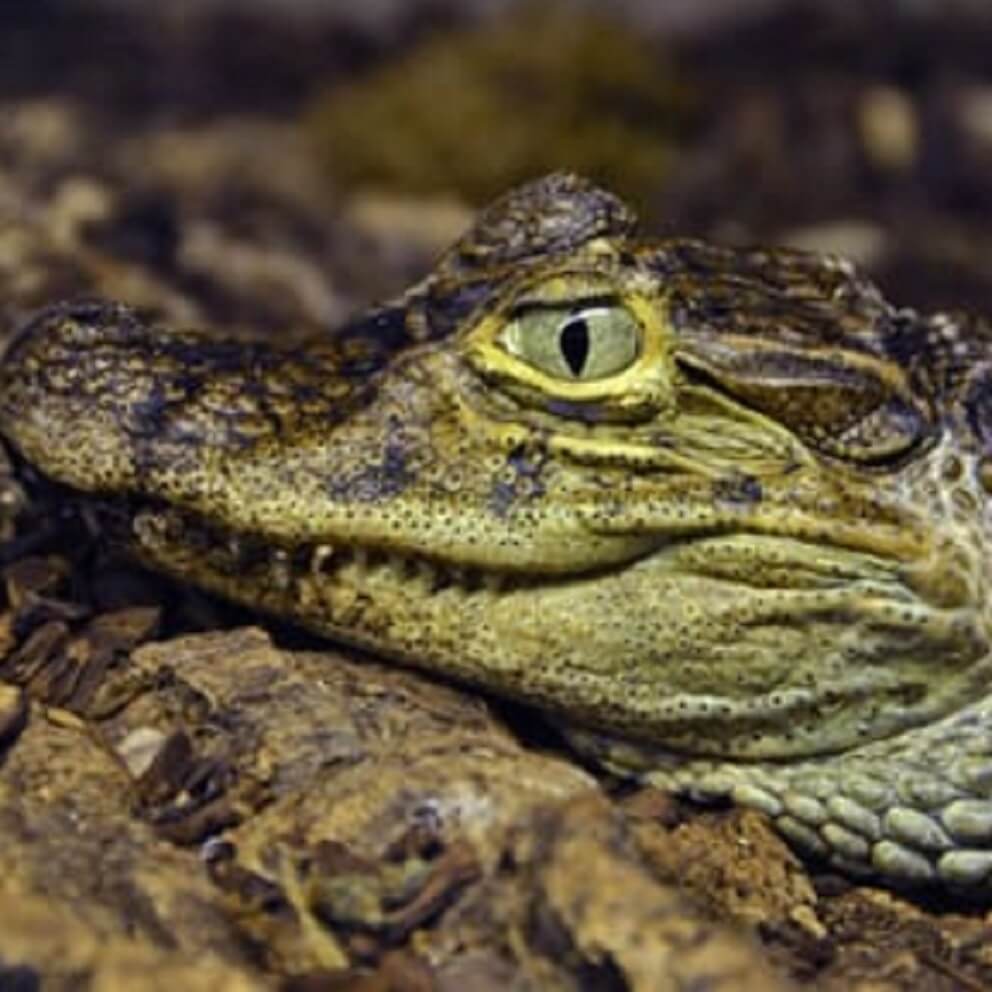
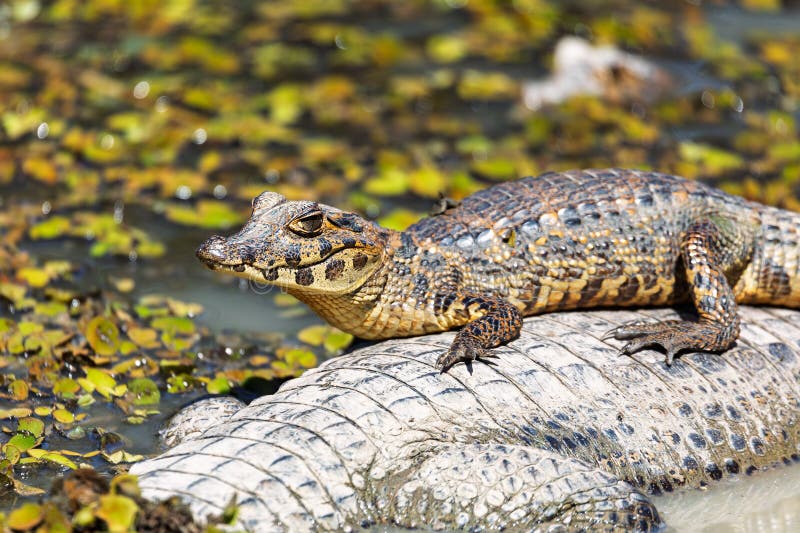
The coloration of the Yacare caiman is adapted for camouflage in aquatic and marginal environments. The back presents tones ranging from dark gray to black, often with yellowish or olive transverse bands, especially visible in young individuals and in the tail region. The belly is lighter, generally yellowish or whitish. A distinctive feature that earned it the nickname piranha caiman is its dentition: even with the mouth closed, some teeth of the lower jaw may be visible, projecting outward or fitting into notches in the upper jaw, giving it an aggressive and unique appearance.
| Characteristic | Value |
|---|---|
| Length (Males) | 2.5 to 3.0 meters |
| Length (Females) | 1.8 to 2.0 meters |
| Adult Weight | 40 to 60 kg (can reach 300 kg in rare cases) |
| Life Expectancy | 40 to 60 years in the wild |
| Ideal Body Temperature | 25°C to 30°C |
Distribution and Habitat
The geographical distribution of Caiman yacare covers the central region of South America, extending through northern Argentina, southern Bolivia, Paraguay, and the Central-West region of Brazil. In Brazilian territory, its occurrence is predominant in the states of Mato Grosso and Mato Grosso do Sul, occupying almost the entire extent of the Upper Paraguay Basin. Although its presence is recorded in other river systems, such as the Amazon Basin (in transition areas), it is in the Pantanal that the species finds its most significant refuge and the highest population densities on the planet.
The preferred habitat of the Yacare caiman includes a wide variety of water bodies, such as rivers, corixos (seasonal channels), baías (temporary or permanent lagoons), and floodplains. They are semi-aquatic animals that depend on water for thermoregulation, feeding, and reproduction, but also utilize the banks and gallery forest areas for nesting and resting. During the dry season in the Pantanal, when the water volume decreases drastically, caimans tend to concentrate in remaining pools, often forming impressive aggregations of hundreds of individuals in a single location, awaiting the return of the rains.
Behavior
The behavior of Caiman yacare is marked by a strong dependence on environmental thermoregulation, a common characteristic of ectothermic animals. During the day, it is frequent to observe them motionless on riverbanks or on fallen logs, with their mouths open to dissipate excessive heat or absorb solar radiation to raise their body temperature. This behavior, although appearing to be absolute rest, is vital for their metabolism and digestion. At night, they become more active, moving through the water in search of food, using their eyes and nostrils positioned on top of the head to monitor the environment while remaining submerged.
Socially, the Yacare caiman can be considered gregarious, especially in situations of water resource scarcity, where mutual tolerance increases. However, during the reproductive season, males become highly territorial and aggressive, emitting deep sounds (bellows) that can be heard at long distances to attract females and ward off competitors. Communication also involves visual signals, such as lifting the tail or head above the water, and infrasonic vibrations that cause ripples on the water surface, a fascinating behavioral spectacle that demonstrates the complexity of these reptiles.
Feeding / Nutrition
The diet of Caiman yacare is essentially carnivorous and generalist, varying significantly according to the individual’s age and the availability of prey in the environment. Hatchlings and juveniles feed predominantly on small invertebrates, such as aquatic insects, crustaceans, and mollusks (especially the Pomacea snail). As they grow, the diet expands to include vertebrates. The caiman is an opportunistic predator that uses the “sit and wait” strategy or rapid strikes to capture its prey, being extremely efficient in shallow waters.
Adults have fish as their main source of nutrition, with emphasis on abundant species in the Pantanal, such as piranhas and curimbatás. Interestingly, the caiman plays an important role in controlling piranha populations, which benefits other fish species and the ecosystem balance. In addition to fish, they may prey on aquatic birds, small mammals, and other reptiles. In cases of larger prey, such as young capybaras or domestic animals approaching the water, the caiman uses its powerful bite to hold and rotate its body (the famous “death roll”) to tear the food apart, as they do not have teeth capable of chewing.
| Type of Food | Importance in Diet |
|---|---|
| Fish (Piranhas, Curimbatás) | High |
| Mollusks (Snails) | High (especially juveniles) |
| Crustaceans (Crabs) | Medium |
| Aquatic Insects | High (for hatchlings) |
| Small Mammals and Birds | Low to Medium |
Reproduction
The reproductive cycle of Caiman yacare is closely linked to the flood and drought regime of the Pantanal. Mating generally occurs at the end of the dry season, between the months of August and October. During this period, courtship rituals involve complex interactions between males and females, including touches, vocalizations, and underwater displays. After fertilization, the female carefully selects a site for nest construction, which is usually made of decomposing organic matter (leaves, branches, and soil) in forest areas or the edges of corixos, protected from immediate flooding.
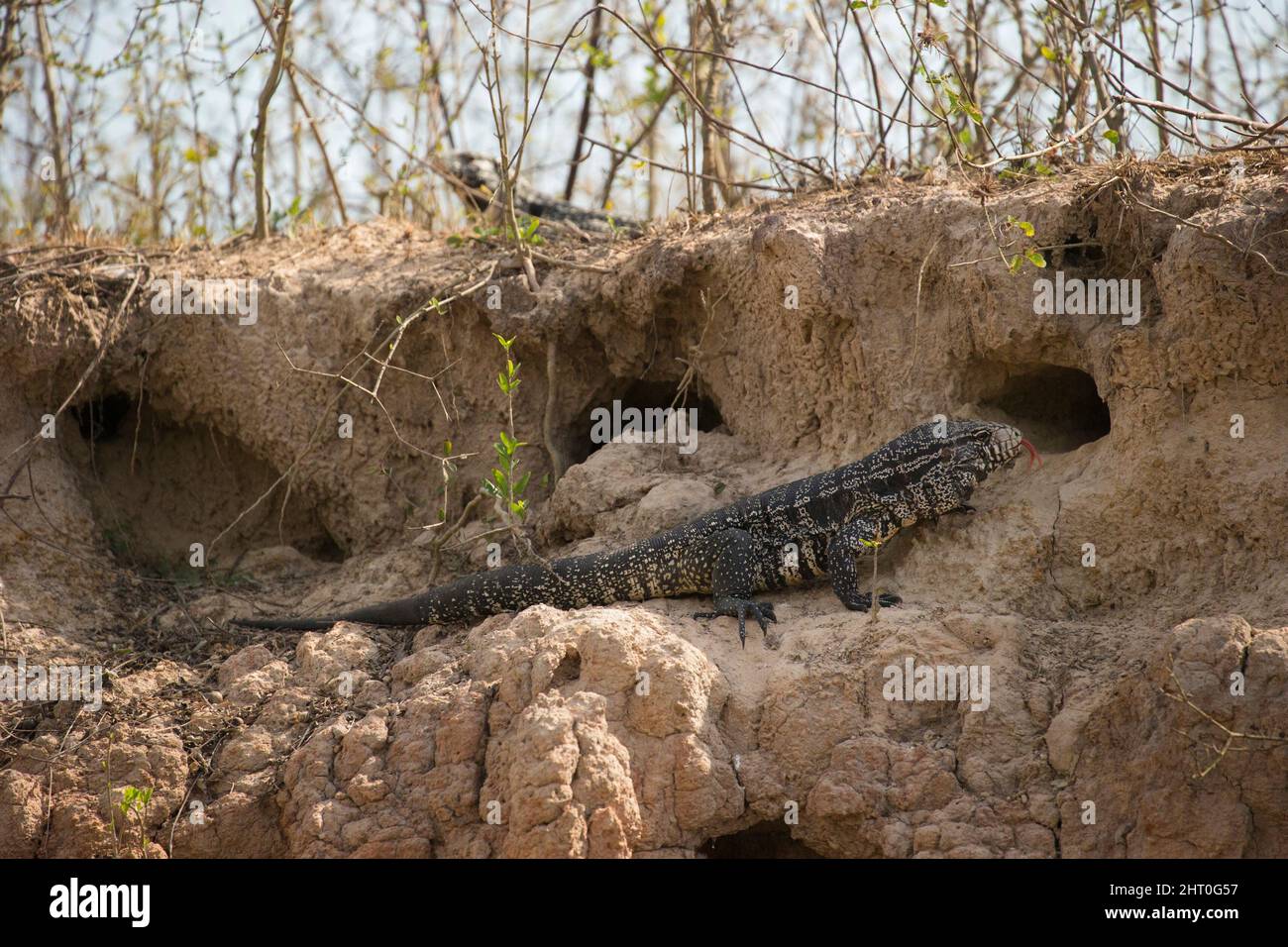
Laying occurs between December and February, coinciding with the start of the rains. A female can deposit 20 to 40 eggs, which are carefully covered by vegetation. The heat generated by the decomposition of the nest’s organic matter is what incubates the eggs for a period of 60 to 90 days. A fascinating biological aspect is that the sex of the hatchlings is determined by the incubation temperature: higher temperatures tend to produce males, while lower temperatures produce females. The female remains near the nest, protecting it against predators such as the tegu lizard and the coati. When the hatchlings are ready to be born, they emit high-pitched sounds from inside the egg, signaling to the mother to open the nest and assist them in reaching the water, where she will continue to protect them for several months.
Ecological Importance
Caiman yacare is considered a keystone species for the health of the Pantanal ecosystem. As an apex predator, it regulates the populations of various species, preventing groups such as piranhas or certain types of mollusks from becoming overabundant and causing imbalances in the food chain. Furthermore, its feces are rich in nutrients that fertilize the waters, promoting the growth of phytoplankton and aquatic plants, which serve as the basis for all biological productivity in the biome. This nutrient cycle is vital for maintaining the Pantanal’s fishery biodiversity.
Another fundamental ecosystem service provided by caimans is the maintenance of water bodies during the drought. By moving and digging in areas of baías and corixos, they help keep channels open and deepen pools, which prevents premature siltation and ensures the survival of fish and other aquatic animals during months of water scarcity. Additionally, caimans serve as prey for other large predators, such as the jaguar (Panthera onca), establishing a direct trophic connection between aquatic and terrestrial environments. The relationship between the jaguar and the caiman is one of the most dramatic and studied examples of predator-prey interaction in Brazilian nature.
Conservation Status
Currently, Caiman yacare is classified by the International Union for Conservation of Nature (IUCN) as a species of Least Concern status. This classification is the result of decades of conservation efforts after the species was decimated by illegal hunting in the 1970s and 1980s. It is estimated that millions of individuals were slaughtered to supply the international leather market. The prohibition of commercial hunting in Brazil, combined with the creation of conservation units and the development of sustainable management techniques in captivity, allowed for a robust population recovery, making the Yacare caiman a global example of biological resilience.
Despite the success, new threats are emerging on the horizon. Habitat destruction due to the advancement of intensive agriculture, river pollution by pesticides, and siltation caused by deforestation of the headwaters of the rivers that feed the Pantanal are constant concerns. Furthermore, climate change represents a severe risk, as it alters rainfall patterns and temperatures, which can directly impact reproduction and water availability for the species. Continuous vigilance and the preservation of the Pantanal biome as a whole are essential to ensure that this symbol of Brazilian fauna continues to thrive in its natural environment.
Curiosities
- The Yacare caiman has a nictitating membrane, a kind of transparent “third eyelid” that protects the eye while it is submerged, functioning like natural diving goggles.
- Unlike true crocodiles, caimans have a wider and more rounded snout, in a “U” shape, an adaptation for a varied diet that includes hard-shelled prey.
- Caimans can remain submerged for up to 20 minutes at rest, drastically reducing their heart rate to save oxygen.
- The belly skin of Caiman yacare is the most commercially valued because it has fewer osteoderms (bony plates), making it more flexible for manufacturing luxury accessories in controlled management systems.
- In the Pantanal, there is a common folk belief that where there are many caimans, the water is cleaner and the fish are healthier, reflecting the empirical perception of their role as environmental regulators.
References
[1] CAMPOS, Z.; LLOBET, A.; MAGNUSSON, W. E.; PIÑA, C. (2020). Caiman yacare. The IUCN Red List of Threatened Species. Available at: https://www.iucnredlist.org [2] COUTINHO, M. E.; CAMPOS, Z. (1996). Ecologia e Manejo do Jacaré-do-Pantanal (Caiman crocodilus yacare). Embrapa Pantanal, Corumbá, MS. [3] VERDADE, L. M. (2004). A exploração da fauna silvestre no Brasil: o caso do jacaré-do-pantanal. Biota Neotropica, v. 4, n. 2. [4] MARQUES, M. J. (2024). Biologia e Ecologia do Jacaré-do-Pantanal. SOS Pantanal. Available at: https://sospantanal.org.br [5] DAUDIN, F. M. (1802). Histoire Naturelle, Générale et Particulière des Reptiles. Paris.