
Introduction
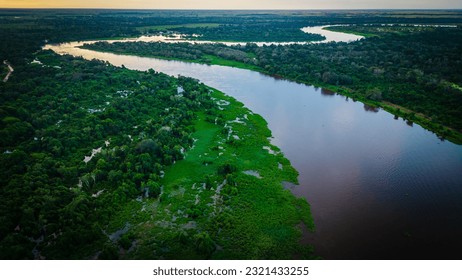
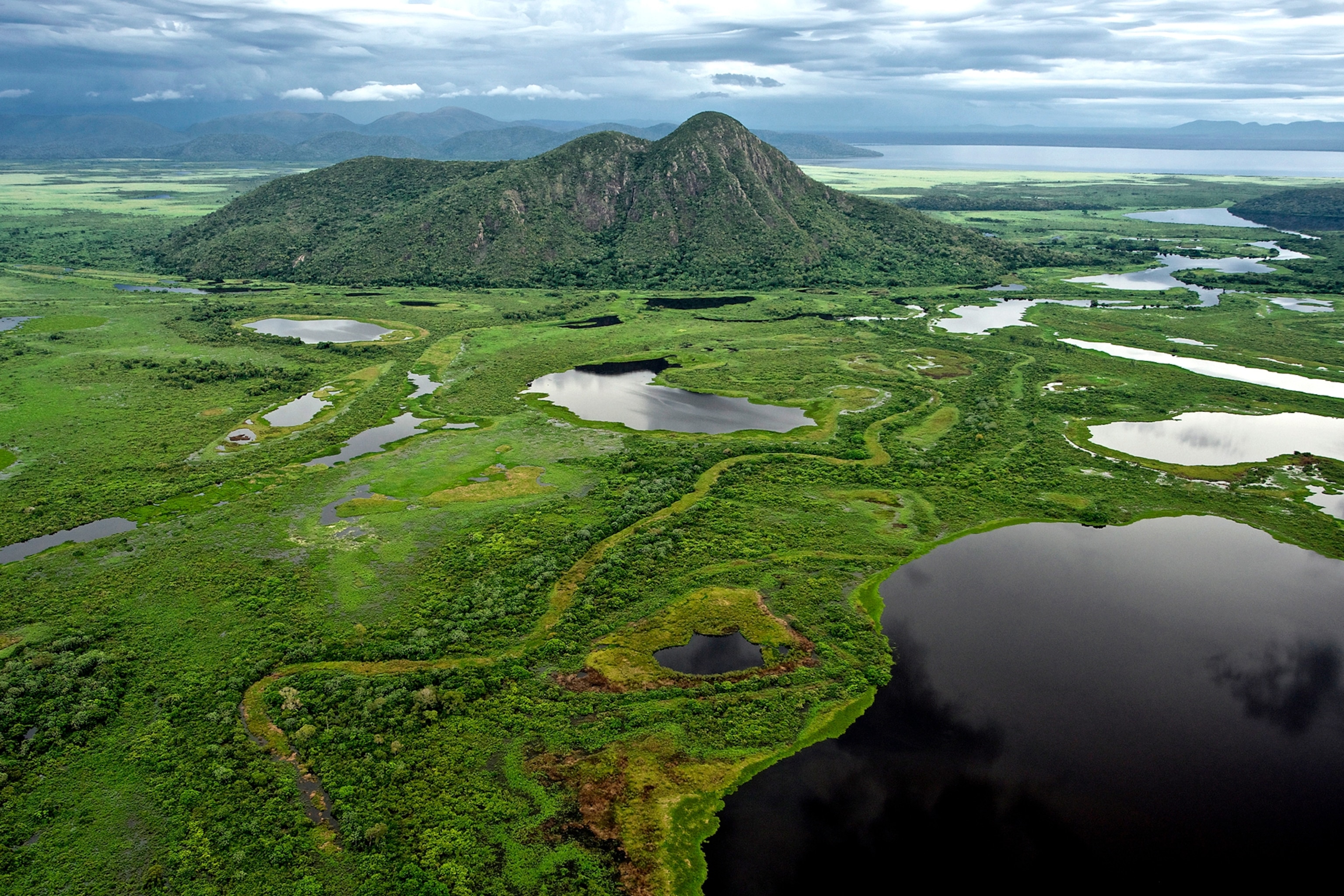
The Pantanal, the world’s largest continuous floodplain, is often visualized as a vast expanse of water and aquatic plants. However, its ecological integrity and biodiversity are equally dependent on its higher ground. Among the most distinctive and vital features of the Pantanal landscape are the capões and cordilheiras. These are elevated areas that remain above the water level even during the peak of the flood season, serving as essential “islands” of terrestrial vegetation and critical refuges for wildlife [1] [2].
While the surrounding plains (campos) are subject to seasonal inundation, capões and cordilheiras provide a stable environment for woody plants and terrestrial animals. They are not merely geographical accidents but are the result of complex geological and biological processes that have shaped the Pantanal over millennia. Understanding these features is key to understanding how terrestrial life persists in a biome dominated by water [3] [4].
Defining Capões and Cordilheiras
Although both are elevated areas, capões and cordilheiras differ in their shape, size, and origin. They represent the heterogeneous nature of the Pantanal’s topography, where even a few centimeters of elevation can dictate the type of vegetation and the survival of species [2] [5].
| Feature | Description | Shape and Size | Origin |
|---|---|---|---|
| Capão | A small, circular or oval island of woody vegetation. | Usually small (a few meters to a few hectares), rounded. | Often formed on ancient termite mounds or small terrain elevations. |
| Cordilheira | A long, narrow ridge of higher ground, often kilometers long. | Linear, elongated, can stretch for several kilometers. | Ancient river levees or sand dunes formed during drier climatic periods. |
Capões de mato are often dominated by a single large tree or a small cluster of trees, surrounded by a dense understory. Cordilheiras, on the other hand, can support more extensive forests and are often used as natural corridors for the movement of large mammals and even for the placement of ranch infrastructure [1] [6].
Ecological Importance: Refuges and Corridors
The ecological role of these “islands” cannot be overstated. During the flood season, when up to 80% of the Pantanal can be underwater, capões and cordilheiras become the only available habitat for terrestrial animals. They serve as:
- Dry Refuges: Mammals like the jaguar (Panthera onca), marsh deer (Blastocerus dichotomus), and collared peccary (Pecari tajacu) congregate on these higher grounds to escape the rising waters [3] [7].
- Nesting Sites: Many bird species, including the Jabiru (Jabiru mycteria) and various parrots, rely on the tall trees found in capões and cordilheiras for nesting, safe from aquatic predators [8] [9].
- Feeding Grounds: The woody vegetation provides fruits, seeds, and browse that are not available in the flooded plains, sustaining herbivores through the flood season [10].
- Biological Corridors: Cordilheiras, in particular, act as natural highways, allowing animals to move across the landscape without having to swim long distances, which is crucial for dispersal and genetic exchange [11].
Vegetation and Biodiversity
The vegetation of capões and cordilheiras is markedly different from the surrounding floodplains. It is characterized by species that cannot tolerate prolonged flooding. Common trees include the fig (Ficus spp.), acuri palm (Attalea phalerata), and piuva (Handroanthus heptaphyllus). The acuri palm is especially important, as its fruits are a primary food source for the Hyacinth Macaw (Anodorhynchus hyacinthinus) and many other animals [12] [13].
These areas also host a high diversity of invertebrates, reptiles, and small mammals that form the base of the terrestrial food web. The concentration of life in these small areas during the flood creates intense ecological interactions, making them hotspots for scientific research and wildlife viewing [4] [14].
Threats and Conservation
Capões and cordilheiras are among the most vulnerable habitats in the Pantanal. Because they are the only dry ground, they are often the first areas to be cleared for ranch buildings, corrals, and non-native pastures. Overgrazing by cattle can also degrade the understory and prevent the regeneration of native trees. Furthermore, these areas are highly susceptible to wildfires during the dry season, which can destroy ancient trees and the wildlife they support [15] [16].
Conservation efforts must focus on protecting these elevated features as part of the broader Pantanal mosaic. This includes implementing sustainable ranching practices that preserve native vegetation on higher ground and establishing protected areas that encompass significant cordilheira systems. Recognizing the value of these “islands” is essential for the long-term survival of the Pantanal’s terrestrial biodiversity [1] [17].
Curiosities
- Some cordilheiras are ancient sand dunes formed thousands of years ago when the Pantanal was a much drier, desert-like environment.
- Termites play a crucial role in the formation of many capões; their mounds provide the initial elevation and nutrient-rich soil needed for trees to take root.
- During extreme floods, capões can become so crowded with animals that different species, which normally avoid each other, are forced to share the same small space.
References
[1] POTT, A.; POTT, V. J. (1994). Plantas do Pantanal. Embrapa.
[2] JUNK, W. J. et al. (2006). The Pantanal: A large South American wetland at a crossroads. Aquatic Conservation.
[3] ALHO, C. J. R. (2008). Biodiversity of the Pantanal: response to seasonal flooding regime and to environmental degradation. Brazilian Journal of Biology.
[4] HARRIS, M. B. et al. (2005). Safeguarding the Pantanal: Priorities and actions for conservation. Conservation Biology.
[5] ASSINE, M. L. (2005). River avulsions on the Taquari megafan, Pantanal wetland, Brazil. Geomorphology.
[6] DAMASCENO-JUNIOR, G. A. et al. (2005). Structure and floristic composition of the arboreal vegetation of the Pantanal. Brazilian Journal of Botany.
[7] SCHALLER, G. B. (1983). Mammals and their conservation in the Pantanal. National Geographic Research.
[8] ANTAS, P. T. Z. (2004). Aves do Pantanal. SESC.
[9] GUEDES, N. M. R. (1993). Biologia reprodutiva da arara-azul (Anodorhynchus hyacinthinus) no Pantanal. USP.
[10] TOMAS, W. M. et al. (2017). Checklist of mammals from Mato Grosso do Sul, Brazil. Iheringia.
[11] QUIGLEY, H. B.; CRAWSHAW, P. G. (1992). A conservation plan for the jaguar in the Pantanal region of Brazil. Biological Conservation.
[12] POTT, V. J.; POTT, A. (2000). Plantas Aquáticas do Pantanal. Embrapa.
[13] SCREMIN-DIAS, E. et al. (1999). Flora e vegetação do Pantanal. UFMS.
[14] HECKMAN, C. W. (1998). The Pantanal of Poconé: Biota and Ecology. Kluwer Academic Publishers.
[15] BERGIER, I. et al. (2018). Pantanal: A Neotropical Wetland Under Threat. Springer.
[16] MARENGO, J. A. et al. (2021). Extreme drought in the Brazilian Pantanal in 2020. Scientific Reports.
[17] SEIDL, A. F. et al. (2001). Ecotourism as a conservation tool and economic alternative. Ecological Economics.