
Introduction
The Dasypus novemcinctus, or nine-banded armadillo, is a member of the Xenarthra superorder. In the Pantanal, it is a common and highly adaptable species, known for its protective armor and digging skills.
Scientific Classification
| Kingdom | Animalia |
| Phylum | Chordata |
| Class | Mammalia |
| Order | Cingulata |
| Family | Dasypodidae |
| Genus | Dasypus |
| Species | Dasypus novemcinctus |
| Common name | Nine-banded armadillo |
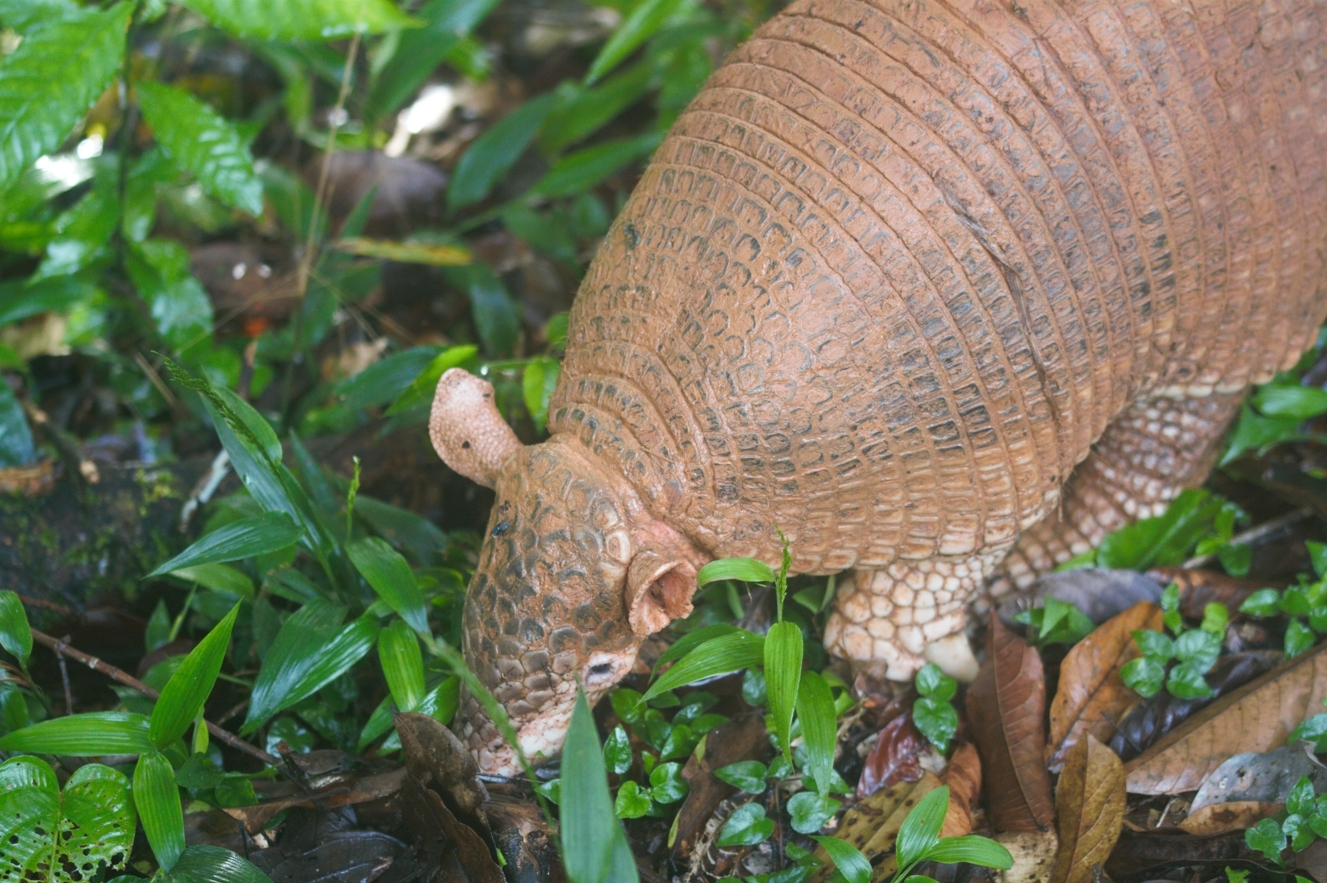
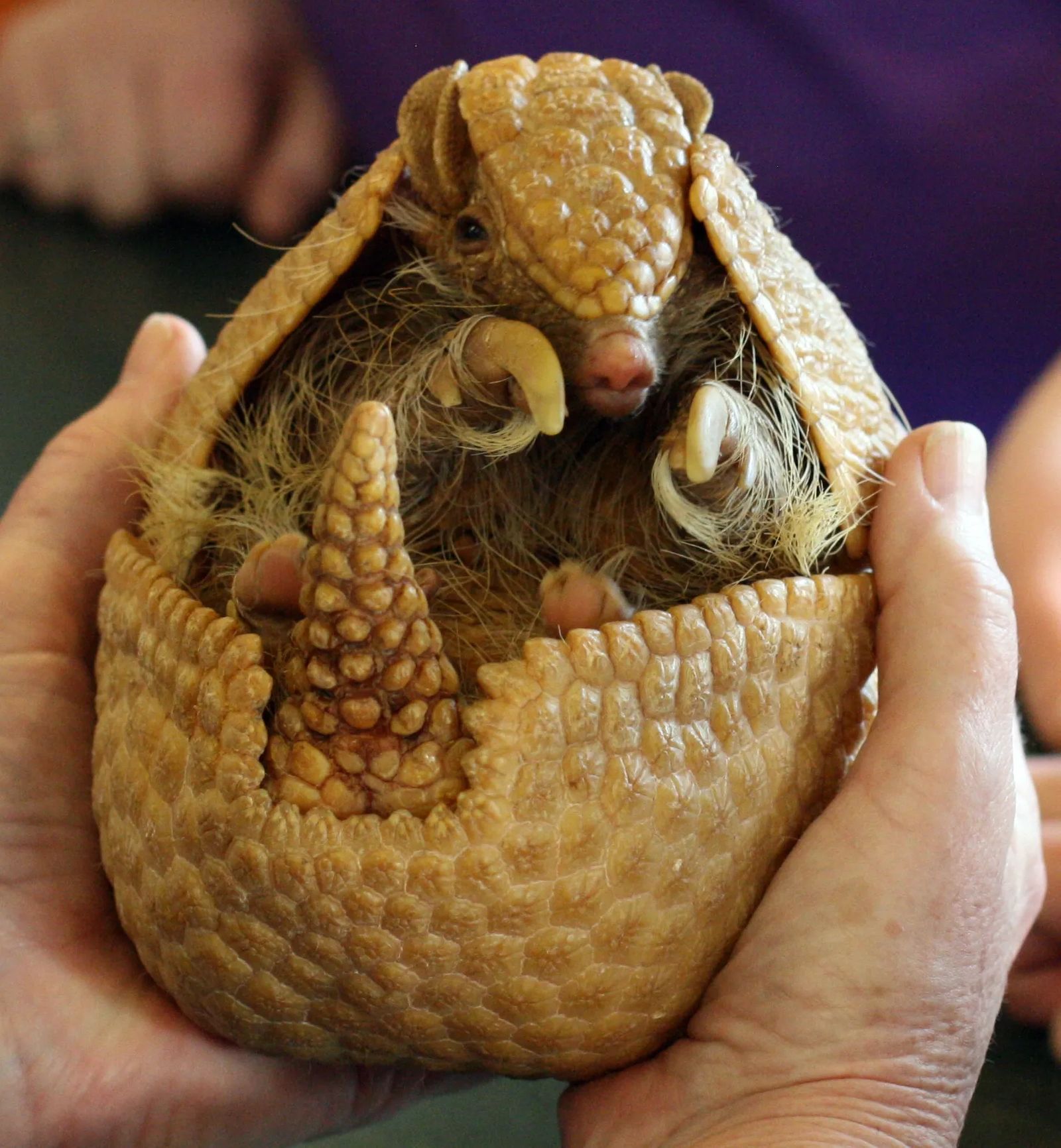
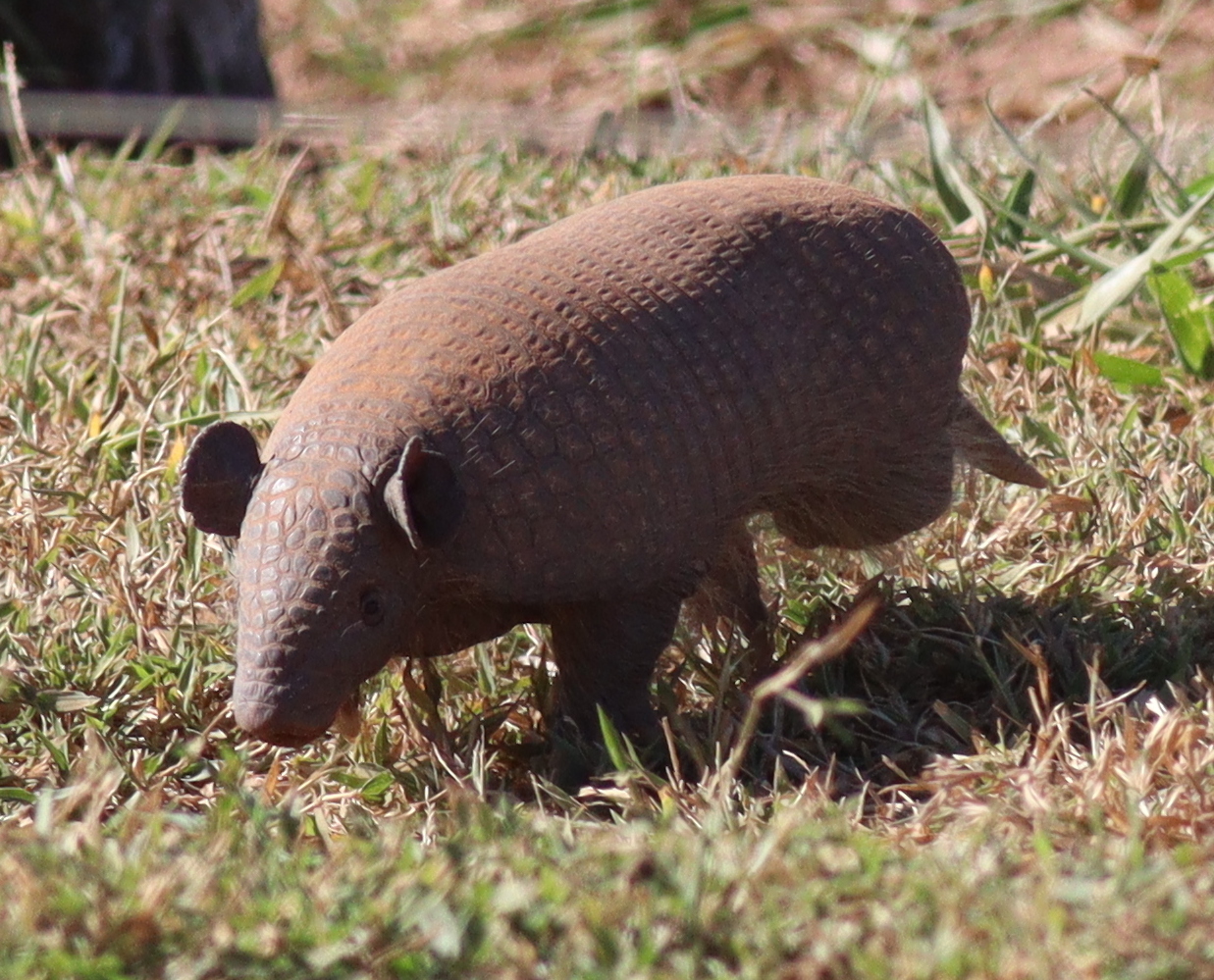
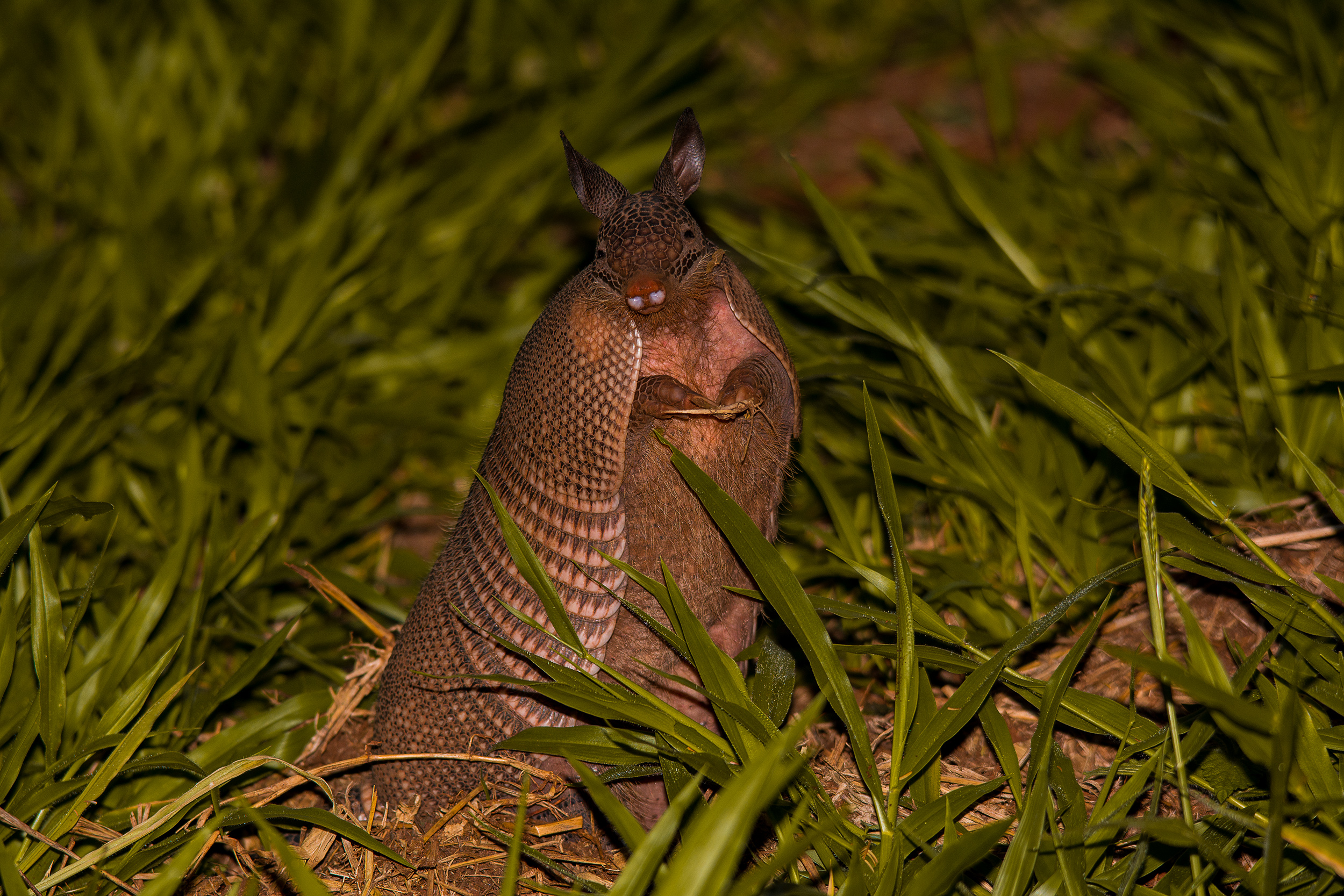
The nine-banded armadillo is easily identified by the bony plates covering its body. It is a solitary animal that spends much of its time digging for food or creating burrows.
Physical Description
It weighs between 3 and 6 kilograms. Its armor consists of a head shield, a shoulder shield, and a hip shield, with 7 to 11 (usually 9) movable bands in between. It has a long, pointed snout and large ears.
Habitat and Distribution in the Pantanal
It is found in a variety of habitats, from forests to open fields. In the Pantanal, it is common in the cordilheiras and near farm buildings.
Behavior
Mainly nocturnal and solitary. It is a skilled digger and creates complex burrow systems. When startled, it can jump straight up into the air.
Diet
Insectivorous, feeding on ants, termites, beetles, and larvae. It also eats small vertebrates, eggs, and some fruits.
Reproduction
Unique for its polyembryony, where a single fertilized egg always splits into four identical quadruplets. Gestation is about 120 days.
Conservation Status
Classified as "Least Concern" (LC) by the IUCN. It is very widespread and adaptable.
Fun Facts
It can "hold its breath" to walk underwater across small streams. It is a reservoir for leprosy (Hansen's disease) in some regions. It is a symbol of resilience in the Pantanal.