
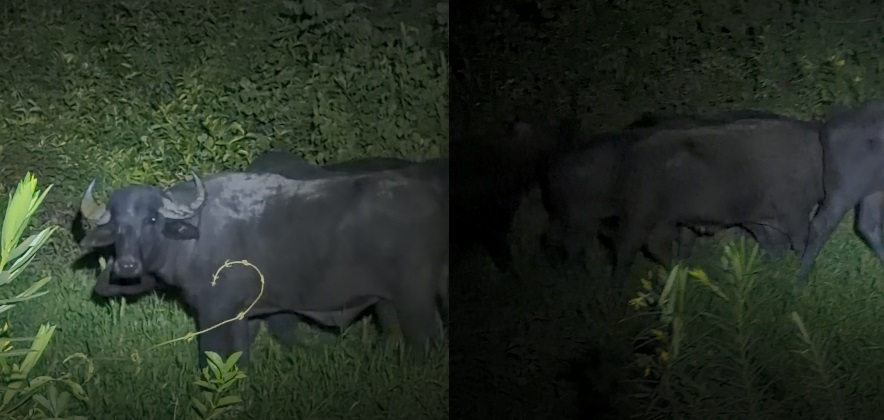
The experience of a night safari in the Pantanal can reveal surprising scenes of wildlife — and one of the most impactful involves the presence of buffaloes, large animals whose aggressiveness draws the attention of even experienced observers.
Although they are now part of the Pantanal landscape, buffaloes are not native to Brazil. They are an exotic species introduced to the country between the 1980s and 1990s, initially for economic purposes, especially for meat and milk production.
Buffaloes in the Pantanal: surprising adaptation
The introduction of these animals into the Pantanal occurred mainly due to their productive potential. However, what many did not foresee was how well they would adapt to the biome.
Buffaloes possess characteristics that favor their survival in flooded areas:
Excellent swimming ability
High resistance to humid and flood-prone environments
Ease of movement in muddy terrains
These abilities made the Pantanal an ideal habitat for the species, allowing for its rapid expansion in certain regions.
Aggressive behavior attracts attention
During night safaris, especially, it is possible to observe family groups of buffaloes in activity. At these times, the defensive and often aggressive behavior of these animals becomes evident.
Experts warn that:
Buffaloes can react unpredictably when they feel threatened
Females with calves tend to be even more protective
Careless approach can pose a real risk
Reports from tourists and guides highlight that the strength and imposing posture of buffaloes create situations of great tension, especially during close encounters.
Environmental impacts and challenges
The presence of an exotic species like the buffalo also raises environmental discussions. Although well adapted, they can:
Compete with native species for resources
Alter local vegetation
Impact the ecological balance of the Pantanal
On the other hand, their economic importance is still relevant for some communities in the region.
Tourism and safety on a night safari
The night safari in the Pantanal remains a unique experience, but it requires responsibility. Specialized guides are essential to ensure the safety of visitors, especially when dealing with large animals like buffaloes.
Recommendations include:
Maintaining a safe distance from the animals
Avoiding sudden movements or excessive noise
Always following the guide's instructions