A Plant of Gigantic Proportions
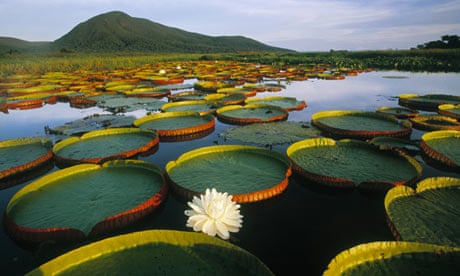
The giant water lily (Victoria amazonica) is one of the most spectacular aquatic plants on the planet, and the Pantanal provides ideal conditions for its development. Its circular leaves can reach up to 2.5 meters in diameter, supporting weights of up to 40 kg.
Botanical Characteristics
The giant water lily possesses extraordinary adaptations:
- Floating leaves with upturned edges that prevent submersion
- Underside with thorny ribs for protection against herbivores
- Flowers that change color: white on the first night, pink on the second
- Root system anchored at the bottom of calm lakes and rivers
- Pollination carried out by beetles attracted by the heat and aroma of the flowers
The Flower Cycle
The flowering process of the giant water lily is fascinating:
- First night: The flower opens white and releases an intense aroma
- Beetles are attracted and become trapped inside the flower
- Second night: The flower opens pink, releasing the beetles covered in pollen
- The beetles fly to another white flower, performing cross-pollination
“The giant water lily is a perfect example of coevolution between plant and pollinator. It is one of nature’s most elegant relationships,” explains botanist Dr. Fernanda Lima.
Where to Observe in the Pantanal
The best areas to observe giant water lilies in the Pantanal are:
- Baías (lagoons) along the Transpantaneira
- Cuiabá River in stretches of calm water
- Lagoons near Corumbá and Miranda
- Pantanal Mato-grossense National Park
Ecological Importance
The giant water lily plays a crucial role in the aquatic ecosystem, serving as a shelter for fish and invertebrates, a resting platform for birds, and a food source for various animals.