
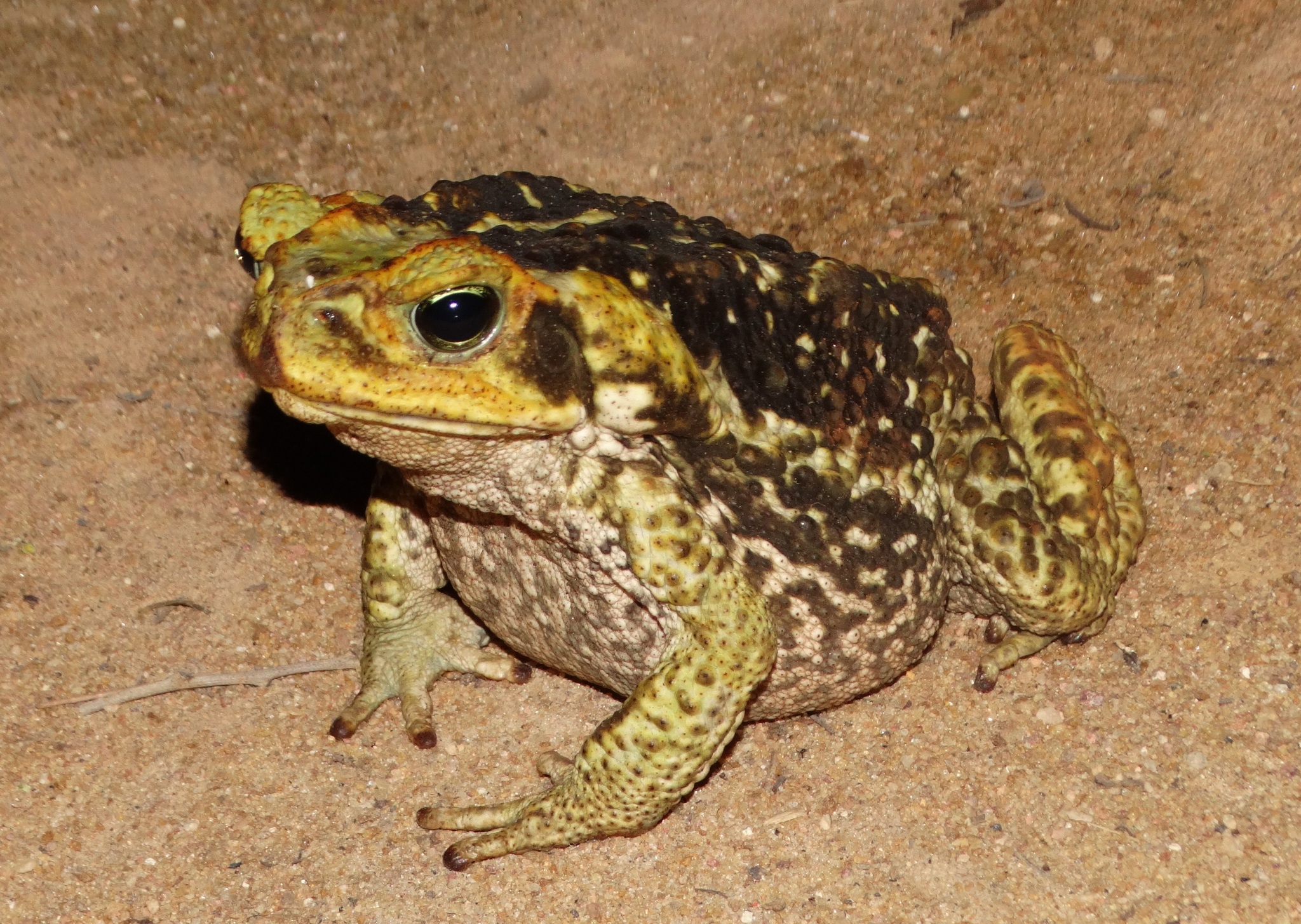
Rhinella schneideri (Cururu Toad)
Introduction
Rhinella schneideri, commonly known as the cururu toad or giant toad, is one of the largest and most emblematic amphibian species in South America. In the Pantanal, this anuran stands out due to its wide distribution and remarkable ability to adapt to diverse environments, ranging from preserved areas to peridomestic zones. Its presence is a key indicator of the region’s environmental health.
As a generalist predator, the cururu toad plays a vital ecological role in controlling populations of invertebrates and small vertebrates. Its robust biology and efficient defense mechanisms, such as toxin secretion through specialized glands, make it a resilient component of Pantanal biodiversity. The species is essential for the trophic balance of the wet ecosystems it inhabits.
Scientific Classification
| Category | Classification |
|---|---|
| Kingdom | Animalia |
| Phylum | Chordata |
| Class | Amphibia |
| Order | Anura |
| Family | Bufonidae |
| Genus | Rhinella |
| Species | Rhinella schneideri |
Description
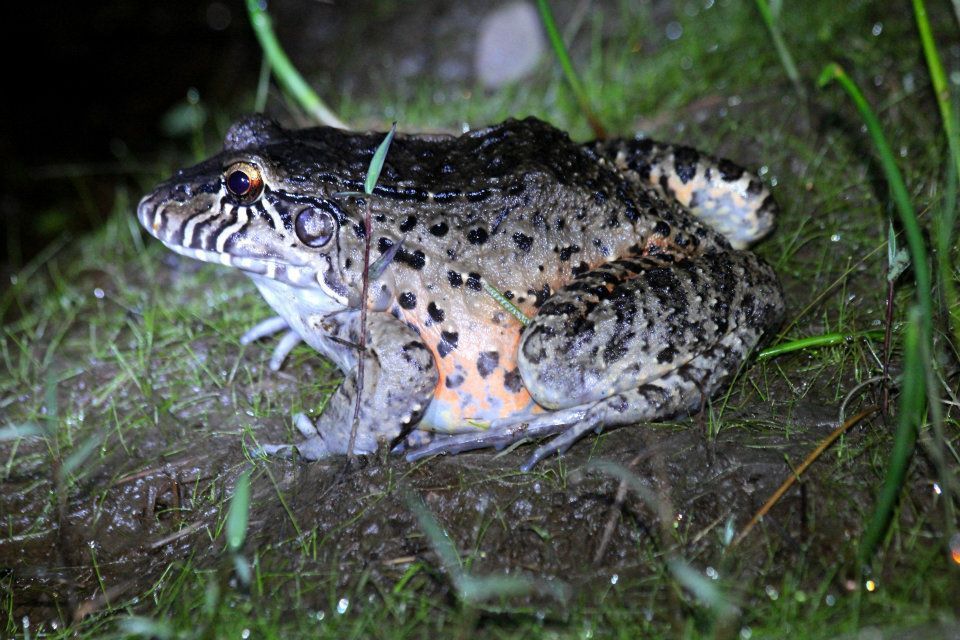
The cururu toad is characterized by its robust body and rough skin covered with tubercles. It is the largest anuran species in South America, with females reaching up to 25 cm in length and males about 18 cm. Adult weight can exceed 1 kg in large specimens. The dorsal coloration varies between light brown, gray, and brown tones, often with irregular dark spots that aid in camouflage.
A distinctive feature of the species is the presence of large parotoid glands located behind the eyes and paracnemis glands situated on the tibiae (hind legs). These glands store bufotoxins, a chemical defense against predators. Sexual dimorphism is not visually pronounced in coloration, but females are significantly larger than males.
Distribution and Habitat
The species has a broad geographic distribution, occurring in Brazil, Argentina, Paraguay, Uruguay, and Bolivia. In the Pantanal, it is found in virtually all subregions, inhabiting forest edges, floodable fields, and open areas. Its high environmental plasticity allows it to thrive in both natural habitats and areas altered by human activity, such as gardens and pastures.
Behavior
Rhinella schneideri exhibits predominantly nocturnal and crepuscular habits, periods during which it forages and reproduces. During the day, it typically shelters in moist locations, under logs, stones, or in soil burrows to avoid desiccation. It is a terrestrial animal but maintains a strong dependence on water bodies for the initial stages of its life cycle.
Unlike many other anurans, the cururu toad can vocalize almost year-round, although the intensity increases during the breeding season. Its call is deep and powerful, resembling the bellow of a bull, which earned it the popular nickname “giant toad.” It is not an aggressively territorial species, but males compete for strategic calling positions near water.
Diet / Nutrition
The diet of the cururu toad is extremely generalist and opportunistic. It feeds mainly on a wide variety of invertebrates, including ants, beetles, spiders, scorpions, and termites. Due to its large size, it is also capable of preying on small vertebrates, such as other amphibians, small reptiles, rodents, and even small birds. [1] [2]
Its hunting strategy is based on the “sit and wait” method, where the toad remains motionless until a prey item moves within reach of its long, sticky tongue. In human-altered environments, it is common to observe cururu toads gathered under streetlights or porch lights to capture insects attracted by the light. This behavioral flexibility is one of the reasons for its success in colonizing diverse habitats. [3] [4]
Reproduction
Reproduction in Rhinella schneideri is closely linked to the availability of water bodies, occurring mainly during the rainy season in the Pantanal. Males gather at the edges of lagoons, temporary pools, and slow-moving rivers to vocalize and attract females. The breeding season can be prolonged, with several spawning events throughout the year if conditions are favorable. [1] [5]
Following courtship, the female lays thousands of eggs (up to 50,000 in a single clutch) in long gelatinous strings attached to aquatic vegetation or deposited on the bottom. The tadpoles are small, black, and typically form large schools in shallow waters. Development is relatively fast, and the newly metamorphosed toadlets are tiny compared to the adults, facing high predation rates before reaching maturity. [2] [6]
Ecological Importance
In the Pantanal ecosystem, the cururu toad acts as a fundamental biological controller. By consuming large quantities of insects and other invertebrates, it helps maintain the balance of these populations, including species that are agricultural pests or disease vectors. Its presence in the food chain is also vital, as it serves as prey for various predators, such as snakes (e.g., the water cobra Hydrodynastes gigas), birds of prey, and some mammals. [1] [3]
Furthermore, the cururu toad is considered a bioindicator of environmental quality. Although it is more resistant to habitat degradation than other amphibians, significant changes in its populations can signal imbalances in the ecosystem, such as water pollution or excessive use of pesticides. Its role in nutrient cycling, both as a predator and as prey, reinforces its importance for the integrity of the Pantanal biome. [4] [7]
Conservation Status
Currently, Rhinella schneideri is classified by the IUCN Red List as a species of Least Concern (LC). This status is due to its wide geographic distribution, large population size, and high tolerance for habitat modification. In the Pantanal, it remains a common and abundant species, with no immediate threats to its global survival. [2] [8]
However, localized threats exist, such as the loss of breeding sites due to wetland drainage and the impact of roadkill on highways crossing the Pantanal. Pollution of water bodies by agrochemicals can also affect the development of tadpoles. Conservation of the species is indirectly linked to the preservation of the Pantanal’s hydrological regime and the maintenance of diverse habitats that allow for its foraging and reproduction. [1] [9]
Curiosities
- The name “cururu” comes from the Tupi language and is an onomatopoeia of the sound produced by the toad during vocalization.
- The toxins produced by the parotoid glands (bufotoxins) are only released when the glands are pressed, acting as a defense mechanism against predators that try to bite the toad.
- Despite popular myths, the cururu toad does not “spit” poison; the contact with the toxin must occur through mucous membranes or ingestion to be effective.
- In some cultures, the cururu toad is a symbol of fertility and protection, while in others, it is unfairly associated with negative omens.
- It is one of the few amphibians that can thrive in urban environments, often becoming a familiar presence in backyards and gardens.
References
[1] PRADO, C. P. A.; FERREIRA, V. L. (2005). Diet and reproductive biology of Rhinella schneideri (Anura: Bufonidae) in the Pantanal, Brazil. Journal of Herpetology. [2] IUCN RED LIST. (2024). Rhinella schneideri. Available at: https://www.iucnredlist.org/species/54755/11394553 [3] AMPHIBIAWEB. (2024). Rhinella schneideri. Available at: https://amphibiaweb.org/species/359 [4] INATURALIST. (2024). Rococo Toad (Rhinella schneideri). Available at: https://www.inaturalist.org/taxa/65853-Rhinella-schneideri [5] KÖHLER, J. (2000). Amphibian community structure and diversity with special reference to the Pantanal. Bonner Zoologische Monographien. [6] HADDAD, C. F. B. et al. (2013). Guia dos Anfíbios da Mata Atlântica: Diversidade e Biologia. Anolis Books. [7] STRÜSSMANN, C. (2000). Herpetofauna do Pantanal. In: Workshop Ações Prioritárias para a Conservação da Biodiversidade do Pantanal e Cerrado. [8] MMA. (2022). Livro Vermelho da Fauna Brasileira Ameaçada de Extinção. [9] SIGNORELLI, L. et al. (2018). Anuran community of the Pantanal: species richness and composition.