
Introduction
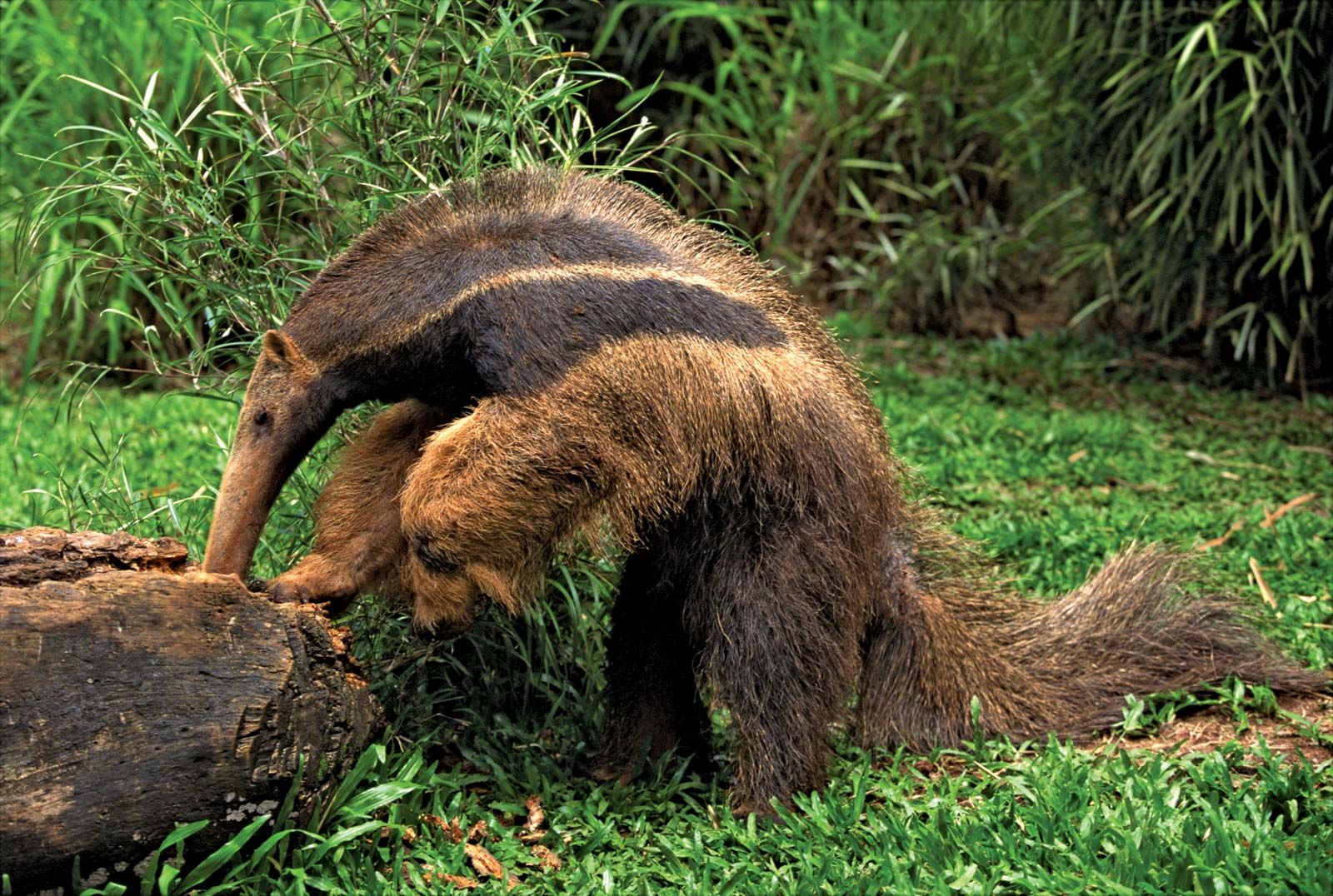
The southern tamandua (Tamandua tetradactyla), also known in Brazil as the tamanduá-mirim or tamanduá-de-colete, is one of the most charismatic and ecologically important mammals of the Pantanal. A member of the order Pilosa, this medium-sized anteater is a master of adaptation, capable of moving with equal skill on the ground and in the treetops. Its presence in the Pantanal is a vital link in the food chain, acting as a natural controller of ant and termite populations, which are abundant in the biome's diverse landscapes.
Scientific Classification
| Kingdom | Animalia |
| Phylum | Chordata |
| Class | Mammalia |
| Order | Pilosa |
| Family | Myrmecophagidae |
| Genus | Tamandua |
| Species | Tamandua tetradactyla |
| Common Name | Southern Tamandua, Lesser Anteater |
Unlike its larger relative, the giant anteater, the southern tamandua possesses a prehensile tail that functions as a fifth limb, allowing it to explore the arboreal strata of the Pantanal forests in search of food and shelter. This semi-arboreal habit makes it a fascinating species for wildlife observation, although its discretion and predominantly nocturnal activity can make it a challenge to spot. In the Pantanal, the southern tamandua finds a mosaic of habitats that perfectly meet its needs, from dense gallery forests to open Cerrado areas.
Physical Description
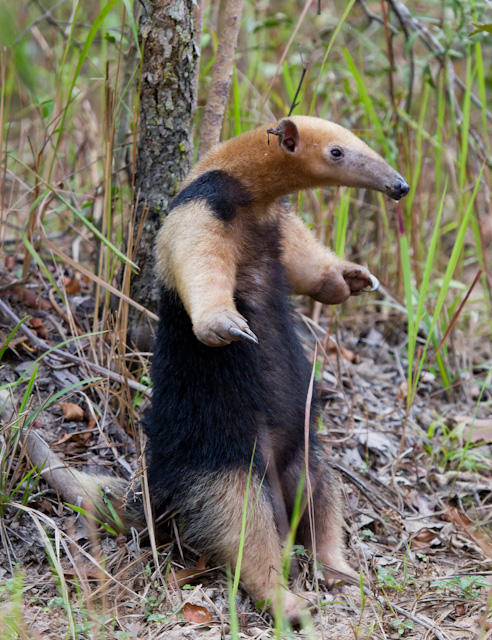
The southern tamandua is a medium-sized mammal, with a body length ranging from 47 to 77 centimeters and a tail of 40 to 67 centimeters. Its weight varies between 3.5 and 8.5 kg. Its most striking feature is its dense, bristly fur, which in many individuals presents a characteristic "vest" pattern—a dark band of fur that starts at the neck, passes over the shoulders, and extends along the sides of the body, contrasting with the lighter, yellowish or cream-colored fur on the rest of the body.
Its head is elongated with a tubular snout, housing a long, thin, and sticky tongue that can extend up to 40 centimeters to capture insects. It has no teeth, an adaptation to its specialized diet. The front paws are extremely strong and equipped with four large claws (hence the name tetradactyla), with the third claw being particularly developed and used to break through termite mounds and defend against predators. Its tail is prehensile and hairless on the underside, providing a secure grip when climbing trees.
Habitat and Distribution in the Pantanal
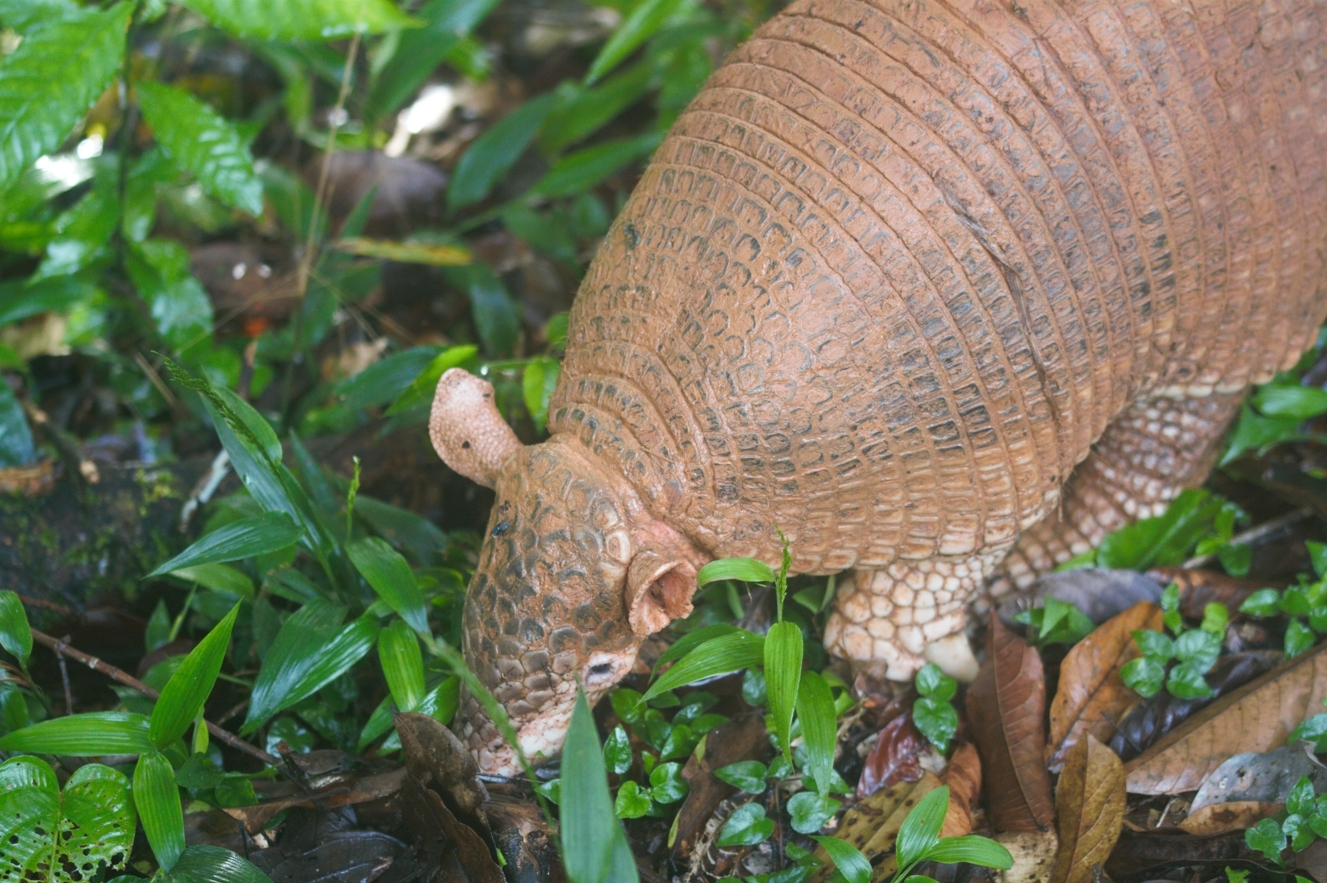
In the Pantanal, the southern tamandua is found in a variety of environments, showing a preference for areas with arboreal vegetation. It is common in gallery forests (which follow the rivers), "capões" (clumps of trees in the middle of the plain), and "cordilheiras" (elevated ridges). These habitats provide both food (arboreal termite and ant nests) and safe places to rest during the day, such as hollow trees or abandoned burrows of other animals, like the giant armadillo.
The species is widely distributed throughout the biome, from the Northern Pantanal in Mato Grosso to the Southern Pantanal in Mato Grosso do Sul. Geographically, Tamandua tetradactyla occurs across much of South America, from Venezuela and the Guianas to northern Argentina and Uruguay. Its ability to use different vertical strata of the environment allows it to coexist with other anteaters, such as the giant anteater, which is strictly terrestrial, minimizing competition for resources.
Behavior
The southern tamandua is a primarily solitary animal with crepuscular and nocturnal habits, although it can be seen active during the day, especially in more preserved areas or during the cooler months. It is an excellent climber, using its prehensile tail and powerful claws to move with agility among the branches. On the ground, its gait is somewhat slow and clumsy, as it walks on the sides of its front paws to protect its long claws.
When threatened, the southern tamandua adopts a characteristic defensive posture: it stands on its hind legs, leans against a tree or rock, and opens its front paws, ready to strike with its powerful claws. This posture, which resembles a "hug," is actually a formidable defense that can discourage even large predators. Furthermore, when cornered, it can release a strong-smelling secretion from its anal glands, which has earned it the nickname "stinker of the forest" in some regions.
Diet
The diet of the southern tamandua is strictly insectivorous, specialized in ants and termites. It uses its keen sense of smell to locate nests, both on the ground and in trees. Once a nest is found, it uses its front claws to make a small opening and inserts its long, sticky tongue to capture the insects. It is a highly efficient feeder, but it never destroys a colony completely, moving to another nest after a few minutes, which allows the insect populations to recover.
In the Pantanal, it also consumes bee larvae and honey when it finds hives in trees. This diet, although specialized, is abundant in the biome, but it requires the animal to spend a large part of its active time foraging to meet its energy needs. Its role in controlling social insects is fundamental to the health of the Pantanal forests, preventing certain species from becoming dominant and affecting the local flora.
Reproduction
The reproduction of the southern tamandua in the Pantanal can occur at different times of the year, although births are more frequent during the spring and summer. After a gestation period of approximately 130 to 150 days, the female gives birth to a single pup. The pup is born quite developed and, shortly after birth, climbs onto its mother's back, where it remains for several months.
This transport strategy not only protects the young from terrestrial predators but also allows it to learn the forest paths and feeding techniques while the mother moves. The pup is nursed for about six months but begins to taste insects long before complete weaning. The final separation between mother and pup usually occurs when the young reaches about one year of age, at which point it already has sufficient size and skills to establish its own territory. Sexual maturity is reached at around two years. In the dynamic environment of the Pantanal, the species' reproductive success depends on the maintenance of dry forest areas that serve as a safe nursery during seasonal floods.
Conservation Status
Currently, the southern tamandua is classified as "Least Concern" (LC) by both the IUCN Red List and ICMBio in Brazil. This classification is due to its wide geographical distribution and its ability to tolerate certain levels of habitat modification. However, in the specific context of the Pantanal, the species faces growing threats that require constant monitoring.
Large-scale forest fires, which have become more frequent and severe in the Pantanal in recent years, represent a mortal danger to the southern tamandua. Due to its relatively slow locomotion on the ground and the habit of seeking refuge in trees (which can become fire traps), mortality during large burns is high. Furthermore, roadkill on highways that cut through the biome, such as BR-262 and the Transpantaneira, is a significant cause of loss of adult individuals.
Other threats include predation by domestic dogs in areas near farms and habitat loss due to the conversion of native forests into exotic pastures. The conservation of the southern tamandua in the Pantanal is directly linked to the protection of ecological corridors and the preservation of "engineer" species, such as the giant armadillo, whose burrows are vital for the tamandua's survival. Responsible ecotourism initiatives have helped value the species, encouraging landowners to maintain native vegetation reserves.
Curiosities
The southern tamandua is the protagonist of various legends and beliefs in Pantanal culture. Due to its strong smell, many local residents believe it has medicinal or mystical properties, although there is no scientific evidence for such uses. In fact, the odor is an essential defense and social communication tool for the species in a dense environment like gallery forests.
A fascinating biological curiosity is the southern tamandua's body temperature, which is one of the lowest among terrestrial mammals, ranging around 33°C to 35°C. This reflects a slow basal metabolism, adapted to a low-energy diet (insects). To conserve energy, the animal spends much of the day resting, sleeping up to 15 hours a day in its safe refuges.
In Pantanal ecotourism, the southern tamandua is affectionately nicknamed the "little kung fu master" by guides and photographers, due to its defensive posture with open arms. Finding a tamandua "hugging" the air is one of the most coveted moments in photographic safaris. Furthermore, its ability to use its tail as a perfect hook to hang while exploring suspended termite mounds demonstrates an evolutionary engineering that enchants scientists and visitors from all over the world.
References
[1] IUCN. (2014). *Tamandua tetradactyla*. The IUCN Red List of Threatened Species. Available at: https://www.iucnredlist.org/species/21349/47442950
[2] ICMBIO. (2018). *Livro Vermelho da Fauna Brasileira Ameaçada de Extinção*. ICMBio. Available at: https://www.icmbio.gov.br
[3] ALHO, C. J. R. (2008). *Biodiversidade do Pantanal*. Editora UNIDERP.
[4] EISENBERG, J. F.; REDFORD, K. H. (1999). *Mammals of the Neotropics, Volume 3: Ecuador, Bolivia, Brazil*. University of Chicago Press.
[5] EMBRAPA PANTANAL. (2020). *Mamíferos do Pantanal*. Embrapa Pantanal. Available at: https://www.embrapa.br/pantanal/publicacoes
[6] MONTANHA, F. R.; ALHO, C. J. R. (2011). Ecologia e conservação de mamíferos no Pantanal. *Revista Brasileira de Zoologia*, v. 28, n. 3, p. 301-312.
[7] SOS PANTANAL. (2023). *Tamanduá-mirim: um aliado contra insetos*. SOS Pantanal. Available at: https://sospantanal.org.br/tamandua-mirim-um-aliado-contra-insetos/