
The Government of Mato Grosso do Sul has intensified its efforts to combat arboviruses in indigenous territories, particularly in the Dourados and Itaporã regions. This mobilization involves a joint effort between the State Department of Health (SES), the Ministry of Health, and other institutions to enhance control of the mosquito that transmits these diseases.
The strategy was discussed at a meeting attended by representatives from the Ministry of Health, the Special Secretariat for Indigenous Health (Sesai), the Special Indigenous Sanitary District (DSEI), the National SUS Force, the UFGD University Hospital, and municipal secretariats, as well as indigenous leaders.
Rising Cases Concern Authorities
According to data from the disease notification system, the year 2026 shows a high incidence of chikungunya cases, surpassing the same period in 2025. In the Dourados region, there is active transmission of the disease within the villages, which has put pressure on local health services.
The region serves approximately 21,355 indigenous people, distributed across four basic health units and six care teams. With the increased demand, the local network faces greater pressure to attend to patients.
In recent days, 150 positive cases have been confirmed in the indigenous reserve, with others still under analysis. The situation has already resulted in three deaths, reinforcing the need for a rapid and coordinated response.
Joint Effort Mobilizes Around 100 Professionals
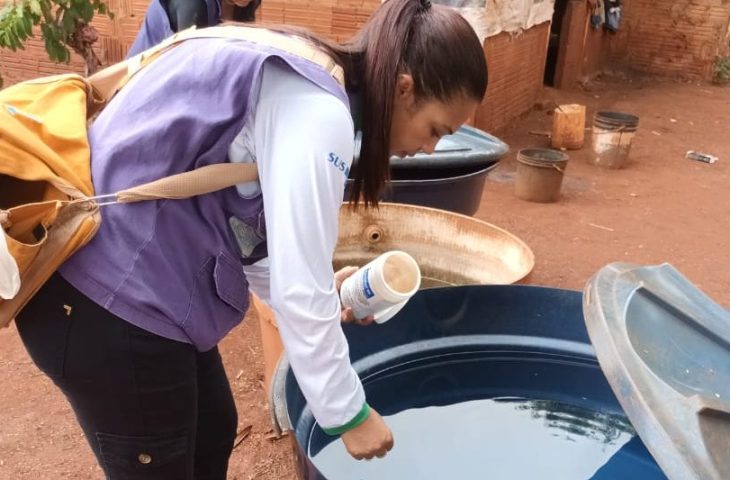
To curb the advance of arboviruses, a joint effort was carried out between March 9 and 11 in the Jaguapiru and Bororó villages. The action mobilized approximately 100 professionals and aimed to eliminate mosquito breeding sites and expand prevention measures.
During three days of work:
- 2,355 properties were inspected
- 589 Aedes aegypti mosquito breeding sites were found
- about 90% of the breeding sites were in tires, water tanks, and trash
In addition to inspections, the teams applied larvicides and insecticides, installed monitoring traps, and conducted public awareness campaigns.
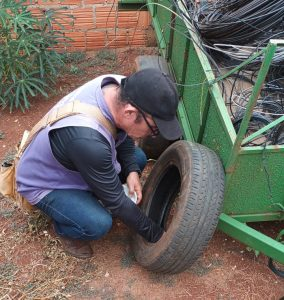
Integrated action to contain arboviruses
According to the State Department of Health, combating arboviruses requires joint action between medical assistance and vector control. The priority is to expand patient care and eliminate breeding sites of the mosquito that transmits diseases such as dengue, chikungunya, and Zika.
The mobilization will continue in indigenous territories with the support of different agencies and institutions, seeking to reduce disease transmission and strengthen surveillance and prevention actions in the communities.
Source: SES Communication / With information from Agência de Notícias MS
Photos and videos: Disclosure