Introduction
The Southern naked-tailed armadillo (Cabassous unicinctus), also known as the small naked-tailed armadillo, is one of the most enigmatic and least sighted species of fauna in the Pantanal. Belonging to the order Cingulata and the family Chlamyphoridae, this mammal stands out for its morphology adapted to subterranean life and its extremely discreet behavior. In the Pantanal ecosystem, the subspecies Cabassous unicinctus squamicaudis plays a vital ecological role as an ecosystem engineer, although its presence is often underestimated due to its fossorial habits.
Scientific Classification
| Kingdom | Animalia |
| Phylum | Chordata |
| Class | Mammalia |
| Order | Cingulata |
| Family | Dasypodidae |
| Genus | Cabassous |
| Species | Cabassous unicinctus |
| Common Name | Southern Naked-tailed Armadillo |
Unlike other more common armadillos, such as the capybara or the jaguar, which are easily spotted on photographic safaris along the Transpantaneira, the Southern naked-tailed armadillo is a biological rarity for observers. Its importance for the region's biodiversity lies in its ability to aerate the soil and control social insect populations, contributing to the balance of native pastures and cordilheira areas bordering the Paraguay River.
This article explores the biological and ecological nuances of this species, detailing everything from its unique physical description to the conservation challenges it faces in the current scenario of land-use changes in the Pantanal. Understanding Cabassous unicinctus is fundamental for preserving the functional integrity of this biome, which harbors one of the greatest concentrations of wildlife on the planet.
Physical Description
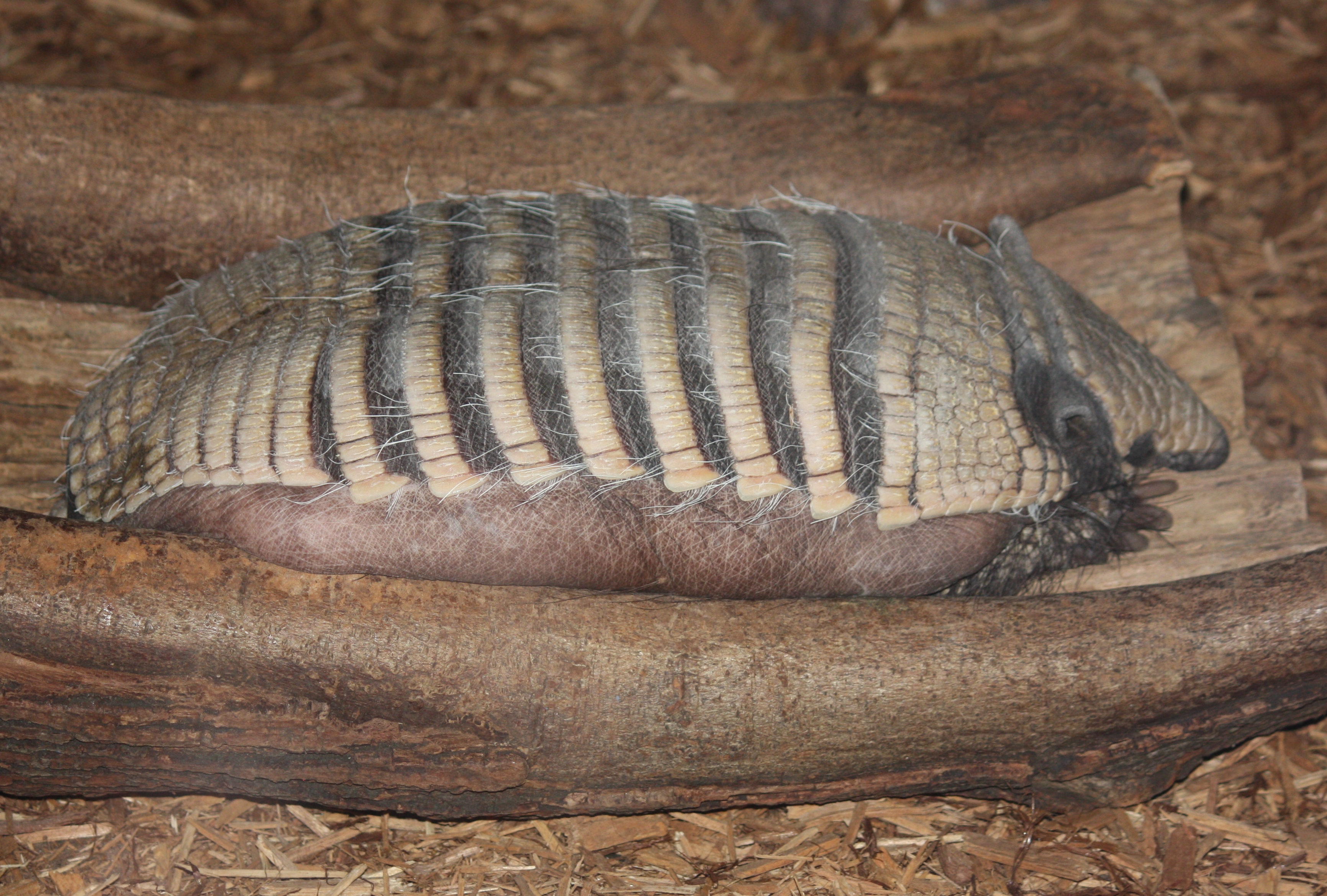
The most distinctive characteristic of Cabassous unicinctus, which gives it its common name, is its tail, devoid of the typical bony plates of other members of the Dasypodidae family. Instead of a rigid armor, the tail is covered by leathery skin and small, sparse scales, giving it a "soft" and flexible appearance. This adaptation facilitates movement within narrow tunnels, where a rigid tail could be an impediment.
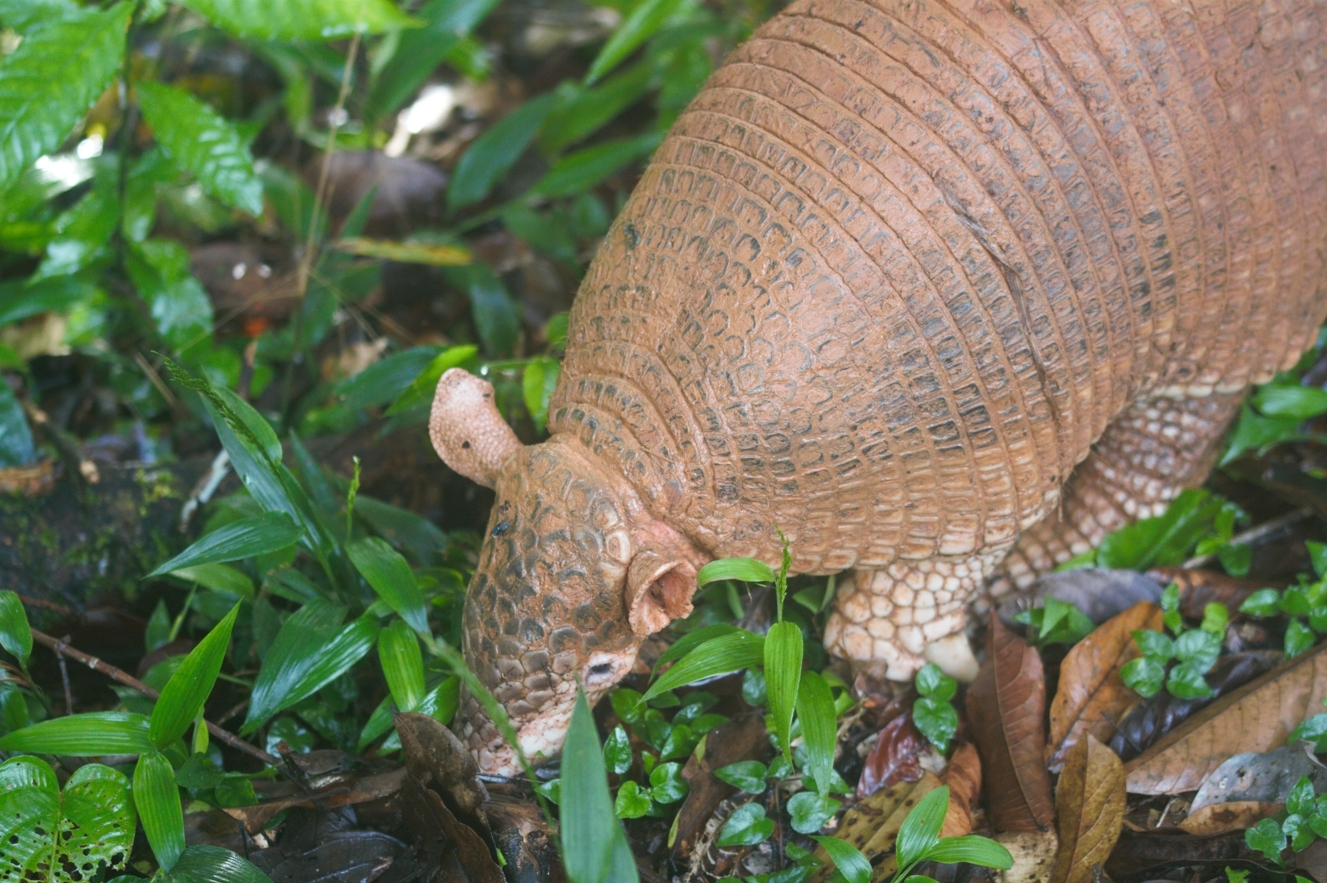
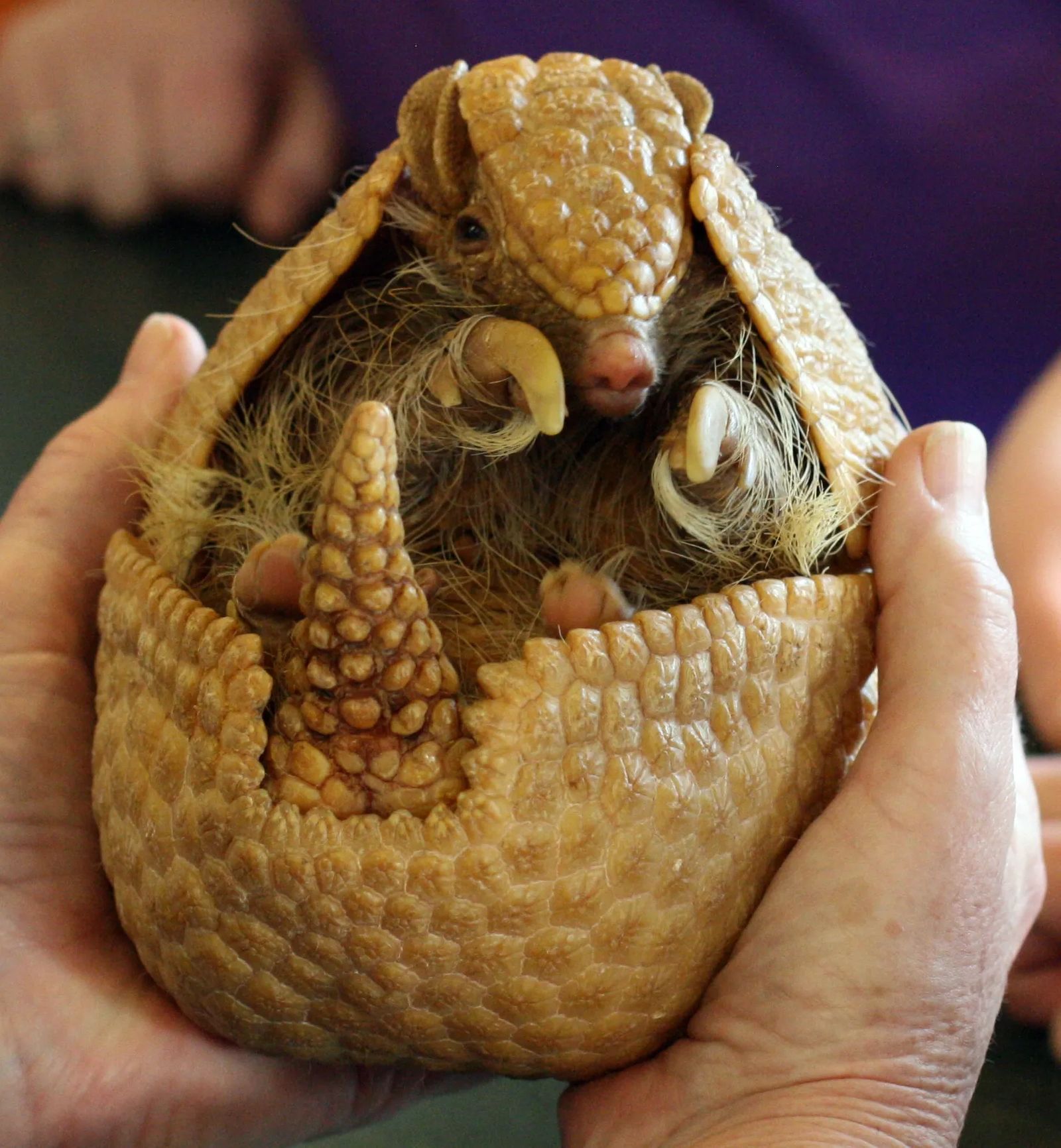
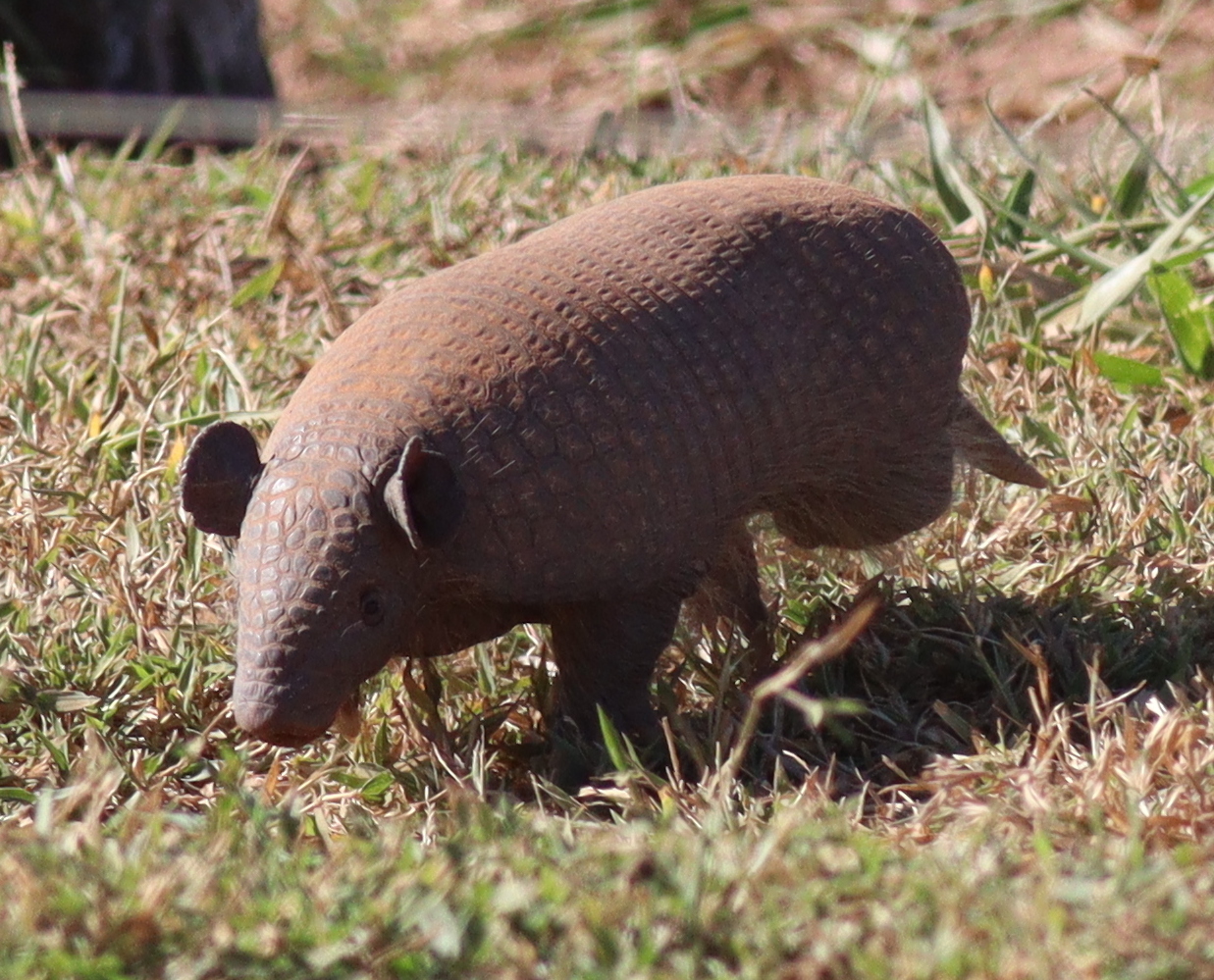
The body is protected by a dark grayish-brown carapace, composed of 10 to 13 movable bands that allow for some lateral flexibility. The weight of an adult usually varies between 2 and 4 kg, with a total length that can reach 45 centimeters, including the tail. Its forelegs are equipped with extremely powerful claws, with the third claw being significantly larger and sickle-shaped, a specialized tool for breaking up compact soils and hardened termite mounds.
The head is short and wide, with medium-sized ears and small eyes, typical of animals that rely more on smell and hearing than on sight. The ventral coloration is lighter than the dorsal, ranging from beige to pale gray. Compared to its close relative, the giant armadillo (Priodontes maximus), the Southern naked-tailed armadillo is considerably smaller but shares the same efficiency in excavation and dietary specialization.
Habitat and Distribution in the Pantanal
In the Pantanal, the Southern naked-tailed armadillo shows a preference for well-drained soil areas, avoiding permanently flooded regions. It is frequently found in "cordilheiras" (natural elevated terrains covered by woody vegetation) and at the edges of forest patches. Its distribution covers both the Northern and Southern Pantanal, being recorded in sub-regions such as Nhecolândia and Miranda, where the alternation between fields and forests offers varied resources.
Although widely distributed throughout South America — occurring from Venezuela to Paraguay and northern Argentina — its population density in the Pantanal is considered low. The species uses the transition areas between the Cerrado and the Pantanal, taking advantage of the abundance of social insects in these zones. The presence of sandy and clayey soils facilitates the construction of its complex networks of tunnels, which are essential for its survival during flood periods, when it seeks refuge in higher ground.
Habitat fragmentation and the conversion of native areas into exotic pastures can impact its local distribution. However, studies indicate that Cabassous unicinctus has some resilience, being able to use cultivated pasture areas, as long as there is food availability and suitable soil for excavation. Proximity to watercourses, such as the Paraguay River, is also a relevant factor for maintaining soil moisture in its habitat.
Behavior
The behavior of the Southern naked-tailed armadillo is defined by its almost entirely subterranean nature. Telemetry studies conducted in the central Pantanal revealed that these animals spend about 99% of their time underground. Unlike many other armadillos that have strictly nocturnal habits, Cabassous unicinctus in the Pantanal exhibits a predominantly diurnal activity pattern, emerging from its burrows usually during the warmer hours of the afternoon.
When on the surface, their activity is frantic and brief. They spend, on average, only 6 to 7 minutes above ground, time used primarily to move between different foraging areas or to find new excavation sites. During these short periods, they can cover considerable distances before diving back underground. They are solitary and territorial animals; males have larger home ranges (about 2 km²) that overlap with the territories of several females (about 0.6 km²), but there is rarely overlap between individuals of the same sex.
A notable behavioral characteristic is its sheltering strategy. The Southern naked-tailed armadillo rarely reuses the same burrow for sleeping on consecutive nights. It is a nomadic excavator, creating new burrows almost daily. These burrows are often excavated directly into termite mounds or ant nests, serving simultaneously as a refuge and a food source. When feeling threatened on the surface, it uses its claws to quickly bury itself, disappearing underground in a matter of seconds.
Diet
Cabassous unicinctus is a strict myrmecophage, meaning its diet consists almost exclusively of ants and termites. In the Pantanal, where the biomass of social insects is immense, this armadillo plays a crucial role in the biological control of these populations. It uses its keen sense of smell to locate subterranean colonies and, once detected, employs its front claws to break through the defensive structures of the nests.
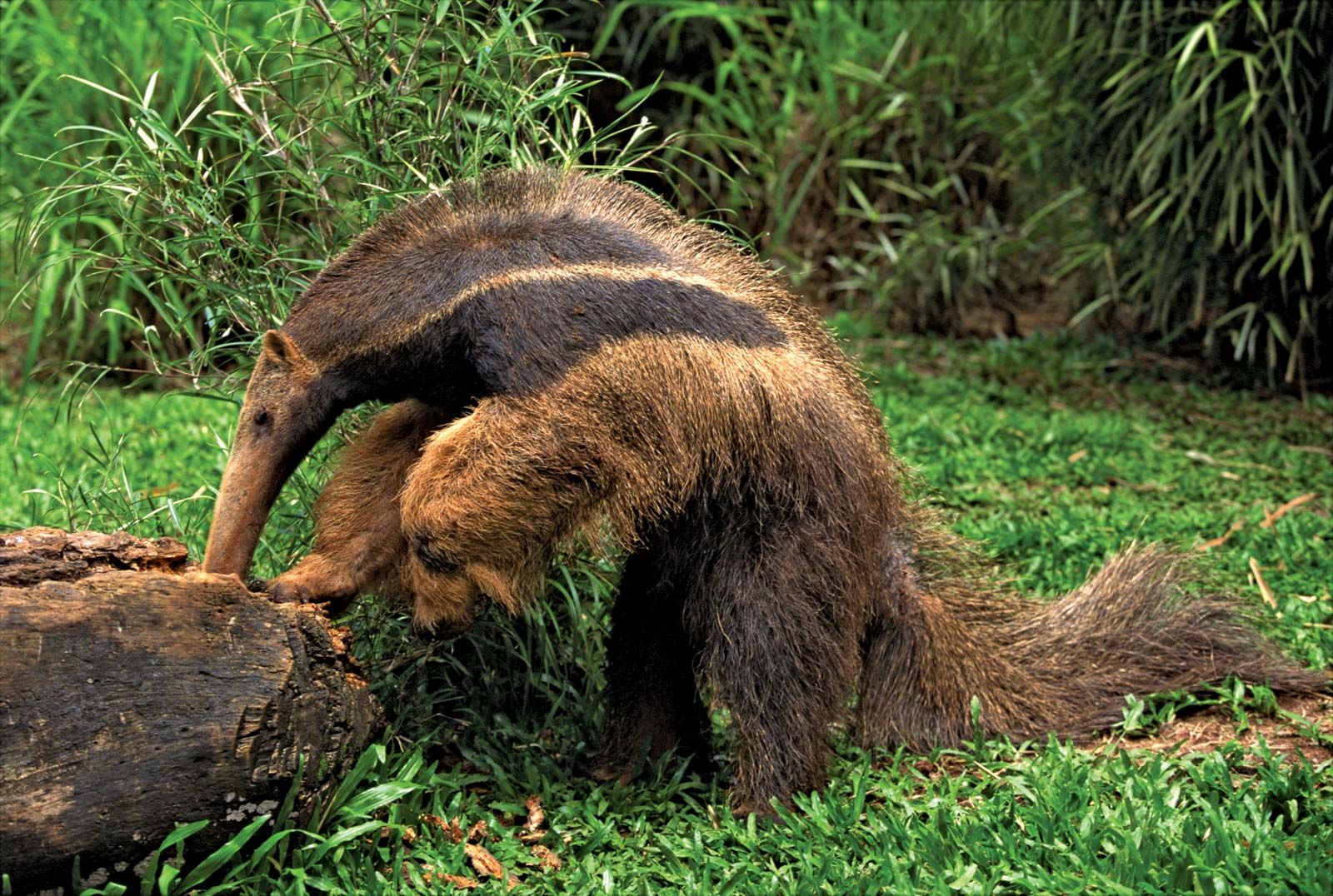
Unlike the giant anteater, which uses a long, sticky tongue on the surface, the Southern naked-tailed armadillo forages by digging convoluted galleries directly into or below insect nests. It consumes not only adults but also larvae and eggs, which are rich sources of protein and fat. This highly specialized diet requires the animal to have an efficient metabolism and a great capacity for excavation, as it needs to process large volumes of earth to obtain the necessary energy.
Ecologically, its feeding promotes nutrient cycling and soil aeration. By destroying old termite mounds and creating new subterranean channels, it facilitates water infiltration and the renewal of undergrowth vegetation. In the Pantanal, this activity is particularly important in cordilheira areas, where soil structure directly influences the composition of local flora. Its diet makes it vulnerable to the intensive use of agrochemicals in adjacent agricultural areas, which can drastically reduce the availability of its natural prey.
Reproduction
The reproductive biology of the Southern naked-tailed armadillo is characterized by a low birth rate and significant parental investment. Gestation lasts approximately four months, culminating in the birth of a single offspring per litter. This reproductive strategy (producing few offspring with a high survival rate) is common among large xenarthrans but makes the species more vulnerable to population pressures, such as hunting or habitat loss.
Pups are born with a still soft carapace, which gradually hardens over time. Parental care is performed exclusively by the female and lasts about four months, during which the pup remains protected within the subterranean burrows. During the first months, the young is entirely dependent on mother's milk and the mother's protection against predators such as the maned wolf or ocelots, which may try to excavate the burrows.
Due to its subterranean lifestyle, observations of mating or females with pups in the wild are extremely rare. It is believed that reproduction can occur throughout the year in the Pantanal, without a strictly defined reproductive season, although the flood pulse may influence the availability of dry places for raising the young. Low population density and long intervals between births mean that the recovery of local populations after catastrophic events, such as large fires, can be a slow process.
Conservation Status
Currently, Cabassous unicinctus is classified by the International Union for Conservation of Nature (IUCN) as "Least Concern" (LC). In Brazil, the Chico Mendes Institute for Biodiversity Conservation (ICMBio) follows the same classification. However, experts warn that this category may mask local population declines, especially due to the lack of robust data on the species (often considered "Data Deficient" in regional assessments).
The main threats to the Southern naked-tailed armadillo in the Pantanal include the replacement of native vegetation by monocultures and exotic pastures, which alter soil structure and insect availability. The use of pesticides is a growing concern, as it directly affects its food base. Furthermore, roadkill on highways that cross the biome, although less frequent than for larger species, represents a constant threat to individuals attempting to cross fragmented areas.
Large-scale forest fires, which have ravaged the Pantanal in recent years, pose a critical risk. Although its subterranean nature offers some protection against immediate heat, the destruction of the superficial layer of organic matter and the mass death of ant and termite colonies can lead to starvation of survivors. The conservation of the species depends on maintaining ecological corridors and preserving forest edge areas and cordilheiras, essential for its life cycle.
Curiosities
One of the most fascinating curiosities about the Southern naked-tailed armadillo is its incredible digging speed. When it feels threatened, it does not try to run; instead, it "drills" into the ground with rotary body movements, disappearing in a few seconds, as if being sucked into the earth. This ability is so efficient that it earned the species the nickname "drill armadillo" in some regions of rural Brazil.
Another interesting fact is its relationship with ecotourism. Although not a "flagship" species like the giant otter, spotting a Southern naked-tailed armadillo is considered a trophy for experienced nature guides and wildlife observers. Its rarity and the peculiar behavior of emerging only in the heat of the afternoon challenge the common logic that the best sightings occur only at dawn or dusk.
In local Pantanal culture, the Southern naked-tailed armadillo is surrounded by myths, often confused with other armadillos or considered an animal from "another world" due to its strange appearance and the fact that it is almost never seen. Scientifically, it continues to be a challenge: its secret life beneath the Pantanal soil still holds many mysteries about its social communication and longevity, proving that, even in such a studied biome, nature still holds deep secrets beneath our feet.
References
[1] IUCN. (2014). *Cabassous unicinctus*. The IUCN Red List of Threatened Species. Available at: https://www.iucnredlist.org/species/3413/47437798
[2] ICMBIO. (2018). *Livro Vermelho da Fauna Brasileira Ameaçada de Extinção*. ICMBio. Available at: https://www.icmbio.gov.br
[3] ALHO, C. J. R. (2008). *Biodiversidade do Pantanal*. Editora UNIDERP.
[4] ANACLETO, T. C. S. (2007). *The mammals of the Pantanal: a review of their ecology and conservation*. Brazilian Journal of Biology, 67(1), 169-176.
[5] EMBRAPA PANTANAL. (2020). *Mamíferos do Pantanal*. Embrapa Pantanal. Available at: https://www.embrapa.br/pantanal/publicacoes
[6] WETZEL, R. M.; GARDNER, A. L. (2007). *Order Cingulata*. In: Gardner, A. L. (Ed.). *Mammals of South America, Volume 1: Marsupials, Xenarthrans, Shrews, and Bats*. University of Chicago Press.
[7] PUIZ, R. (2003). *Xenarthrans of the Pantanal*. In: Schaller, G. B. (Ed.). *The Pantanal: Ecology, Biodiversity and Conservation*. Yale University Press.