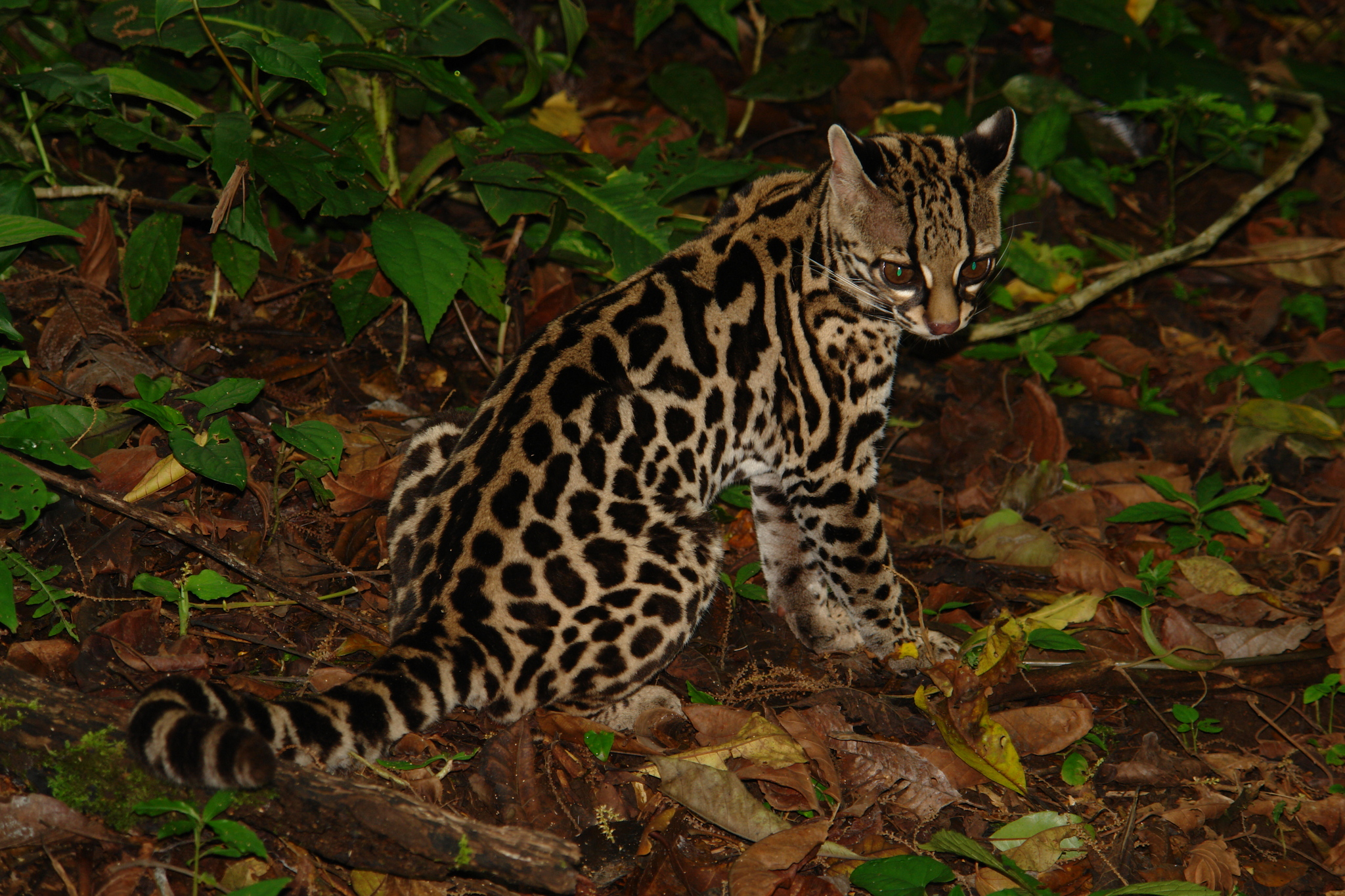


Introduction
The Herpailurus yagouaroundi, popularly known as the Jaguarundi or Eyra cat, is one of the most unique and fascinating wild felines inhabiting the Pantanal. With a physical appearance that often leads it to be confused with a weasel or an otter, the jaguarundi stands out for its slender body, long tail, and small ears. In the vast Pantanal ecosystem, it plays a fundamental ecological role as a diurnal predator, occupying a specific niche that distinguishes it from most other felines in the region, which are predominantly nocturnal.
Scientific Classification
| Kingdom | Animalia |
| Phylum | Chordata |
| Class | Mammalia |
| Order | Carnivora |
| Family | Felidae |
| Genus | Herpailurus |
| Species | Herpailurus yagouaroundi |
| Common Name | Jaguarundi |
Historically, the jaguarundi was classified within the genus Felis or Puma, but recent genetic studies have confirmed its position in its own genus, Herpailurus, being closely related to the puma and the cheetah. In the Pantanal, its presence is an indicator of environmental diversity, as the species uses a wide range of habitats, from dense forests to open savannas. Its conservation is vital for maintaining the balance of small vertebrate populations, acting as an important link in the complex food web of the world's largest tropical wetland.
The importance of the jaguarundi for the Pantanal goes beyond ecology; it is a symbol of the evolutionary adaptability of felines. In regions near the Paraguay River and the Cuiabá River, researchers and ecotourists seek sightings of this animal, which, despite being active during the day, is extremely discreet and agile, making every encounter a rare and privileged experience.
Physical Description
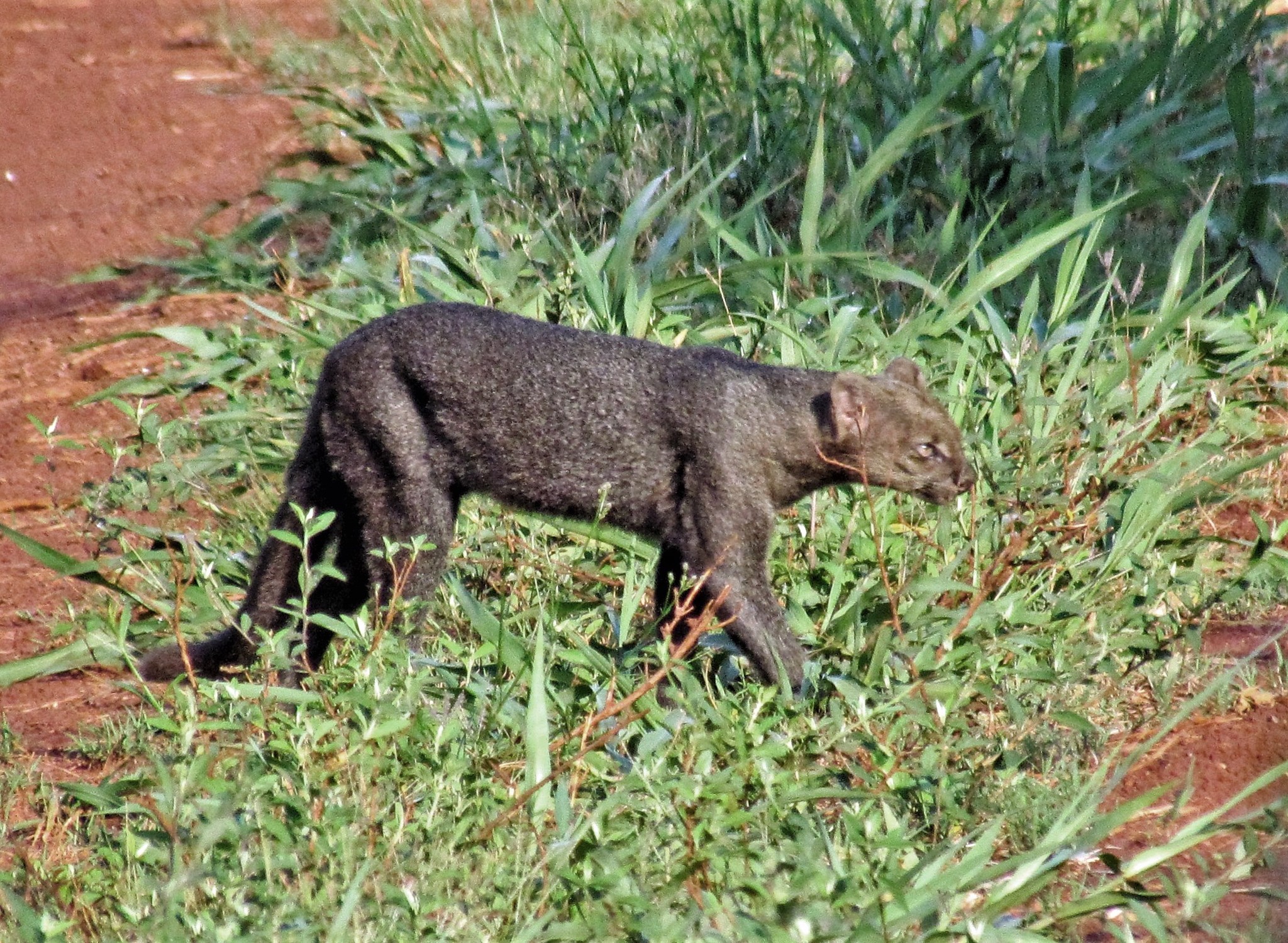
The Herpailurus yagouaroundi is a medium-sized feline with a very distinctive morphology. It has an elongated body, short legs, a small, flattened head, and a long tail, which gives it an appearance similar to that of a mustelid. Adults weigh between 3.5 kg and 9 kg, with a body length ranging from 50 cm to 77 cm, plus a tail that can reach 60 cm. Its ears are small and rounded, and its eyes are relatively small compared to other felines.
One of the most interesting characteristics of the jaguarundi is its coat, which is uniform and lacks spots or stripes. There are two main color phases: a dark gray or blackish phase and a reddish or chestnut phase. For a long time, it was thought that these were two different species, but it is now known that both colors can occur in the same litter. The fur is short and dense, providing excellent protection and camouflage in the varied environments of the Pantanal.
Unlike most felines, the jaguarundi does not have a pronounced facial pattern. Its pupils are round, a characteristic shared with the puma and the cheetah, reflecting its predominantly diurnal habits. Its paws are relatively small, but its claws are sharp and partially retractable, allowing for great agility both on the ground and when climbing trees or moving through dense vegetation.
Habitat and Distribution in the Pantanal
The geographical distribution of Herpailurus yagouaroundi is extensive, ranging from the southern United States to central Argentina. In the Pantanal, the species is widely distributed and can be found in almost all types of vegetation. However, it shows a preference for edge areas, where dense forest meets open fields or savannas, as well as gallery forests along rivers and vazantes (seasonal drainage channels).
The jaguarundi is highly adaptable and can survive in areas modified by human activity, provided there is enough cover for shelter and hunting. In the Pantanal mosaic, it uses the cordilheiras and capões as refuge during the flood season. In Mato Grosso, records are frequent in the Transpantaneira region, while in Mato Grosso do Sul, the species is often seen in conservation areas and farms that maintain native vegetation corridors.
The species' ability to use different habitats makes it less vulnerable to certain types of fragmentation than more specialized felines. However, the loss of gallery forests and the conversion of large areas of savanna into intensive pastures still represent significant threats. Maintaining connectivity between the different environments of the Pantanal is crucial to ensure that jaguarundi populations can move and find resources throughout the year.
Behavior
The Herpailurus yagouaroundi is a predominantly diurnal animal, with peaks of activity in the early morning and late afternoon. This behavior is unusual among felines and allows it to avoid direct competition with larger, nocturnal predators like the jaguar and the ocelot. It is a solitary animal, although pairs are occasionally seen during the mating season or mothers with their kittens.
Despite its slender appearance, the jaguarundi is an agile and powerful hunter. It spends most of its time on the ground, where it moves with a characteristic gait, but it is also an excellent climber and swimmer. Its behavior is marked by extreme caution and a remarkable ability to disappear into the vegetation at the slightest sign of danger. Communication between individuals occurs through scent marking and a varied repertoire of vocalizations.
Social interactions are rare and limited to the reproductive period. In the Pantanal, the jaguarundi's behavior is influenced by the flood cycle, which forces the animal to concentrate in higher areas during the floods. During the estrus period, females become more vocal and use intensified scent markings to attract males. Although reproductive encounters are brief, the complexity of courtship behavior demonstrates the biological sophistication of this species. The survival rate of kittens in the Pantanal is influenced by predation pressure and the severity of seasonal floods, which can limit safe den sites.
Diet
The diet of Herpailurus yagouaroundi in the Pantanal is varied and reflects its opportunistic nature. As a diurnal predator, it consumes a large amount of birds, which are captured both on the ground and in low vegetation. In addition to birds, the jaguarundi preys on small mammals, such as rodents and small marsupials, as well as reptiles like lizards and small snakes. Occasionally, it may consume large insects and even fish in shallow waters.
Its hunting technique is based on active search and a quick pounce. Its slender body allows it to move easily through dense vegetation, pursuing prey with agility. In the Pantanal ecosystem, the jaguarundi plays an important role in controlling small vertebrate populations. Its ability to capture a wide range of prey ensures its survival in different seasonal conditions, adapting to the changes in resource availability caused by the water cycle.
Competition for food with other small carnivores is minimized by its diurnal activity. While other felines hunt at night, the jaguarundi takes advantage of the daylight hours to explore the environment. This temporal niche division is a key factor for the coexistence of several feline species in the Pantanal, contributing to the high biodiversity and ecological complexity of the region.
Reproduction
The reproduction of Herpailurus yagouaroundi in the wild is still relatively little studied. The gestation period lasts about 70 to 75 days, resulting in litters of one to four kittens. In the Pantanal, births can occur throughout the year, but there seems to be a concentration in periods that favor the survival of the young, such as the beginning of the dry season.
Kittens are born with a soft coat and begin to explore the surroundings of the den after a few weeks. They are weaned around one month of age and begin to accompany the mother on hunts shortly after. Maternal care is fundamental for the kittens to learn the complex hunting and survival techniques needed in the Pantanal environment. Sexual maturity is reached between 2 and 3 years of age, when the young become independent and seek their own territories.
Females choose well-hidden places for their dens, such as dense thickets, hollow logs, or abandoned burrows. The jaguarundi's reproductive success is linked to the availability of food and the preservation of areas with enough cover to protect the kittens from predators. Conservation of these reproductive habitats is essential for the long-term maintenance of the species' populations in the Pantanal.
Conservation Status
Globally, the jaguarundi is classified by the International Union for Conservation of Nature (IUCN) as a species of "Least Concern" (LC), due to its vast geographical distribution. However, the situation in Brazil is more alarming. The Chico Mendes Institute for Biodiversity Conservation (ICMBio) classifies Herpailurus yagouaroundi as "Vulnerable" (VU) in national territory. This discrepancy highlights that, although the species is not at immediate risk of global extinction, its local populations face severe and growing threats.
In the Pantanal, the main threats include habitat loss and fragmentation due to the conversion of native areas into exotic pastures and monocultures on the biome's edges. Roadkill on highways crossing the region, such as BR-262 and the Transpantaneira itself, represents a significant cause of mortality, given the species' diurnal habit and mobility. In addition, the jaguarundi suffers persecution from domestic bird breeders, who often kill the animal in retaliation for attacks on their chicken coops.
Conservation efforts in the Pantanal focus on creating ecological corridors and promoting sustainable agricultural practices that allow for the coexistence of wildlife and economic activities. Research and monitoring projects, such as those conducted by Onçafari and other local NGOs, are fundamental to better understanding the jaguarundi's population dynamics and implementing mitigation measures, such as the installation of wildlife crossings and environmental education campaigns to reduce conflict with humans.
Curiosities
One of the most fascinating curiosities about the jaguarundi is its incredible resemblance to the tayra (Eira barbara), a member of the weasel family. This resemblance is so pronounced that, in many regions of the Pantanal, local residents use the same common name for both animals or distinguish them only by subtle behavioral details. However, the jaguarundi is a true feline, with retractable claws and the characteristic dentition of carnivores in its family.
The name "jaguarundi" derives from the Tupi yawarundi, which can be translated as "dark jaguar" or "small jaguar." In local Pantanal culture, the jaguarundi is surrounded by myths; some believe its presence brings luck, while others fear it for its almost supernatural agility in disappearing into the forest. For ecotourism, the jaguarundi is considered a visual "trophy" because, despite being diurnal, its reserved nature makes every sighting a special and memorable event for visitors to Porto Jofre.
Another interesting fact is its vocalization. Unlike the roar of large jaguars, the jaguarundi has a repertoire of sounds that includes at least 13 distinct calls. Researchers have already recorded individuals emitting sounds that perfectly imitate the song of certain birds, raising the hypothesis that the feline could use vocal mimicry as a hunting strategy to attract its prey, although this theory still needs more definitive scientific evidence in the field.
References
[1] IUCN. (2016). *Herpailurus yagouaroundi*. The IUCN Red List of Threatened Species. Available at: https://www.iucnredlist.org/species/9948/50659567
[2] ICMBIO. (2018). *Red Book of Brazilian Fauna Threatened with Extinction*. ICMBio. Available at: https://www.icmbio.gov.br
[3] ALHO, C. J. R. (2008). *Biodiversity of the Pantanal*. UNIDERP Publishing.
[4] EMMONS, L. H.; FEER, F. (1997). *Neotropical Rainforest Mammals: A Field Guide*. University of Chicago Press.
[5] EMBRAPA PANTANAL. (2024). *Mammals of the Pantanal*. Embrapa Pantanal. Available at: https://www.embrapa.br/pantanal/publicacoes
[6] SOS PANTANAL. (2024). *Felines of the Pantanal: Meet the region's wild cats*. SOS Pantanal. Available at: https://sospantanal.org.br/felinos-do-pantanal-conheca-os-gatos-selvagens-da-regiao/
[7] SUNQUIST, M. E.; SUNQUIST, F. (2002). *Wild Cats of the World*. University of Chicago Press.