

Introduction
The Leopardus guttulus, popularly known as the Southern Tiger Cat or Southern Oncilla, is one of the smallest and most enigmatic wild felines inhabiting the Pantanal. Often confused with its close relatives, such as the ocelot and the margay, this species stands out for its elegance and adaptation to transition environments. In the vast Pantanal ecosystem, the Southern Tiger Cat plays a fundamental ecological role as a predator of small vertebrates, assisting in the population control of rodents and reptiles in forest edges and cordilheiras (elevated land strips).
Scientific Classification
| Kingdom | Animalia |
| Phylum | Chordata |
| Class | Mammalia |
| Order | Carnivora |
| Family | Felidae |
| Genus | Leopardus |
| Species | Leopardus guttulus |
| Common Name | Southern Tiger Cat |
Historically, Leopardus guttulus was classified as a subspecies of Leopardus tigrinus. However, recent genetic and morphological studies elevated it to distinct species status, separating the populations of the south and southeast from those of the north and northeast of Brazil. In the Pantanal, its presence is an indicator of environmental health, although the species is naturally rarer in the biome compared to the Atlantic Forest. Its conservation is vital for maintaining local biodiversity, serving as an important link in the complex food web of the world's largest floodplain.
The importance of the Southern Tiger Cat for the Pantanal goes beyond ecology; it is a symbol of the resilient fauna that inhabits the contact areas between forest and savanna. In regions near the Paraguay River and the Cuiabá River, researchers and ecotourism enthusiasts seek rare sightings of this feline, which, despite its discretion, enchants with the beauty of its coat and the agility of its movements.
Physical Description
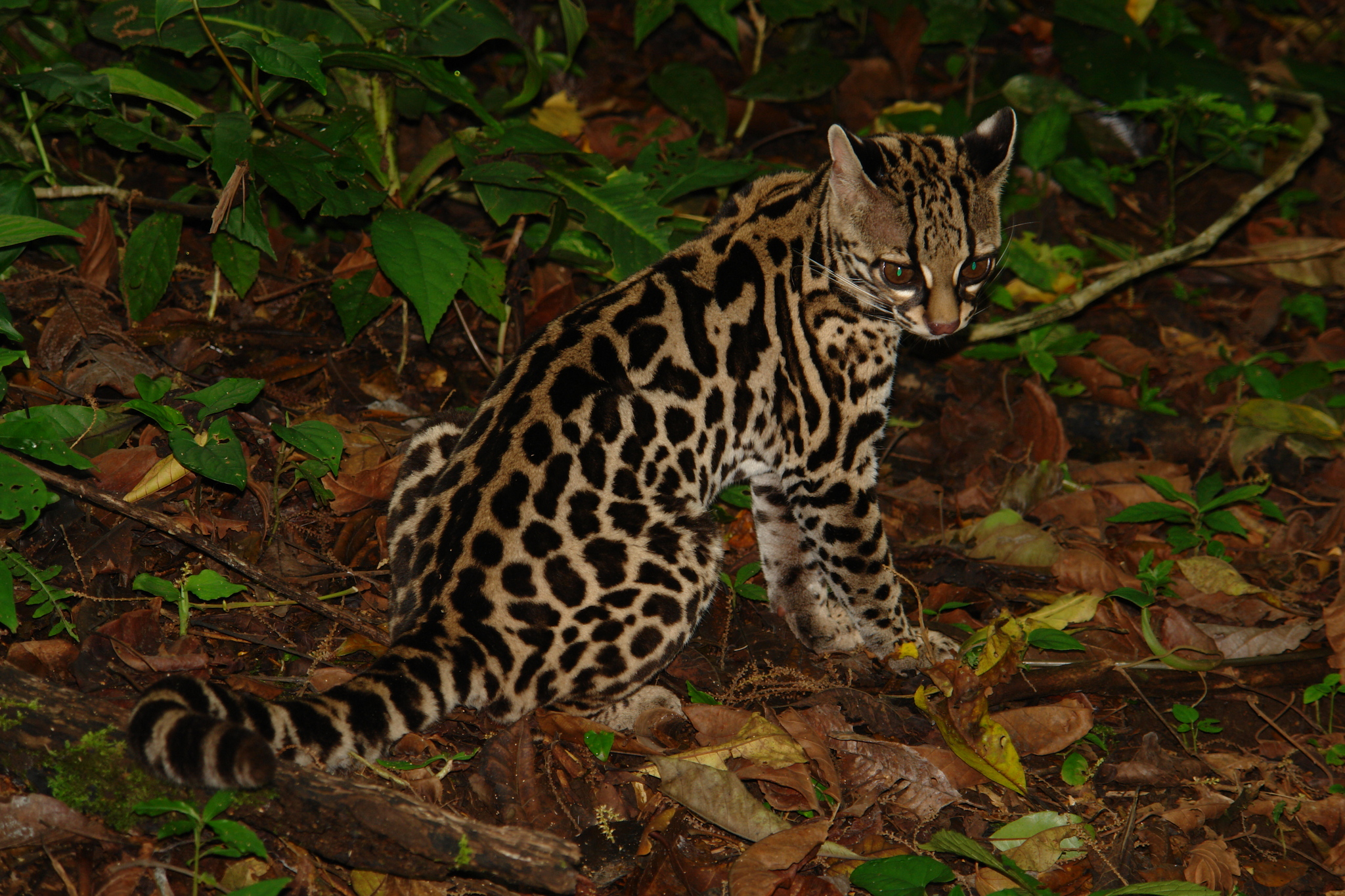
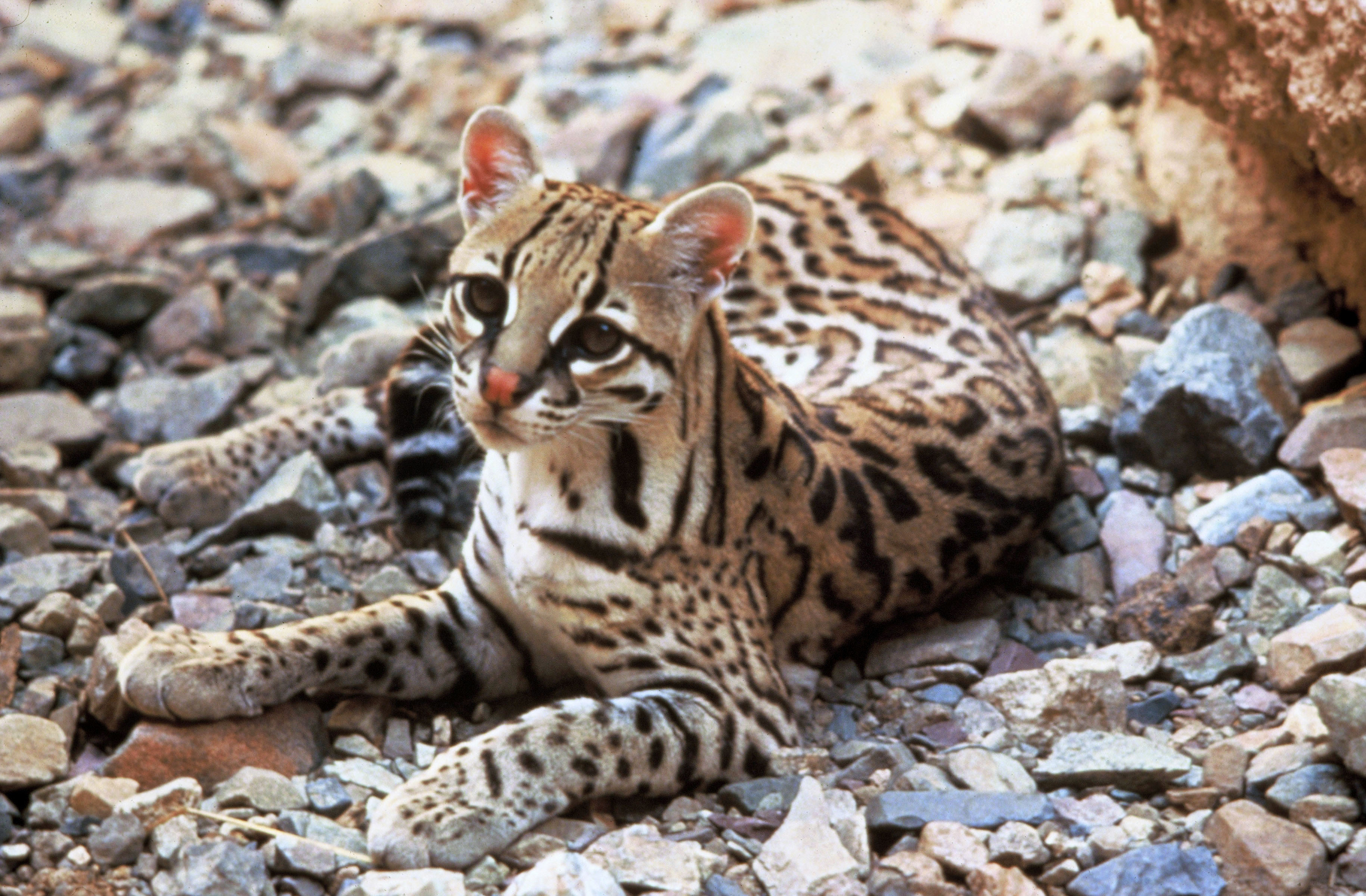
The Leopardus guttulus is notable for being the smallest spotted feline in South America, having a size very similar to that of a domestic cat, but with a more slender and muscular structure. Adults generally weigh between 1.5 kg and 3.5 kg, with a body length ranging from 38 cm to 55 cm, plus a tail of 22 cm to 42 cm. A distinctive feature compared to the margay is that its tail is proportionally shorter and less thick, and its eyes are smaller, reflecting less strictly arboreal habits.
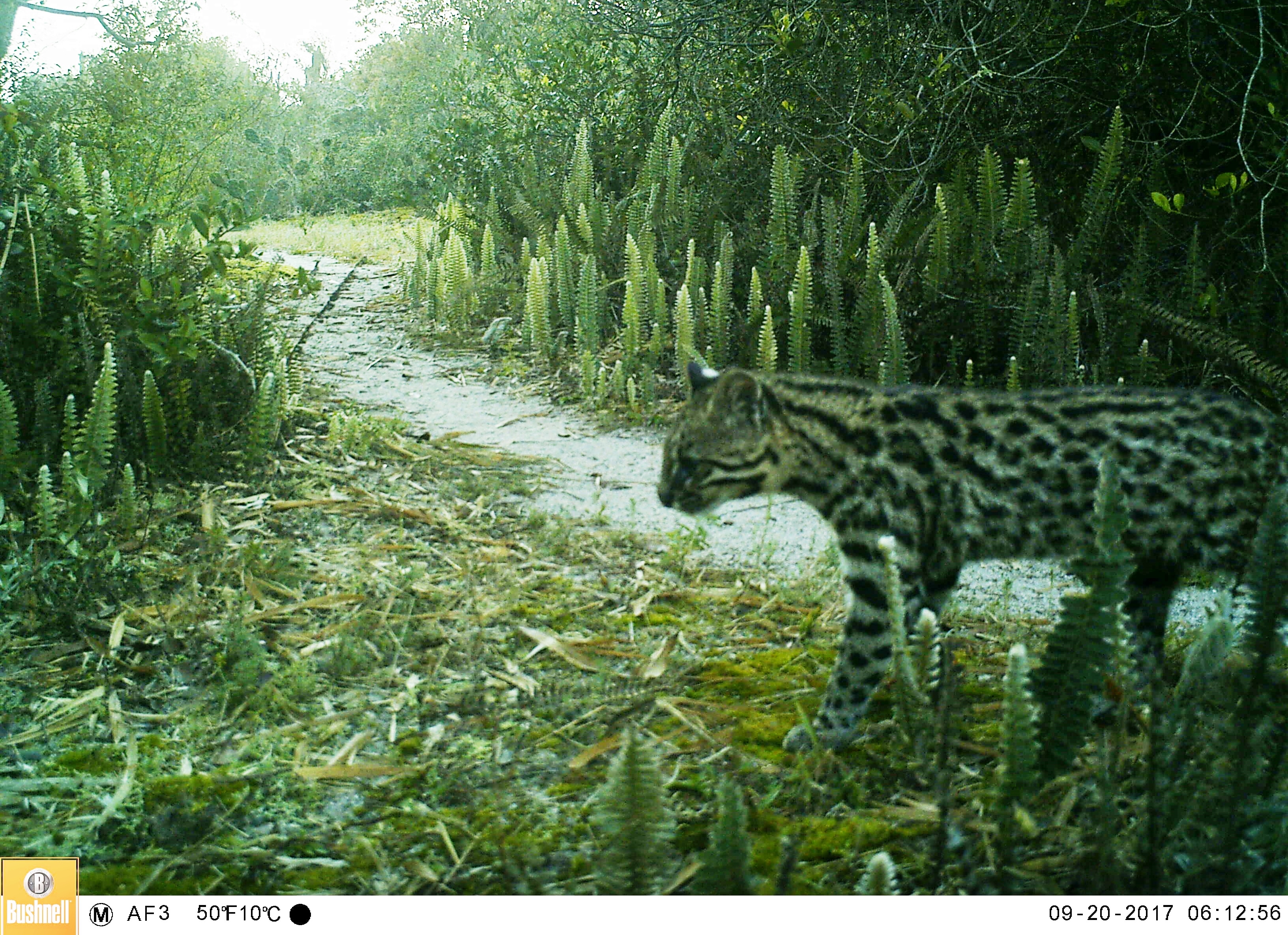
The Southern Tiger Cat's fur is dense and soft, with a background color ranging from light yellow to yellowish-brown. The body is covered with solid or open rosettes, which tend to be smaller and more numerous than those of the ocelot. In the ventral region, the fur becomes lighter, almost white, with scattered black spots. The ears are black on the posterior side, featuring a characteristic central white spot common in many small felines. An interesting phenomenon in the species is melanism; it is estimated that about 20% of the population has entirely black fur, although the original spots can still be seen under intense light.
Unlike other felines, the hairs on the nape of Leopardus guttulus are all directed backward, a morphological feature that aids in taxonomic differentiation. There is no pronounced sexual dimorphism, although males tend to be slightly larger and more robust than females. Their paws are proportionally small but equipped with sharp retractable claws, ideal for capturing agile prey and for occasional climbing in shrubby vegetation.
Habitat and Distribution in the Pantanal
The geographical distribution of Leopardus guttulus covers the South, Southeast, and Midwest regions of Brazil, extending to Paraguay and northeastern Argentina. In the Pantanal biome, the species is at the western limit of its distribution, being considered less common than in Atlantic Forest areas. Its occurrence is strongly associated with edge habitats, where dense vegetation meets open areas, such as cordilheiras (elevations that do not flood) and forest patches (capões) scattered across the plain.
Unlike the jaguar, which prefers areas closer to large bodies of water, the Southern Tiger Cat prefers drier and forested environments within the Pantanal mosaic. It avoids permanently flooded areas or open fields without nearby vegetation cover. In Mato Grosso, records of the species were made in areas near the Transpantaneira highway, especially in stretches where cerrado vegetation and gallery forest are better preserved. In Mato Grosso do Sul, its presence is noted in conservation farms and environmental protection areas that maintain connectivity between forest fragments.
The preference for edge habitats makes Leopardus guttulus vulnerable to anthropogenic changes. However, it demonstrates some tolerance to modified landscapes, provided there are remnants of native vegetation for shelter and hunting. Connectivity between the Pantanal and neighboring biomes, such as the Cerrado and the Atlantic Forest, is crucial for the species' gene flow, ensuring the viability of populations inhabiting the fringes of the Pantanal ecosystem.
Behavior
The Leopardus guttulus is a predominantly solitary animal with nocturnal and crepuscular habits. Its activity intensifies after sunset, a period when it uses its keen vision and sensitive hearing to locate prey in the understory. However, in areas where there is a high density of ocelots — a phenomenon known as the "ocelot effect" — the Southern Tiger Cat may adjust its activity pattern to daytime periods to avoid aggressive encounters or predation by the larger feline.
Despite being an excellent climber, the Southern Tiger Cat spends most of its time on the ground. Its behavior is marked by discretion and caution; it moves silently through dense vegetation, using its camouflaged coat to go unnoticed by both prey and larger predators. Communication between individuals occurs mainly through scent marking, using urine, feces, and scratches on tree trunks to delimit territories, which can vary significantly in size depending on resource availability.
Social interactions are rare and limited almost exclusively to the reproductive period. The Southern Tiger Cat is known for its shy nature, which makes studying its behavior in the wild a challenge for biologists. In the Pantanal, its agility is tested during the flood period, when dry space becomes limited and competition for shelter in the cordilheiras increases, requiring closer coexistence with other species, such as the maned wolf and the collared peccary.
Diet
As a specialized carnivore, the diet of Leopardus guttulus in the Pantanal is mostly composed of small vertebrates. Its preferred food items are small rodents, which form the basis of its nutrition. In addition to rodents, the Southern Tiger Cat consumes a variety of small birds, lizards, and occasionally amphibians and large insects. Its hunting technique is based on stalking and rapid pouncing, taking advantage of vegetation cover to get as close as possible to the victim.
Although it focuses on small prey, there are records of attacks on slightly larger animals, such as young capybaras or small agoutis, demonstrating the strength and determination of this small feline. In the Pantanal ecosystem, it occupies an important ecological niche, controlling populations of species that could become agricultural pests or disease vectors in rural areas. Its opportunistic diet allows it to survive in different seasonal conditions, adapting to the availability of prey that varies with the water cycle.
The role of Leopardus guttulus as an apex predator at its size scale helps maintain the balance of local biodiversity. By preying on birds and small mammals, it influences the dynamics of prey communities and, indirectly, seed dispersal and vegetation structure. Competition for food with other small carnivores, such as the pampas cat and the jaguarundi, is minimized by specialization in different micro-habitats and activity periods, ensuring the coexistence of these species in the rich mosaic of the Pantanal.
Reproduction
The reproduction of Leopardus guttulus is characterized by low reproductive potential compared to other felines of similar size. Gestation lasts between 71 and 78 days, usually resulting in the birth of only one kitten, although litters of up to four have been recorded in captivity. In the wild environment of the Pantanal, the birth of a single kitten is the norm, which makes the recovery of its populations a slow and delicate process.
Kittens are born with their eyes closed and depend entirely on maternal care. They open their eyes between 8 and 17 days after birth and begin to ingest solid food around 8 weeks of age. Complete weaning occurs between the second and third month. Sexual maturity is reached late, around 2 to 2.5 years of age. This long development period and low birth rate mean that each individual is extremely valuable for the long-term survival of the species.
Females choose safe and well-protected locations, such as hollow trees, dense vegetation tangles, or rock crevices in the Pantanal cordilheiras, to serve as dens. Parental care is exercised exclusively by the female, who teaches the kitten the hunting and survival techniques necessary to face the challenges of the biome. Reproduction can occur throughout the year, but there are indications that births may coincide with periods of greater prey abundance, ensuring better chances of survival for the offspring.
Conservation Status
The Leopardus guttulus is globally classified as "Vulnerable" (VU) by the IUCN Red List. In Brazil, ICMBio also categorizes it as "Vulnerable," reflecting concern over the continuous decline of its populations. Main threats to the species in the Pantanal and other regions include habitat loss and fragmentation due to agricultural expansion, uncontrolled wildfires, and the conversion of native areas into exotic pastures.
In addition to habitat loss, the Southern Tiger Cat faces direct threats, such as roadkill on highways crossing the biome and predation by domestic dogs, which can also transmit fatal diseases such as distemper and parvovirus. Retaliatory hunting for attacks on domestic birds in rural properties still occurs, despite being illegal. Hybridization with the Geoffroy's cat (Leopardus geoffroyi) in contact areas in the south of its distribution is also a genetic concern, although less documented in the Pantanal.
Conservation efforts involve creating ecological corridors to connect forest fragments and promoting sustainable agricultural practices that respect permanent preservation areas. Institutions such as Onçafari and the Pró-Carnívoros Institute conduct essential monitoring and scientific research to understand the species' ecology and implement effective protection strategies. Raising awareness among landowners in the Pantanal about the importance of this feline is fundamental to reducing conflicts and ensuring a safe future for Leopardus guttulus.
Curiosities
One of the most fascinating curiosities about Leopardus guttulus is its incredible agility; despite its small size, it is capable of jumping considerable heights to capture birds in mid-flight or to take refuge in trees. Another interesting fact is that, due to its similarity to the domestic cat, it is often erroneously called "gato-do-mato" (bush cat) in a generic way, hiding the taxonomic complexity that separates it from other species such as Leopardus tigrinus (from the North) and Leopardus braccatus (Pantanal pampas cat).
In local folklore and Pantanal culture, the Southern Tiger Cat is seen as a forest spirit, an "invisible" animal that few are lucky enough to see. For ecotourism, especially in regions like Porto Jofre, sighting a Southern Tiger Cat is considered a trophy for nature photographers, given its rarity and shy behavior. It represents the delicate and wild face of the Pantanal, contrasting with the imposing presence of the jaguar.
Scientifically, the species continues to surprise researchers. The discovery that Leopardus guttulus does not interbreed with Leopardus tigrinus, despite being visually almost identical, was a milestone in conservation biology, highlighting the importance of molecular genetics in identifying endangered species. Protecting this small feline is protecting the evolutionary integrity of a unique lineage that found in the Pantanal one of its last safe havens.
References
[1] IUCN. (2016). *Leopardus guttulus*. The IUCN Red List of Threatened Species. Available at: https://www.iucnredlist.org/species/54010476/50653894
[2] ICMBIO. (2018). *Red Book of Brazilian Fauna Threatened with Extinction: Volume II – Mammals*. ICMBio. Available at: https://www.icmbio.gov.br/portal/images/stories/docs-publicacoes/livro_vermelho_2018_vol2.pdf
[3] ALHO, C. J. R. (2008). *Biodiversity of the Pantanal*. UNIDERP Publishing.
[4] TRIGO, T. C.; ASTUA, D.; EIZIRIK, E. (2013). *Phylogenetic relationships and historical biogeography of the Neotropical small cats (Leopardus, Felidae)*. Molecular Phylogenetics and Evolution, 69(3), 1121-1133.
[5] SILVEIRA, L.; FERRARI, S. F.; EIZIRIK, E. (2010). *Small felids of the Pantanal: distribution, ecology and conservation*. Cat News, 52, 12-16.
[6] EMBRAPA PANTANAL. (2020). *Mammals of the Pantanal*. Embrapa Pantanal. Available at: https://www.embrapa.br/pantanal/publicacoes
[7] SOS PANTANAL. (2024). *Felines of the Pantanal*. SOS Pantanal. Available at: https://sospantanal.org.br/felinos-do-pantanal/