

Introduction
The ocelot (Leopardus pardalis), known in Brazil as jaguatirica, is one of the most emblematic and visually stunning felines of the Americas. In the Pantanal, this medium-sized cat finds one of its most important strongholds, thriving in the mosaic of forests, riverbanks, and savannas. With its characteristic coat of chain-like rosettes and spots, the ocelot is often considered the most beautiful feline in the world, a title that unfortunately made it a primary target for the fur trade in the past.
Larger than a domestic cat but significantly smaller than a jaguar, the ocelot is a highly adaptable predator. In the Pantanal, it occupies a crucial ecological niche, acting as a top predator for small vertebrates and helping to maintain the balance of the ecosystem. Its presence is a strong indicator of environmental health, as it requires preserved forest cover and an abundant prey base to survive.
Classification and Taxonomy
The ocelot belongs to the order Carnivora, family Felidae, and the genus Leopardus, which includes several small to medium-sized Neotropical cats. Its scientific name, Leopardus pardalis, derives from the Greek pardos (leopard), referring to its spotted coat. Despite the name, it is not closely related to the Old World leopards (genus Panthera).
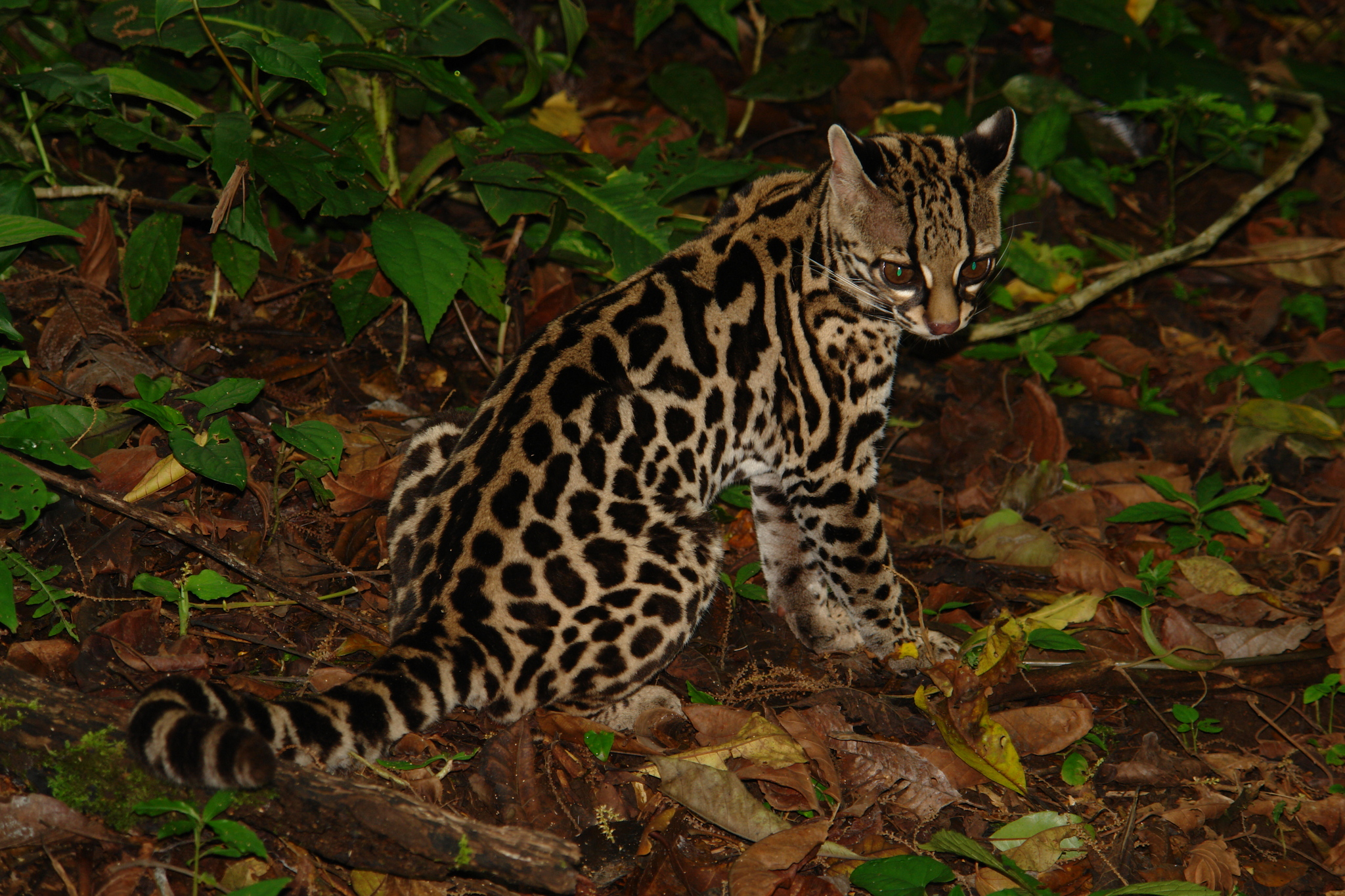
Genetically, the ocelot is the namesake of the "ocelot lineage," which diverged from other felines approximately 2.9 million years ago. This lineage also includes the margay (Leopardus wiedii) and the oncilla (Leopardus tigrinus), with which the ocelot is often confused. However, the ocelot is notably larger and more robust than its relatives, with a shorter tail relative to its body length.
Morphology and Identification
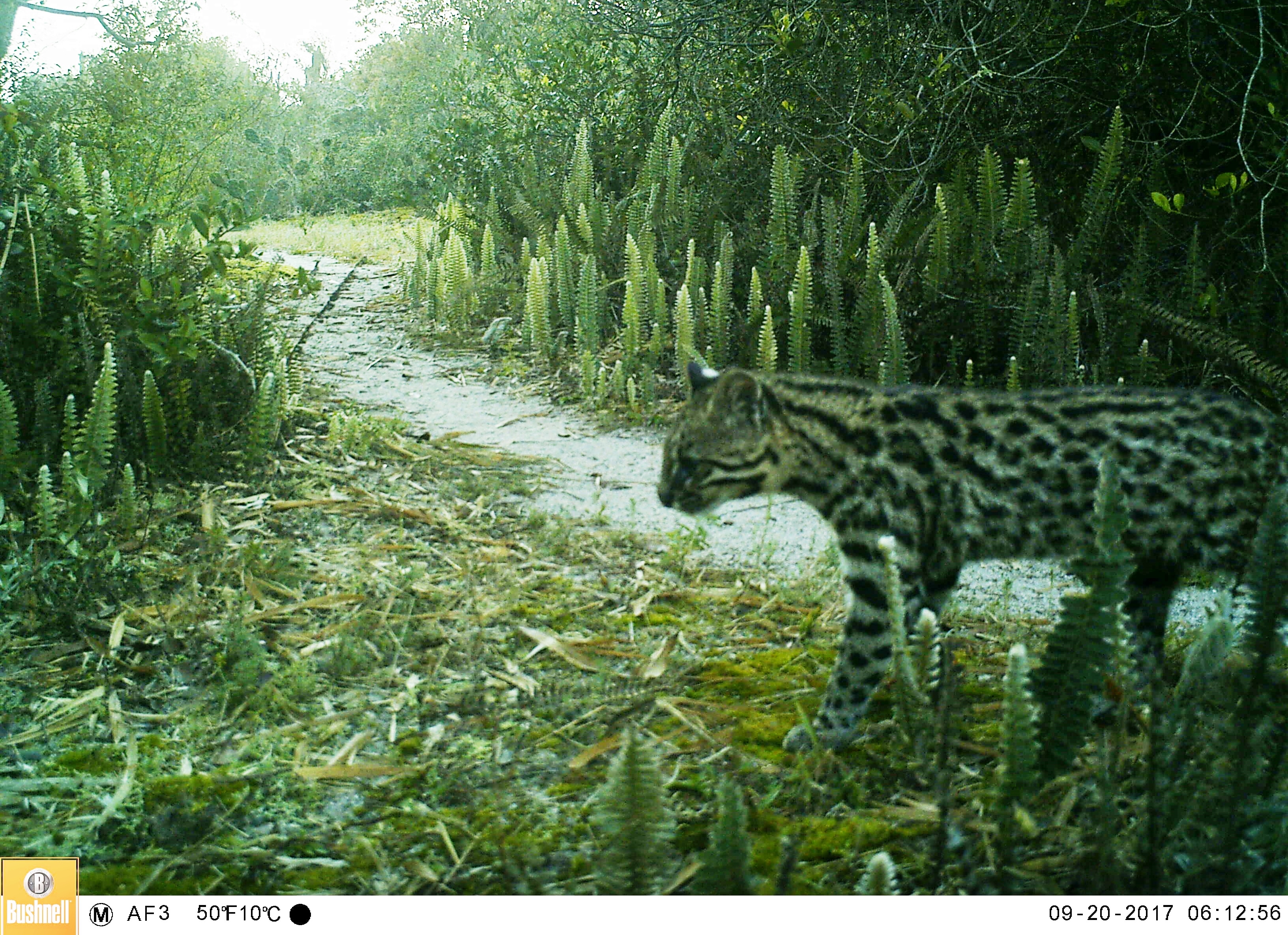
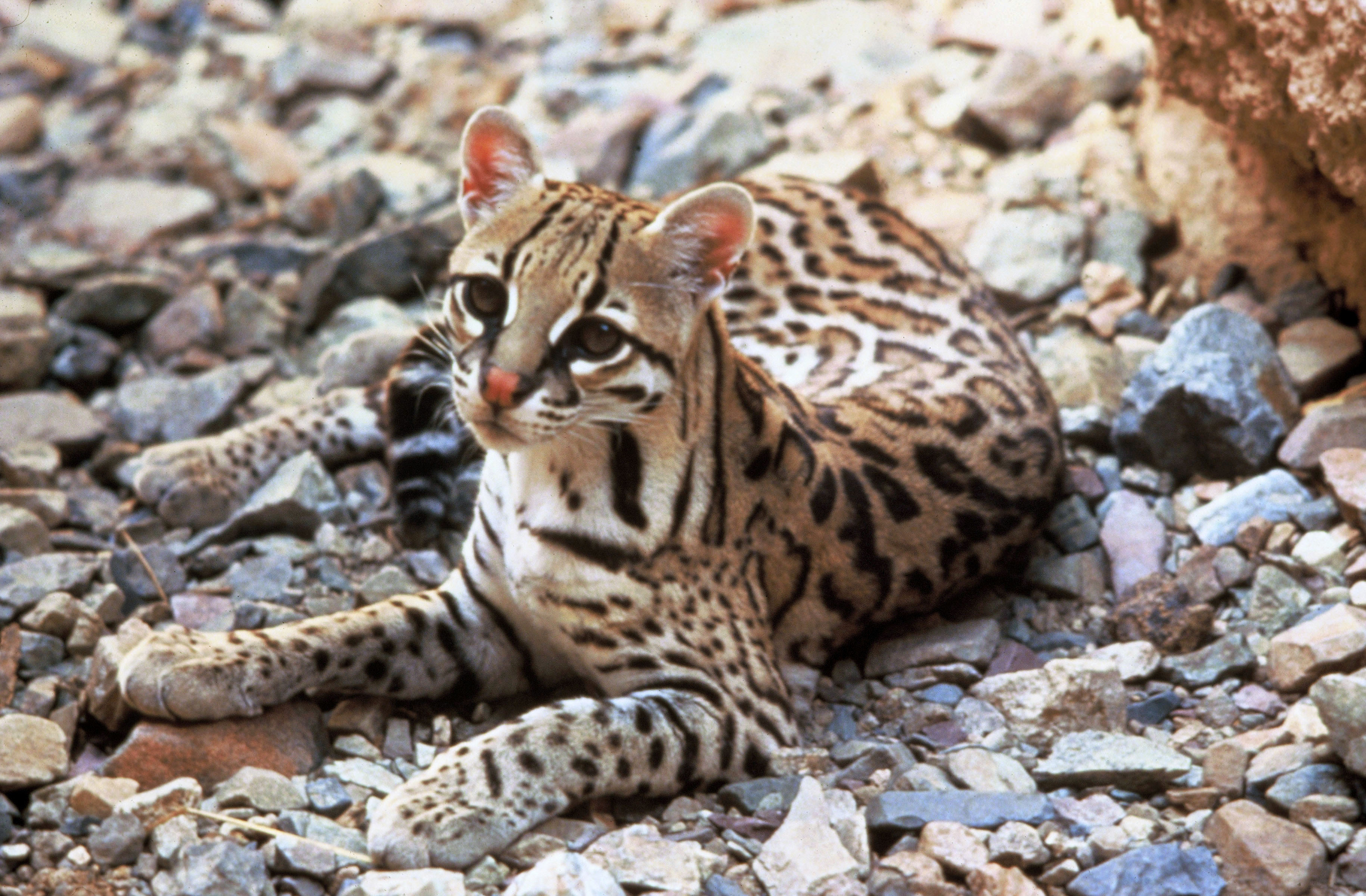
The ocelot is a medium-sized feline, with adults weighing between 8 and 16 kg. Its most distinctive feature is its coat: a golden-yellow background covered with black spots and rosettes that often merge into longitudinal bands or chains along the sides. The belly is white with black spots, and the tail has black rings or bars. Interestingly, the pattern of spots is unique to each individual, much like a human fingerprint, allowing researchers to identify specific animals through camera traps.
Its body is muscular and agile, with relatively short but strong limbs. The front paws are wider than the hind paws, providing excellent stability for climbing and moving through dense undergrowth. The ears are rounded with a characteristic white spot on the back (ocelli), which may serve as "false eyes" to deter predators or help kittens follow their mothers in the dark. Its eyes are large and adapted for nocturnal vision, reflecting a brilliant golden-green light when caught in a beam.
Ecology and Behavior
In the Pantanal, the ocelot is primarily nocturnal and crepuscular, although it can be active during the day in undisturbed areas. It is a solitary and territorial animal, with males maintaining larger home ranges that overlap with those of several females. They mark their territory using scent glands, urine, and claw marks on trees.
While ocelots are excellent climbers and often rest in trees during the day, they do most of their hunting on the ground. They are opportunistic hunters with a broad diet that includes small mammals (rodents, opossums), birds, reptiles (lizards, small caimans), and even fish and crabs. Their ability to swim allows them to navigate the flooded landscapes of the Pantanal with ease, moving between "cordilheiras" (elevated forested ridges) during the high-water season.
Reproduction and Life Cycle
Ocelots can breed year-round, although in the Pantanal, there may be peaks associated with prey abundance. After a gestation period of approximately 79 to 82 days, the female gives birth to one or two kittens (rarely three). The mother provides all the care, hiding the young in dense vegetation, hollow logs, or small caves.
Kittens grow slowly compared to other small cats. They begin to accompany their mother on hunts at around three months of age but may remain in her territory for up to two years before dispersing to find their own. This slow reproductive rate makes ocelot populations particularly vulnerable to high mortality or habitat loss.
Conservation Status
Globally, the ocelot is classified as "Least Concern" (LC) by the IUCN, thanks to its wide distribution from Texas to northern Argentina. However, in Brazil, the situation varies by biome. While still relatively common in the Amazon and Pantanal, it is considered threatened in the Atlantic Forest and Southern grasslands. ICMBio keeps the species off the national endangered list but recognizes that regional populations face severe risks from habitat fragmentation and roadkill.
In the Pantanal, main threats include habitat loss to extensive ranching and agriculture, as well as catastrophic fires that destroy the forested ridges essential for shelter. Human conflict also occurs, though on a smaller scale than with jaguars; ocelots are sometimes killed for preying on domestic poultry. Additionally, illegal hunting, though reduced compared to the last century, still persists in some remote regions.
Conservation efforts in the biome involve creating Private Natural Heritage Reserves (RPPNs) and strengthening ecological corridors. Research projects using monitoring collars and camera traps are fundamental to understanding how the species responds to land-use changes. Raising awareness among landowners and encouraging sustainable ecoturism in places like Porto Jofre have proven effective tools for ensuring the ocelot continues to thrive in the Pantanal plains.
Curiosities
- The ocelot has a fascinating relationship with local culture and folklore. In many Pantanal communities, it is respected for its agility and cunning, often featuring in stories about forest life. In the past, its fur was so valued that it became the most hunted feline in the world, with hundreds of thousands of skins exported annually until the CITES treaty ban in the 1970s.
- In ecotourism, the ocelot is considered one of the "jewels" of the Pantanal. While the jaguar attracts crowds, an ocelot sighting is often considered a more intimate and rare event due to its nocturnal habits. Hotels and lodges along the Transpantaneira invest in night safaris specifically to observe this feline, generating direct revenue that encourages local preservation.
- The ocelot has a unique vocal capacity. Unlike big cats that roar, the ocelot emits a variety of sounds including meows, growls, and even a short "cough" to mark its presence. Furthermore, genetic studies revealed that despite its similar appearance, the ocelot is evolutionarily closer to the margay and oncilla than to the big cats of the genus Panthera.
References
[1] IUCN. (2015). *Leopardus pardalis*. The IUCN Red List of Threatened Species. Available at: https://www.iucnredlist.org/species/11509/50653476
[2] ICMBIO. (2018). *Livro Vermelho da Fauna Brasileira Ameaçada de Extinção*. ICMBio. Available at: https://www.icmbio.gov.br
[3] ALHO, C. J. R. (2008). *Biodiversidade do Pantanal*. Editora UNIDERP.
[4] EMMONS, L. H.; FEER, F. (1997). *Neotropical Rainforest Mammals: A Field Guide*. University of Chicago Press.
[5] PEREIRA, J. A.; MAZIM, F. D.; MORATO, R. G. (2010). Ecologia e conservação de pequenos felinos no Pantanal. *Revista Brasileira de Zoologia*, v. 27, n. 4, p. 555-564.
[6] SOS PANTANAL. (2024). *Jaguatirica: o felino manchado do Pantanal*. SOS Pantanal. Available at: https://sospantanal.org.br/jaguatirica-o-felino-manchado-do-pantanal/
[7] EMBRAPA PANTANAL. (2015). *Mamíferos do Pantanal*. Embrapa Pantanal. Available at: https://www.embrapa.br/pantanal/publicacoes