Anodorhynchus hyacinthinus (Hyacinth Macaw): The Jewel of the Pantanal
Introduction
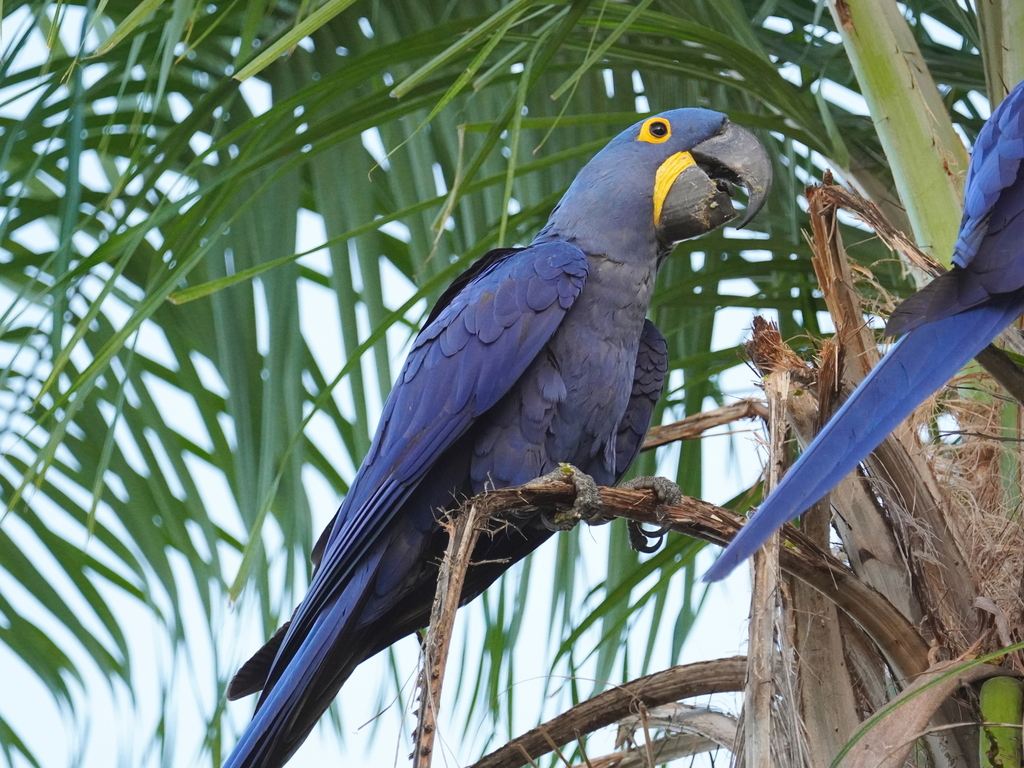
The Hyacinth Macaw (Anodorhynchus hyacinthinus) is the largest macaw in the world and one of the largest extant psittacines. With stunning cobalt-blue plumage and a vibrant yellow periocular ring, this species is considered one of the greatest symbols of the Pantanal and one of Brazil’s most emblematic animals. Its presence in the biome is a direct indicator of environmental quality, as it requires native palms—especially the acuri (Attalea phalerata)—for food and large trees with cavities for nesting [1] [2].
Scientific Classification
| Category | Classification |
|---|---|
| Kingdom | Animalia |
| Phylum | Chordata |
| Class | Aves |
| Order | Psittaciformes |
| Family | Psittacidae |
| Genus | Anodorhynchus |
| Species | Anodorhynchus hyacinthinus |
| Common name | Hyacinth Macaw, Blue Macaw |
Description
The Hyacinth Macaw is the largest macaw in the world, measuring between 95 and 100 cm in length (including the long tail) and weighing between 1.2 and 1.7 kg. The plumage is entirely brilliant cobalt-blue, with a yellow periocular ring and a yellow patch at the base of the beak. The beak is black, extremely robust, and curved, capable of cracking the hardest seeds of Pantanal palms [1] [3].
Geographical Distribution
It occurs in three isolated populations in Brazil: the Pantanal (largest population), the Amazon (Tocantins River region), and the Northeast (Maranhão and Piauí). The Pantanal houses the largest and most viable population of the species, estimated at over 5,000 individuals—more than 90% of the total population [1] [4].
Habitat
In the Pantanal, the Hyacinth Macaw is closely associated with the acuri palm (Attalea phalerata) and bocaiuva palm (Acrocomia aculeata), which constitute the basis of its diet. It frequents fields with palms, gallery forests, and forest patches (capões). For nesting, it requires large trees with natural cavities, especially the manduvi (Sterculia apetala) [2] [3].
Behavior
The Hyacinth Macaw is monogamous and forms stable pairs for life. It is highly vocal, emitting strident screams that can be heard from a great distance. Outside the reproductive season, it forms flocks of dozens of individuals that move between palm groves [1] [2].
Feeding
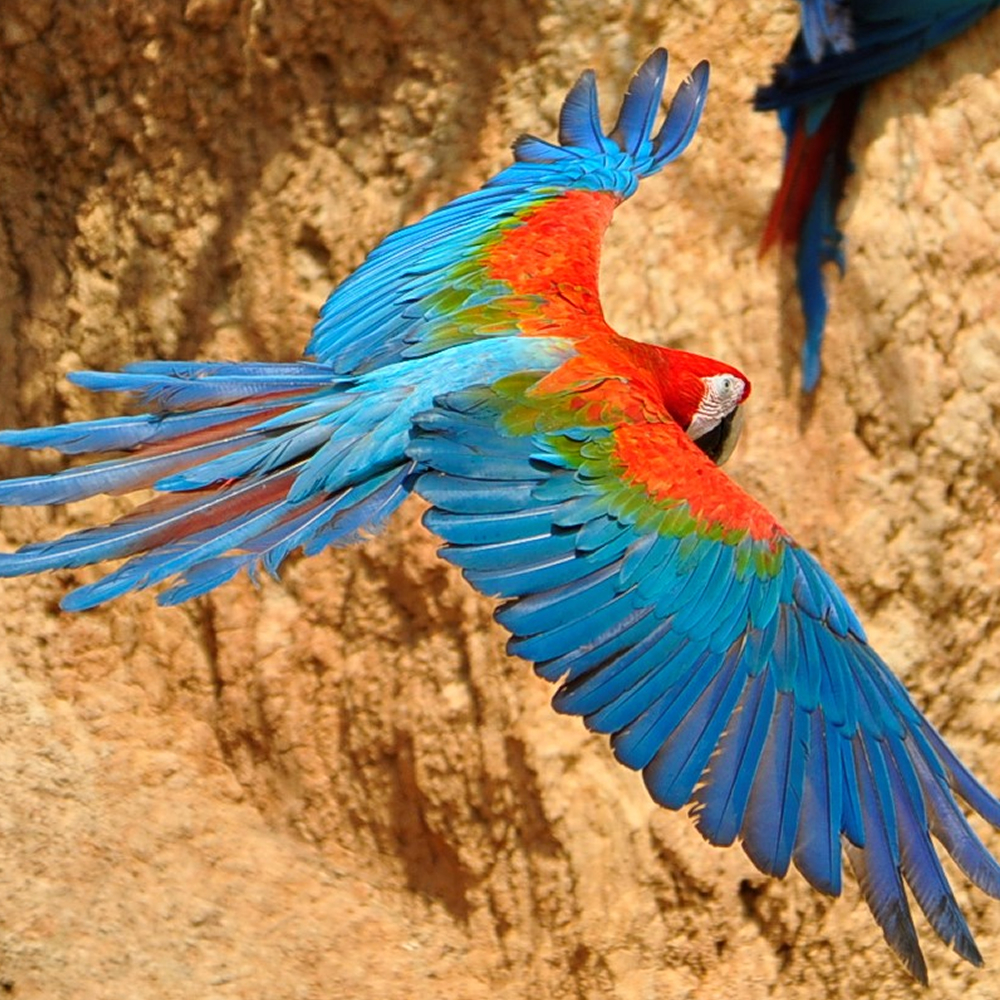
It feeds almost exclusively on palm seeds, especially acuri and bocaiuva. Its powerful beak allows it to break the extremely hard shells of these seeds. It also consumes fruits from other species and visits salt licks (barreiros) to ingest minerals [3] [4].
Reproduction
It nests in natural tree cavities, especially the manduvi. The female lays 1 to 3 white eggs. Incubation lasts about 28 days. The chicks remain in the nest for approximately 105 days. The interval between reproductions is 2 years [1] [3].
Conservation Status
Classified as Vulnerable (VU) by the IUCN. The Hyacinth Macaw Project, started in 1990 by biologist Neiva Guedes in the Pantanal, is considered one of Brazil’s greatest conservation successes—the Pantanal population grew from fewer than 1,500 individuals in the 1980s to over 5,000 today [1] [5].
References
[1] SICK, H. (1997). Ornitologia Brasileira. Nova Fronteira. [2] GUEDES, N.M.R. (2003). Hyacinth Macaw (Anodorhynchus hyacinthinus) in the Pantanal*. Ararajuba, v.11. [3] DEL HOYO, J. (1992). Handbook of the Birds of the World. Lynx Edicions. [4] IUCN. (2023). Anodorhynchus hyacinthinus. The IUCN Red List of Threatened Species. [5] COLLAR, N.J. (1992). Threatened Birds of the Americas. ICBP.