

Aratinga nenday (Nanday Parakeet): The Nanday of the Pantanal
Introduction
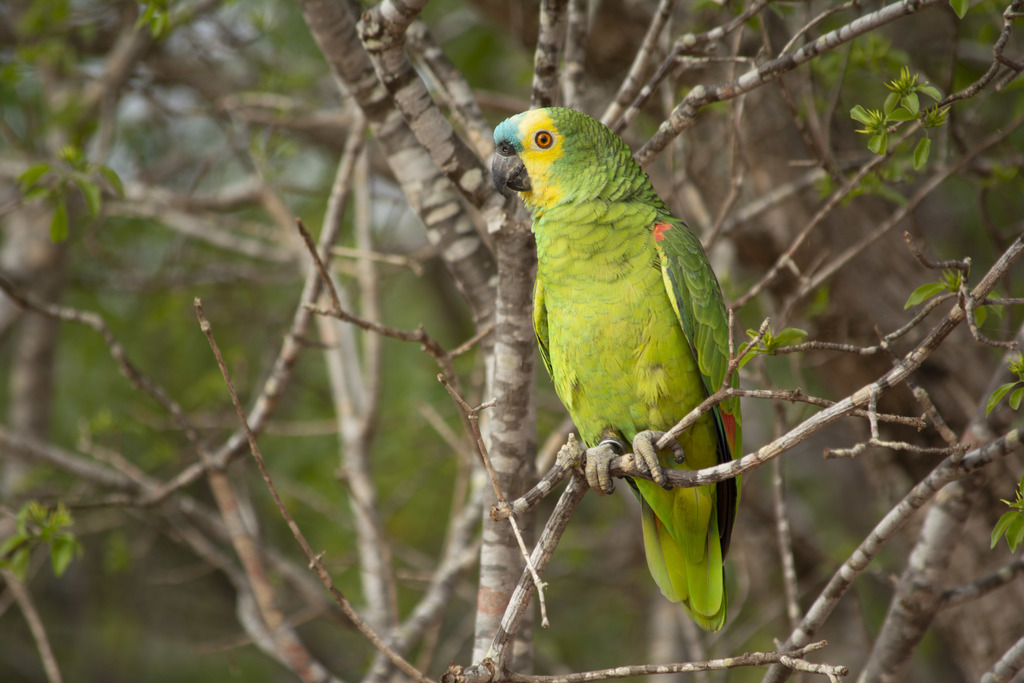
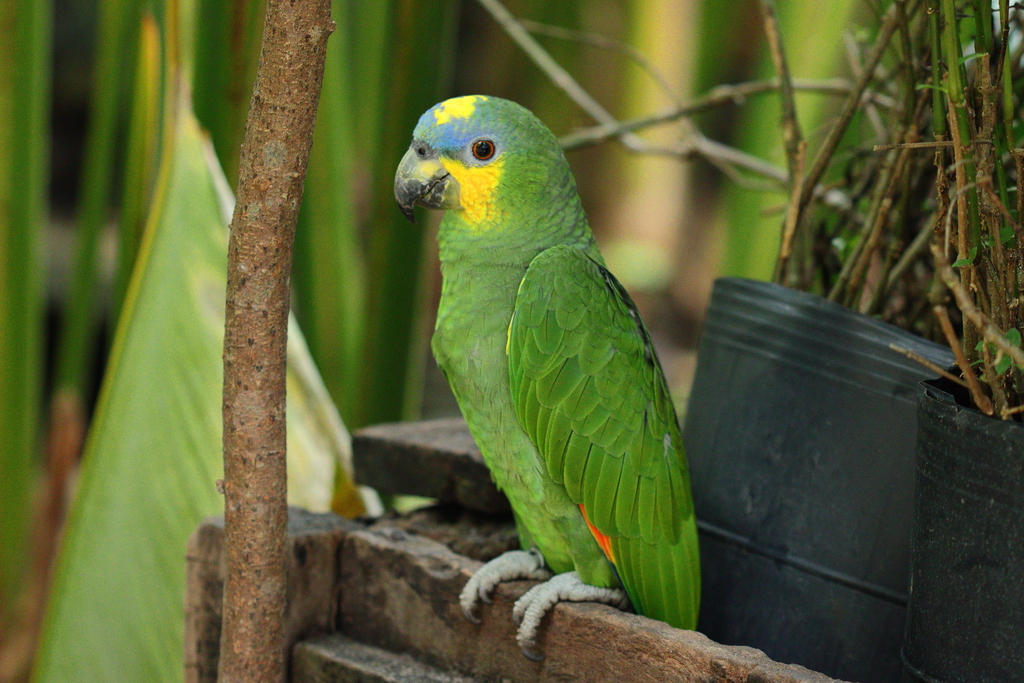
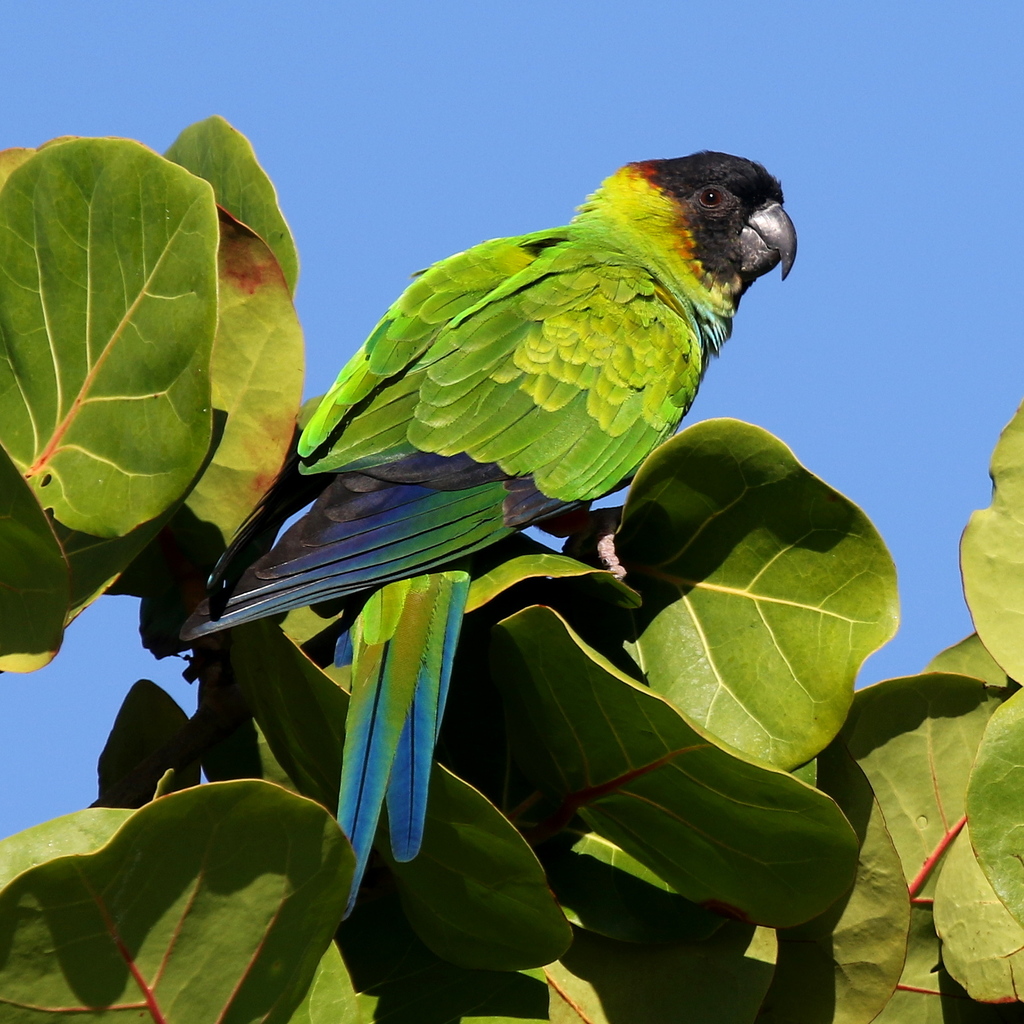
The Nanday Parakeet (Aratinga nenday), also known as the black-hooded parakeet, is one of the most characteristic psittacids of the open fields of the Pantanal. Its black head contrasting with the brilliant green body and blue-violet thigh feathers make this species unmistakable. It forms large noisy flocks that fly over the fields and riparian forests, being one of the most characteristic sounds of the biome [1] [2].
Scientific Classification
| Category | Classification |
|---|---|
| Kingdom | Animalia |
| Phylum | Chordata |
| Class | Aves |
| Order | Psittaciformes |
| Family | Psittacidae |
| Genus | Aratinga |
| Species | Aratinga nenday |
| Common Name | Nanday Parakeet, Black-hooded Parakeet |
Description
The Nanday Parakeet measures between 32 and 37 cm in length and weighs between 140 and 170 g. The plumage is predominantly brilliant green, with a black head, blue-violet thigh feathers, and a tail with a turquoise blue underside. The beak is black and the eyes are orange [1] [3].
Geographic Distribution
It occurs in the Brazilian Pantanal, Bolivia, Paraguay, and northern Argentina. In Brazil, it is found mainly in the Pantanal and adjacent Cerrado areas [1] [4].
Habitat
It frequents open fields, cerrado, riparian forests, and forest edges. It is particularly abundant in field areas with palms and forest islands (capões) of the Pantanal [2] [3].
Behavior
It is a highly gregarious bird, forming flocks of dozens to hundreds of individuals. It is monogamous and forms stable pairs. It sleeps in communal roosts in palms or dense trees [1] [2].
Feeding
It feeds on seeds, fruits, flowers, and buds of various native species. In the Pantanal, it consumes palm fruits and other species characteristic of the biome [3] [4].
Reproduction
It nests in tree cavities or in the nests of other birds. The female lays 3 to 5 white eggs. Incubation lasts about 26 days [1] [3].
Conservation Status
Classified as Least Concern (LC) by the IUCN. It is relatively common in its natural habitat [1] [5].
References
[1] SICK, H. (1997). Ornitologia Brasileira. Nova Fronteira. [2] TUBELIS, D.P.; TOMAS, W.M. (2003). Bird species of the Pantanal wetland, Brazil. Ararajuba, v.11, n.1. [3] DEL HOYO, J. (1992). Handbook of the Birds of the World. Lynx Edicions. [4] IUCN. (2023). Aratinga nenday. The IUCN Red List of Threatened Species. [5] COLLAR, N.J. (1992). Threatened Birds of the Americas. ICBP.