
Dryocopus lineatus (Lineated Woodpecker): Lineated Woodpecker of the Pantanal
Introduction
The lineated woodpecker (Dryocopus lineatus) is one of the most characteristic species of the Pantanal avifauna. It is one of the largest woodpeckers in the region. This species is part of the rich bird diversity of the Pantanal, a biome that hosts more than 650 species and is considered one of the best birdwatching destinations in the world [1] [2].
Scientific Classification
| Category | Classification |
|---|---|
| Kingdom | Animalia |
| Phylum | Chordata |
| Class | Aves |
| Order | Piciformes |
| Family | Picidae |
| Genus | Dryocopus |
| Species | Dryocopus lineatus |
| Common Name | Lineated Woodpecker |
Description
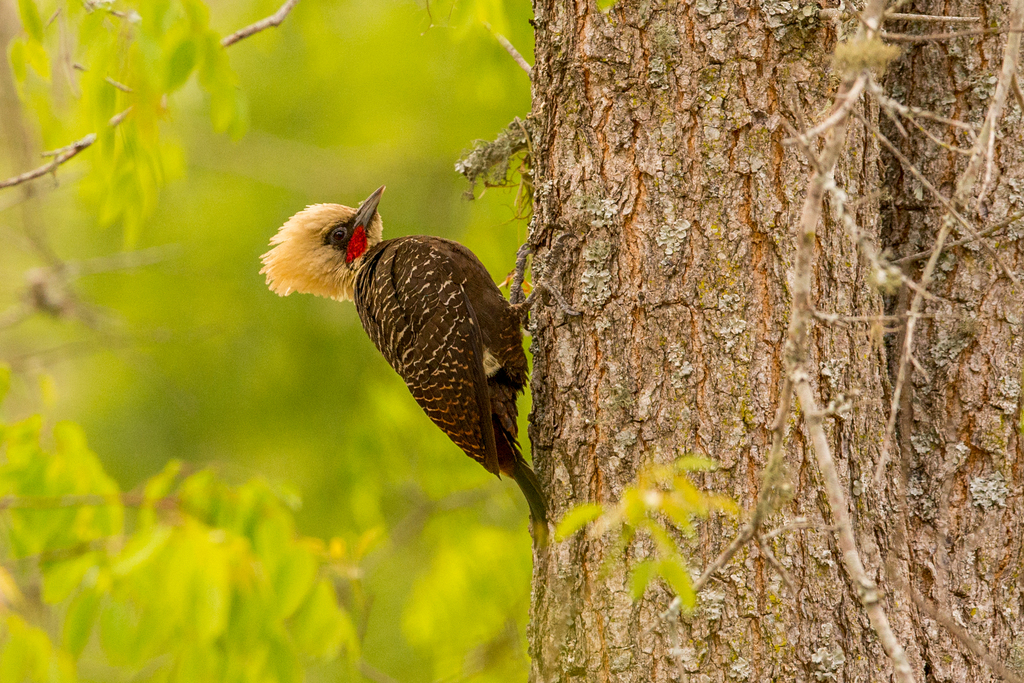
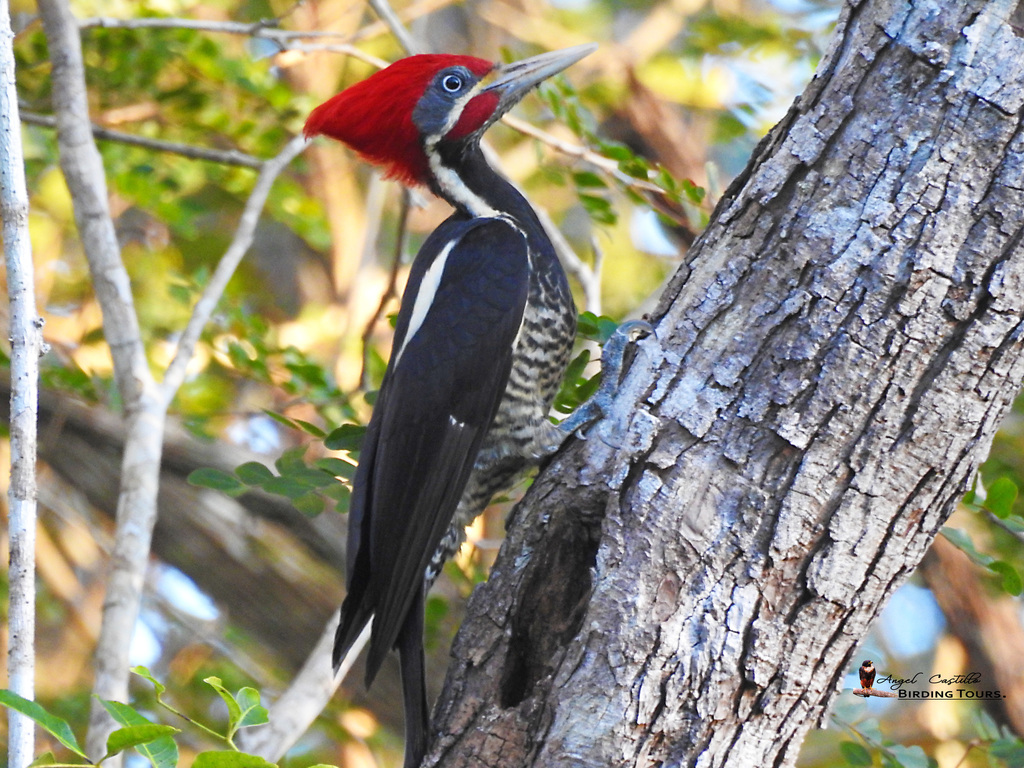
One of the largest woodpeckers of the Pantanal. Black plumage with two white stripes on the neck and face. The male has a prominent red crest (female with a smaller crest and black forehead). The beak is light gray and robust. Length ranges between 33-36 cm and weight between 180-230 g.
Geographic Distribution
From Mexico to northern Argentina. In Brazil, it occurs in all forest biomes. In the Pantanal, it is found in riparian forests and forest patches.
Habitat
Riparian forests, forest patches, and gallery forests. Prefers large trees with decaying wood.
Behavior
Solitary or in pairs. Excavates rectangular holes in wood searching for termites and ants. Emits a loud and rhythmic call. The sound of excavation can be heard from a great distance.
Diet
Termites and ants living in wood, beetle larvae, and other wood-eating insects. Occasionally consumes fruits.
Reproduction
Excavates cavities in dead or living trees. Lays 2-4 white eggs. Incubation lasts 12-14 days. Both parents participate.
Conservation Status
Least Concern (LC) according to the IUCN. Relatively common in the Pantanal.
References
[1] SICK, H. (1997). Ornitologia Brasileira. Nova Fronteira. [2] TUBELIS, D.P.; TOMAS, W.M. (2003). Bird species of the Pantanal wetland, Brazil. Ararajuba, v.11, n.1. [3] DEL HOYO, J. (1992). Handbook of the Birds of the World. Lynx Edicions. [4] IUCN. (2023). Dryocopus lineatus. The IUCN Red List of Threatened Species. [5] COLLAR, N.J. (1992). Threatened Birds of the Americas. ICBP.