

Introduction
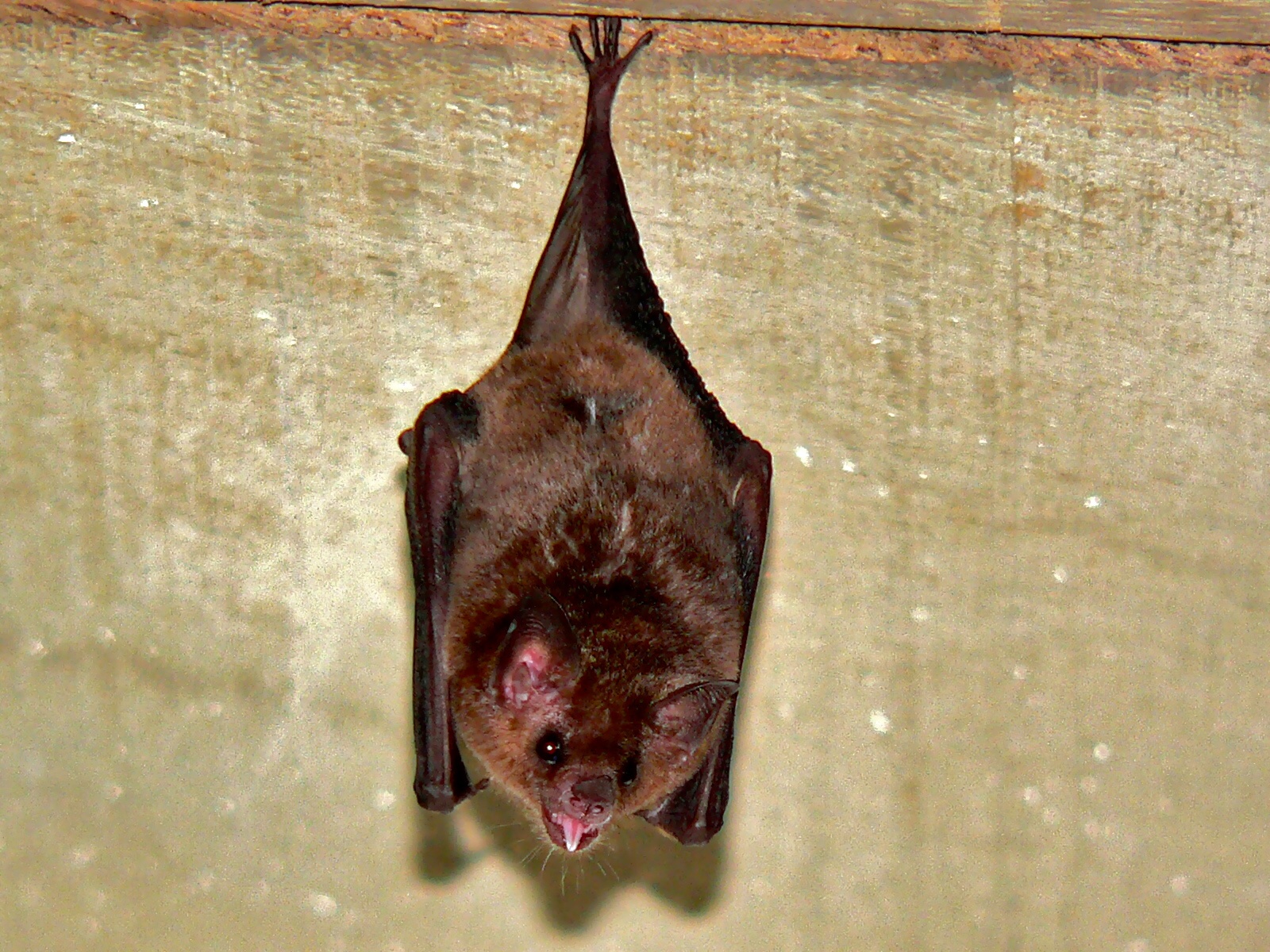
Glossophaga soricina, popularly known as Pallas's long-tongued bat, is one of the most emblematic and ecologically significant chiropteran species in the Brazilian Pantanal. Belonging to the family Phyllostomidae and the subfamily Glossophaginae, this small flying mammal plays a vital role in maintaining Pantanal biodiversity, acting as one of the region's primary nocturnal pollinators. Its presence is an indicator of ecosystem health, as it establishes intricate relationships with various native plant species that depend exclusively on its services for reproduction.
Scientific Classification
| Kingdom | Animalia |
| Phylum | Chordata |
| Class | Mammalia |
| Order | Chiroptera |
| Family | Phyllostomidae |
| Genus | Glossophaga |
| Species | Glossophaga soricina |
| Common name | Long-tongued bat |
In the vast mosaic of habitats that make up the Pantanal, G. soricina stands out for its remarkable adaptability, being found in both preserved forest areas and environments altered by human activity. The species is often compared to hummingbirds due to its technical ability to hover in front of flowers while extracting nectar, a sophisticated evolutionary adaptation that allows for the efficient exploitation of floral resources. In addition to its importance as a pollinator, this bat also contributes to seed dispersal and the control of insect populations, consolidating itself as a multifunctional element in the biome's trophic web.
The relevance of the long-tongued bat to the Pantanal extends to the regional economy, as it pollinates plants of great extractivist and ecological value, such as the jatobá and the pequi. Understanding the biology and ecology of this species is fundamental for developing effective conservation strategies, ensuring that pollination and forest regeneration processes continue to sustain life in the world's largest floodplain.
Physical Description
Glossophaga soricina is a small bat, featuring a morphology highly specialized for a nectarivorous diet. Adults weigh, on average, between 9 and 10.5 grams, with a forearm length ranging around 36 millimeters. Its fur is dense and soft, with coloration transitioning from grayish-brown to dark brown on the back, while the ventral region displays slightly lighter and grayish tones. The snout is visibly elongated, ending in a small, lanceolate nose-leaf, characteristic of the family Phyllostomidae.
The most distinctive physical feature of this species is its extremely long and extensible tongue. The tip of the tongue is covered with elongated filiform papillae, which function like small bristles to efficiently collect nectar and pollen from inside floral corollas. Unlike other genera in the same subfamily, G. soricina has well-developed lower incisors, an important taxonomic feature for its identification. Its eyes are relatively large and functional, complementing the echolocation system during nocturnal navigation and flower localization.
Habitat and Distribution in the Pantanal
In the Pantanal, Glossophaga soricina demonstrates a wide and generalist distribution, occupying a variety of phytophysiognomies. It is commonly found in "capões" (islands of woody vegetation in floodable areas), gallery forests along rivers, cerradões, and dry forests. The species also exhibits a remarkable tolerance for anthropized environments, being frequently sighted in pasture areas with remaining trees and near farm headquarters, where it uses human structures as daytime shelter.
Geographically, the species occurs throughout the Upper Paraguay basin, covering both the lowland areas and the surrounding plateaus. Its ability to move between different habitats allows it to dynamically exploit seasonal resources, following the flowering cycles of Pantanal plants. Globally, its distribution extends from northern Mexico to northern Argentina and Paraguay, evidencing its resilience and evolutionary success in various Neotropical biomes.
Behavior
Pallas's long-tongued bat is strictly nocturnal, starting its foraging activities shortly after dusk. The peak of activity generally occurs in the first four hours after sunset, a period when nectar production in many chiropterophilous plants is at its maximum. During the day, it takes refuge in colonies that can range from a few individuals to groups of up to a thousand specimens, using caves, tree hollows, rock crevices, or human constructions as shelter.
The foraging behavior of G. soricina is complex and can be divided into two main strategies: territoriality and "trap-lining." Some individuals defend small territories around resource-rich plants, chasing away competitors. Others adopt the strategy of fixed routes, traveling distances that can range from 150 meters to more than a kilometer, sequentially visiting various plants and monitoring food availability. Its flight is extremely agile, allowing for quick maneuvers in dense vegetation environments and the execution of hovering flight for feeding.
Feeding
The diet of Glossophaga soricina is classified as generalist within the phytophagous spectrum, although nectarivory is its specialty. It consumes nectar, pollen, fruits, and occasionally insects. In the Pantanal, it plays a crucial role in the pollination of species such as the jatobá-do-cerrado (Hymenaea stigonocarpa), the orchid tree (Bauhinia spp.), and the pequi (Caryocar brasiliense). When visiting flowers, pollen adheres to the hair on its head and shoulders, being transported to other plants, which ensures the genetic variability of plant populations.
In addition to nectar, the bat consumes fruits from various families, such as Moraceae (fig trees) and Cecropiaceae (embaúbas), aiding in seed dispersal through its feces. The consumption of insects, such as small beetles and moths, occurs complementarily, providing essential proteins, especially during periods of floral resource scarcity. This diversified diet allows the species to maintain an extremely high metabolism, one of the highest recorded among mammals of its size.
Reproduction
The reproductive pattern of Glossophaga soricina in the Pantanal tends to be bimodal polyestrous, meaning the species has two birth peaks throughout the year, generally synchronized with periods of greater food resource availability (flowering and fruiting). In some regions with constant resources, reproduction can occur continuously. The gestation period lasts approximately 105 days (about 3.5 months).
Females generally give birth to a single pup at a time, although cases of twins have been rarely recorded. Parental care is intensive; in the first few days, the pup remains attached to the mother's belly, even during foraging flights. Around 18 to 20 days of age, the young begin to be left in the shelter while the mother feeds, and they start their first flights between 25 and 28 days after birth. Complete weaning and independence occur around two months of age.
Conservation Status
Currently, Glossophaga soricina is classified by the International Union for Conservation of Nature (IUCN) as a species of "Least Concern" (LC). Its wide geographical distribution and ability to use disturbed environments contribute to the stability of its populations. However, this does not mean the species is free from risks, especially at the local level in the Pantanal biome.
Main threats include habitat loss due to the conversion of native areas into extensive pastures, the indiscriminate use of pesticides that reduce insect supply and can cause direct poisoning, and human persecution motivated by ignorance. Often, beneficial bats like G. soricina are killed because they are confused with hematophagous species (which feed on blood), highlighting the importance of environmental education programs in the Pantanal for the protection of wildlife.
Curiosities
One of the most fascinating curiosities about Glossophaga soricina is its metabolism. To sustain hovering flight and the constant search for nectar, it has such a high metabolic rate that it needs to consume the equivalent of its own weight in food almost every night. Additionally, it is considered the "hummingbird of the night," occupying an ecological niche almost identical to that of pollinating birds but operating under the cloak of darkness with the aid of a sophisticated sonar system.
Another interesting fact is its importance for the regeneration of Pantanal forests. Many of the trees that form the "capões" depend on this bat for cross-pollination. Without its silent and tireless activity, the Pantanal landscape would be drastically different, with less tree diversity and lower resilience to climate change. Its tongue, when fully extended, can reach a length proportionally greater than that of almost any other mammal, a true marvel of natural biological engineering.
References
[1] IUCN. (2015). *Glossophaga soricina*. The IUCN Red List of Threatened Species. Available at: https://www.iucnredlist.org/species/9277/22109670
[2] ICMBIO. (2018). *Red Book of Threatened Brazilian Fauna*. ICMBio. Available at: https://www.icmbio.gov.br
[3] ALHO, C. J. R. (2008). *Biodiversity of the Pantanal*. UNIDERP Publishing.
[4] REIS, N. R.; LIMA, I. P.; PERACCHI, A. L.; LIMA, M. S.; ROCHA, V. J. (2007). *Bats of Brazil: Field Guide*. Technical Books Editora.
[5] AGUIAR, L. M. S.; MACHADO, R. B. (2004). *Field Guide to Bats of the Cerrado*. Fundação Biodiversitas.
[6] EMBRAPA PANTANAL. (2023). *Fauna of the Pantanal*. Embrapa Pantanal. Available at: https://www.embrapa.br/pantanal/fauna
[7] SOS PANTANAL. (2024). *The importance of bats for the Pantanal*. SOS Pantanal. Available at: https://sospantanal.org.br/a-importancia-dos-morcegos-para-o-pantanal/