
Introduction
Rhopalurus lacreus, commonly known as the Pantanal scorpion, is an arachnid species that exemplifies the specialized biodiversity of the Brazilian Pantanal. Belonging to the family Buthidae, this scorpion is part of a genus known for its interesting biogeographical patterns in South America. In the context of the Pantanal, Rhopalurus lacreus has evolved to thrive in an environment defined by extreme seasonal fluctuations between terrestrial and aquatic phases. While perhaps less famous than the medically significant Tityus species, the Pantanal scorpion is a key predator in the region’s leaf litter and arboreal microhabitats, contributing to the delicate ecological balance of the world’s largest tropical wetland.
In the Pantanal ecosystem, Rhopalurus lacreus serves as an important link in the food chain, preying on a variety of insects and being preyed upon by larger vertebrates. Its presence is particularly notable in the forest islands (capões) and riparian forests that provide refuge during the annual floods. Understanding the biology and ecology of this species offers valuable insights into how terrestrial invertebrates adapt to the unique hydrological pulse of the Pantanal. As a native inhabitant, its conservation is tied to the preservation of the diverse habitats that characterize this UNESCO World Heritage site.
Scientific Classification
| Category | Classification |
|---|---|
| Kingdom | Animalia |
| Phylum | Arthropoda |
| Class | Arachnida |
| Order | Scorpiones |
| Family | Buthidae |
| Genus | Rhopalurus |
| Species | Rhopalurus lacreus |
| Common Name | Pantanal Scorpion |
Description
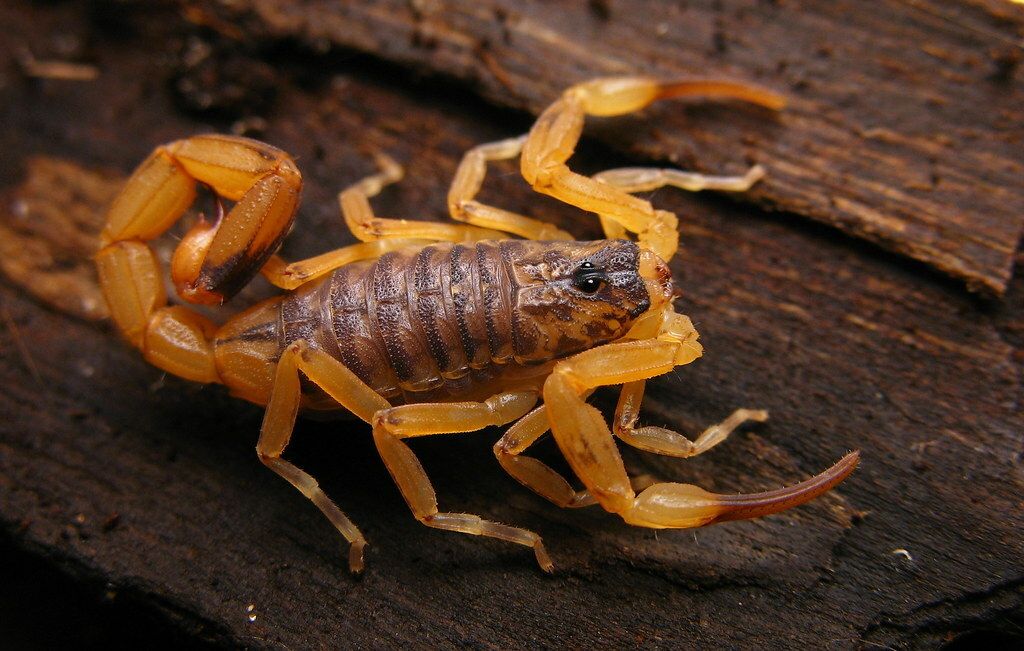
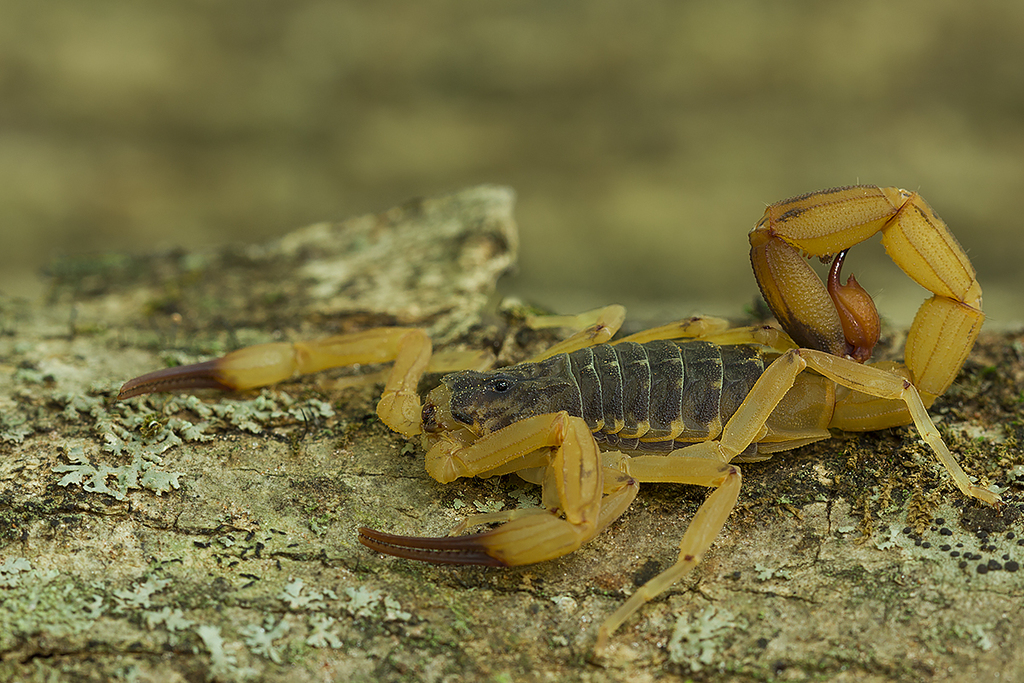
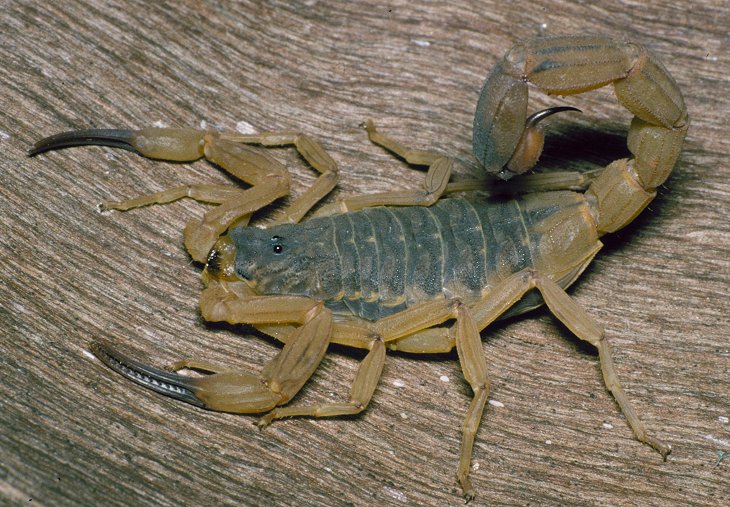
Rhopalurus lacreus is a medium-sized scorpion, typically reaching lengths of 5 to 7 centimeters. Its coloration is generally a yellowish-brown or ochre, which provides effective camouflage against the dry leaves and bark of its habitat. One of the most distinctive features of the genus Rhopalurus is the presence of a stridulatory organ, which allows the scorpion to produce a faint sound by rubbing its pectines against its abdomen, a behavior often used as a deterrent against predators.
The body is relatively slender, with long, thin pedipalps (pincers) that are well-suited for capturing fast-moving insect prey. The metasoma (tail) is moderately thick and ends in a sharp aculeus (sting) connected to venom glands. While its venom is potent enough to paralyze its prey, it is generally not considered as dangerous to healthy adult humans as that of the Tityus genus, though stings can still be painful and cause local reactions. The overall morphology of Rhopalurus lacreus reflects its dual life as both a ground-dweller and an occasional climber.
Geographic Distribution
As its common name suggests, Rhopalurus lacreus is primarily associated with the Pantanal region of Brazil, specifically in the states of Mato Grosso and Mato Grosso do Sul. Its range also extends into neighboring parts of Bolivia and Paraguay that share the same wetland characteristics. Within the Brazilian Pantanal, it is widely distributed across various sub-regions, including the Pantanal of Poconé, Nhecolândia, and Abobral. It is a characteristic species of the “Chaco” influenced areas of the southern Pantanal, where the vegetation and climate create a unique transition zone. Its distribution is closely tied to the availability of non-flooded refuges during the wet season.
Habitat
The habitat of Rhopalurus lacreus is defined by the mosaic of vegetation types found in the Pantanal. It is most commonly found in:
- Forest Islands (Capões): These elevated patches of forest are critical habitats, providing a dry substrate year-round.
- Riparian Forests: The dense vegetation along rivers offers abundant prey and shelter under fallen logs and bark.
- Cerrado and Chaco Transitions: It inhabits the drier, more open woodlands on the edges of the Pantanal basin.
- Arboreal Microhabitats: During the flood season, this species is known to climb trees and hide under bark or in epiphytes to stay above the water line.
Its ability to utilize both terrestrial and arboreal spaces is a key adaptation to the Pantanal’s flood pulse, allowing it to maintain stable populations despite the dramatic changes in the landscape.
Behavior
Rhopalurus lacreus is a nocturnal predator, emerging from its daytime retreats under logs, stones, or bark to hunt. It is a solitary animal and can be quite active during the warmer months. A unique behavioral trait is its use of stridulation; when threatened, it can produce a buzzing sound that may startle potential predators like small mammals or birds. Like most scorpions, it uses its sensitive pectines on the underside of its body to detect chemical and vibrational signals from the environment. During the day, it remains inactive in humid micro-refuges to conserve moisture and avoid the intense heat of the Pantanal sun.
Feeding
The diet of the Pantanal scorpion consists mainly of small to medium-sized invertebrates. Its common prey includes:
- Insects: Termites, crickets, small beetles, and cockroaches.
- Other Invertebrates: Small spiders and occasionally other scorpions.
It uses a “sit-and-wait” or active searching strategy depending on prey density. Once a prey item is detected, the scorpion captures it with its pedipalps and, if necessary, delivers a quick sting to submerge it. The venom contains a mix of toxins designed to rapidly immobilize insects. This predatory activity makes Rhopalurus lacreus an essential component of the Pantanal’s natural pest control system.
Reproduction
Reproduction in Rhopalurus lacreus is sexual. The mating process involves a complex courtship dance where the male leads the female over a suitable surface to deposit his spermatophore. After internal fertilization, the female undergoes a gestation period that can last several months. Like other members of the Buthidae family, it is viviparous. The young are born live and immediately climb onto the mother’s back, where they stay through their first molt. This period of maternal care is vital for protecting the vulnerable young from the numerous predators in the Pantanal. Once they molt, the young scorpions disperse to begin their independent lives.
Conservation Status
Rhopalurus lacreus has not been formally evaluated by the IUCN Red List, and therefore its official conservation status is “Not Evaluated.” However, as a species endemic to the Pantanal and surrounding regions, its survival is intrinsically linked to the health of the biome. Threats such as large-scale habitat conversion for agriculture, altered fire regimes, and changes in the hydrological cycle due to climate change could impact its populations. Currently, it is considered relatively common within its range, but the preservation of the Pantanal’s habitat mosaic is essential for ensuring that this unique scorpion remains a part of the region’s fauna.
References
[1] LOURENÇO, W. R. (2002). Scorpions of Brazil. Les Éditions de l’If. [2] TERUEL, R. B., & TIETZ, A. K. (2008). The genus Rhopalurus in South America. Boletín de la Sociedad Entomológica Aragonesa. [3] BUZAS, A. F., et al. (2015). Scorpion fauna of the Pantanal wetland, Brazil. Journal of Venomous Animals and Toxins including Tropical Diseases. [4] EMBRAPA PANTANAL. (2018). Biodiversidade do Pantanal. Disponível em: https://www.embrapa.br/pantanal [5] SOS PANTANAL. (2024). Ecossistema do Pantanal. Disponível em: https://sospantanal.org.br [6] POLIS, G. A. (1990). The Biology of Scorpions. Stanford University Press.