

Overview
The Coqueiro River is a fundamental watercourse for the hydrological dynamics of the Northern Pantanal, located in the state of Mato Grosso. Situated in a critical ecological transition region, this river plays a vital role in maintaining local biodiversity, serving as an essential biological corridor for countless species. Its basin is intrinsically linked to the complex system of bays and corixos that define the Pantanal landscape, being one of the arteries that feed wildlife and traditional communities in the Barão de Melgaço and Poconé regions.
As a significant tributary of the Cuiabá River system, the Coqueiro River is not just a drainage channel but an environmental regulator. It sustains open water ecosystems and floodable areas that are refuges for fauna during periods of extreme drought. The presence of palm trees on its banks, which give the river its name, offers food resources and nesting sites for a wide range of birds, consolidating its importance as an ecological pillar in the mosaic of the Mato Grosso Pantanal.
In addition to its biological relevance, the Coqueiro River possesses deep socioeconomic value for riverine populations, such as the Cuiabá-Mirim community. For these inhabitants, the river is the main source of subsistence, providing fish and water, as well as serving as a transport route in a region where roads are often impassable during the flood season. Its preservation is, therefore, inseparable from the cultural and physical survival of these traditional communities.
Geography and Course
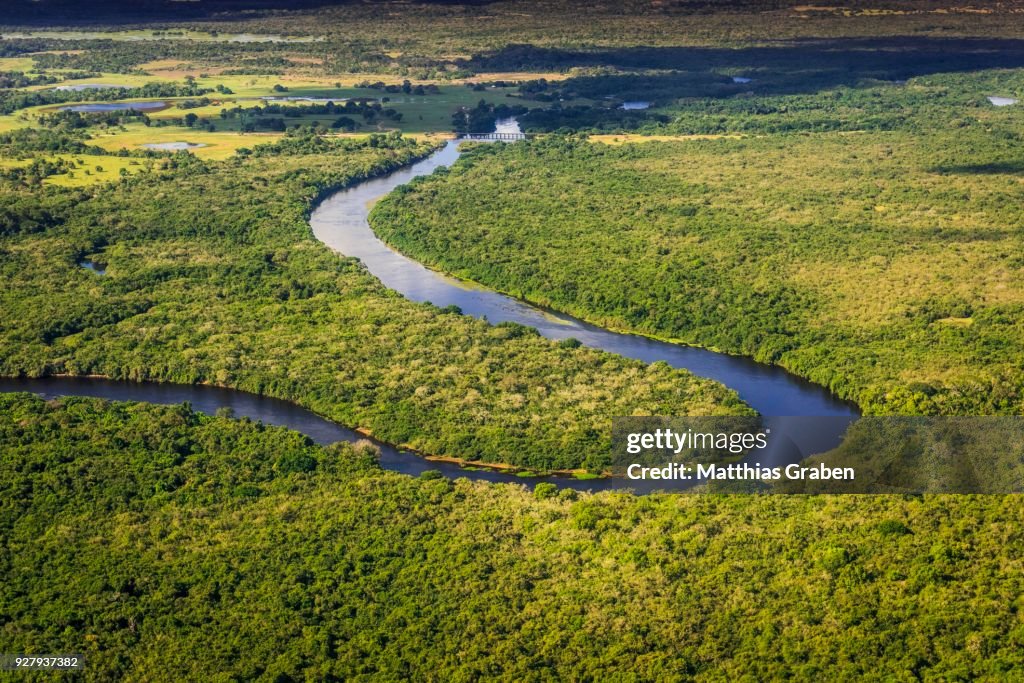
The Coqueiro River has its origins in the transition areas between the plateau and the Pantanal plain in Mato Grosso. Its course runs through a region characterized by sedimentary soils and extremely flat topography, which favors the formation of sharp meanders and marginal bays. The river flows predominantly in a north-south direction, integrating into the Cuiabá River sub-basin, which in turn is one of the main tributaries of the Paraguay River.
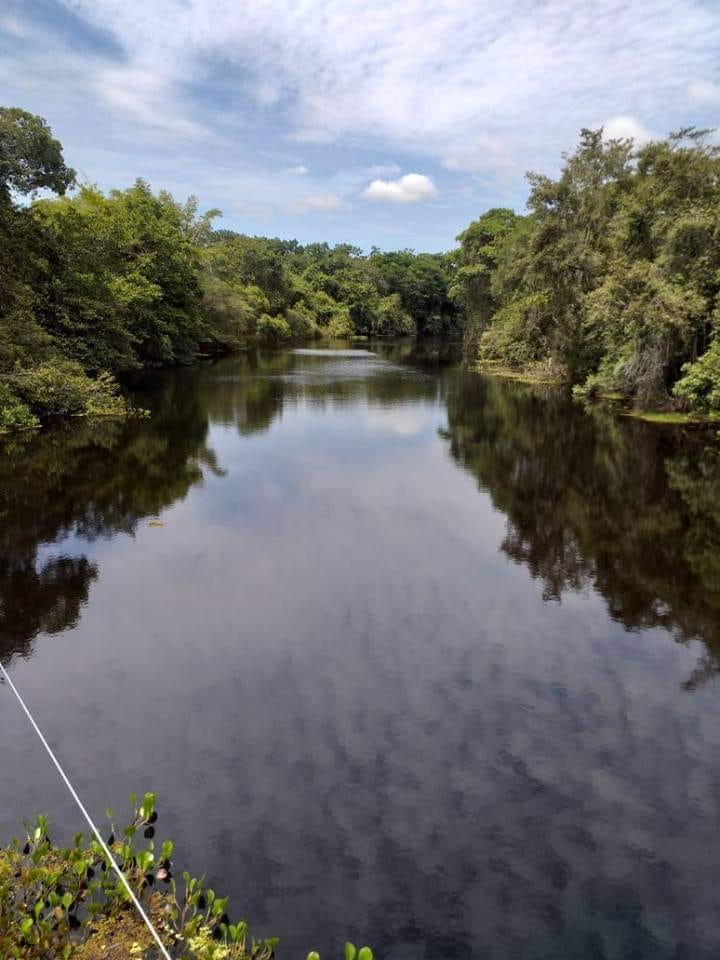
Along its path, the Coqueiro River connects to important lentic water bodies, such as Coqueiro Bay and Sinhá Mariana Bay. These bays are, in fact, flood lakes that maintain a connection with the main river channel during most of the year. The river's course is marked by dense riparian vegetation, composed of species typical of the Cerrado and the Pantanal, with emphasis on the populations of palm trees (coqueiros) that line its waters, creating a unique and wild landscape setting.
The river crosses areas belonging to the municipalities of Barão de Melgaço and Poconé, regions that concentrate some of the most preserved areas of the Northern Pantanal. Although its exact length may vary due to the seasonal flood dynamics that constantly alter its bed, the Coqueiro River is recognized as one of the hydrological axes that define local hydrography, also connecting to other systems such as the Pixaim River and the São Lourenço River through a complex network of corixos.
Hydrological Role in the Pantanal
The Coqueiro River is an active component of the Pantanal's flood pulse, the seasonal phenomenon that dictates the rhythm of life in the biome. During the rainy season (November to March), the river's water volume increases drastically, overflowing into adjacent plains and filling marginal bays. This flood process is crucial for soil fertilization, as the river transports sediments and organic nutrients that are deposited in the flooded areas, promoting the growth of native pastures and aquatic macrophytes.
In the ebb phase, the Coqueiro River acts as a drainage channel, leading waters back to the main bed of the Cuiabá River. This movement is vital for the renewal of water in the bays, avoiding stagnation and ensuring adequate oxygen levels for aquatic fauna. The hydrological dynamics of the Coqueiro are characterized by a slow flow speed due to the low slope of the terrain, which allows water to remain on the plain for prolonged periods, sustaining the moisture necessary for the ecosystem during the beginning of the dry season.
The interconnection of the Coqueiro River with the corixo system allows it to function as a hydrological escape valve. In years of exceptional floods, known as "big floods," the river helps distribute excess water over a vast area, mitigating the impacts of severe flooding in specific regions. On the other hand, in dry periods, its deep bays retain water, serving as natural reservoirs that ensure the survival of fish and other aquatic animals until the return of the rains.
Fauna and Ecology
The biodiversity associated with the Coqueiro River is extraordinary, reflecting the richness of the Northern Pantanal. In the river's waters, fish species of great ecological and commercial value abound, such as pacu, pintado, cachara, and dourado. The river serves as a spawning ground and nursery for many of these species, which migrate upstream during the piracema. The abundance of fish attracts a wide variety of predators, including the giant otter and the Yacare caiman, which are frequently seen on its banks.
The banks of the Coqueiro River are privileged territories for the jaguar (Panthera onca). The dense riparian vegetation and proximity to bay areas offer the ideal habitat for hunting, especially capybaras and caimans. The region is considered one of the best spots for observing this cat in its wild state, given the preservation of the environment and low human pressure in certain stretches of the river. In addition to the jaguar, mammals such as the marsh deer and the tapir also use the river as a source of water and refuge.
The birdlife is another highlight, with the jabiru, the symbol of the Pantanal, nesting in tall trees near the river. The palm tanager (sanhaço-do-coqueiro), a bird that indirectly gives its name to stretches of the river, is omnipresent, as are various species of kingfishers, herons, and the black-collared hawk. The ecology of the Coqueiro River is an interdependent system where the pulse of the waters regulates food availability, from plankton in the bays to large predators at the top of the food chain.
Tourism and Experiences
Tourism along the Coqueiro River is focused on low-impact ecotourism and sustainable sport fishing. Visitors seeking an authentic experience in the Pantanal find in the river a setting of isolation and scenic beauty. Boat trips through the river's meanders and the Sinhá Mariana and Coqueiro bays allow for close observation of wild animals, making it a mandatory destination for nature photographers and birdwatchers.
Sport fishing is one of the main activities, attracting fishermen from all over the world in search of the legendary dourado and large Pantanal catfish. Many lodges in the region operate with a "catch and release" system, ensuring the maintenance of fish stocks and the health of the ecosystem. In addition to fishing, jaguar observation tourism has grown significantly, with specialized local guides who know the habits of the cats that inhabit the banks of the Coqueiro.
Cultural experiences are also part of the itinerary, with visits to riverine communities that share their knowledge about the river, medicinal plants, and local legends. The sunset in the bays connected to the Coqueiro River is considered one of the most spectacular in the Pantanal, where the reflection of the sky in the calm waters creates an atmosphere of absolute serenity, far from urban bustle.
Connection with Other Rivers
The Coqueiro River is a fundamental piece in the hydrological puzzle of the Pantanal. Its main connection is with the Cuiabá River, of which it is a direct tributary. Through this connection, the waters of the Coqueiro eventually reach the Paraguay River, contributing to the flow of the Pantanal's largest basin. This network allows for fish migration and the transport of nutrients over hundreds of kilometers.
In addition to the Cuiabá, the Coqueiro River maintains seasonal links with the São Lourenço River through systems of corixos and overflow areas during big floods. This interconnectivity is what allows the Pantanal to function as a cohesive ecological unit. The river also relates indirectly to the Pixaim River, sharing hydrological influence zones that sustain the Transpantaneira region. Other important connections include the Taquari River and the Miranda River, which although geographically distant, are part of the same pulsing system of the Upper Paraguay Basin.
References
[1] EMBRAPA PANTANAL. (2010). *Bacia do Alto Rio Paraguai: Diagnóstico e Perspectivas*. Embrapa Pantanal. Available at: https://www.embrapa.br/pantanal/publicacoes
[2] ALHO, C. J. R. (2008). *Biodiversidade do Pantanal*. Editora UNIDERP.
[3] POTT, A.; POTT, V. J. (1994). *Plantas do Pantanal*. Embrapa-SPI.
[4] IUCN. (2016). *Mauritia flexuosa*. The IUCN Red List of Threatened Species. Available at: https://www.icmbio.gov.br
[5] SOS PANTANAL. (2023). *A importância dos rios e corixos para a biodiversidade pantaneira*. SOS Pantanal. Available at: https://sospantanal.org.br
[6] ICMBIO. (2018). *Plano de Ação Nacional para a Conservação das Espécies Ameaçadas de Extinção do Pantanal*. ICMBio. Available at: https://www.icmbio.gov.br