
Overview
The Pindaival River is a fundamental watercourse for the hydrological dynamics of the Northern Pantanal, located in the state of Mato Grosso. Acting as an important tributary in the Cuiabá River basin and maintaining vital connections with the Piquiri River and São Lourenço River systems, this river plays a crucial role in maintaining the wetlands of the Barão de Melgaço region. Its basin is characterized by a smooth transition between the highlands and the floodplain, serving as an ecological corridor for various species that depend on the seasonal alternation between droughts and floods.
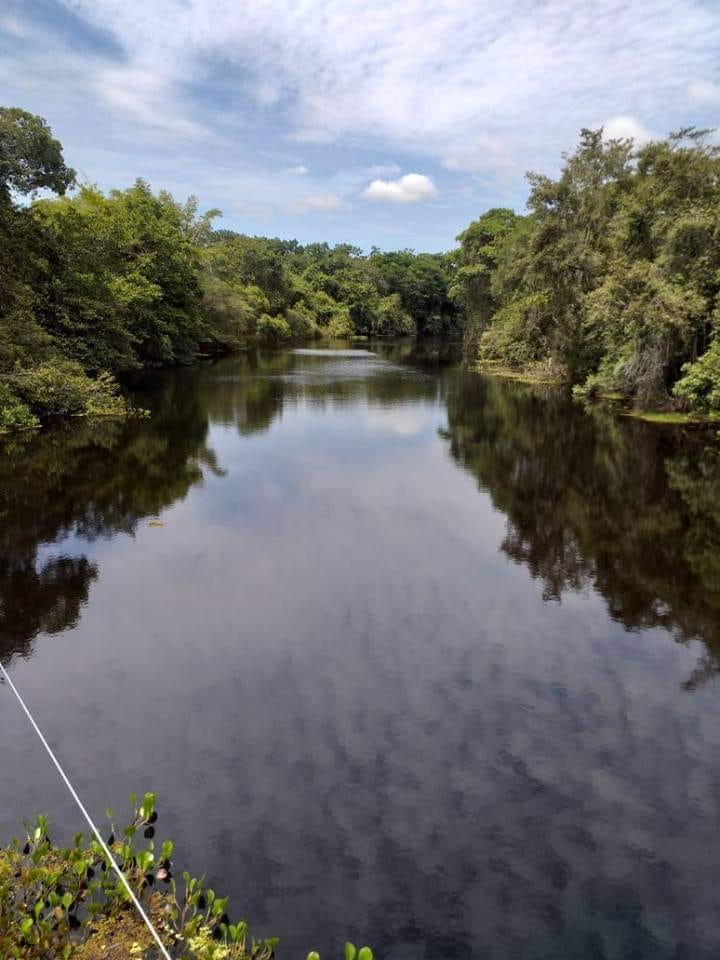
Geographically, the Pindaival River is inserted in one of the most preserved areas of the Mato Grosso Pantanal. Its importance goes beyond the water flow, being a pillar for local biodiversity and for the riverside communities that depend on its resources for subsistence and transport. The river is known for its waters that wind through dense gallery forests, providing a rich and varied habitat that sustains the iconic wildlife of the biome.
Geography and Course
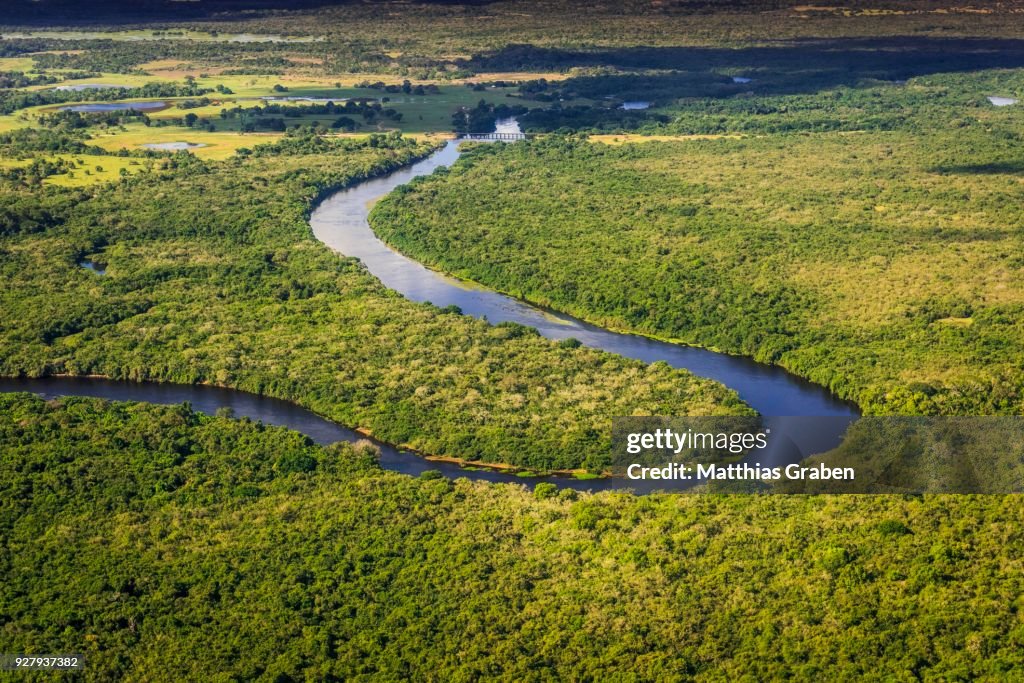
The Pindaival River has its origins in the transition regions from the plateau to the plain, flowing predominantly in a north-south direction through the municipality of Barão de Melgaço. The river's course is marked by a low-gradient relief, which results in a highly sinuous path, with the formation of several meanders and secondary branches. It is one of the main tributaries that feed the complex system of 'baías' (lakes) and 'corixos' (natural channels) of the Northern Pantanal, flowing into or strategically connecting with the São Lourenço River and influencing the volume of the Cuiabá River.
Along its journey, the Pindaival crosses areas of dense vegetation, including Cerrado formations and flooded forests. The exact length of the river varies according to the season, as during the flood period, its limits merge with the overflow areas, creating a vast aquatic network. The geology of the region is mainly composed of modern alluvial sediments, which are constantly remodeled by the force of the waters during the annual flood pulse.
Hydrological Role in the Pantanal
The hydrological role of the Pindaival River is defined by the flood pulse, the seasonal phenomenon that governs life in the Pantanal. During the rainy season (November to March), the river's volume increases drastically, causing its banks to overflow and flood the adjacent plains. This process is vital for soil fertilization, as the waters carry nutrient-rich sediments that are deposited on the plain, sustaining the primary productivity of the ecosystem.
In the dry season, the Pindaival River retracts to its main bed but maintains deep pools and channels that serve as critical refuges for aquatic fauna. The hydrological dynamics of the Pindaival are intrinsically linked to the level of the Paraguay River, which acts as the main drainage axis for the entire Pantanal basin. The natural damming caused by the Paraguay's waters during the flood causes the Pindaival and other tributaries to reduce their flow speed, prolonging the time the water remains on the plain.
Fauna and Ecology
The ecology of the Pindaival River is vibrant and diverse. In its waters, iconic Pantanal fish species are found, such as the Pacu, the Pintado, and the Dourado, which use the river for their reproductive cycles and migrations (piracema). The riverbanks are inhabited by a dense population of birds, including the jabiru stork, the kingfisher, and various species of herons that feed on the sandbanks and shallow areas.
The presence of large mammals is a striking feature of the Pindaival region. The jaguar (Panthera onca) is frequently sighted in the gallery forests along the river, using the watercourse as a hunting and movement route. Other common animals include the giant otter, the capybara, and the yacare caiman, which find ideal shelter and feeding conditions in the Pindaival. The riparian flora, composed of species such as the 'sarã' and the 'carandá' palm, offers protection against bank erosion and serves as a food source for terrestrial fauna.
Tourism and Experiences
Tourism along the Pindaival River is mainly focused on ecotourism and sustainable sport fishing. Due to its remote and preserved location, the river offers a deep immersion experience in the wild nature. Local operators organize boat expeditions that allow for the observation of animals in their natural habitat, with a highlight on photographic safaris focused on jaguars and rare birds.
For fishing enthusiasts, the Pindaival is a valued destination for the abundance and size of the specimens captured, always following the 'catch and release' rules to ensure the preservation of fish stocks. Lodges in the Barão de Melgaço region serve as a base for exploring the river, offering specialized guides who deeply know the secrets of its channels and 'baías.' Navigating the Pindaival, especially during sunset, is described by visitors as one of the most contemplative and beautiful experiences in the Northern Pantanal.
Connection with Other Rivers
The Pindaival River is not an isolated system; it is part of a complex and interdependent hydrographic network. It connects directly with the Cuiabá River, contributing to the flow that sustains the central region of the Pantanal. Furthermore, its proximity and seasonal connections with the São Lourenço River and the Piquiri River create an essential water corridor for fish migration and nutrient transport.
Through the flood system, the Pindaival also establishes indirect links with the Paraguay River, the final destination of all waters in the basin. In periods of extreme flooding, the Pindaival's waters can mix with those of other systems, such as the Pixaim River, demonstrating the incredible water connectivity that defines the world's largest continuous floodplain.
References
[1] ALHO, C. J. R. (2008). *Biodiversity of the Pantanal*. UNIDERP Publishing.
[2] EMBRAPA PANTANAL. (2010). *Ecological-Economic Zoning of the Pantanal: Subsidies for Territorial Management*. Embrapa Pantanal.
[3] JUNK, W. J.; DA SILVA, C. J. (1995). *Mato Grosso's Pantanal: A Large South American Wetland*. In: *The Ecology of Large Rivers*. John Wiley & Sons.
[4] POTT, A.; POTT, V. J. (1994). *Plants of the Pantanal*. Embrapa-SPI.
[5] SOS PANTANAL. (2024). *The Pantanal and its rivers*. SOS Pantanal. Available at: https://sospantanal.org.br/o-pantanal-e-seus-rios/
[6] TUNDISI, J. G.; TUNDISI, T. M. (2002). *Limnology of the Pantanal: An Integrated Approach*. Rima Publishing.