

Introduction and Overview
The jaguar (Panthera onca), the largest feline in the Americas and one of the most iconic apex predators on the planet, finds one of its most important strongholds in the Brazilian Pantanal. This biome, characterized by its vast floodplain and rich biodiversity, offers ideal conditions for the survival and proliferation of this majestic species. Territoriality is a fundamental aspect of jaguar ecology, shaping its distribution, social interactions, hunting strategies, and, ultimately, population dynamics. Understanding space use patterns and territorial marking strategies is crucial for the effective conservation of this feline, especially in an environment as dynamic and complex as the Pantanal.
Territoriality in the jaguar is not a static concept but rather a set of behaviors and strategies that vary based on factors such as sex, age, resource availability (prey and water), population density, and habitat structure. In the Pantanal, where flood and drought cycles drastically alter the landscape and prey distribution, plasticity in territorial behavior is particularly notable. This article explores in depth the territoriality of the jaguar in the Pantanal, addressing its characteristics, modulating factors, marking methods, and ecological and conservation implications.
Characteristics of Territoriality
Jaguar territoriality is a complex behavior involving the active or passive defense of an exclusive or semi-exclusive area against conspecifics. In the Pantanal, this characteristic is particularly pronounced due to the high population density of the species, which can lead to a greater number of interactions and, consequently, the need to establish and maintain clear boundaries.
Size and Variation of Territories
The size of jaguar territories in the Pantanal is remarkably variable, reflecting environmental heterogeneity and resource availability. Adult males generally maintain significantly larger territories than females. Studies in the Pantanal indicate that male territories can range from 25 km² to an impressive 150 km², with some estimates reaching 200 km² in areas with lower prey density or greater fragmentation. This range reflects the need for males to access a sufficient number of females for reproduction, as well as a prey base that sustains their larger body size and energy demands.
Females, on the other hand, maintain smaller territories, typically ranging from 10 km² to 60 km². The main reason for this difference is the need for females to raise and protect their cubs, which requires an area with concentrated and relatively safe resources. Territorial overlap between females is more common than between males, and overlap of female territories with that of a dominant male is also frequent, facilitating mating.
Factors Influencing Territory Size
Several ecological and biological factors modulate the size and shape of jaguar territories in the Pantanal:
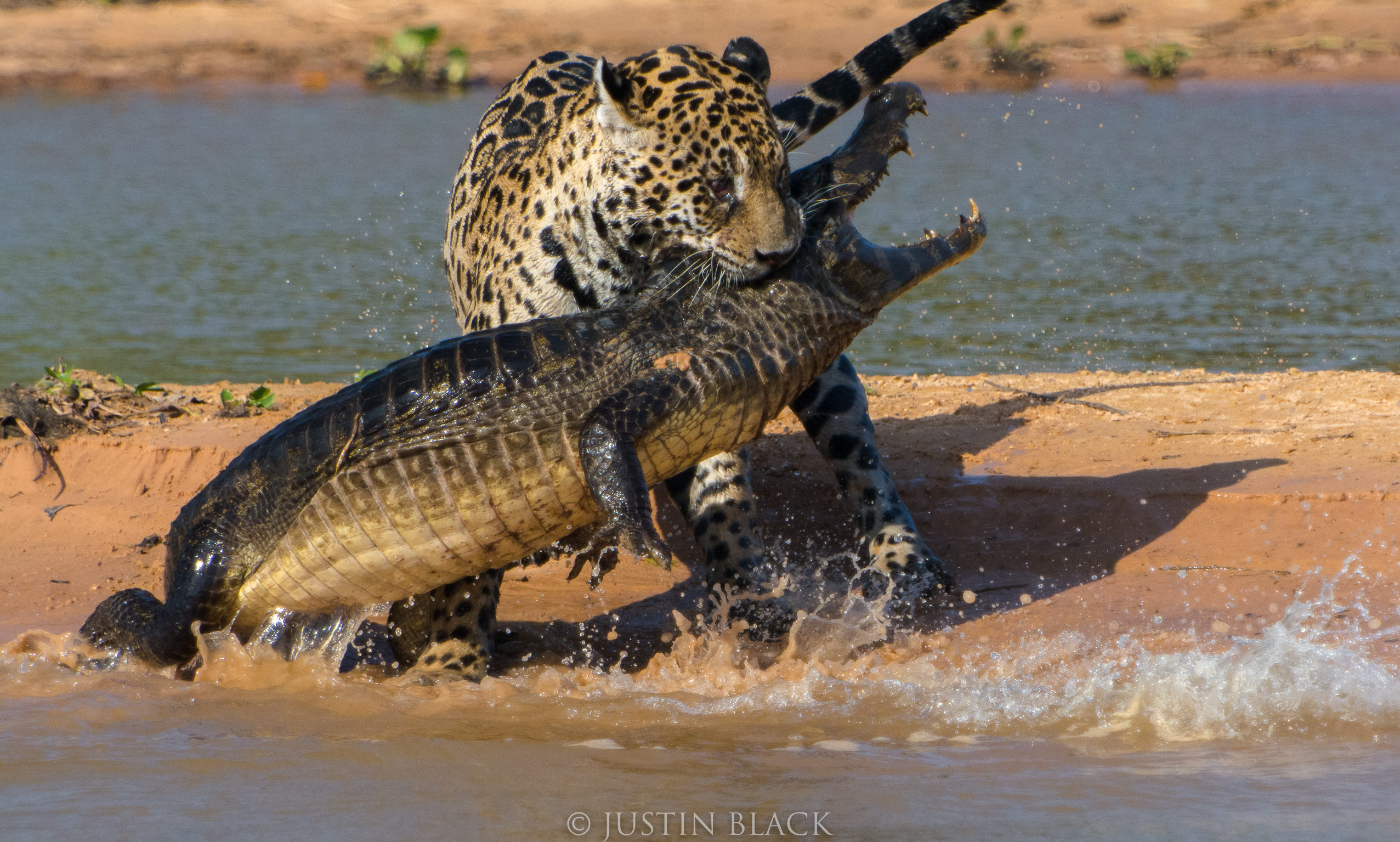
- Prey Availability: Areas with high prey abundance, such as capybaras (Hydrochoerus hydrochaeris), caimans (Caiman crocodilus yacare), and pampas deer (Ozotoceros bezoarticus), tend to sustain smaller territories, as individuals do not need to travel as far to find food. The Pantanal is recognized for its high prey biomass, which contributes to the high density of jaguars and, consequently, to relatively smaller territories compared to other regions.
- Water Availability: The presence of permanent bodies of water, such as rivers, corixos, and lagoons, is crucial for the jaguar, which is an excellent swimmer and frequently hunts in aquatic environments. Proximity to water also influences the distribution of its prey.
- Flood Cycles: The Pantanal’s annual floods and droughts directly impact habitat and prey availability. During the rainy season, flooded areas can fragment the habitat, forcing jaguars to concentrate in higher areas. In the dry season, receding water can concentrate prey, altering hunting strategies and space use. Territorial plasticity allows jaguars to adjust their territories in response to these seasonal changes.
- Population Density: In high population density areas like the Pantanal, competition for resources and sexual partners is more intense, which can lead to smaller and more overlapping territories, or a greater need for marking to avoid conflicts.
- Age and Sex: Young individuals, especially subadult males, may have floating or unestablished territories until they can compete for an area. Females with cubs may reduce their territory size to minimize risks and maximize resource access for the offspring.
Territorial Marking Methods
The jaguar employs a variety of signals to mark its territories, communicating its presence and status to other individuals without the need for direct confrontations. These signals are crucial for maintaining social structure and preventing intraspecific conflicts.
- Tree Scrapes: Jaguars frequently scratch tree trunks with their claws, leaving visible marks. These marks are not only a visual signal but also release pheromones from the interdigital glands, transmitting information about the individual (sex, age, reproductive status). These scrapes are particularly common on trails and at strategic points within the territory.
- Urine and Feces: Depositing urine and feces in prominent locations, such as rocks, fallen logs, or terrain elevations, is a common marking method. Urine contains pheromones that can be detected by other jaguars, providing chemical information about the individual. Feces, in addition to their characteristic odor, may contain genetic material that allows for individual identification.
- Vocalizations: Although less frequent than chemical and visual markings, vocalizations, such as roars and “chuffs” (blowing sounds), are used to announce an individual’s presence and status, especially during the reproductive period or in territorial defense situations. Jaguar roars can be heard at long distances in the Pantanal, serving as a warning to conspecifics.
- Paths and Trails: The repetitive use of certain trails and paths within the territory also serves as a sign of occupation, reinforcing boundaries and the animal’s presence.
Distribution and Occurrence in the Pantanal
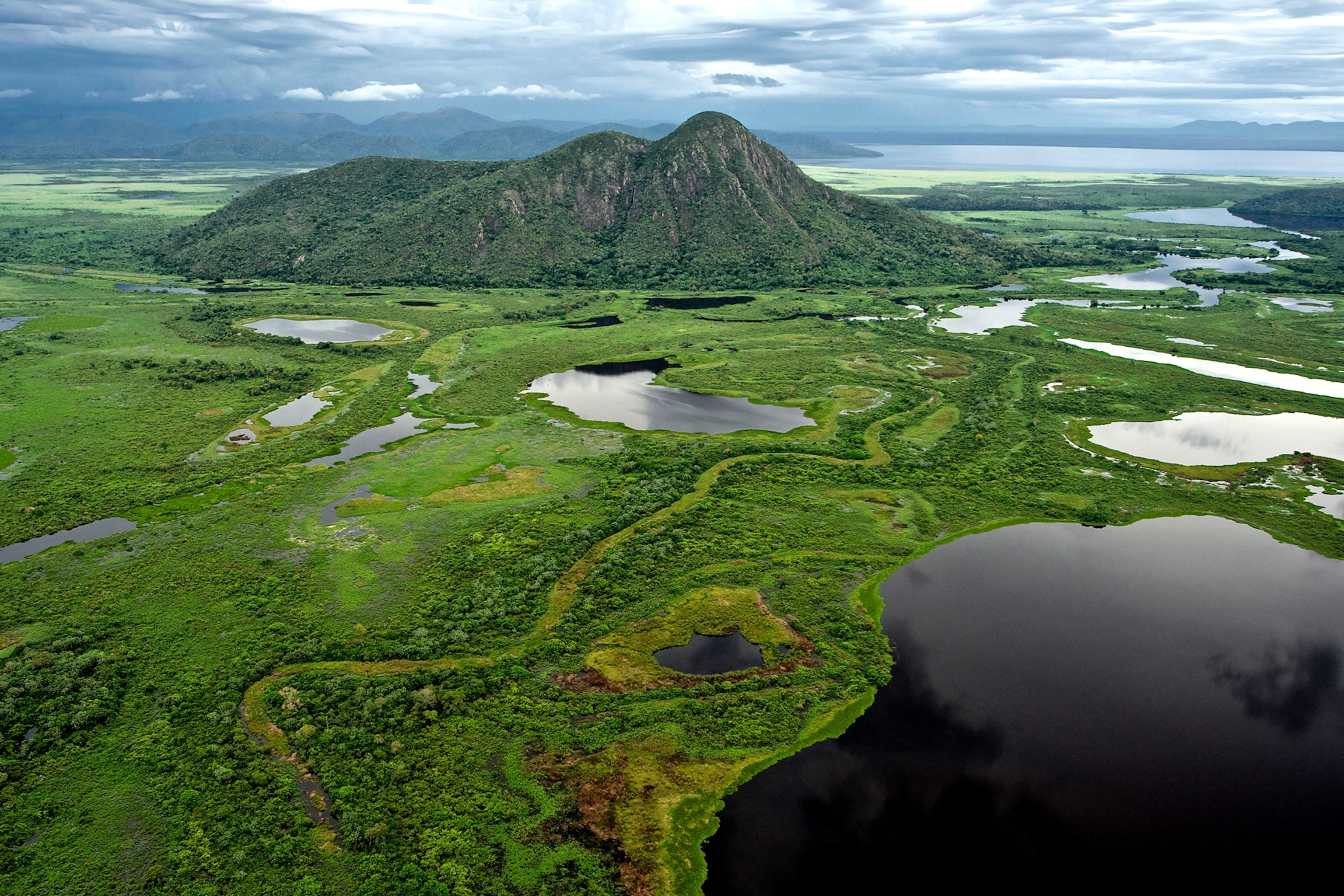
The Pantanal is a mosaic of landscapes including open fields, savannas, riparian forests, forest patches (capões), and flooded areas. The jaguar demonstrates remarkable adaptability to this diversity of habitats, although it prefers areas with dense vegetation for ambushes and rest, and proximity to water bodies.
Population Density
Jaguar population density in the Pantanal is one of the highest in the world, with estimates ranging from 6 to 10 individuals per 100 km² in some areas, such as the Pantanal Matogrossense National Park and private reserves. This high density is a testament to the biome’s resource richness and the effectiveness of the species’ territorial strategies. The concentration of jaguars in specific regions of the Pantanal, such as Porto Jofre and the Rio Miranda region, has driven wildlife observation ecotourism, making the jaguar a symbol of Pantanal conservation.
Habitat Use
Jaguars in the Pantanal use different types of habitat seasonally. During the dry season, they may concentrate in areas near permanent rivers and lagoons, where prey also aggregate. In the rainy season, with the flooding of vast areas, jaguars tend to move to higher ridges (cordilheiras) and forest patches that remain dry. This seasonal movement directly influences the overlap and dynamics of territories.
Ecological Importance
The jaguar, as an apex predator, plays an irreplaceable ecological role in the Pantanal. Its territoriality and hunting strategies influence the structure and functioning of the ecosystem in several ways:
- Prey Population Control: By preying on herbivores such as capybaras, deer, and white-lipped peccaries, the jaguar helps regulate their populations, preventing overgrazing and maintaining vegetation health.
- Natural Selection: Selective predation of weak, sick, or young individuals contributes to the maintenance of healthier and genetically robust prey populations.
- Ecosystem Engineering: By influencing the behavior and distribution of its prey, the jaguar can indirectly affect vegetation structure and the dynamics of other animals. For example, the presence of jaguars can lead herbivores to avoid certain areas, allowing flora regeneration.
- Environmental Health Indicator: The presence of a healthy jaguar population, with well-established territories, is a strong indicator of the Pantanal’s ecological integrity. As apex predators, they are sensitive to environmental disturbances, and their decline can signal broader problems in the ecosystem.
Territorial and Social Interactions
Jaguar territoriality does not imply complete isolation. Although they are solitary animals, jaguars interact for reproductive purposes and, occasionally, in disputes over resources or territory.
Overlap and Tolerance
Territory overlap is more common between females and between females and males. Overlap between adult males is generally minimal, indicating strong mutual exclusion to avoid direct confrontations, which can be dangerous. However, in areas of high prey density, a certain tolerance can be observed. Territorial marking serves precisely to minimize these direct interactions, allowing individuals to communicate and avoid each other.
Reproductive Behavior
Territoriality is intrinsically linked to reproductive behavior. A dominant male’s territory generally encompasses the territories of several females, allowing access for mating. Females, in turn, need a safe and resource-rich territory to raise their cubs. The dispersal of young cubs, especially males, is a critical moment, as they need to establish their own territories, which can lead them to marginal areas or conflicts with established jaguars.
Conservation and Threats
The jaguar in the Pantanal faces significant challenges despite its robust population. Conserving its territories is fundamental for the species’ survival.
Habitat Loss and Fragmentation
Although the Pantanal is a relatively preserved biome, the expansion of livestock, infrastructure construction (roads, hydroelectric plants), and the occurrence of wildfires have led to habitat loss and fragmentation. Reducing available habitat can compress jaguar territories, increasing the density and frequency of agonistic interactions, as well as hindering young dispersal.
Human-Jaguar Conflict
Conflict with ranchers is one of the greatest threats to the jaguar. Cattle predation, although often overestimated, leads to retaliation by farmers, resulting in illegal hunting and poisoning. Understanding jaguar territoriality is crucial for developing management strategies that minimize these conflicts, such as implementing more effective fences, proper cattle management, and promoting coexistence practices.
Wildfires
The large-scale fires that have plagued the Pantanal in recent years represent a devastating threat. In addition to destroying habitat and prey, fires can force jaguars to abandon their territories, leading them to unknown areas and increasing their vulnerability. Recovery of burned areas is a slow process, and the ability of jaguars to re-establish their territories in these areas is a challenge.
Ecotourism and Monitoring
Jaguar observation ecotourism in the Pantanal has grown exponentially, generating revenue and awareness for conservation. Jaguar monitoring through camera traps and GPS telemetry has provided valuable data on their territorial patterns, habitat use, and social behavior, aiding in the formulation of conservation strategies. It is crucial that ecotourism is conducted sustainably, minimizing the impact on the animals and their territories.
Jaguar territoriality in the Pantanal is a pillar of its ecology and a reflection of the biome’s environmental richness. Protecting its territories and mitigating threats are essential to ensure that this magnificent feline continues to thrive and play its vital role as the guardian of the Pantanal.
References
[1] AZEVEDO, F. C. C. de; MURTA, R. P. (2007). Jaguar (Panthera onca) habitat use in the Pantanal of Brazil. Journal of Mammalogy, v. 88, n. 4, p. 1017-1024. Available at: https://academic.oup.com/jmammal/article/88/4/1017/844621
[2] CAVALCANTI, W. A.; GATTO, M. A. (2014). Home range and activity patterns of jaguars (Panthera onca) in the northern Pantanal, Brazil. Mammalian Biology, v. 79, n. 4, p. 273-280. Available at: https://www.sciencedirect.com/science/article/abs/pii/S161650471400030X
[3] QUIGLEY, H. B.; CRAWSHAW JR., P. G. (1992). A comparison of two methods to estimate jaguar population densities. Wildlife Society Bulletin, v. 20, n. 4, p. 403-408. Available at: https://www.jstor.org/stable/3782977
[4] SOUZA, A. C. de; EMMONS, L. H.; ALMEIDA, L. B. de. (2013). Jaguar (Panthera onca) diet in the Pantanal: a review of current knowledge. Biota Neotropica, v. 13, n. 4, p. 1-10. Available at: https://www.scielo.br/j/bn/a/w5yJgY4dK5m7ZfM6xHqY63Q/
[5] TOMLINSON, C.; AZEVEDO, F. C. C. de. (2010). Jaguar (Panthera onca) spatial ecology in the Pantanal: insights from GPS telemetry. Journal of Wildlife Management, v. 74, n. 3, p. 556-564. Available at: https://wildlife.onlinelibrary.wiley.com/doi/abs/10.2193/2009-009
[6] WWF Brazil. (2021). Jaguar. Available at: https://www.wwf.org.br/natureza_brasileira/areas_prioritarias/pantanal/especies_do_pantanal/onca_pintada/
[7] Rio Negro Jaguars Project. (n.d.). Jaguar Ecology. Available at: https://www.oncasdorio.org/ecologia-da-onca-pintada

_on_capybara_(Hydrochoeris_hydrochaeris).JPG/1280px-Yellow-headed_caracara_(Milvago_chimachima)_on_capybara_(Hydrochoeris_hydrochaeris).JPG)