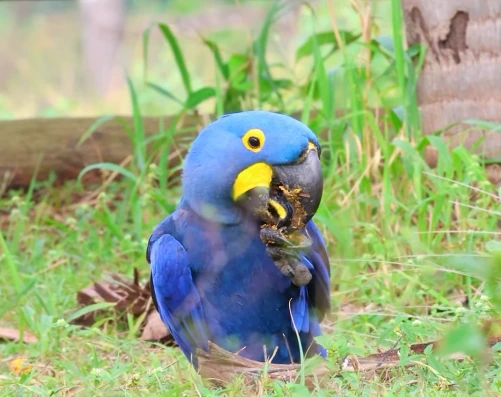
The Hyacinth Macaw (Anodorhynchus hyacinthinus) is one of the most emblematic birds of the Pantanal and one of the largest psittaciformes in the world. Known for its intense blue plumage and strong curved beak, the species can reach about 1 meter in length and weigh up to 1.5 kg.
These birds primarily inhabit cerrado and Pantanal areas, where they find large trees for nesting and a variety of natural foods.
Diet and behavior
The Hyacinth Macaw's diet is mainly based on nuts and seeds, especially from palm trees like acuri and bocaiuva, which are very common in the Pantanal. Its extremely strong beak allows it to crack hard shells with ease.
They are generally seen in pairs or small groups, as they form monogamous pairs and maintain bonds for many years. The couple usually shares the tasks of caring for their chicks.
Reproduction and chick care
Reproduction typically occurs between July and December. Hyacinth Macaws use natural cavities in large trees to build their nests. Usually, one to three eggs are laid, but not all chicks survive to adulthood.
The parents take turns to protect the nest and feed the chicks, demonstrating strong family behavior.