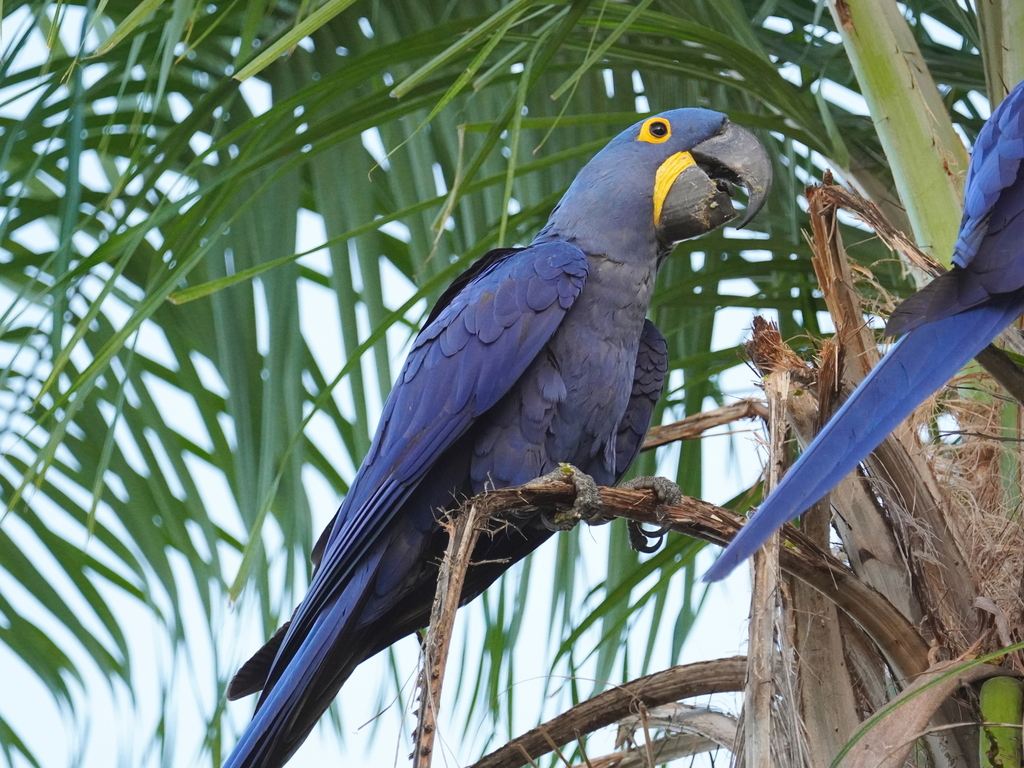


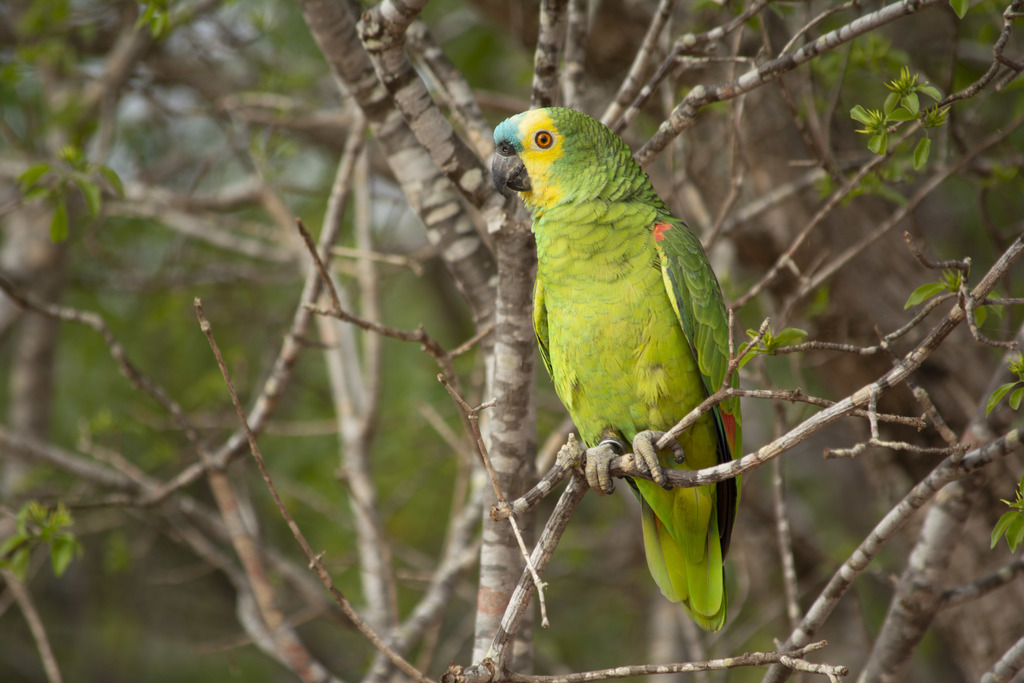
Amazona aestiva (Turquoise-fronted Amazon): Turquoise-fronted Amazon of the Pantanal
Introduction
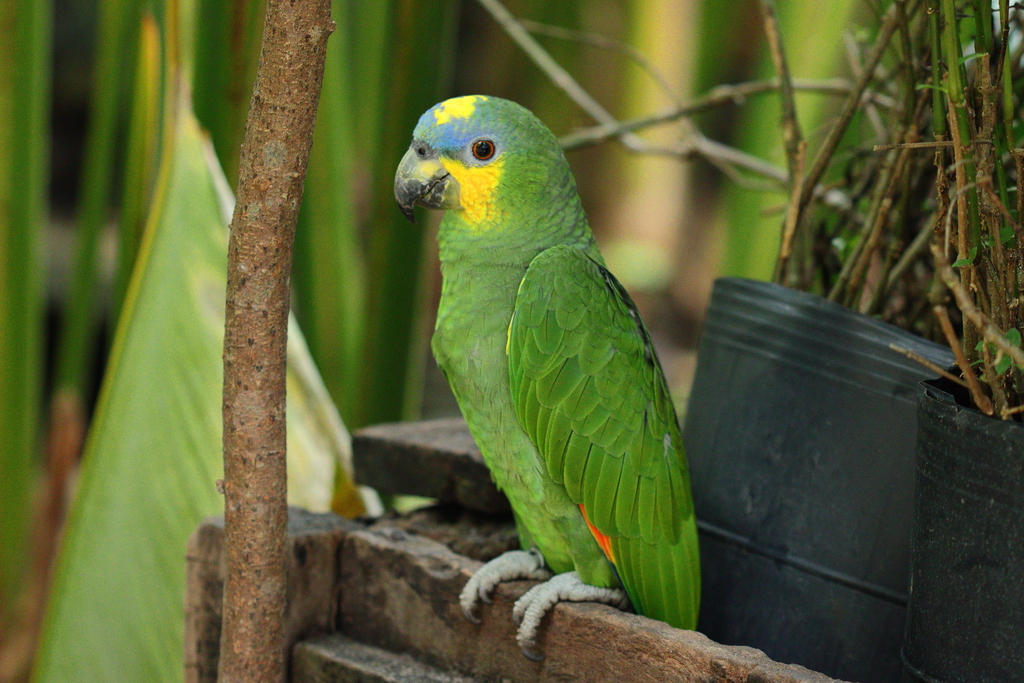
The turquoise-fronted amazon (Amazona aestiva) is one of the most characteristic species of the Pantanal avifauna. It has predominantly bright green plumage, with a violet-blue forehead and lores, yellow cheeks, and an orange-red wing speculum visible in flight. This species is part of the rich bird diversity of the Pantanal, a biome that hosts more than 650 species and is considered one of the world’s best destinations for birdwatching [1] [2].
Scientific Classification
| Category | Classification |
|---|---|
| Kingdom | Animalia |
| Phylum | Chordata |
| Class | Aves |
| Order | Psittaciformes |
| Family | Psittacidae |
| Genus | Amazona |
| Species | Amazona aestiva |
| Common Name | Turquoise-fronted Amazon, Blue-fronted Parrot |
Description
Predominantly bright green plumage, with a violet-blue forehead and lores, yellow cheeks, and an orange-red wing speculum visible in flight. The bill is dark gray. The eyes are orange. Length varies between 35-38 cm and weight between 300-450 g.
Geographic Distribution
Central Brazil (Cerrado and Pantanal), Bolivia, and northern Argentina. In the Pantanal, it is the most common and widely distributed parrot species.
Habitat
Gallery forests, forest patches (capões), cerradão, and forest edges. It prefers areas with large trees for nesting.
Behavior
Highly gregarious and vocal. It forms flocks of dozens to hundreds of individuals that move in search of food. Monogamous, with stable pairs for life. It sleeps in communal roosts.
Feeding
Fruits, seeds, flowers, buds, and tree bark. In the Pantanal, it consumes fruits from palms, fig trees, and other native species. It is an important seed disperser.
Reproduction
Nests in natural tree cavities. The female lays 2-4 white eggs. Incubation: 26-28 days. Chicks remain in the nest for 60-70 days.
Conservation Status
Vulnerable (VU) in Brazil (ICMBio). It faces intense pressure from the illegal wildlife trade — it is one of the most frequently seized species in Brazil.
References
[1] SICK, H. (1997). Ornitologia Brasileira. Nova Fronteira. [2] TUBELIS, D.P.; TOMAS, W.M. (2003). Bird species of the Pantanal wetland, Brazil. Ararajuba, v.11, n.1. [3] DEL HOYO, J. (1992). Handbook of the Birds of the World. Lynx Edicions. [4] IUCN. (2023). Amazona aestiva. The IUCN Red List of Threatened Species. [5] COLLAR, N.J. (1992). Threatened Birds of the Americas. ICBP.