

Amazona amazonica (Orange-winged Amazon): The Orange-winged Parrot
Introduction
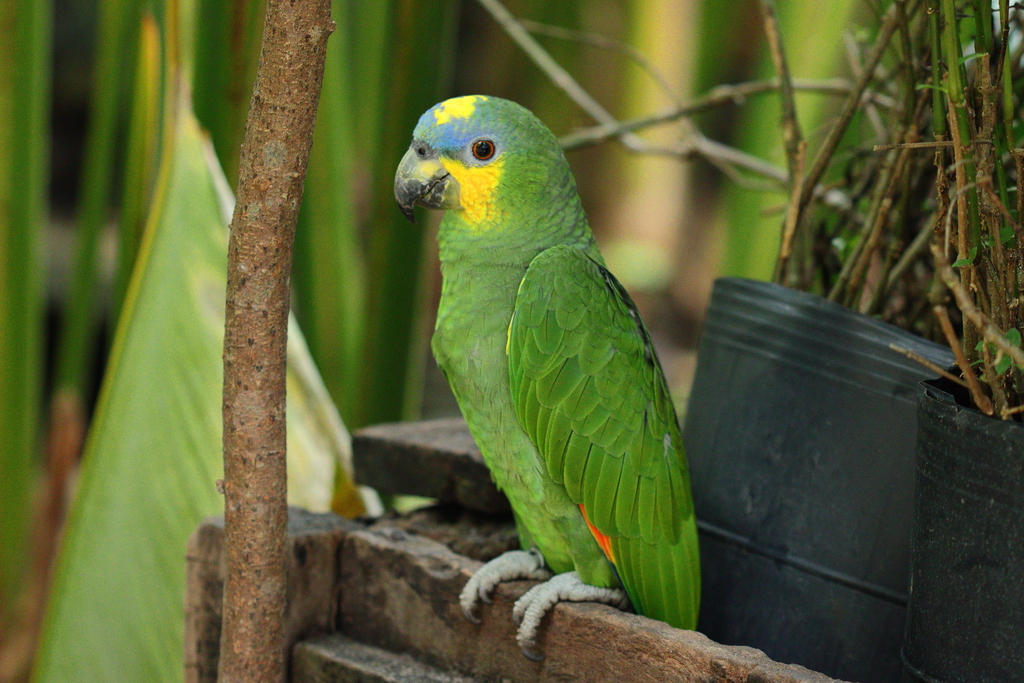
The orange-winged amazon (Amazona amazonica), also known as the orange-winged parrot, is one of the most common and noisy parrots in the Pantanal. With predominantly green plumage and reddish-orange details on the wings, this species forms large flocks that fly over gallery forests at dusk, creating a unique visual and auditory spectacle [1] [2].
Scientific Classification
| Category | Classification |
|---|---|
| Kingdom | Animalia |
| Phylum | Chordata |
| Class | Aves |
| Order | Psittaciformes |
| Family | Psittacidae |
| Genus | Amazona |
| Species | Amazona amazonica |
| Common Name | Orange-winged Amazon, Orange-winged Parrot |
Description
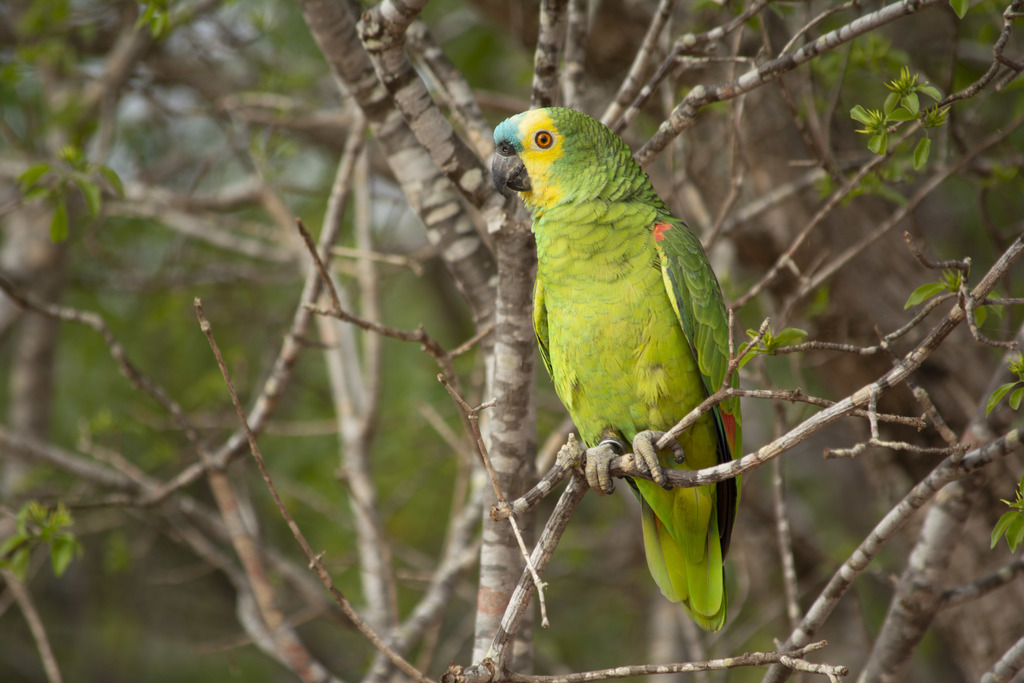
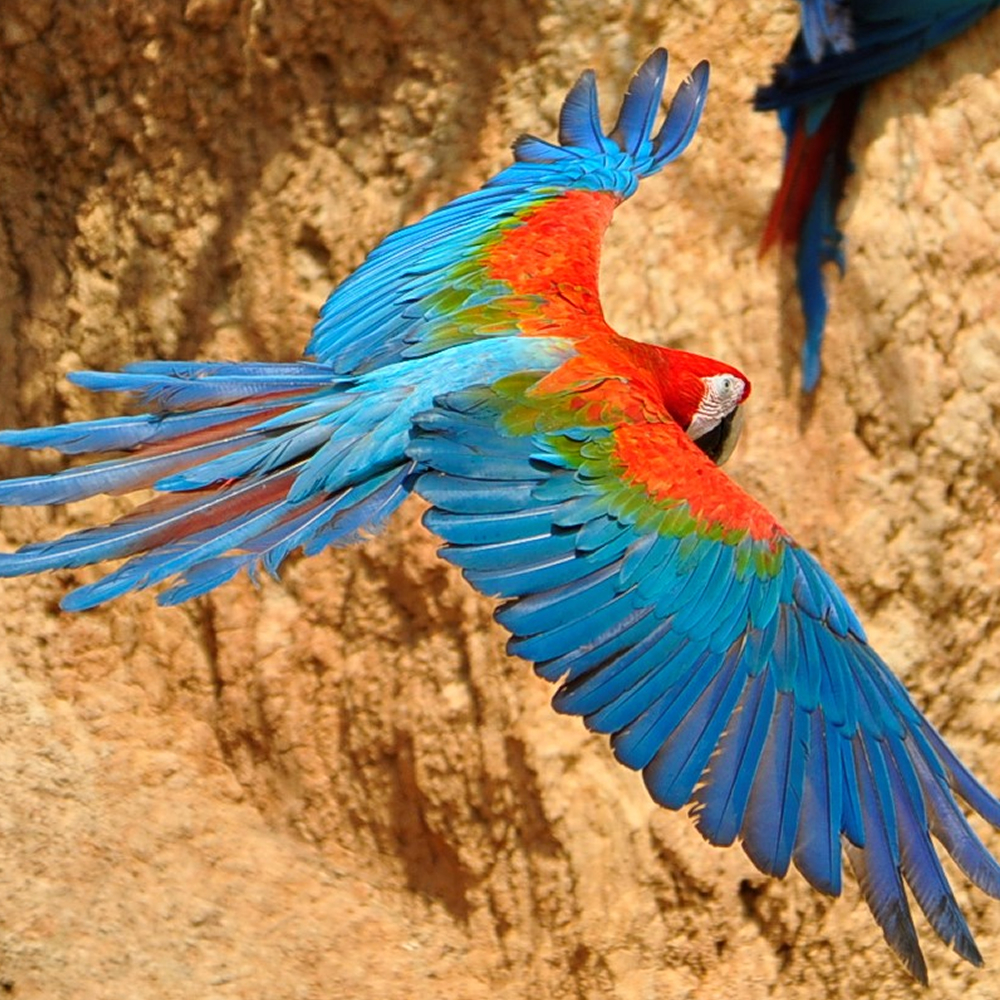
The orange-winged amazon measures between 31 and 35 cm in length and weighs between 250 and 380 g. The plumage is predominantly green, with a violet-blue forehead, yellow lores, and an orange-red wing speculum visible in flight. The bill is light gray with a darker tip. The eyes are orange [1] [3].
Geographic Distribution
Occurs from Venezuela and Trinidad to northern Bolivia and central Brazil. In Brazil, it is found in the Amazon, the Cerrado, and the Pantanal, being one of the most widely distributed parrot species in the country [1] [4].
Habitat
Frequents gallery forests, forest patches (capões), cerradão, and forest edges. In the Pantanal, it is most common in the gallery forests of large rivers and in the forest patches that dot the flooded fields [2] [3].
Behavior
The orange-winged amazon is a gregarious and highly vocal bird. It forms flocks of dozens to hundreds of individuals that move in search of food and communal roosts. It is monogamous and forms stable pairs [1] [2].
Feeding
Feeds mainly on fruits, seeds, flowers, and buds of various native species. It is an important seed disperser in the Pantanal [3] [4].
Reproduction
Nests in natural tree cavities. The female lays 2 to 5 white eggs. Incubation lasts about 26 days. The chicks remain in the nest for approximately 60 days [1] [3].
Conservation Status
Classified as Least Concern (LC) by the IUCN. It faces pressure from the illegal wildlife trade [1] [5].
References
[1] SICK, H. (1997). Ornitologia Brasileira. Nova Fronteira. [2] TUBELIS, D.P.; TOMAS, W.M. (2003). Bird species of the Pantanal wetland, Brazil. Ararajuba, v.11, n.1. [3] DEL HOYO, J. et al. (1992). Handbook of the Birds of the World. Lynx Edicions. [4] IUCN. (2023). Amazona amazonica. The IUCN Red List of Threatened Species. [5] COLLAR, N.J. et al. (1992). Threatened Birds of the Americas. ICBP.