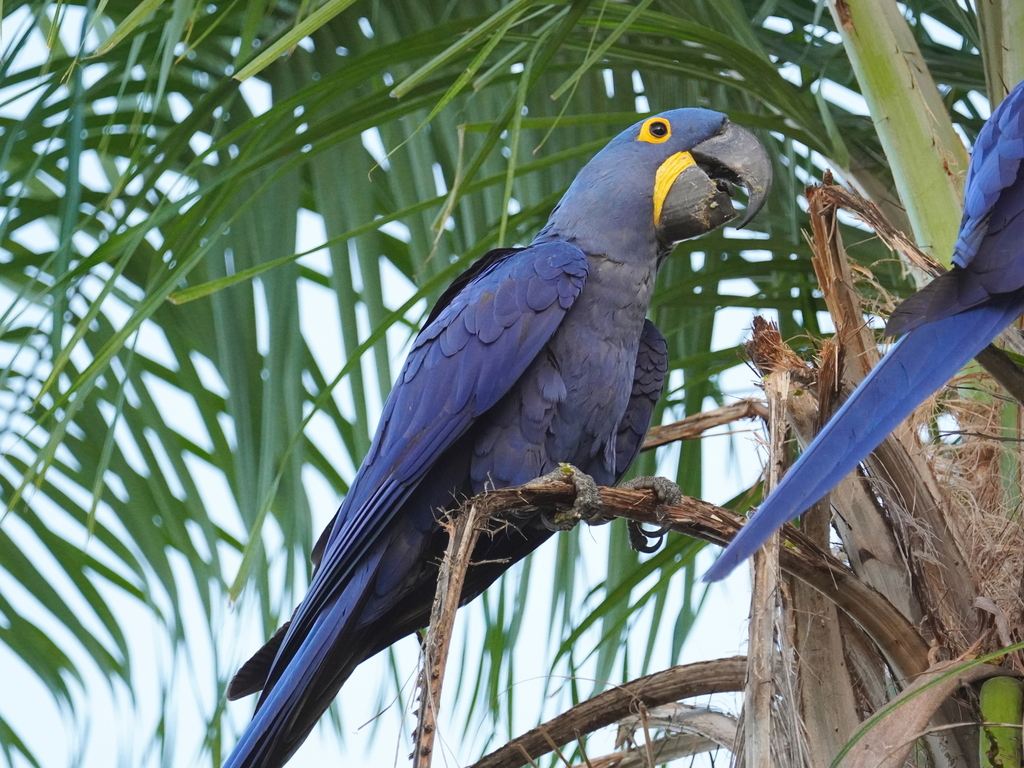


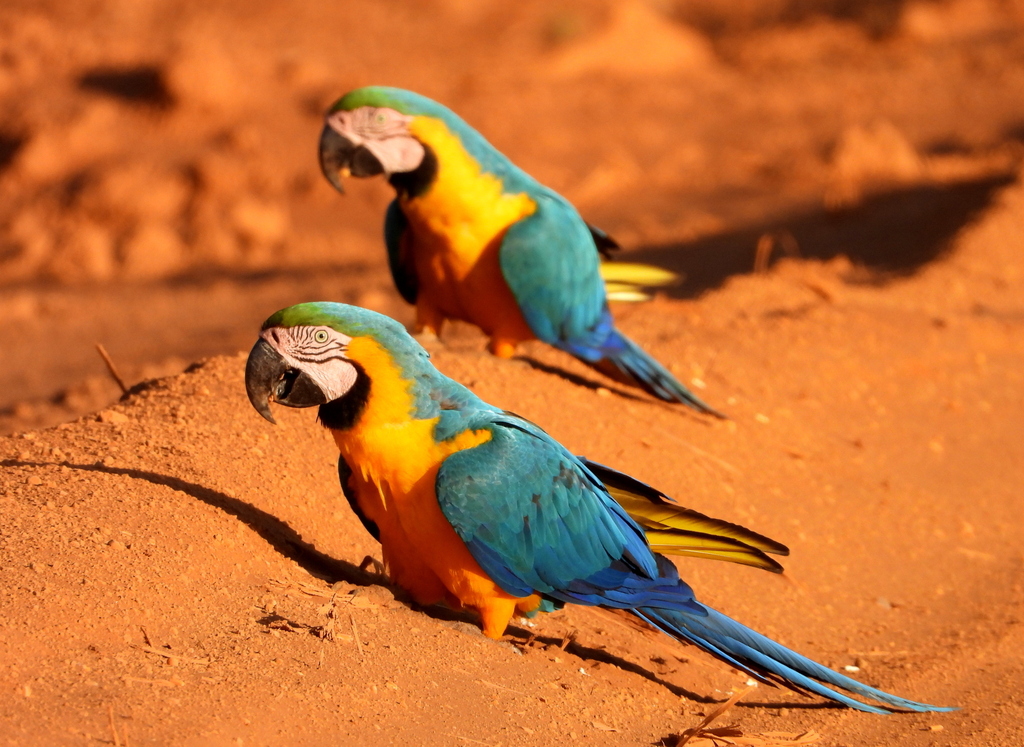
Ara ararauna (Blue-and-yellow Macaw): The Blue-and-Yellow Macaw of the Pantanal
Introduction
The blue-and-yellow macaw (Ara ararauna) is one of the most colorful and charismatic birds of the Pantanal. With its stunning turquoise-blue plumage on the upperparts and yellow on the underparts, this large macaw is one of the greatest attractions for birdwatchers and tourists visiting the biome. Its flight in pairs or groups over forest patches and gallery forests is one of the most iconic images of the Pantanal [1] [2].
Scientific Classification
| Category | Classification |
|---|---|
| Kingdom | Animalia |
| Phylum | Chordata |
| Class | Aves |
| Order | Psittaciformes |
| Family | Psittacidae |
| Genus | Ara |
| Species | Ara ararauna |
| Common Name | Blue-and-yellow Macaw, Blue-and-gold Macaw |
Description
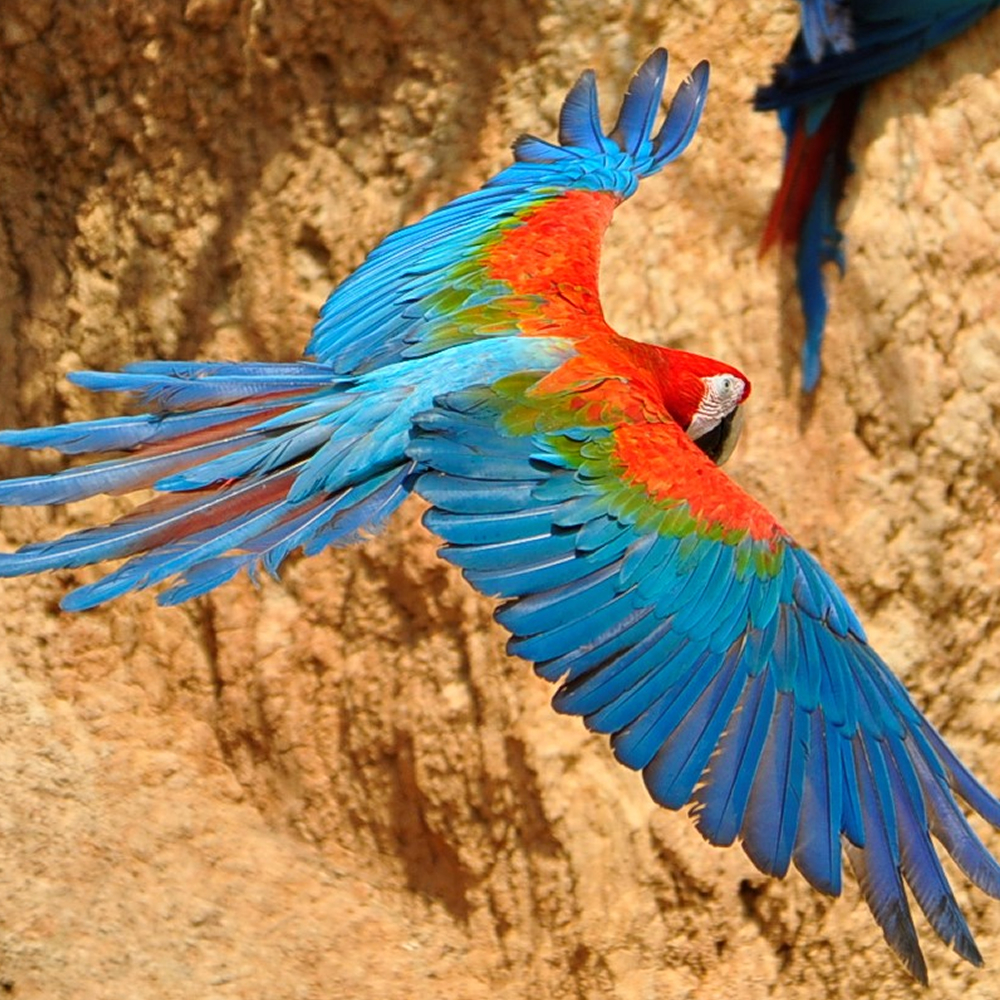
The blue-and-yellow macaw is one of the largest macaws in the world, measuring between 76 and 86 cm in length (including the long tail) and weighing between 900 g and 1.3 kg. The plumage of the upperparts is brilliant turquoise-blue, while the underparts (chest, belly, and inner wing surface) are golden-yellow. The face is white with black feather stripes and yellow eyes. The bill is black, robust, and curved — adapted for cracking hard seeds and fruits [1] [3].
Geographic Distribution
Occurs from eastern Panama to northern Bolivia and central Brazil. In Brazil, it is found in the Amazon, the Cerrado, and the Pantanal. In the Pantanal biome, it is a resident and relatively common species, especially in the Northern Pantanal [1] [4].
Habitat
Frequents gallery forests, forest patches (capões), cerradão, and forest edges near open areas. It requires trees with cavities for nesting, especially palms and large trees [2] [3].
Behavior
The blue-and-yellow macaw is a monogamous bird that forms stable pairs for life. It is highly vocal, emitting loud screeches that can be heard from a great distance. Outside the breeding season, it forms flocks of dozens of individuals that move in search of food [1] [2].
Feeding
Feeds mainly on seeds, fruits, nuts, and flowers. In the Pantanal, it consumes fruits from various native species, including bocaiuva, acuri, and other palms. Its powerful bill allows it to crack extremely hard seeds [3] [4].
Reproduction
Nests in natural tree cavities or in nests excavated in riverbanks. The female lays 2 to 3 white eggs. Incubation lasts about 26 days, performed mainly by the female. The chicks remain in the nest for approximately 90 days [1] [3].
Conservation Status
Classified as Least Concern (LC) by the IUCN. Although relatively common, it faces pressure from the illegal wildlife trade — it is one of the most frequently captured birds in Brazil for the pet trade [1] [5].
References
[1] SICK, H. (1997). Ornitologia Brasileira. Nova Fronteira. [2] TUBELIS, D.P.; TOMAS, W.M. (2003). Bird species of the Pantanal wetland, Brazil. Ararajuba, v.11, n.1. [3] DEL HOYO, J. et al. (1992). Handbook of the Birds of the World. Lynx Edicions. [4] IUCN. (2023). Ara ararauna. The IUCN Red List of Threatened Species. [5] COLLAR, N.J. et al. (1992). Threatened Birds of the Americas. ICBP.