
Caiman latirostris (Broad-snouted Caiman)
Introduction
Caiman latirostris, popularly known as the broad-snouted caiman, is one of the most characteristic crocodilian species of South America. In the Pantanal, although less abundant than the Pantanal caiman (Caiman yacare), it plays a crucial ecological role as an intermediate predator in aquatic ecosystems. Its name is a direct reference to its most striking physical feature: a snout that is noticeably wider and shorter than that of other caimans. [1] [2]
This species is recognized for its remarkable resilience and ability to inhabit a wide variety of environments, from large rivers to small temporary ponds and even brackish waters. In the Pantanal, the broad-snouted caiman is a vital component of biodiversity, contributing to the balance of aquatic populations and serving as an indicator of environmental health. Its history is also marked by successful conservation efforts after decades of intense hunting for its high-quality skin. [1] [3]
Scientific Classification
| Category | Classification |
|---|---|
| Kingdom | Animalia |
| Phylum | Chordata |
| Class | Reptilia |
| Order | Crocodilia |
| Family | Alligatoridae |
| Genus | Caiman |
| Species | Caiman latirostris |
Description
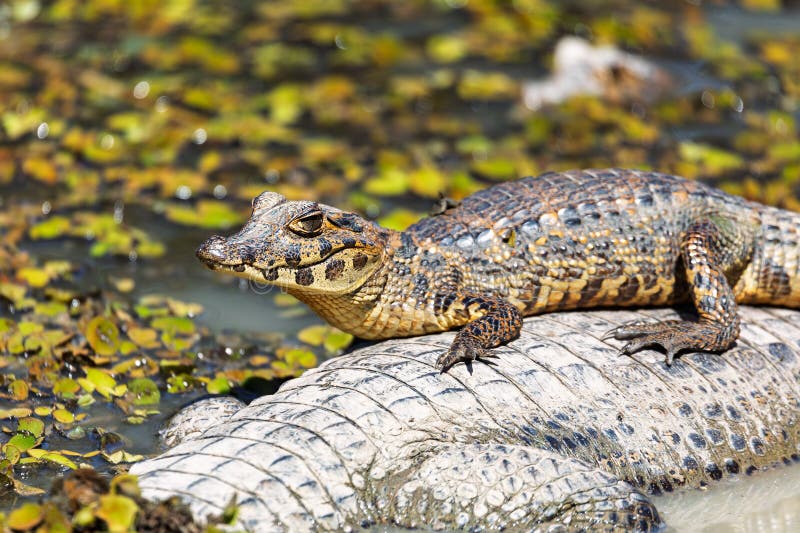
The broad-snouted caiman is a medium-sized crocodilian. Adults typically measure between 1.5 and 2.5 meters in length, although exceptional specimens can reach up to 3 meters. Its most distinctive feature is the snout, which is almost as wide as it is long, an adaptation that provides a powerful bite for crushing hard shells, such as those of snails and turtles. [2] [4]
The coloration of adults is usually olive-green or dark gray, which helps with camouflage in murky waters and dense vegetation. Juveniles are lighter, with dark transverse bands on the body and tail. The skin of the broad-snouted caiman is highly valued because it has fewer osteoderms (bony plates) on the belly compared to other species, making it more flexible and suitable for the leather industry. [3] [5]
Distribution and Habitat
The geographic distribution of Caiman latirostris is extensive, covering Brazil (from the Northeast to the South), Paraguay, Uruguay, northern Argentina, and eastern Bolivia. In the Pantanal, it is found mainly in areas with dense aquatic vegetation, such as marshes, lagoons, and slow-moving rivers. [2] [6]
Unlike the Pantanal caiman, which prefers more open waters, the broad-snouted caiman is often associated with more closed and shaded habitats. It is a highly adaptable species, capable of surviving in environments modified by human activity and even in waters with some degree of salinity, which allows it to inhabit coastal areas in other parts of its range. [1] [4]
Behavior
The broad-snouted caiman is a predominantly nocturnal animal, spending the day basking in the sun to regulate its body temperature or hidden among aquatic plants. It is generally more shy and less gregarious than the Pantanal caiman, often found alone or in small groups. [3] [7]
During the dry season in the Pantanal, these caimans may seek refuge in burrows dug into the banks of rivers or remain in the last remaining pools of water. They are excellent swimmers, using their powerful tails for propulsion. Although they appear slow on land, they can move with surprising speed over short distances when threatened or when moving between water bodies. [2] [5]
Diet / Nutrition
The diet of Caiman latirostris is generalist and changes as the animal grows. Juveniles feed mainly on insects, small crustaceans, and mollusks. Adults have a diet that includes fish, amphibians, other reptiles, and occasionally birds and small mammals. [1] [3]
A notable aspect of its diet is malacophagy (feeding on mollusks). Thanks to its wide snout and powerful jaw muscles, the broad-snouted caiman is a specialist in crushing the shells of aquatic snails (Ampullariidae), which are abundant in the Pantanal. This specialized diet helps control the populations of these mollusks, which can be intermediate hosts for various parasites. [4] [8]
Reproduction
Reproduction occurs during the rainy season, between November and January. The female builds a mound-shaped nest using organic matter (leaves, branches, and soil), usually in areas of dense vegetation near the water. She lays between 20 and 60 eggs, which are incubated by the heat generated by the decomposition of the nest material and the sun. [1] [6]
The female is a dedicated mother, guarding the nest against predators like lizards and coatis. When the hatchlings are ready to emerge, they emit high-pitched sounds, signaling the mother to help them out of the nest and carry them to the water in her mouth. Parental care can last for several months, significantly increasing the survival chances of the young. [2] [9]
Ecological Importance
In the Pantanal, the broad-snouted caiman is a key species for the maintenance of aquatic ecosystems. As a predator, it regulates the populations of its prey, including fish and mollusks. Furthermore, its nests, after being abandoned, serve as microhabitats for various species of invertebrates and even other small vertebrates. [3] [7]
Another important ecological role is the cycling of nutrients. By moving between different water bodies and feeding in one place while defecating in another, caimans help distribute essential nutrients throughout the ecosystem. They are also considered “ecosystem engineers,” as their movements and burrowing activities help maintain water channels and small ponds during the dry season. [4] [10]
Conservation Status
Currently, Caiman latirostris is classified as Least Concern (LC) by the IUCN Red List. This is a major conservation success story, as the species was heavily threatened by illegal hunting and habitat loss in the mid-20th century. Effective protection and sustainable management programs in countries like Argentina and Brazil have allowed populations to recover. [2] [5]
Despite the favorable status, the species still faces challenges. The main threats include the destruction of its habitat for agricultural expansion, water pollution by pesticides, and the drainage of wetlands. In the Pantanal, the preservation of riparian forests and permanent lagoons is essential to ensure the long-term survival of the broad-snouted caiman. [1] [9]
Curiosities
- The sex of the hatchlings is determined by the temperature of the nest during incubation: higher temperatures tend to produce males, while lower temperatures produce females.
- The broad-snouted caiman is more tolerant of cold than most other crocodilian species, which allows it to live as far south as Uruguay and central Argentina.
- Its skin is considered one of the best in the world for the production of high-quality leather due to the small size of its bony scales.
- In some regions, it is known as the “jacaré-de-papo-amarelo” because, during the breeding season, the throat area can take on a yellowish tint.
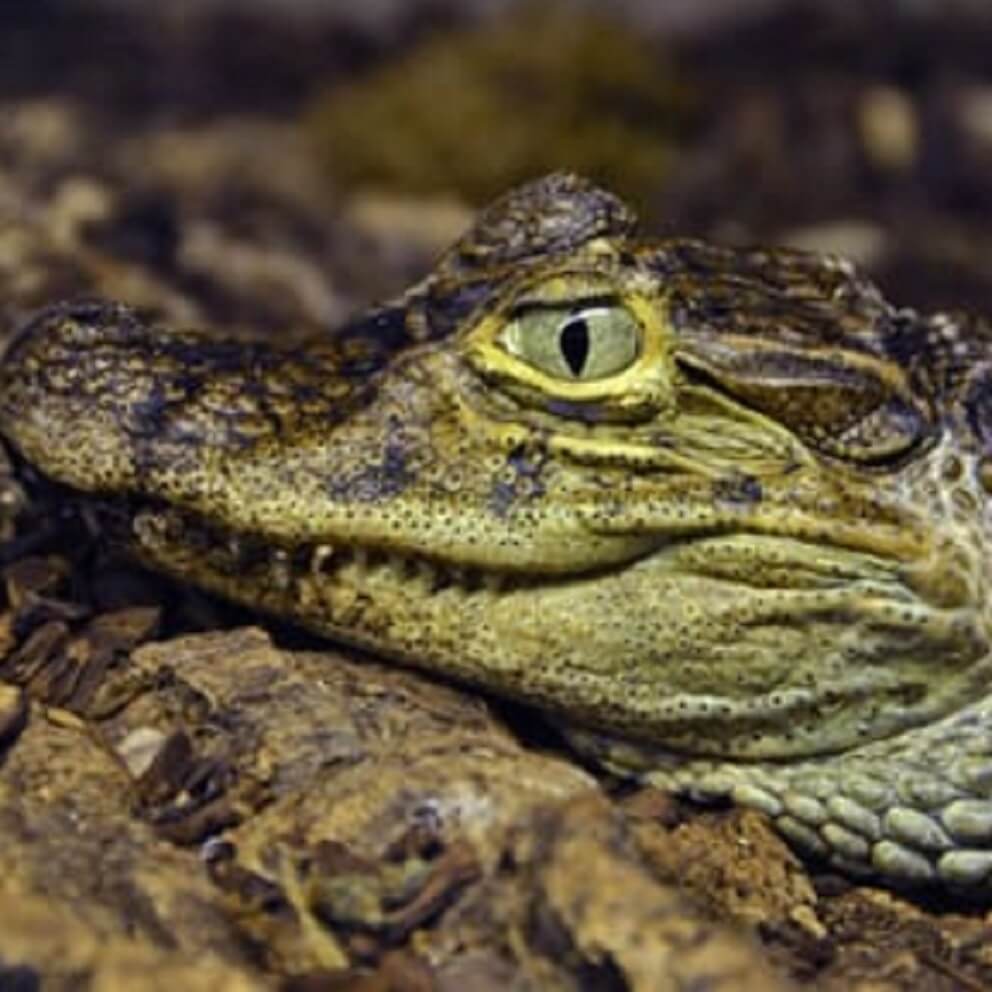
- They have a “third eyelid” called a nictitating membrane, which is transparent and protects the eye while they are underwater. [1] [2]
References
[1] VERDADE, L. M. (1996). The influence of social stimuli on the reproductive behavior of the broad-snouted caiman (Caiman latirostris). Applied Animal Behaviour Science. [2] IUCN RED LIST. (2024). Caiman latirostris. Available at: https://www.iucnredlist.org/species/46585/11581605 [3] CROCODILE SPECIALIST GROUP. (2024). Broad-snouted Caiman (Caiman latirostris). Available at: http://www.iucncsg.org/pages/Caiman-latirostris.html [4] BRITO, M. et al. (2011). Dieta de Caiman latirostris (Crocodylia, Alligatoridae) no Pantanal. [5] LARRIERA, A. et al. (2008). Caiman latirostris. In: Crocodiles. Status Survey and Conservation Action Plan. [6] VERDADE, L. M. et al. (2010). Broad-snouted Caiman (Caiman latirostris). In: Crocodiles. Status Survey and Conservation Action Plan. [7] BOULENGER, G. A. (1889). Catalogue of the Chelonians, Rhynchocephalians, and Crocodiles in the British Museum. [8] DA SILVA, E. A. et al. (2016). Feeding habits of Caiman latirostris in different habitats. [9] MMA. (2022). Livro Vermelho da Fauna Brasileira Ameaçada de Extinção. [10] CITES. (2024). Appendices I, II and III. Available at: https://cites.org/eng/app/appendices.php