

Overview
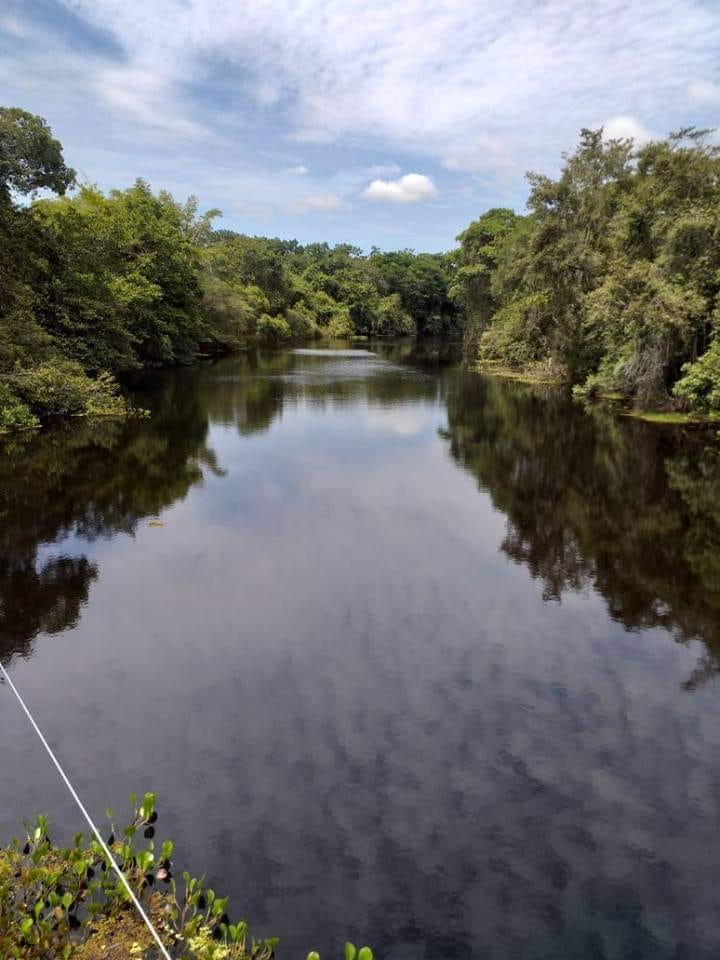
The Chacororé River, intimately linked to the majestic Chacororé Bay, represents one of the most vital hydrological components of the Northern Pantanal. Located in the municipality of Barão de Melgaço, Mato Grosso, this water system is the heart of a complex of lakes and channels that sustains regional biodiversity. Chacororé Bay, with which the river merges, is the largest in the Pantanal, exceeding in dimensions geographical landmarks such as Guanabara Bay.
Recognized as one of the main 'fish nurseries' of the biome, the Chacororé River allows nutrient-rich waters from the Cuiabá River to enter the plain during floods. This environment is ideal for the reproduction of countless species. For the communities of Barão de Melgaço, the river and its bay are essential, providing sustenance through artisanal fishing and driving ecotourism and sport fishing.
However, the system faces challenges such as climate change, siltation, and flow regulation by dams. The preservation of the Chacororé River is a priority for Pantanal conservation, given its function in regulating the flood pulse and maintaining wildlife.
Geography and Course
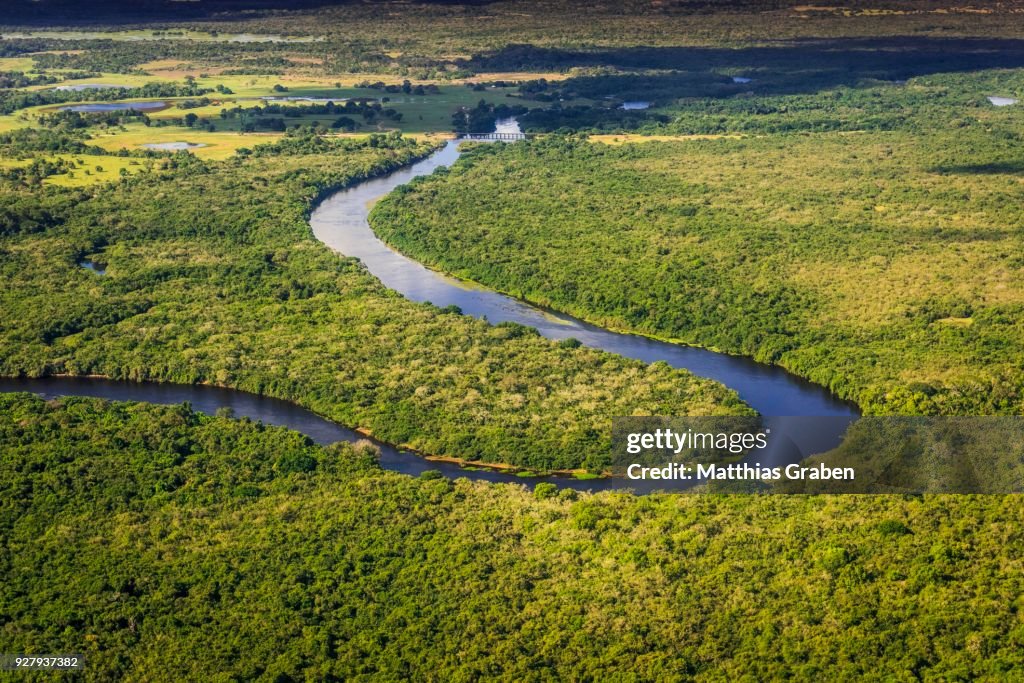
The Chacororé River functions as a dynamic link between the main bed of the Cuiabá River and Chacororé Bay. Situated between coordinates 16º13'S and 55º54'W, its course is characterized by a network of natural channels, the corixos, which wind through the plain. Approximately 14 main channels connect the Cuiabá River to the bay, allowing for the constant exchange of water, sediments, and living organisms.
Chacororé Bay has impressive dimensions, reaching 64 kilometers in length and 16 kilometers in width at the height of the flood. In addition to the Cuiabá River, the system is fed by the Cupim and Água Branca streams, which descend from the adjacent plateau. These rivers bring clear waters that mix with the muddy river waters, creating a unique ecological gradient in the Northern Pantanal.
The course is extremely flat, resulting in a low flow velocity that favors sediment deposition and the formation of aquatic vegetation. Downstream, the system connects to Siá Mariana Bay, forming an interconnected lacustrine complex. Eventually, its waters return to the Paraguay River system through the Cuiabá River itself.
Hydrological Role in the Pantanal
The hydrological role of the Chacororé River is defined by the seasonal flood pulse. The river acts as an expansion valve for the Cuiabá River. When the level of the Cuiabá rises, hydraulic pressure forces water to enter through the 'corixos,' filling the bay and adjacent areas. This process fertilizes the plain, transporting organic matter and essential nutrients for the food chain.
During the 'vazante' (receding waters), the process reverses and the Chacororé River drains the bay's waters back into the Cuiabá River. This dynamic creates productive transition zones. However, the operation of the Manso Hydroelectric Power Plant has altered flood peaks, reducing the intensity with which water reaches the system. Without these peaks, the bay runs the risk of accelerated desiccation, threatening the local ecological balance.
Furthermore, the Chacororé River purifies the water by filtering sediments through its dense vegetation. Nutrients are absorbed by aquatic plants, resulting in better quality water that returns to the main system. Maintaining this flow is fundamental to ensuring that the system acts as a water regulator for Barão de Melgaço.
What is a Corixo?
A corixo is a natural channel that connects 'baías' (lakes), 'vazantes' (seasonal drainage areas), or rivers to each other in the Pantanal. Unlike conventional rivers, a 'corixo' is a two-way street that responds to variations in water levels. They are the 'arteries' of the biome, allowing water to flow to the plain during the flood and return to the main rivers in the dry season, maintaining water connectivity.
The 'corixos' of the Chacororé River are vital for the migration of fish seeking calm waters to spawn. The vegetation on their banks offers shelter and nesting sites for birds. In the dry season, many transform into isolated pools that concentrate aquatic life, becoming focal points for predators such as caimans and wading birds, highlighting their importance in species survival during critical periods.
Fauna and Ecology
The ecology of the Chacororé River is marked by extraordinary biodiversity. As a natural nursery, it houses fish populations such as the pacu, pintado, cachara, and dourado. This abundance attracts predators such as giant otters and the yacare caiman, which finds the perfect habitat on the banks.
The avifauna is a spectacle, with the jabiru stork nesting in tall trees. Species such as the kingfisher and the roseate spoonbill are common. The region is a refuge for the jaguar, which uses the gallery forests of the Chacororé River as hunting corridors. The presence of these large felines indicates the health of the ecosystem and the abundance of prey such as capybaras and caimans.
Aquatic flora, including giant water lilies and 'camalotes' (water hyacinths), serves as a microhabitat for small organisms. This vegetation forms the base of the food chain and assists in regulating water quality. The mosaic of habitats sustained by the Chacororé-Siá Mariana system is crucial for the survival of rare species in the heart of Mato Grosso.
Tourism and Experiences
Tourism on the Chacororé River offers authentic experiences in the Pantanal. Barão de Melgaço is the gateway, with lodges and specialized guides. Sport fishing attracts visitors seeking to catch dourados and pacus under the 'catch and release' modality. This activity generates local income while promoting the conservation of fish stocks.
Boat trips through the 'corixos' allow proximity to wildlife in its natural behavior. The sunset at Chacororé Bay is one of the most beautiful in Brazil, with the sky reflected in the immense mirror of water. For photographers and birdwatchers, the region is a paradise, offering unique opportunities to record rare species in a setting of incomparable scenic beauty.
Ecotourism also focuses on community-based tourism, allowing visitors to learn about the riverside way of life. Activities such as nocturnal caiman spotting and interpretive trails complete the immersion in the ecosystem. These experiences provide a deep understanding of the relationship between man and nature in the Pantanal.
Connection with Other Rivers
The Chacororé River is an intrinsic part of the Pantanal hydrological network. Its primary connection is with the Cuiabá River, from which it receives water volume and sediments. Through the Cuiabá, it connects to the São Lourenço River and the Paraguay River, the main drainage artery of the biome, integrating into the flow that sustains the entire floodplain.
The system also communicates with the Mutum River and Siá Mariana Bay. In large floods, the waters merge, allowing for species dispersal. The indirect connection with the Pixaim River and the Taquari River through the shared plain reinforces that impacts on one river resonate throughout the entire Northern Pantanal water complex, requiring integrated management.
References
[1] EMBRAPA PANTANAL. (2010). *Pantanal watersheds: characterization and management*. Embrapa Pantanal. Available at: https://www.embrapa.br/pantanal/publicacoes
[2] ALHO, C. J. R. (2008). *Biodiversity of the Pantanal*. UNIDERP Publishing.
[3] POTT, A.; POTT, V. J. (1994). *Plants of the Pantanal*. Embrapa-SPI.
[4] IUCN. (2020). *Piaractus mesopotamicus* (Pacu). The IUCN Red List of Threatened Species. Available at: https://www.iucnredlist.org/species/186676/1814674
[5] ICMBIO. (2018). *National Action Plan for the Conservation of Endangered Species of the Pantanal*. ICMBio. Available at: https://www.icmbio.gov.br
[6] SOS PANTANAL. (2023). *Threats and challenges of the Pantanal*. SOS Pantanal. Available at: https://sospantanal.org.br/ameacas-e-desafios-do-pantanal/
[7] SILVA, C. J.; ABDON, M. M. (1998). *Environmental impacts in the Upper Paraguay River basin*. Brazilian Journal of Water Resources, v. 3, n. 2, p. 101-112.