Introduction
Azara's agouti (Dasyprocta azarae) is one of the most active and visible rodents in the Pantanal, playing a vital role in the maintenance and regeneration of the biome's forests. Often confused with the paca, the agouti is smaller, diurnal, and has distinct biological characteristics. Its name is a tribute to the Spanish naturalist Félix de Azara, who described much of the South American fauna in the 18th century. In the Pantanal, the agouti is known as the "forest gardener" due to its unique habit of burying seeds for future consumption, many of which end up germinating and giving rise to new trees.
Scientific Classification
| Kingdom | Animalia |
| Phylum | Chordata |
| Class | Mammalia |
| Order | Rodentia |
| Family | Dasyproctidae |
| Genus | Dasyprocta |
| Species | Dasyprocta azarae |
| Common Name | Azara's Agouti |
This rodent is a fundamental link in the Pantanal food chain. Being a medium-sized animal, it serves as a primary food source for a wide range of predators, from large cats like jaguars and pumas to birds of prey and large snakes. Its presence in an area is a strong indicator of environmental health, as agoutis require relatively preserved forest environments with a constant supply of fruits and seeds. Despite its importance, the species faces challenges related to habitat loss and hunting, although it is more resilient than other larger rodents.
This article explores the biology, behavior, and ecology of Dasyprocta azarae in the Pantanal, highlighting its importance for the ecosystem and the adaptations that allow it to thrive in one of the most dynamic environments in the world. By understanding the life of the agouti, we gain a broader perspective on the complex interactions that sustain the biodiversity of the world's largest floodplain.
Physical Description
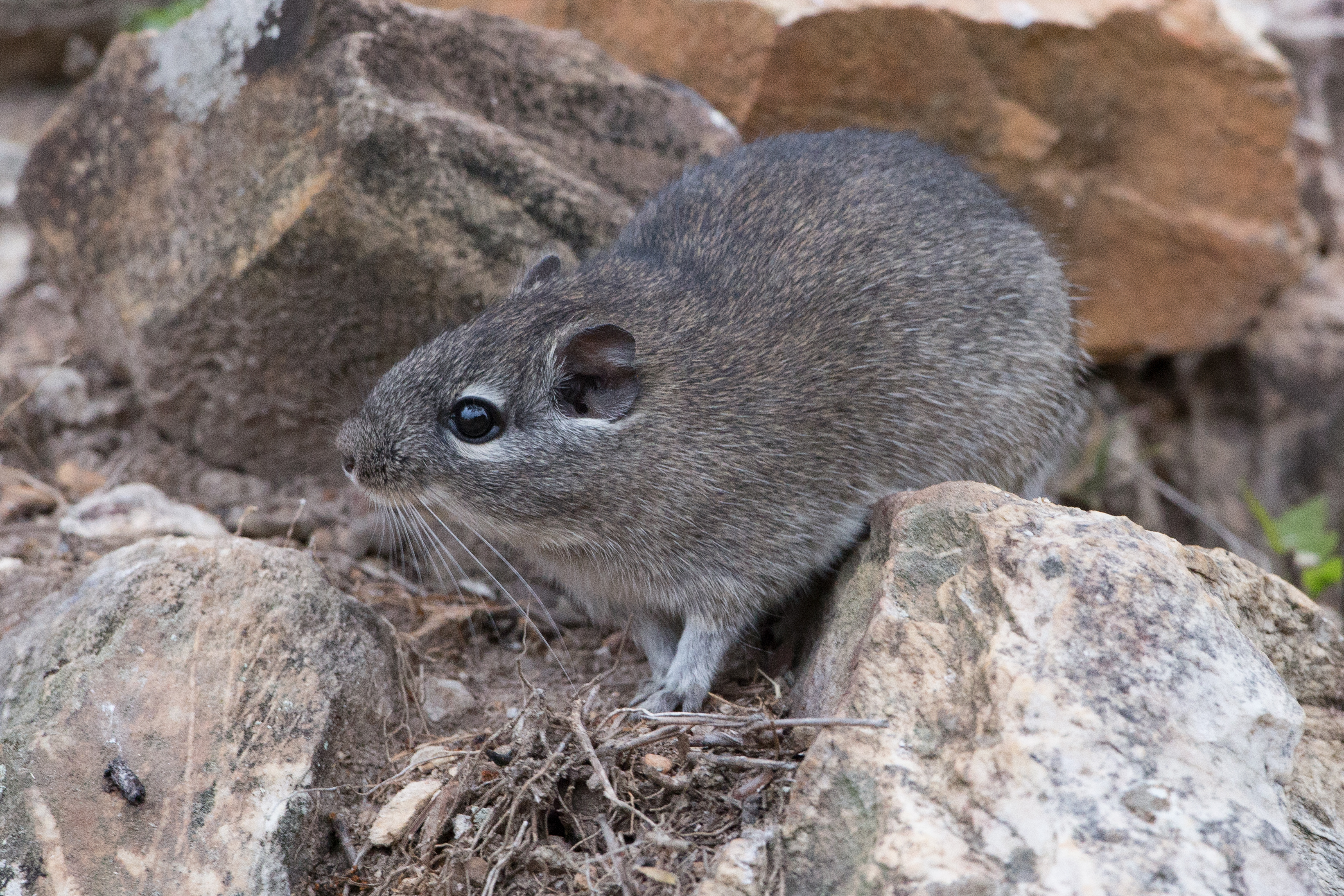
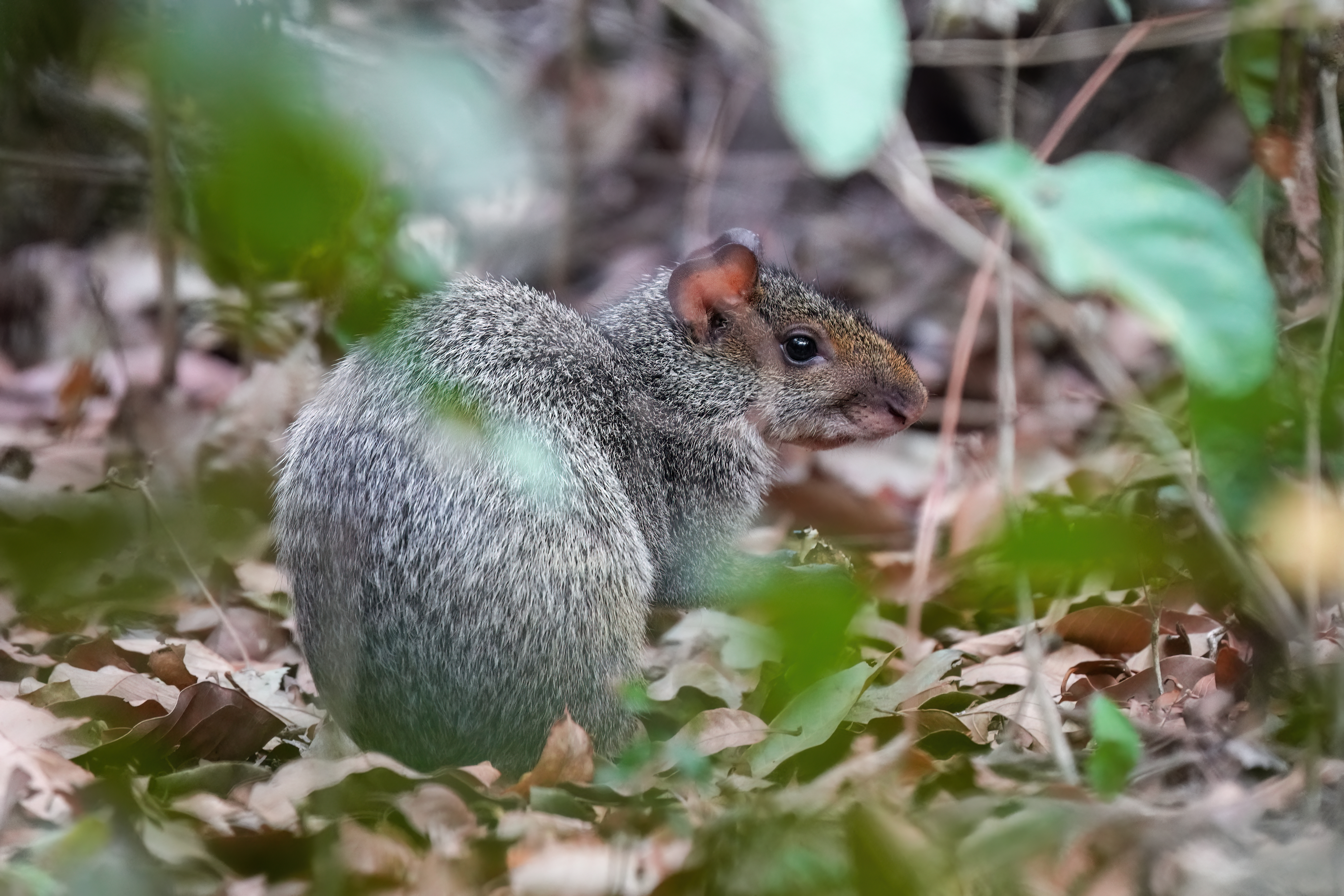
Azara's agouti is a medium-sized rodent, with a body length ranging from 45 to 60 cm and a weight between 2 and 5 kg. Its body is elongated and arched, with hind legs significantly longer than the front ones, an adaptation that allows for rapid and agile movements, including high jumps when threatened. The tail is extremely short, almost invisible, and the ears are small and rounded. One of its most striking features is its coarse, shiny fur, which in the Pantanal population tends to be a speckled olive-brown or yellowish-brown, providing excellent camouflage among the dry leaves of the forest floor.
The agouti's head is large with a pointed snout and long vibrissae (whiskers) that assist in tactile perception. Its eyes are large and positioned laterally, offering a wide field of vision to detect predators. Like all rodents, it has powerful incisors that grow continuously, used to break the hard shells of fruits and seeds. The feet have strong claws; the front ones are used to hold food while the animal eats in a characteristic upright position, while the hind ones provide the necessary traction for quick escapes.
Habitat and Distribution in the Pantanal
In the Pantanal, Dasyprocta azarae is widely distributed, occurring in both the northern and southern regions. Its preferred habitat includes gallery forests, forest patches (capões), and areas of dense scrubland (cerradão). Unlike the paca, which is highly dependent on the immediate proximity of water, the agouti can be found in slightly drier forest areas, although it still prefers environments with some humidity and dense cover for protection. During the flood season, agoutis concentrate in the higher forest areas (cordilheiras) that remain above the water level.
The species is territorial and usually lives in pairs or small family groups, although it is often seen foraging alone. They use burrows under tree roots, hollow logs, or abandoned burrows of other animals as shelters and nesting sites. The distribution of agoutis in the Pantanal is closely linked to the availability of fruit-bearing trees, as they are highly dependent on the seasonal supply of seeds and fruits that fall to the forest floor.
Behavior
The agouti is primarily diurnal, with peaks of activity in the early morning and late afternoon. This distinguishes it from many other Pantanal rodents that are nocturnal. They are extremely wary and have highly developed hearing and vision. When they detect a threat, they often remain motionless before fleeing with a series of rapid jumps, sometimes emitting a characteristic alarm bark to warn other individuals. A fascinating behavior is their method of eating: they sit on their hind legs and use their front paws to handle food, carefully peeling fruits or breaking seeds.
Socially, Azara's agoutis are often monogamous, with pairs maintaining a territory together for several years. They communicate through vocalizations, scent marking with anal glands, and body postures. One of the most ecologically important behaviors is scatter-hoarding: when food is abundant, agoutis bury seeds in various locations within their territory to eat later. Since they do not recover all the buried seeds, many of them germinate, making the agouti one of the most important seed dispersers in the Pantanal.
Diet
The diet of Dasyprocta azarae is essentially frugivorous and granivorous. In the Pantanal, they feed on a wide variety of native fruits and seeds, such as those from the acuri palm (Attalea phalerata), bocaiuva (Acrocomia aculeata), and various species of figs and legumes. They are one of the few animals capable of breaking the extremely hard shells of certain palm nuts, thanks to their powerful teeth and persistent gnawing. When fruits are scarce, they may supplement their diet with leaves, roots, and occasionally insects.
The agouti's role in the ecosystem goes beyond seed dispersal. By consuming fruits and seeds, they also influence the population dynamics of various plant species. Furthermore, as a prey species, they are vital for the survival of many Pantanal predators. Jaguars, pumas, ocelots, and various species of hawks and eagles rely on the agouti as a consistent food source. This position as both a "gardener" and a "prey" makes the agouti a keystone species for the ecological balance of the Pantanal forests.
Reproduction
The reproduction of Azara's agouti in the Pantanal can occur throughout the year, although there is often a peak in births during the rainy season when food is more abundant. The gestation period lasts about 100 to 120 days. Usually, one or two well-developed (precocial) young are born. Newborn agoutis are covered in fur, have their eyes open, and are capable of running and eating solid food shortly after birth, although they continue to nurse for several weeks.
The mother provides intensive care, keeping the young in a well-protected nest within a burrow or hollow log. The father also plays a role in territorial defense, ensuring a safe environment for the family. The young grow rapidly and reach sexual maturity at around six to nine months of age. This relatively high reproductive rate, compared to the paca, allows agouti populations to recover more quickly from environmental pressures, provided their habitat remains intact.
Conservation Status
Globally, Dasyprocta azarae is classified by the IUCN as "Data Deficient" (DD) or "Least Concern" (LC) depending on the region, but in many parts of its range, including the Pantanal, it faces significant threats. The main threat is habitat loss due to deforestation and the conversion of forests into pastures. The fragmentation of forests isolates populations and makes them more vulnerable to local extinction. Additionally, hunting for subsistence and sport remains a pressure in some areas of the Pantanal.
The conservation of the agouti is directly linked to the preservation of the Pantanal's forest formations. Protecting gallery forests and cordilheiras is essential to ensure the survival of the species. Ecotourism has proven to be a valuable tool for conservation, as agoutis are often easily observed in areas where they are protected, becoming an attraction for wildlife photographers and nature lovers. Awareness of their role as seed dispersers is also crucial for local communities to value the presence of these animals in their lands.
Curiosities
One of the most interesting curiosities about the agouti is its "memory" for buried seeds. Although they are very efficient at finding their caches, the seeds they "forget" are the ones that sustain the forest. Another fascinating fact is their jumping ability: an agouti can jump up to 2 meters high from a standing position, a vital maneuver to escape predators like the ocelot. Furthermore, their hair can be raised when the animal is excited or threatened, making it appear larger and more intimidating to rivals.
In the Pantanal, the relationship between the agouti and the acuri palm is a classic example of coevolution. The agouti is one of the few animals that can open the hard acuri nut, and the palm depends almost exclusively on the agouti to disperse its seeds away from the mother tree. Without the agouti, the landscape of the Pantanal's cordilheiras would be very different. These small details of its life highlight how even a relatively small rodent can be a giant in terms of ecological importance.
References
[1] IUCN. (2016). *Dasyprocta azarae*. The IUCN Red List of Threatened Species. Available at: https://www.iucnredlist.org/species/6277/22230030
[2] ICMBio. (2018). *Livro Vermelho da Fauna Brasileira Ameaçada de Extinção*. ICMBio. Available at: https://www.icmbio.gov.br
[3] ALHO, C. J. R. (2008). *Biodiversidade do Pantanal*. Editora UNIDERP.
[4] POTT, A.; POTT, V. J. (1994). *Plantas do Pantanal*. Embrapa-SPI.
[5] EMBRAPA PANTANAL. (2010). *Mamíferos do Pantanal: Guia de Campo*. Embrapa Pantanal.
[6] REIS, N. R.; PERACCHI, A. L.; PEDRO, W. A.; LIMA, I. P. (2006). *Mamíferos do Brasil*. Londrina: Editora da Universidade Estadual de Londrina.
[7] SOS PANTANAL. (2024). *A fauna do Pantanal*. SOS Pantanal. Available at: https://sospantanal.org.br/a-fauna-do-pantanal/