

Hydrochoerus hydrochaeris (Capybara)
Introduction
The capybara (Hydrochoerus hydrochaeris) is widely recognized as the largest living rodent in the world, being one of the most emblematic symbols of South American fauna and, in particular, the Brazilian Pantanal. This semi-aquatic mammal belongs to the Caviidae family and the Hydrochoerus genus, presenting remarkable evolutionary adaptations that allow it to transition with extreme efficiency between terrestrial and aquatic environments. In the Pantanal ecosystem, the capybara plays a central ecological role, acting both as an important herbivore that shapes local vegetation and as a fundamental prey for the region’s large predators, such as the jaguar and the Pantanal caiman [1] [2].
The abundance of the species in the Pantanal is intrinsically linked to the flood pulse regime, which creates a mosaic of ideal habitats composed of floodplains, drainage channels, and gallery forests. Its complex social structure, characterized by cohesive family groups and a well-defined hierarchy, allows the species to thrive even in environments with high predation pressure. In addition to its biological relevance, the capybara holds historical cultural and economic importance, being the subject of profound scientific studies on wildlife management and biodiversity conservation in wetlands [3].
Scientific Classification
| Category | Classification |
|---|---|
| Kingdom | Animalia |
| Phylum | Chordata |
| Class | Mammalia |
| Order | Rodentia |
| Family | Caviidae |
| Genus | Hydrochoerus |
| Species | Hydrochoerus hydrochaeris |
| Common Name | Capybara, carpincho |
Description
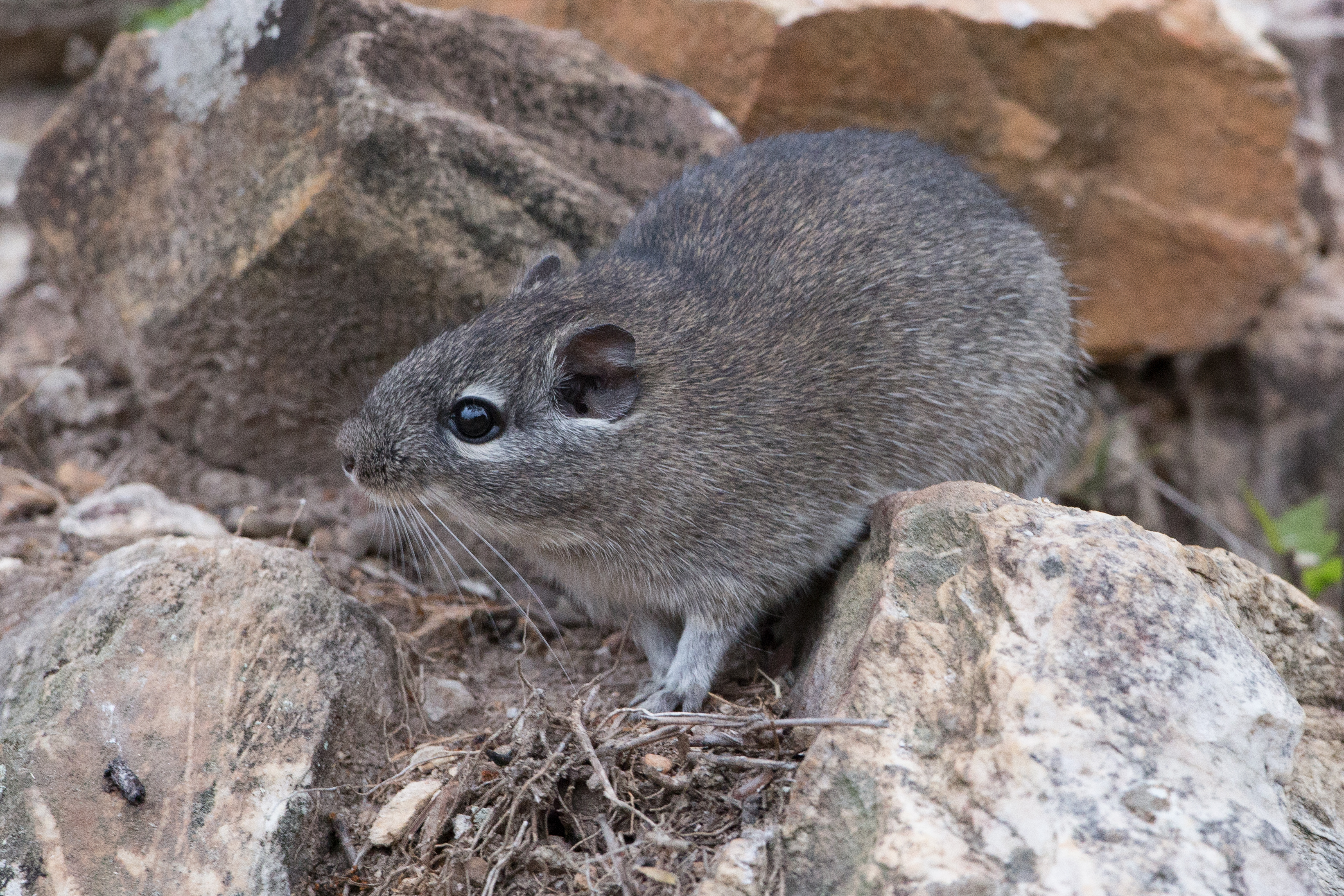
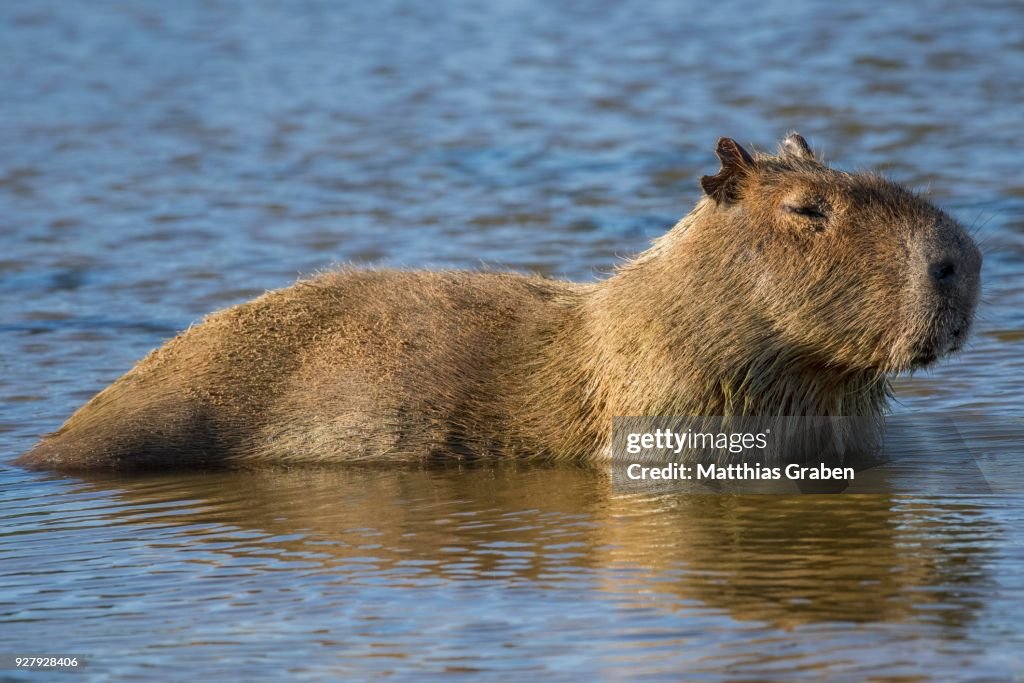
The morphology of the capybara is a classic example of specialization for life in wetlands. Its body is robust and heavy, with a large, square head relative to the trunk. One of the most distinct features is the arrangement of sensory organs: the eyes, ears, and nostrils are located on the upper part of the head, allowing the animal to remain almost completely submerged while maintaining vigilance and breathing, an adaptation analogous to that of hippos and caimans [4]. The coat consists of long, thick, and sparse bristles, generally reddish-brown or grayish in color, which dry quickly after the animal leaves the water.
Internally, the capybara has a highly specialized digestive system for processing tough plant fibers. Like all rodents, its incisor teeth grow continuously (hypsodont), compensating for the severe wear caused by constant chewing of grasses and aquatic plants. Its limbs are short, with the hind limbs being slightly longer than the forelimbs, and the feet feature rudimentary interdigital membranes that aid in swimming, although they are not full flippers. Below are the average physical data for the species in the wild:
| Feature | Average Value (Adults) |
|---|---|
| Total Length | 1.06 to 1.34 meters |
| Shoulder Height | 50 to 62 centimeters |
| Body Weight | 35 to 66 kilograms |
| Longevity (Wild) | 6 to 10 years |
| Activity Period | Crepuscular and Nocturnal |
Distribution and Habitat
The geographic distribution of Hydrochoerus hydrochaeris covers almost all of South America, extending from eastern Panama to northern Argentina, always associated with permanent bodies of water. In Brazil, the species occurs in all biomes, but it is in the Pantanal where it reaches some of its highest population densities. The Pantanal plain offers the perfect gradient of resources: water for thermoregulation, refuge from predators, and mating, as well as vast areas of nutrient-rich pasture during different phases of the hydrological cycle [5].
In the specific context of the Pantanal, habitat use by the capybara is dynamic and seasonal. During the flood season, groups tend to concentrate in higher areas, known as cordilheiras and capões, where arboreal vegetation offers shelter. With the receding waters in the dry season, capybaras expand their home range into the newly exposed floodplains, where the regrowth of grasses provides high-quality food. This plasticity in space use is fundamental for the species’ survival in such a variable environment, allowing it to maintain stable populations even in the face of extreme climatic fluctuations [1] [6].
Behavior
The social behavior of the capybara is one of the most fascinating aspects of its biology. It is a highly gregarious species, living in structured family groups ranging from 10 to 30 individuals, although during periods of extreme drought in the Pantanal, larger groups of up to 100 animals can be observed around remaining bodies of water. The social structure is centered on a dominant male, who maintains control over a harem of females and their offspring, as well as some subordinate males occupying the group’s periphery. The dominant male actively defends his territory against intruders, using scent glands located on top of the snout (morrillo gland) to mark vegetation and signal his presence [7] [8].
Communication among group members is rich and varied, involving visual, olfactory, and, primarily, acoustic signals. Capybaras emit a series of distinct vocalizations, such as contact whistles, submission grunts, and a short, dry alarm bark, which serves to warn the group of approaching predators. When threatened, capybaras run toward the water, where they are extremely agile and can remain submerged for up to five minutes to escape terrestrial attacks. Furthermore, vigilance behavior is shared among group members, allowing some individuals to feed while others monitor the environment, a classic strategy for reducing predation risk in social mammals [9].
Feeding / Nutrition
The capybara is a specialized grazing herbivore whose diet in the Pantanal consists predominantly of grasses (Poaceae) and aquatic plants. Its feeding strategy is classified as selective, preferring plant species with high protein content and low concentration of indigestible fibers, although this selectivity decreases during the dry season when resource availability is lower. In the Pantanal, capybaras consume a wide variety of species, including water hyacinth (Eichhornia spp.) and various floodplain grasses that sprout after the water recedes [10].
A unique nutritional feature of the capybara is the practice of coprophagy, specifically the ingestion of cecotropes (soft, nutrient-rich feces). This behavior allows the animal to maximize the extraction of proteins and vitamins produced by bacterial microflora in the cecum, a highly developed digestive organ. Through redigestion, the capybara can survive on diets that would be nutritionally insufficient for other herbivores of similar size. Below is the typical composition of the capybara’s diet in the Pantanal ecosystem:
| Food Type | Importance in Diet |
|---|---|
| Grasses (Poaceae) | High |
| Aquatic Plants (Water Hyacinths) | High |
| Sedges (Cyperaceae) | Medium |
| Tree Bark | Low (Seasonal) |
| Fallen Fruits | Low |
Reproduction
Reproduction of the capybara in the Pantanal occurs throughout the year, although there are birth peaks that coincide with the start of the rainy season when the supply of high-quality food is at its maximum. Mating occurs almost exclusively in the water, where the dominant male pursues the female in shallow waters. The gestation period lasts between 120 and 150 days, resulting in litters ranging from one to eight pups, with an average of four per birth. Females are polyestrous and can have up to two litters per year under favorable environmental conditions [11] [12].
Capybara pups are extremely precocial (nidifugous), born with eyes open, full coat, and functional teeth. A few hours after birth, they are already capable of walking, swimming, and even ingesting small amounts of grass, although they continue to nurse for about three to four months. A notable aspect of parental care in the species is communal nursing: females in the group often nurse pups that are not their own, a cooperative behavior that increases the survival of the group’s offspring [13].
Ecological Importance
In the Pantanal, the capybara acts as a key species for maintaining biodiversity. By grazing, they prevent certain grass species from becoming dominant, promoting a more diverse plant community. Furthermore, their feces and urine contribute to nutrient cycling, fertilizing both the soil and the water. They are also the primary food source for the jaguar (Panthera onca), the largest feline in the Americas. Studies show that in certain regions of the Pantanal, capybaras can represent up to 30% of the jaguar’s diet, demonstrating their vital role in the trophic chain [14] [15] [16].
Conservation Status
The capybara is classified as Least Concern (LC) by the IUCN Red List. Its populations are generally stable and abundant throughout its range. However, in some regions, they face challenges such as habitat loss due to urban expansion and agriculture, as well as illegal hunting. In the Pantanal, the main concern is the maintenance of the hydrological cycle, as extreme droughts can significantly reduce available habitat and increase mortality. Current conservation efforts focus on protecting the biome as a whole and promoting harmonious coexistence between capybara populations and human activities in the Pantanal [17] [18] [19].
Fun Facts
- World’s Largest Rodent: The capybara holds the title of the largest living rodent on Earth, surpassing species like the beaver and porcupine in size and weight.
- Infinite Teeth: Their incisor teeth never stop growing, potentially reaching several centimeters if not worn down by constant chewing of tough plant fibers.
- Expert Diver: Capybaras can remain submerged for up to five minutes and are capable of sleeping in the water, keeping only their nose above the surface to breathe.
- Tupi Etymology: The name “capybara” derives from the Tupi term kapi’wara, which literally means “grass-eater” (ka’api = grass + uara = eater).
- Collective Nursing: It is common to observe female capybaras nursing pups that are not their own, a rare cooperative behavior among mammals that increases the survival of the group’s offspring.
References
[1] ALHO, C. J. R.; CAMPOS, Z. M. S.; GONÇALVES, H. C. (1987). Ecologia de capivara (Hydrochaeris hydrochaeris) do Pantanal: I. Habitats, densidades e tamanho de grupo. Revista Brasileira de Biologia, v. 47, n. 4, p. 511-517. [2] SCHALLER, G. B. (1967). The Deer and the Tiger. University of Chicago Press. [3] MOREIRA, J. R.; MACDONALD, D. W. (1997). Capybara biology and management: a review. In: Wildlife Conservation and Management in Brazil. [4] LORD, R. D. (2007). Mammals of South America. Johns Hopkins University Press. [5] EMBRAPA PANTANAL. (2007). Criação e manejo de capivaras. Documentos 102. Available at: https://www.infoteca.cnptia.embrapa.br/infoteca/bitstream/doc/88240/1/Criacaoemanejo.pdf [6] CAMPOS, Z.; MOURÃO, G. (2006). Capivaras no Pantanal. Embrapa Pantanal. [7] HERRERA, E. A.; MACDONALD, D. W. (1987). Group size and the social system of the capybara, Hydrochaeris hydrochaeris. Journal of Mammalogy, v. 68, n. 4, p. 823-830. [8] MACDONALD, D. W. (1981). The capybara: giant rodent of Brazil. National Geographic. [9] YABER, M. C.; HERRERA, E. A. (1994). Vigilance, group size and social status in capybaras. Animal Behaviour, v. 48, n. 6, p. 1301-1307. [10] BARRETO, G. R.; HERRERA, E. A. (1998). Foraging patterns of capybaras in a seasonally flooded savanna of Venezuela. Journal of Tropical Ecology, v. 14, n. 1, p. 87-108. [11] OJASTI, J. (1973). La capibara (Hydrochoerus hydrochaeris) - Poblaciones y manejo en Venezuela. [12] JORGE, W. (2010). Biologia e Manejo de Capivaras. Conhecer. [13] VERDADE, L. M.; FERRAZ, K. M. P. M. B. (2006). Capybaras in an anthropogenic habitat in Southeastern Brazil. Brazilian Journal of Biology, v. 66, n. 1, p. 203-208. [14] ALHO, C. J. R. (2008). The Pantanal of Brazil. [15] MOURÃO, G. et al. (2010). Ecologia de populações de capivaras no Pantanal. Embrapa. [16] AZEVEDO, F. C. C.; MURRAY, D. L. (2007). Spatial organization and food habits of jaguars (Panthera onca) in a floodplain forest. Biological Conservation, v. 137, n. 3, p. 391-402. [17] IUCN. (2016). Hydrochoerus hydrochaeris. The IUCN Red List of Threatened Species. [18] MMA. (2022). Lista Nacional de Espécies da Fauna Brasileira Ameaçadas de Extinção. [19] LABRUNA, M. B. (2009). Ecology of Rickettsia rickettsii in South America. Annals of the New York Academy of Sciences, v. 1166, n. 1, p. 156-166.