Introduction
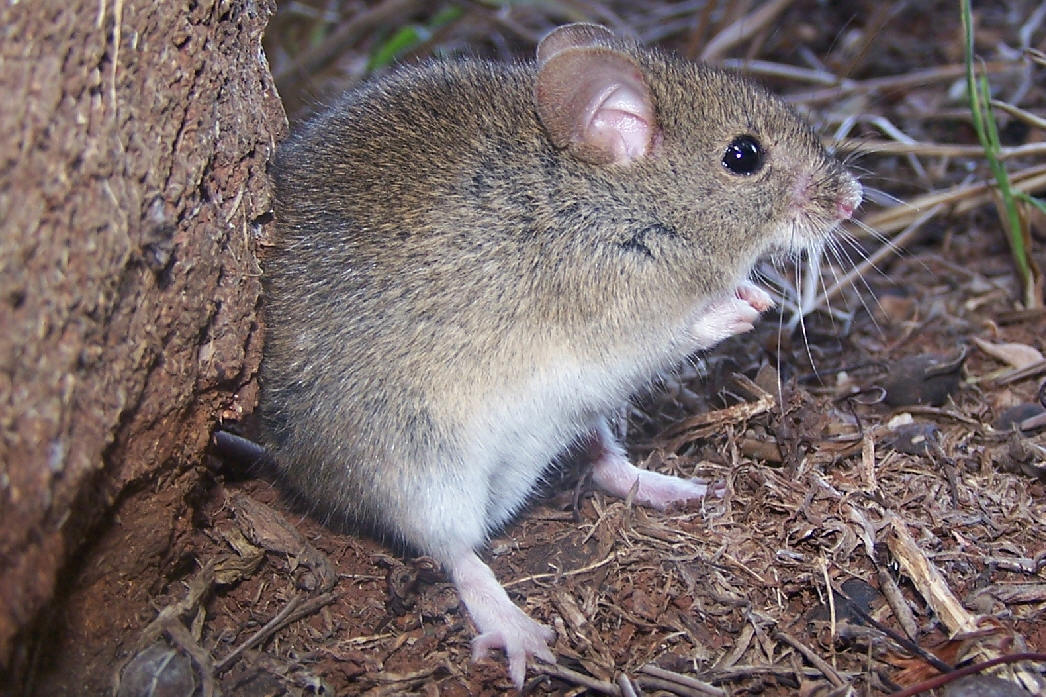
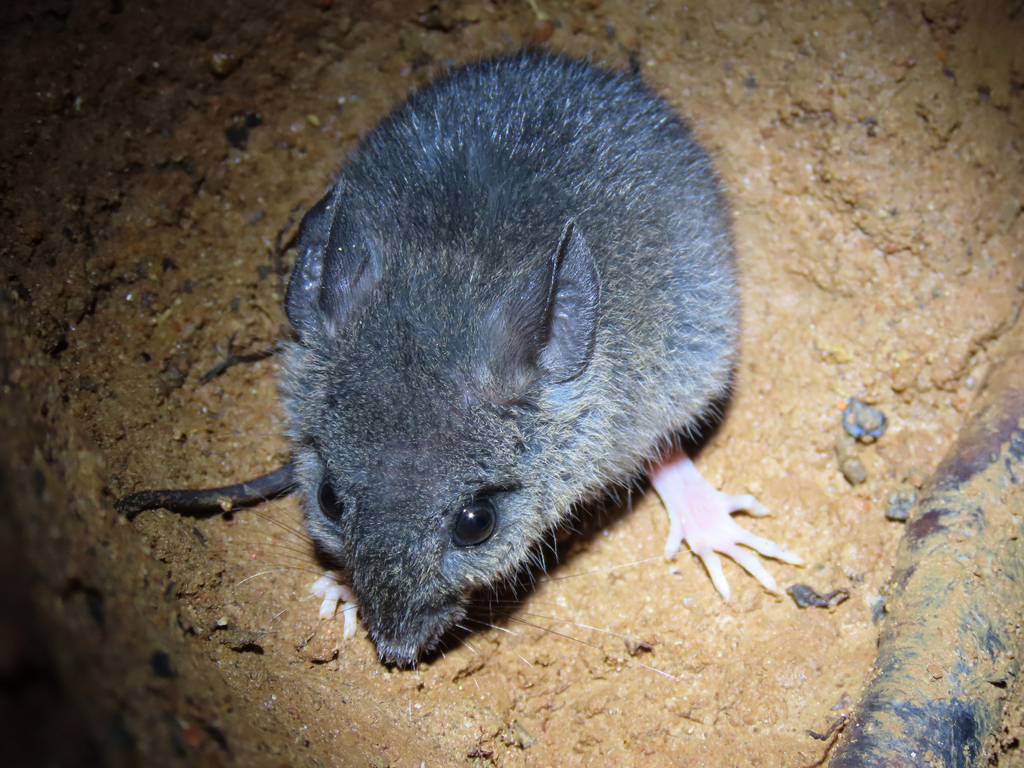
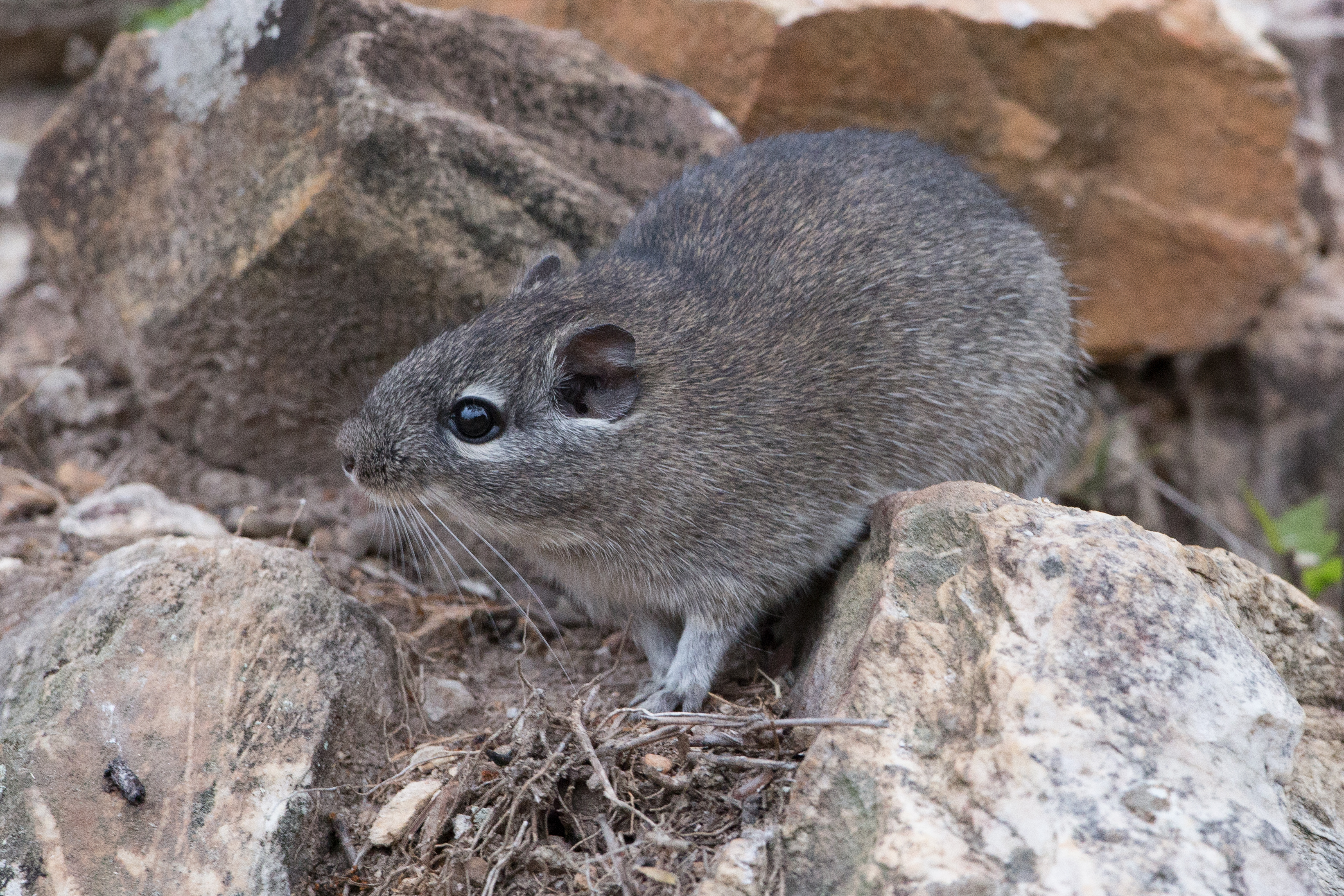
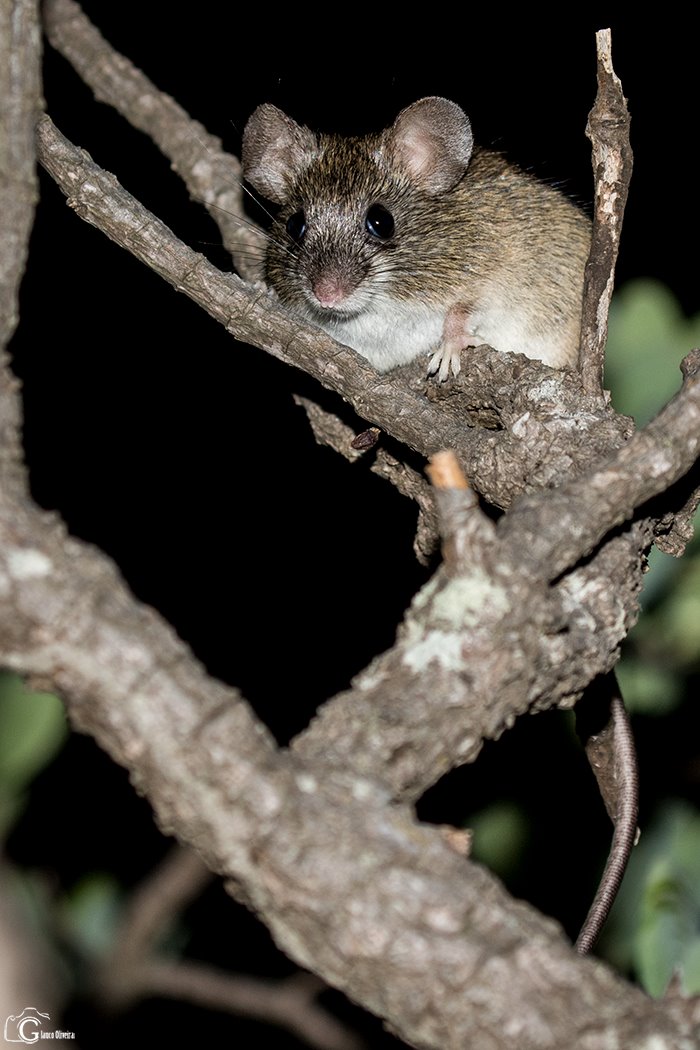
The Rhipidomys macrurus, popularly known as the long-tailed climbing rat or tree rat, is a rodent of the Cricetidae family and Sigmodontinae subfamily, widely distributed across the central and eastern regions of South America. In the Pantanal ecosystem, this species plays a vital ecological role as one of the primary small arboreal mammals, inhabiting the complex networks of riparian forests and "cordilheiras" (elevated ridges) that characterize the floodplain. Its presence is an indicator of the environmental health of forest formations, serving as a fundamental link in maintaining local biodiversity.
Scientific Classification
| Kingdom | Animalia |
| Phylum | Chordata |
| Class | Mammalia |
| Order | Rodentia |
| Family | Cricetidae |
| Genus | Rhipidomys |
| Species | Rhipidomys macrurus |
| Common Name | Long-tailed Climbing Rat |
As a rodent specialized in life within the tree canopies, Rhipidomys macrurus acts both as a consumer of seeds and fruits and as a key component in the Pantanal food chain. It serves as a dietary staple for a wide range of predators, including nocturnal birds of prey such as owls, as well as arboreal snakes and small carnivores like the jaguarundi and the coati. Its biology and behavior reflect a refined adaptation to the flood and drought cycles of the Pantanal, where the availability of vertical vegetation strata becomes an essential refuge during inundation periods.
The scientific importance of this species lies not only in its taxonomy but also in its function as a seed disperser in transition areas between the Cerrado and the Pantanal. By moving between different forest strata, the long-tailed climbing rat contributes to the natural regeneration of gallery forests, ensuring the persistence of plant species that are crucial for protecting the banks of Pantanal rivers against erosion and for maintaining the regional microclimate.
Physical Description
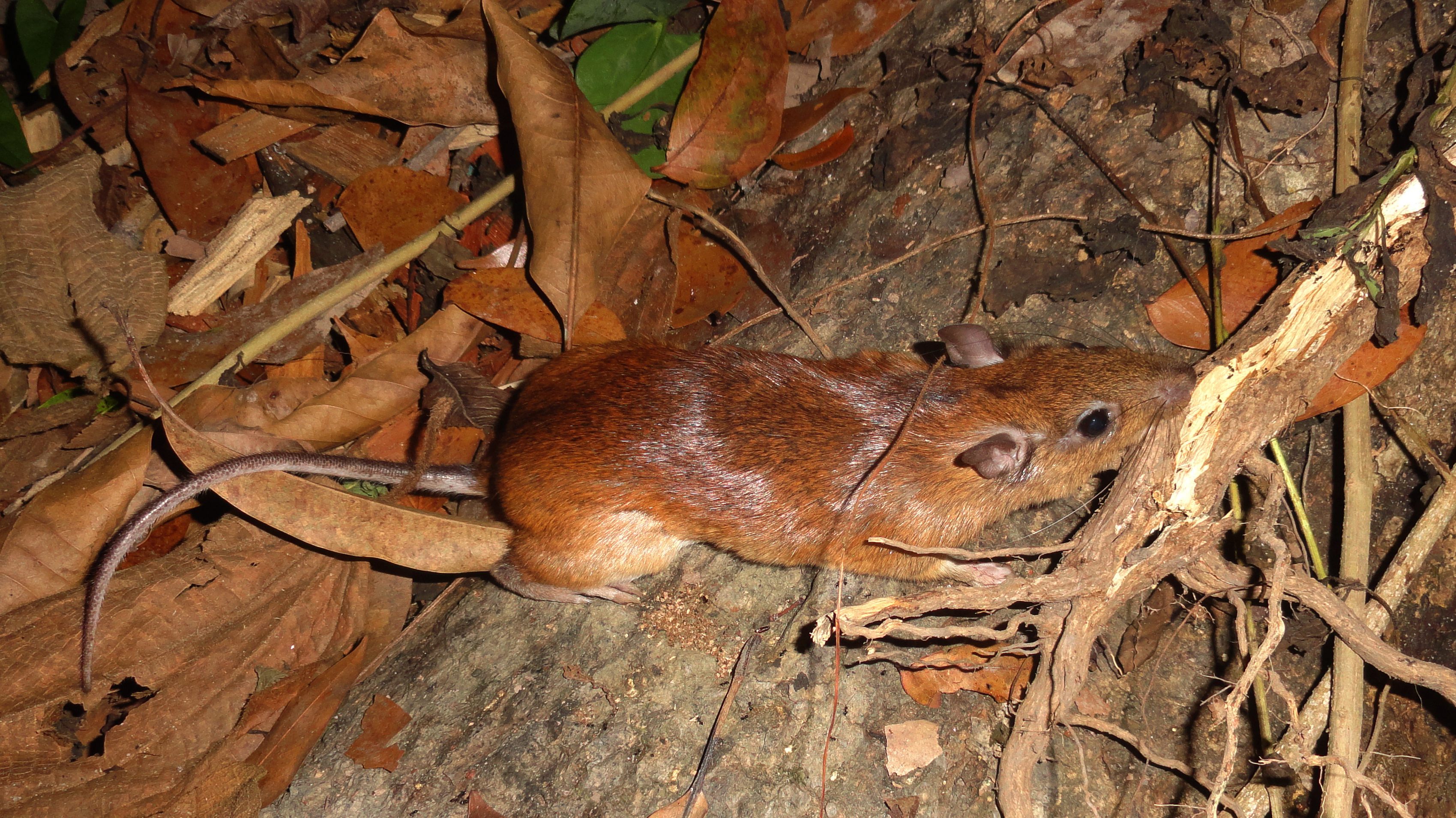
Rhipidomys macrurus is a medium-sized rodent, with a head-and-body length ranging between 125 and 145 millimeters. Its most distinctive morphological feature, which gives it its common name, is the long tail, which slightly exceeds the body length and ends in a tuft of dense, dark hairs. This tail is not merely an ornament but a tool for balance and functional grasping, essential for its acrobatics on the thin branches of Pantanal trees.
The dorsal fur coloration varies from reddish-brown to yellowish tones, providing efficient camouflage against tree bark and dry foliage. In contrast, the ventral region is markedly light, featuring tones of white or pale cream, often with grayish hair bases. Its eyes are large and adapted to low-light vision, while the ears are prominent and brown, granting it acute hearing to detect the approach of silent predators.
The hind feet of the climbing rat are robust and moderately long, with specific adaptations for climbing, such as developed plantar pads and sharp claws. An important diagnostic feature is the presence of a dark spot, sometimes poorly defined, in the center of the upper surface of the hind feet, surrounded by golden-brown hairs. The weight of an adult individual generally oscillates around 80 grams, varying from 48 to 130 grams depending on resource availability and reproductive stage.
Habitat and Distribution in the Pantanal
In the context of the Pantanal, Rhipidomys macrurus finds its preferred habitat in riparian forests and gallery forests that follow watercourses, and in "cordilheiras" — slightly elevated land portions that do not suffer severe seasonal flooding. This species is typical of forested environments, being rarely found in open grassland or floodable plains unless there are corridors of arboreal vegetation that allow for safe movement.
Its geographic distribution covers a vast area including the states of Mato Grosso and Mato Grosso do Sul, extending through the Cerrado and reaching the Caatinga and portions of the Atlantic Forest. In the Pantanal ecosystem, the population density of this species is intrinsically linked to the preservation of hillside forests and forest patches known as "capões de mato." During the flood season, when much of the plain is submerged, the long-tailed climbing rat uses the upper forest stratum as a permanent refuge, demonstrating remarkable resilience to the region's hydrological variations.
The preference for well-preserved primary and secondary forests makes Rhipidomys macrurus an excellent indicator of environmental integrity. In the Pantanal, it coexists with other rodent species but occupies a verticalized ecological niche that minimizes direct competition for ground resources. Connectivity between forest fragments is crucial for maintaining the gene flow of this species, especially in areas where extensive cattle ranching or agriculture may isolate populations in small forest patches.
Behavior
The behavior of Rhipidomys macrurus is predominantly nocturnal and strictly arboreal. Its activities begin at dusk when it emerges from its daytime shelters — usually tree hollows, nests built with plant fibers, or tangles of epiphytes — to forage among the branches. Its agility is impressive; it is capable of making precise leaps between branches and descending trunks head-first with ease, thanks to the flexible structure of its ankles and the strength of its hind limbs.
Although it spends most of its time in the heights, the climbing rat may occasionally descend to the ground, especially during the dry season, to seek fallen seeds or cross small spaces between isolated trees. However, its vulnerability to terrestrial predators increases significantly outside the arboreal stratum. It is a solitary animal most of the time, although females with offspring may share the same nest for extended periods. Interestingly, in areas near human settlements in the Pantanal, there are records of individuals entering attics or house ceilings, seeking shelter or food scraps.
Communication between individuals occurs mainly through olfactory signals and high-frequency vocalizations, often imperceptible to the human ear. The use of the tail as a counterweight is constant during rapid movement, and the terminal tuft of hair may have sensory functions or serve as a visual distraction mechanism to confuse predators during a chase. Its cautious and stealthy nature makes it a difficult species to observe directly in the wild, being more frequently detected through pitfall traps or camera traps installed in the canopy.
Diet
The diet of Rhipidomys macrurus is classified as omnivorous, with a strong inclination toward the consumption of wild seeds and fruits. In the Pantanal, it takes advantage of the seasonality of fruit production from native trees such as the ingá, the tarumã, and various species of fig trees (Ficus spp.). Its jaws and incisor teeth are robust enough to break hard seed shells, allowing it to access nutrients that other small mammals cannot.
In addition to plant matter, this rodent complements its nutrition by ingesting insects, mainly coleopterans (beetles) and hymenopterans (ants and wasps), as well as larvae found under tree bark. This source of animal protein is especially important during the reproductive period when the energy demands of females increase. By consuming insects, the climbing rat also acts as a biological control agent, helping to regulate invertebrate populations in the forest ecosystem.
The ecological role of Rhipidomys macrurus in the food chain is twofold: as a consumer, it assists in seed dispersal, many of which pass through its digestive tract and are deposited in locations far from the parent plant, favoring the colonization of new areas. As prey, it sustains a diversity of top and intermediate predators. In the Pantanal, the abundance of small rodents like Rhipidomys is a determining factor for the reproductive success of many birds of prey, establishing a direct connection between forest productivity and the survival of carnivorous fauna.
Reproduction
The reproductive biology of Rhipidomys macrurus in the Pantanal is closely linked to the availability of food resources, occurring with greater intensity during spring and summer, coinciding with the start of the rainy season and the greater supply of fruits and insects. However, in years of exceptional abundance, reproduction may occur continuously throughout the year. The gestation period is estimated at about two months (between 56 and 86 days), a relatively long time for rodents of its size, suggesting a greater investment in the initial development of the offspring.
Litters are generally small, ranging from 1 to 5 pups, with an average of 2 to 3 individuals per birth. Newborns are altricial, meaning they are born blind, hairless, and completely dependent on maternal care. The female builds elaborate nests in protected locations, such as tree hollows or dense tangles of climbing vegetation, to ensure the safety of the offspring against predators and weather. Parental care is performed exclusively by the female, who nurses the pups until they have sufficient size and coordination to begin their own arboreal incursions.
Sexual maturity is reached quickly, allowing young individuals to integrate into the reproductive population within a few months. This high rate of population turnover is a common adaptive strategy among small rodents to compensate for the high predation pressure they face in the wild. In the Pantanal, the reproductive dynamics of this species can be affected by extreme climatic events, such as prolonged droughts or extraordinary floods, which alter the phenology of the plants they depend on for food and nesting.
Conservation Status
Currently, Rhipidomys macrurus is classified by the International Union for Conservation of Nature (IUCN) as a species of Least Concern (LC). This classification is due to its wide geographic distribution and its occurrence in several protected areas throughout the Cerrado and the Pantanal. However, this situation of apparent safety does not mean the species is free from risks, especially at the regional level.
The main threat to the survival of the long-tailed climbing rat is habitat loss and fragmentation. In the Pantanal, the conversion of native forests into cultivated pastures and the occurrence of large-scale forest fires destroy the arboreal strata essential for its life. Fire, in particular, is devastating for arboreal species, as it eliminates not only food sources but also nesting and refuge sites. Furthermore, the fragmentation of riparian forests isolates populations, reducing genetic variability and making them more susceptible to diseases and environmental changes.
In Brazil, the conservation of this species depends directly on the effective application of the Forest Code, which protects Permanent Preservation Areas (APPs) along rivers. The maintenance of ecological corridors connecting the Pantanal to the Cerrado is fundamental to ensuring that Rhipidomys macrurus continues to perform its ecological functions. Although it is not a target species for hunting or trade, its preservation is a necessary byproduct of the protection of South American tropical forests and savannas.
Curiosities
One of the most fascinating curiosities about Rhipidomys macrurus is the function of the tuft of hair at the tip of its tail. In addition to aiding balance during movement on thin branches, it is believed that this tuft may act as a "decoy" for predators; when attacked, the rodent can move its tail in a way that draws the predator's attention to the non-vital end of its body, allowing a chance to escape. Furthermore, the long, furry tail is a feature that visually distinguishes it from other common rats, giving it an appearance vaguely reminiscent of a small squirrel.
Another interesting fact is its incredible vertical adaptation capacity. While many Pantanal rodents are forced to migrate or suffer high mortality rates during major floods, the climbing rat simply shifts its center of activity to the higher parts of the forest canopy, where it continues to find food and dry shelter. This specialization makes it one of the most resilient survivors of the Pantanal, demonstrating how evolution has shaped different strategies to deal with the flood pulse of the world's largest wetland.
Finally, the relationship of Rhipidomys macrurus with the Pantanal ecosystem is a perfect example of biological interdependence. By acting as a "forest gardener," dispersing seeds of fruit trees, it helps maintain the forest structure that, in turn, provides the necessary habitat for its own existence and for countless other species, from tiny insects to the majestic jaguars that indirectly depend on the productivity maintained by these small and agile arboreal rodents.
References
[1] IUCN. (2016). *Rhipidomys macrurus*. The IUCN Red List of Threatened Species. Available at: https://www.iucnredlist.org/species/19615/22373030
[2] ALHO, C. J. R. (2008). *Biodiversity of the Pantanal*. UNIDERP Publishing.
[3] ICMBIO. (2018). *Red Book of Threatened Brazilian Fauna*. ICMBio. Available at: https://www.icmbio.gov.br
[4] REIS, S. F.; PERCEQUILLO, A. R.; HINGST-ZAHER, E. (2006). *Mammals of Brazil: Identification Guide*. Technical Books.
[5] EMBRAPA PANTANAL. (2024). *Fauna of the Pantanal*. Embrapa Pantanal. Available at: https://www.embrapa.br/pantanal/fauna
[6] POTT, A.; POTT, V. J. (1994). *Plants of the Pantanal*. Embrapa-SPI.
[7] SOS PANTANAL. (2024). *The importance of biodiversity in the Pantanal*. SOS Pantanal. Available at: https://sospantanal.org.br/a-importancia-da-biodiversidade-no-pantanal/