
.jpg/1280px-Brazil_Pantanal_Mato_Grosso_Do_Sul_Caiman_Yacaré_Close_under_the_Water_Salobra_River_(17067068247).jpg)
Introduction
The Pantanal basin, one of the largest continuous wetlands in the world, is an ecosystem of unique complexity, shaped by annual cycles of floods and droughts that profoundly influence its biodiversity and trophic interactions. The rivers that meander through this alluvial plain are the central axes of aquatic life, sustaining an intricate food chain that extends from microscopic organisms to large predators. Seasonal water dynamics, with the flooding of vast areas and the subsequent retraction of waters, create a heterogeneous environment that favors the proliferation of a wide range of species, each playing a vital role in maintaining ecological balance.
Understanding the food chain of Pantanal rivers is fundamental to appreciating the resilience and vulnerability of this biome. This article will explore the different trophic levels, from primary producers to top consumers, detailing the interactions between species and the influence of environmental factors on the structure and function of this aquatic system. The richness of fish, birds, mammals, and reptiles that inhabit the banks and waters of Pantanal rivers is a testament to the productivity and ecological complexity that characterize this natural sanctuary.
General Characteristics of Pantanal Rivers
The rivers of the Pantanal, such as the Paraguay, Cuiabá, São Lourenço, Taquari, Miranda, and Aquidauana, are characterized by pulsing hydrological regimes. During the rainy season (usually from November to April), the water volume increases significantly, overflowing the beds and flooding extensive areas of the plain. This flooding creates a mosaic of temporary and permanent aquatic environments, such as lagoons, bays, corixos (temporary channels), and flooded fields, which connect to the main rivers. In the dry season (May to October), the waters recede, concentrating aquatic life in remaining pools and channels, which intensifies competition and predation.
Water quality in Pantanal rivers is influenced by the basin’s geology, riparian vegetation, and human activities. The waters are generally rich in nutrients and sediments, originating from the erosion of the highlands and the decomposition of organic matter. Water temperature varies seasonally, influencing the metabolism of aquatic organisms and primary productivity. Water transparency is also an important factor, affecting light penetration and, consequently, photosynthesis.
The Base of the Food Chain: Primary Producers
The foundation of any food chain is composed of primary producers, organisms capable of converting light or chemical energy into organic matter. In the rivers of the Pantanal, this base is robust and diverse.
Phytoplankton
Phytoplankton, a set of microscopic algae that float in the water column, is one of the main primary producers in the rivers and water bodies of the Pantanal. Its abundance is influenced by the availability of nutrients, sunlight, and temperature. During floods, dilution and a larger surface area may favor the growth of certain species, while in the dry season, the concentration of nutrients in pools can lead to blooms. Phytoplankton is the main food source for zooplankton and some filter-feeding fish.
Aquatic Macrophytes
Aquatic macrophytes, plants visible to the naked eye that grow submerged, emerged, or floating, play a crucial role. Species such as the water hyacinth (Eichhornia crassipes), the giant water lily (Victoria amazonica), and various aquatic grasses form extensive mats that cover the water surface or root in the substrate. They provide direct food for herbivorous fish, invertebrates, and birds, in addition to serving as a substrate for epiphytic algae and as a refuge for various species. The decomposition of macrophytes also contributes organic matter and nutrients to the ecosystem.
Periphytic Algae and Detritus
In addition to phytoplankton and macrophytes, periphytic algae (which grow attached to submerged surfaces) and organic detritus (decomposing organic matter, such as leaves and twigs) are also significant sources of energy and nutrients. Detritus, in particular, forms the base of the detritivorous food chain, being consumed by a wide range of invertebrates and some fish.
Primary Consumers: Zooplankton and Aquatic Invertebrates
Primary consumers, or herbivores, feed directly on primary producers. In the rivers of the Pantanal, this trophic level is dominated by zooplankton and a myriad of aquatic invertebrates.
Zooplankton
Zooplankton, composed of small crustaceans (such as copepods and cladocerans) and protozoa, feeds on phytoplankton and fine detritus. They are a vital link in the transfer of energy from the base of the chain to higher trophic levels, serving as food for fish larvae and small fish.
Aquatic Invertebrates
The diversity of aquatic invertebrates is impressive and includes insect larvae (ephemeropterans, odonates, trichopterans, chironomids), mollusks (snails and bivalves), crustaceans (freshwater shrimp and crabs), and annelids (aquatic worms). Many of these invertebrates are detritivores, feeding on decomposing organic matter, while others are herbivores, scraping algae from surfaces or feeding on macrophytes. They are a crucial food source for fish, birds, and other aquatic animals.
Secondary Consumers: Herbivorous and Omnivorous Fish
The rivers of the Pantanal house a very rich ichthyofauna, with more than 260 recorded species. Many of these fish occupy the level of secondary consumers, feeding on primary producers and, in some cases, invertebrates.
Herbivorous Fish
Herbivorous fish, such as the pacu (Piaractus mesopotamicus) and the curimbatá (Prochilodus lineatus), are emblematic species of the Pantanal. The pacu is known for its diet based on fruits, seeds, and aquatic macrophytes, playing an important role in seed dispersal. The curimbatá is a detritivore-herbivore that feeds on algae and organic matter from the bottom, contributing to nutrient cycling. Other species, such as the piau (Leporinus spp.) and the tambaqui (Colossoma macropomum), also have predominantly herbivorous or omnivorous diets, consuming plants, seeds, and invertebrates.
Omnivorous Fish
Many fish in the Pantanal are omnivores, adapting their diet to the availability of resources. They consume a variety of items, including invertebrates, small fish, detritus, and plant material. This dietary flexibility is an important adaptive strategy in an environment with seasonal fluctuations in resources.
Tertiary Consumers: Predatory Fish
At the top of the aquatic food chain are predatory fish, which feed on other fish and, occasionally, larger invertebrates or small vertebrates.
Dourado (Salminus brasiliensis)
The dourado, known as the “king of the river,” is a voracious predator and one of the most coveted fish by sport fishermen. Its diet consists mainly of other fish, such as lambaris and piaus. It is a large fish, with a robust and strong body, adapted for hunting in rapids and open waters.
Pintado (Pseudoplatystoma corruscans)
The pintado, a large catfish, is another top predator in Pantanal rivers. Its diet is composed of a variety of smaller fish, crustaceans, and, occasionally, small vertebrates. It is a bottom-dwelling fish that feeds mainly at night, using its barbels to locate prey on the riverbed.
Piranhas (Serrasalmus spp. and Pygocentrus nattereri)
Piranhas, although often stigmatized, are important predators and opportunistic scavengers. The best-known species, such as the red-bellied piranha (Pygocentrus nattereri), feed mainly on fish but can also consume invertebrates, carcasses, and, occasionally, attack larger animals, especially in periods of food scarcity. They play a crucial role in removing sick or weak fish, contributing to the health of the ecosystem.
Top Consumers: Large Aquatic and Semi-aquatic Predators
The large predators of the Pantanal, both aquatic and semi-aquatic, occupy the highest level of the food chain, exercising control over fish populations and other vertebrates.
Giant Otter (Pteronura brasiliensis)
The giant otter, or ariranha, is a social carnivorous mammal highly adapted to aquatic life. Its diet is almost exclusively composed of fish, which it hunts with great dexterity in family groups. The giant otter is a bioindicator of river health, as its presence indicates an aquatic environment rich in fish and with good water quality.
Caimans (Caiman crocodilus and Caiman latirostris)
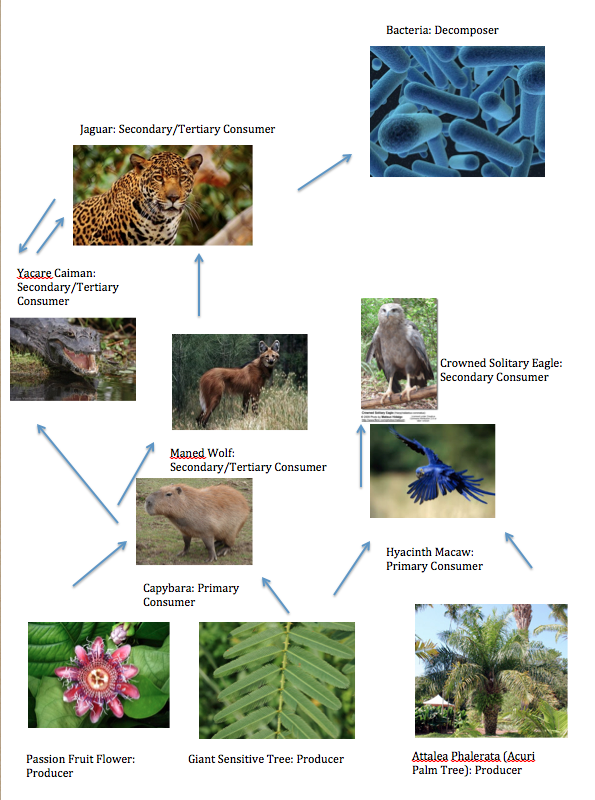
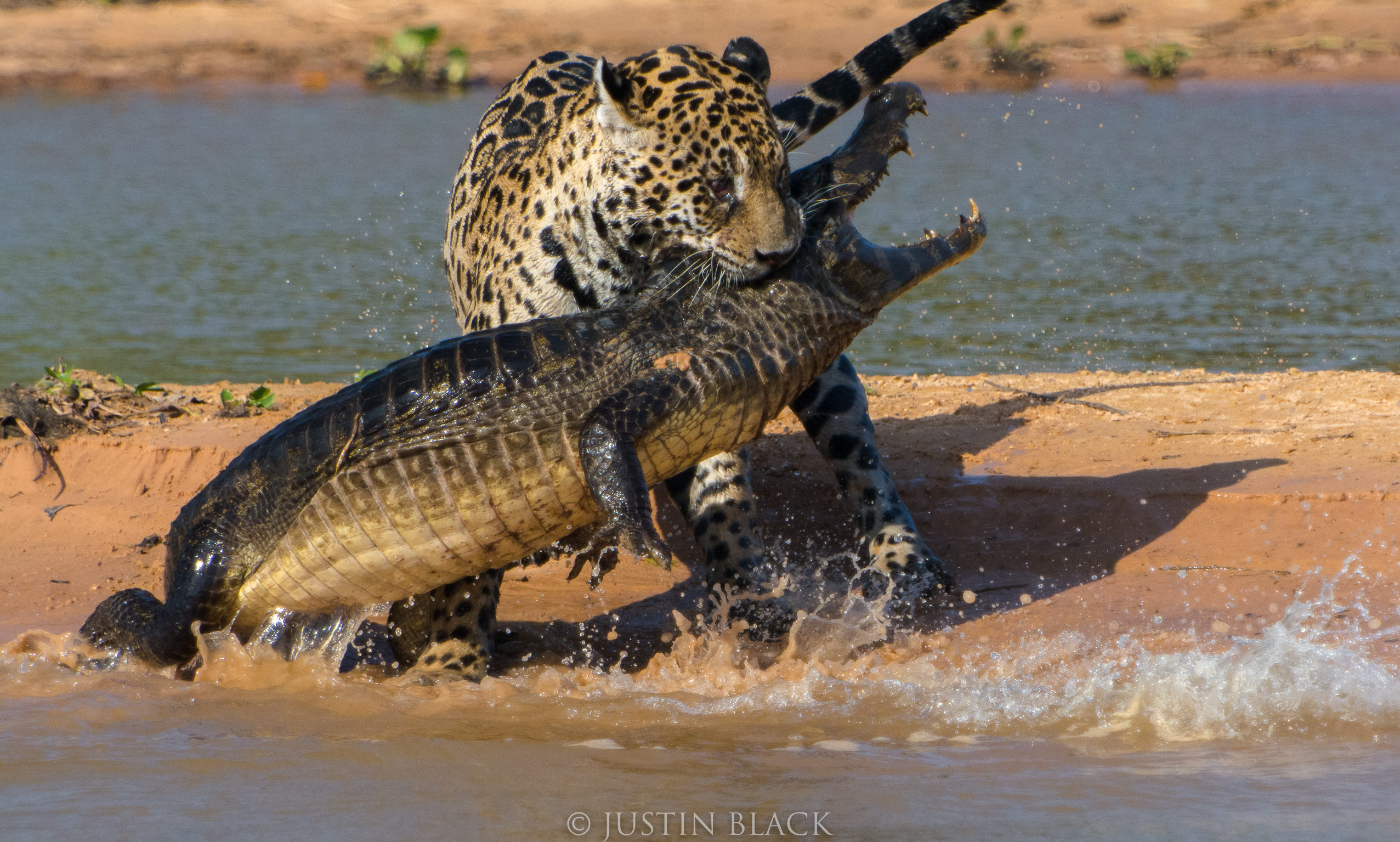
Caimans, represented mainly by the Pantanal caiman (Caiman crocodilus yacare) and the broad-snouted caiman (Caiman latirostris), are abundant predatory reptiles. Although young caimans feed on invertebrates and small fish, adults are opportunistic predators, consuming a wide range of prey, including medium and large fish, aquatic birds, mammals, and even other reptiles. They play a fundamental role in the population control of various species and in nutrient cycling, as they also feed on carcasses.
Jaguar (Panthera onca)
The jaguar, the largest feline in the Americas, is a top predator that, in the Pantanal, demonstrates a remarkable adaptation to semi-aquatic life. Although its diet includes terrestrial mammals such as capybaras and deer, Pantanal jaguars are expert hunters of caimans and fish, especially during the dry season when aquatic prey concentrates in pools. Its presence is an indicator of a healthy ecosystem with an abundance of prey.
Fishing Birds
A great diversity of fishing birds inhabits the rivers and wetlands of the Pantanal, occupying different ecological niches.
-
Kingfisher (Megaceryle torquata, Chloroceryle spp.): Several species of kingfishers, with varying sizes, are agile predators of small and medium fish, diving into the water to capture them.
-
Grebe (Podicipedidae): Grebes are aquatic birds specialized in diving, feeding on fish and aquatic invertebrates.
-
Herons and Egrets (Ardeidae): Great egrets, little blue herons, rufescent tiger herons, and other heron species are opportunistic predators that feed on fish, amphibians, reptiles, and invertebrates, using their long beaks and flexible necks to capture prey in shallow waters.
-
Roseate Spoonbill (Platalea ajaja): The spoonbill uses its spoon-shaped beak to filter small fish and invertebrates from the water.
-
Jabiru (Jabiru mycteria): The jabiru, symbol of the Pantanal, is a large bird that feeds on fish, amphibians, reptiles, and small mammals, using its strong beak to capture prey in shallow waters.
-
Neotropic Cormorant (Phalacrocorax brasilianus): The cormorant is an efficient diver that pursues fish underwater, using its webbed feet for propulsion.
Ecological Importance of the River Food Chain
The complexity of the food chain of Pantanal rivers is fundamental for maintaining the biodiversity and ecological processes of the biome.
- Nutrient Cycling: The decomposition of organic matter and the activity of detritivores and herbivores contribute to the cycling of essential nutrients, such as nitrogen and phosphorus, which are reincorporated into the ecosystem.
- Population Control: Predator-prey interactions regulate the populations of different species, preventing overpopulation and resource depletion.
- Energy Flow: The transfer of energy between different trophic levels ensures the sustainability of the ecosystem, from the solar energy captured by primary producers to the top predators.
- Maintenance of Biodiversity: The diversity of ecological niches created by the complexity of the food chain allows the coexistence of a wide range of species, each with its specific role.
- Ecosystem Services: The health of the aquatic food chain sustains vital ecosystem services, such as fishing (which is an important economic activity for local communities), water quality regulation, and wildlife observation tourism.
Conservation and Threats
The food chain of Pantanal rivers, despite its resilience, faces several threats that compromise its integrity and functionality.
- Deforestation and Land Use Changes: Deforestation in the highland areas that drain into the Pantanal increases erosion and siltation of rivers, harming water quality and aquatic habitats. The conversion of natural areas into pastures and crops also leads to the use of pesticides, which can contaminate waters and affect the base of the food chain.
- Water Pollution: The discharge of untreated domestic, industrial, and agricultural effluents into rivers contributes to nutrient pollution (eutrophication), heavy metals, and other contaminants, directly affecting the health of aquatic organisms.
- Predatory and Illegal Fishing: Overfishing and the use of illegal methods (such as trawl nets and explosives) can lead to a decrease in fish populations, especially large species, unbalancing the food chain.
- Construction of Dams and Hydroelectric Plants: The construction of dams on rivers upstream of the Pantanal alters the natural hydrological regime, impacting the flood and drought cycles essential for the reproduction of many fish species and the dynamics of the ecosystem.
- Climate Change: Changes in rainfall and temperature patterns resulting from climate change can intensify droughts and floods, affecting the availability of water and food, and altering the distribution and abundance of species.
- Invasive Species: The introduction of exotic species, such as the peacock bass (Cichla spp.) in some basins, can compete with native species for resources and prey on them, causing imbalances in the food chain.
Conserving the food chain of Pantanal rivers requires an integrated approach involving the protection of headwater areas, sustainable management of water resources, pollution control, fishing inspection, and the development of public policies that promote environmental and socioeconomic sustainability in the region. Maintaining the health of the rivers is crucial for the survival of all Pantanal biodiversity and for the continuity of the ecosystem services that this unique biome offers.
References
[1] JUNK, W. J.; NUNES DA CUNHA, C.; NEVES, F. D. M. The Pantanal: a large South American wetland. In: PARANÁ, S. L. (Org.). The Pantanal: ecology, biodiversity and sustainable management of a large South American wetland. Sofia: Pensoft Publishers, 2011. p. 1-27. Available at: https://www.pensoft.net/book/10266/the-pantanal-ecology-biodiversity-and-sustainable-management-of-a-large-south-am
[2] HAMILTON, S. K. Hydrological controls of ecological processes in the Pantanal. In: PARANÁ, S. L. (Org.). The Pantanal: ecology, biodiversity and sustainable management of a large South American wetland. Sofia: Pensoft Publishers, 2011. p. 29-48.