

Introduction
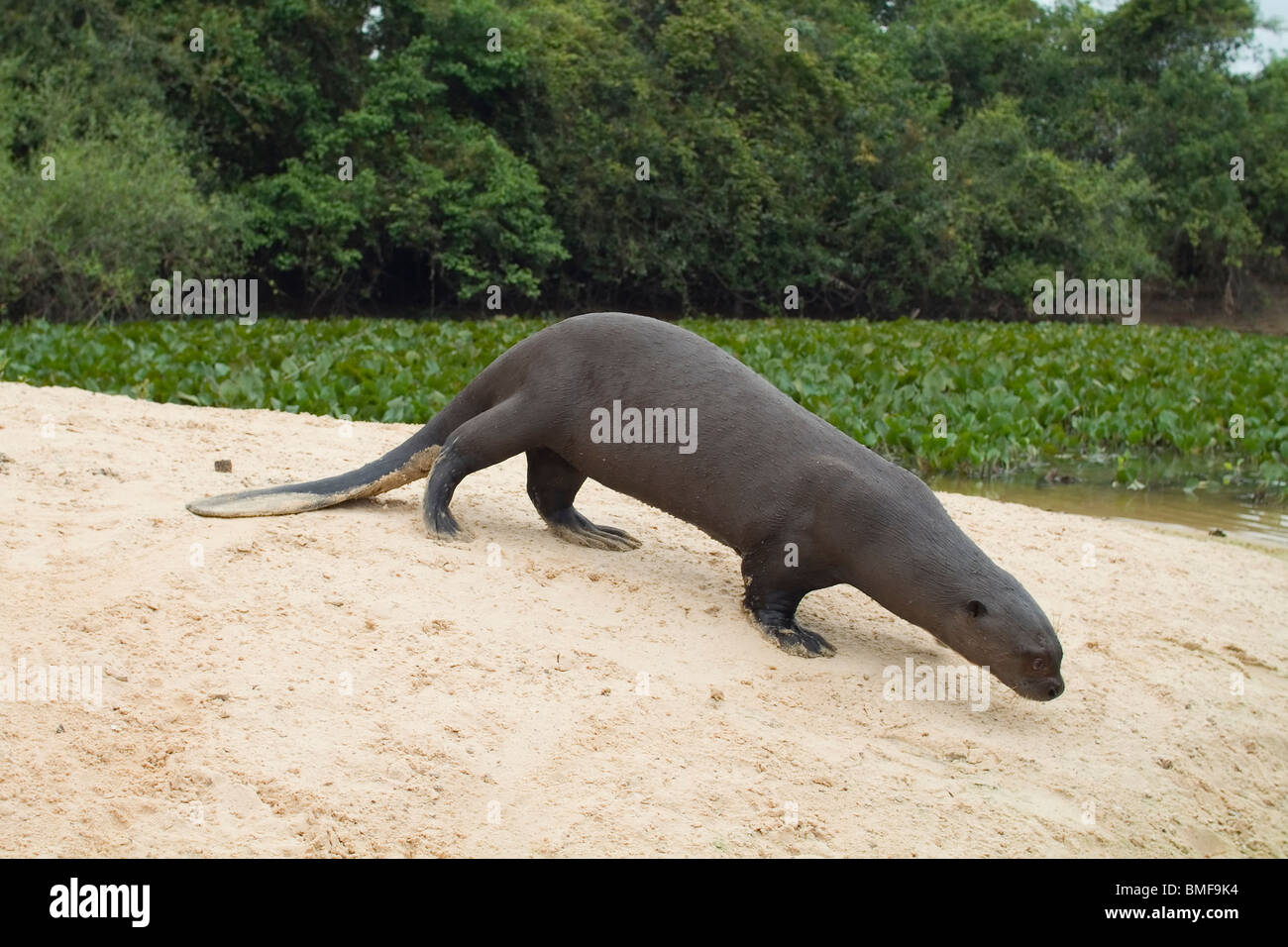
The Neotropical otter (Lontra longicaudis), also known as the river otter, is one of the most emblematic and agile semi-aquatic mammals of the Pantanal. Belonging to the Mustelidae family, the same as the giant otter (Pteronura brasiliensis), the Neotropical otter stands out for its solitary nature and its extreme adaptability to different types of aquatic environments, from large rivers to small corixos and flooded areas. In the Pantanal ecosystem, it plays a crucial role as an intermediate predator, helping to regulate fish and crustacean populations and serving as an indicator of the environmental health of water bodies.
Scientific Classification
| Kingdom | Animalia |
| Phylum | Chordata |
| Class | Mammalia |
| Order | Carnivora |
| Family | Mustelidae |
| Genus | Lontra |
| Species | Lontra longicaudis |
| Common name | Neotropical otter |
Unlike its larger cousin, the giant otter, which is highly social and noisy, the Neotropical otter is discreet and often goes unnoticed by casual observers. Its presence is more easily detected by its tracks and spraints (feces) left on rocks and logs along the riverbanks. This species is widely distributed throughout Latin America, but it is in the Pantanal that it finds one of its most important strongholds, thanks to the abundance of food and the preservation of riparian forests, which are essential for its shelter and reproduction.
The study of Lontra longicaudis is vital for the conservation of the biome's freshwater ecosystems. As a species that depends on clean water and healthy fish stocks, its decline can signal problems such as pollution or overfishing. In the Pantanal, the Neotropical otter is a symbol of the resilience of aquatic life, adapting to the seasonal cycles of flood and drought that define the rhythm of the wetland.
Physical Description
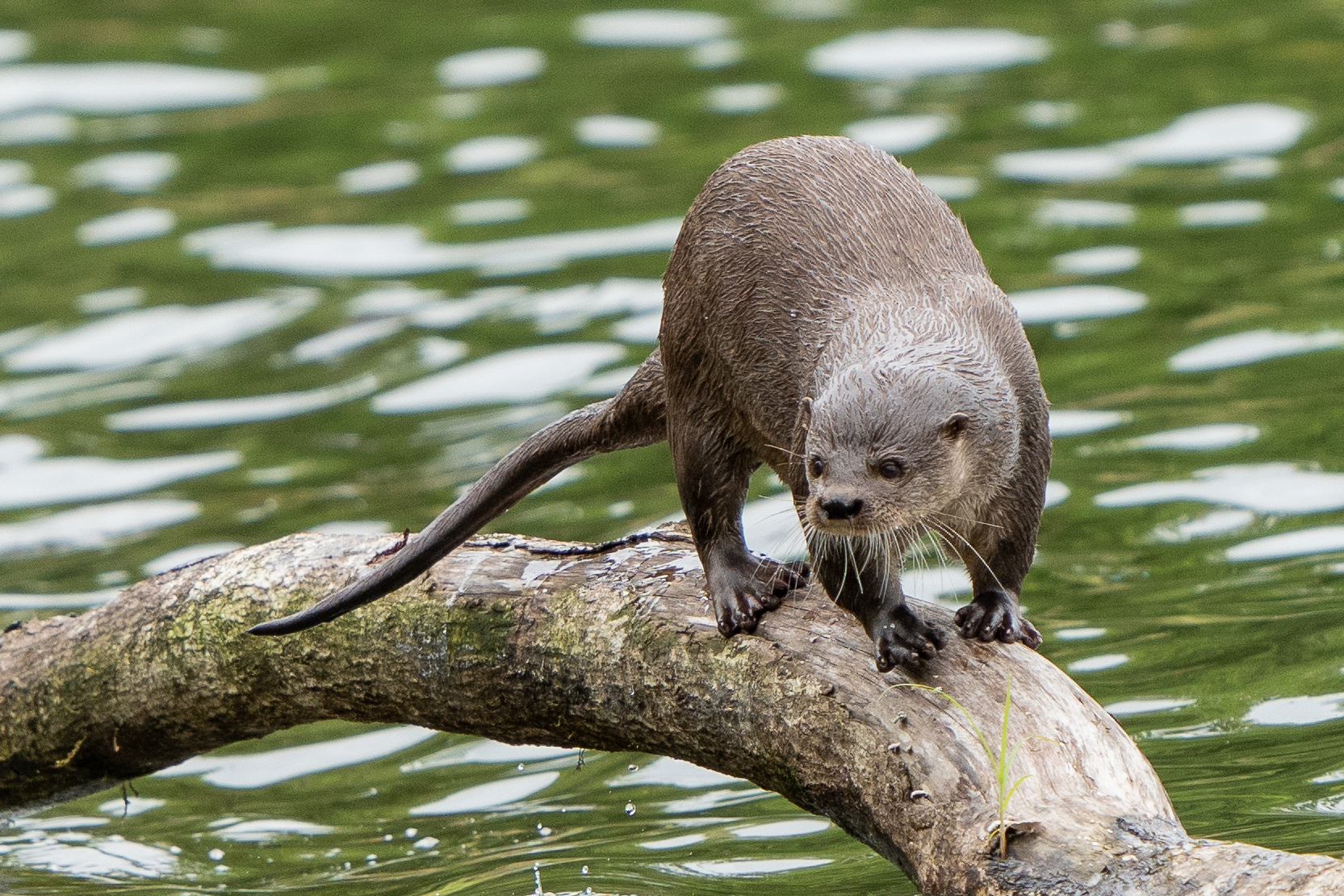
The Neotropical otter has an elongated and hydrodynamic body, perfectly adapted for life in the water. Adults generally measure between 90 cm and 150 cm in total length, including the tail, which is long, muscular, and slightly flattened at the base, serving as a powerful rudder. Their weight varies from 5 kg to 15 kg, with males usually being larger than females. Their fur is short, dense, and waterproof, with a coloration that varies from light brown to dark grayish-brown on the back, while the ventral region is lighter, often silvery or yellowish.
One of its most notable features is its webbed feet, which facilitate fast and precise swimming. Its head is small and flattened, with small, rounded ears that can be closed when submerged. Its eyes are positioned high on the head, allowing it to see above the water while swimming. Furthermore, it possesses long and sensitive vibrissae (whiskers) that help it detect the movement of prey in murky waters. Its dentition is strong, with sharp teeth specialized for grasping and crushing the shells of crustaceans and the bones of fish.
Habitat and Distribution in the Pantanal
In the Pantanal, the Neotropical otter is found in a wide variety of aquatic habitats. It prefers rivers with clear or dark water, corixos, lagoons, and flooded areas with abundant riparian vegetation. Unlike the giant otter, which prefers large rivers and open lagoons, the Neotropical otter is frequently found in smaller and more sheltered water bodies, where it can easily hide among roots and fallen logs. It is a territorial species, and each individual maintains a home range that can cover several kilometers of riverbank.
Its distribution covers both the Northern and Southern Pantanal. It is common to see it in regions such as the Transpantaneira, the Cuiabá River, the Paraguay River, and the Miranda River. During the flood season, it expands its territory into the flooded forests (igapós), while in the dry season, it concentrates in the remaining water bodies. The presence of steep banks with dense vegetation is crucial, as it is in these locations that the otter builds its dens or "resting places," which are used for sleeping and raising its young.
Behavior
The Neotropical otter is a predominantly solitary animal, except during the mating season or when a female is with her pups. It has crepuscular and nocturnal habits, although it can be seen active during the day, especially in areas with little human presence. It is an excellent swimmer and diver, capable of remaining submerged for several minutes while hunting. On land, its movement is more limited, but it can move quickly between water bodies if necessary.
One of its most characteristic behaviors is scent marking. They use their spraints and secretions from anal glands to mark rocks, logs, and sandy areas along the banks, communicating their presence and territorial boundaries to other otters. They are also known for their "playful" behavior, often seen sliding down muddy banks or playing with objects in the water, which helps in the development of hunting skills and physical coordination. Despite its charismatic appearance, it is a brave animal and can be quite aggressive if it feels cornered or if its pups are threatened.
Diet
The diet of the Neotropical otter in the Pantanal is primarily piscivorous, but it is also a generalist predator. Fish represent the majority of its food, with a preference for species that are easier to capture, such as cichlids, characins, and catfish. In addition to fish, it consumes a significant amount of crustaceans (crabs and shrimp), which are abundant in the Pantanal's corixos. Its diet can also include amphibians, small reptiles (such as small caimans and snakes), birds, and occasionally small mammals.
Its hunting technique is based on stealth and speed. It uses its vibrissae to detect vibrations in the water and, once the prey is located, it performs a quick dive to capture it with its mouth. Small prey are often consumed in the water, while larger ones are taken to the bank or to a semi-submerged log to be eaten. This varied diet allows the Neotropical otter to adapt to seasonal changes in the availability of food resources in the Pantanal, ensuring its survival even during periods of extreme drought.
Reproduction
The reproduction of the Neotropical otter can occur throughout the year, but there is often a peak in births that coincides with the beginning of the dry season, when the concentration of fish in the water bodies is higher. The gestation period lasts about 60 to 70 days. The female gives birth to a litter of 1 to 3 pups in a protected den, usually a hole in the riverbank or a cavity under tree roots. The pups are born blind and completely dependent on their mother.
The female is solely responsible for the care of the young. The pups begin to leave the den and have their first contact with water at around 50 to 60 days of age. They remain with their mother for about a year, during which time they learn essential hunting and survival techniques. After this period, the young become independent and disperse to find their own territories. Sexual maturity is reached at around two years of age. The low reproductive rate and the long period of parental care make the species particularly vulnerable to environmental disturbances.
Conservation Status
Currently, Lontra longicaudis is classified by the International Union for Conservation of Nature (IUCN) as "Near Threatened". In Brazil, it is also considered a species that requires attention due to the continuous loss of its habitat. The main threats in the Pantanal include water pollution by mercury (from gold mining) and pesticides from upland crops, as well as the siltation of rivers caused by the deforestation of riparian forests.
Another pressure factor is the conflict with human activities, especially fish farming and professional fishing. Otters are sometimes perceived as competitors by fishermen or as pests in fish ponds, which can lead to retaliatory killings. Furthermore, the construction of large hydroelectric projects (PCHs) on the rivers that feed the Pantanal plain alters the hydrological regime and fragments populations, making it difficult for individuals to move and disperse.
Conservation efforts in the Pantanal involve the creation and maintenance of Conservation Units, such as the Encontro das Águas State Park and the Pantanal Matogrossense National Park. Research and monitoring projects, such as those carried out by Onçafari and the Ekko Brasil Institute, are fundamental to understanding the species' ecology and promoting harmonic coexistence with local communities. Environmental education and the strengthening of sustainable ecotourism in regions like Porto Jofre are key strategies to transform the otter into a symbol of the preservation of Pantanal rivers.
Curiosities
One of the most fascinating curiosities about Lontra longicaudis is its incredible underwater agility, being capable of performing acrobatic maneuvers to capture fast fish. Unlike the giant otter, which hunts in groups and uses brute force, the Neotropical otter uses stealth and precision. In the local Pantanal culture, it is often simply called "lontra" to differentiate it from the "ariranha" or "river wolf," and it is respected for its ability to "disappear" in the water at the slightest sign of danger.
Another interesting fact is the sensitivity of its vibrissae. These "whiskers" function as biological radars, allowing the animal to detect the movement of prey even in waters with zero visibility, which is common in many Pantanal corixos during the rainy season. Furthermore, the otter has a very high metabolism, which forces it to consume a daily amount of food equivalent to about 15% to 25% of its body weight, keeping it in constant hunting activity.
For ecotourism, the otter represents both a challenge and a prize. While the jaguar and the tapir are the stars of photographic safaris, spotting a Neotropical otter requires patience and a keen eye on the riverbanks. Its presence in places like the Transpantaneira enriches the observable biodiversity and serves as a reminder of the complexity of wildlife that depends directly on the integrity of the Pantanal rivers.
References
[1] IUCN. (2021). *Lontra longicaudis*. The IUCN Red List of Threatened Species. Available at: https://www.iucnredlist.org/species/12429/164579175
[2] ICMBIO. (2018). *Red Book of Threatened Brazilian Fauna*. ICMBio. Available at: https://www.icmbio.gov.br
[3] ALHO, C. J. R. (2008). *Biodiversity of the Pantanal*. UNIDERP Publishing.
[4] CHEIDA, C. C.; KASPER, C. B.; TRAPANI, R. (2006). Ecology and conservation of Neotropical otters (*Lontra longicaudis*) in Brazil. *Natureza & Conservação*, v. 4, n. 2, p. 143-152.
[5] EMBRAPA PANTANAL. (2023). *Mammals of the Pantanal*. Embrapa Pantanal. Available at: https://www.embrapa.br/pantanal/publicacoes
[6] SOS PANTANAL. (2024). *Neotropical Otter: An Environmental Health Indicator*. SOS Pantanal. Available at: https://sospantanal.org.br/lontra-neotropical-um-indicador-de-saude-ambiental/
[7] PARDINI, R.; SOUZA, S. M. (2000). Habitat use and diet of the otter (*Lontra longicaudis*) in an Atlantic Forest stream, southeastern Brazil. *Brazilian Journal of Zoology*, v. 17, n. 4, p. 1025-1033.