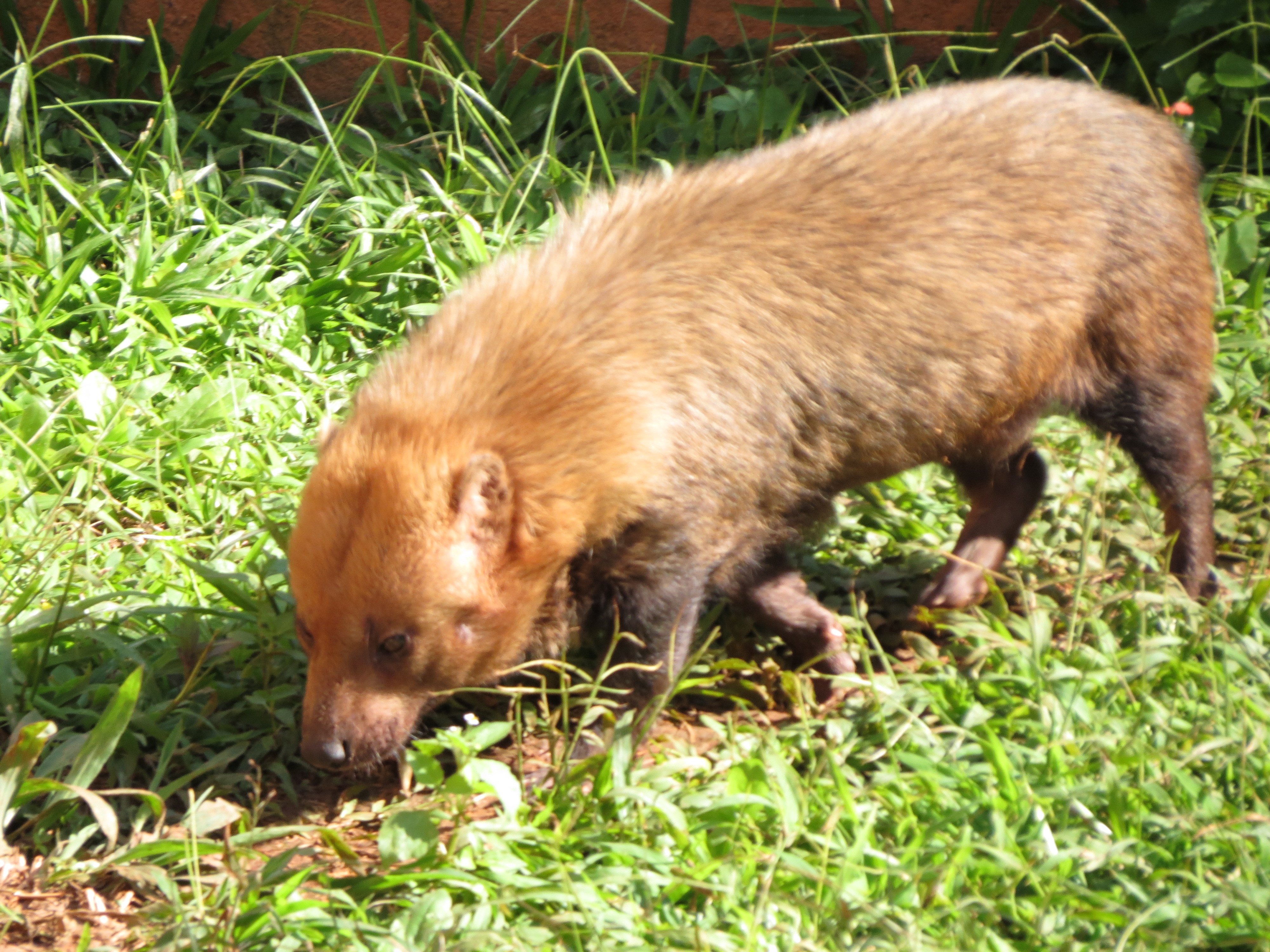


Nasua nasua (South American Coati): The Social Engineer of the Pantanal Forests
Introduction
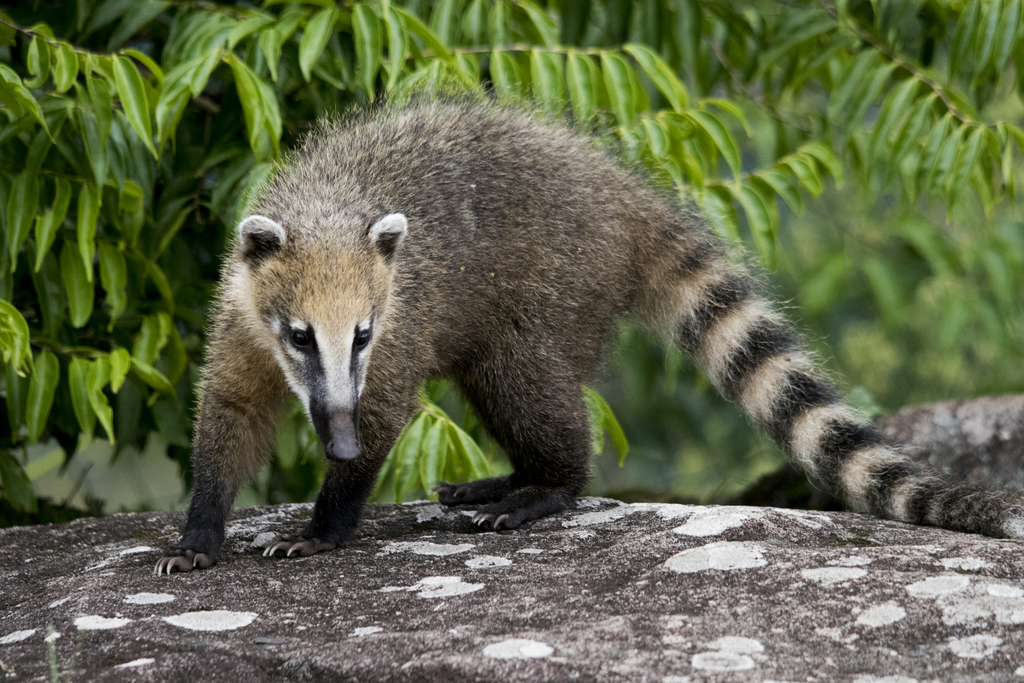
The South American coati (Nasua nasua) is one of the most charismatic and socially complex mammals of the Pantanal. A member of the Procyonidae family—the same as raccoons—the coati is easily recognized by its long, ringed tail and its elongated, extremely mobile snout. In the Pantanal biome, these animals play a fundamental role as seed dispersers and regulators of invertebrate populations, being essential for the health and regeneration of gallery forests and capões (forest patches) [1] [4].
Scientific Classification
| Category | Classification |
|---|---|
| Kingdom | Animalia |
| Phylum | Chordata |
| Class | Mammalia |
| Order | Carnivora |
| Family | Procyonidae |
| Genus | Nasua |
| Species | Nasua nasua |
| Common name | South American coati, Ring-tailed coati, Quati |
Description
The coati has a slender body, measuring between 40 and 70 cm in length, with a tail that can be just as long. Its weight varies from 3 to 7 kg. The coat is dense, with colors ranging from reddish-brown to gray, and the tail always presents characteristic dark rings. Its snout is long and flexible, an adaptation for foraging in the soil and between tree trunks. Its paws have strong claws, making it an excellent climber [5] [7].
Distribution and Habitat
It occurs throughout South America, from Colombia to northern Argentina. In the Pantanal, it is widely distributed, occupying mainly forested areas, such as gallery forests and capões. Although they spend much of their time on the ground foraging, they are highly dependent on trees for resting, escaping predators, and nesting [3] [9].
Behavior and Social Structure
The coati is famous for its unique social structure among carnivores. Females and young males live in organized groups of up to 30 individuals, called “bands.” These groups exhibit high levels of cooperation, including collective vigilance and grooming. Adult males, on the other hand, are predominantly solitary, joining the groups only during the mating season. They are diurnal animals, starting their activities at sunrise and returning to the treetops at dusk [1] [11].
Feeding
They are typical omnivores, with a very broad diet. Using their sensitive snout and strong claws, they forage in the leaf litter for insects, spiders, scorpions, and small vertebrates. They are also great fruit consumers, playing a vital role in seed dispersal. In the Pantanal, they are known to consume the fruits of the acuri palm, facilitating the dispersal of this important plant [2] [8].
Reproduction
Mating usually coincides with the period of greatest food abundance. After a gestation of about 75 days, the female leaves the group to build a nest in the treetops, where she gives birth to 2 to 7 cubs. After a few weeks, the mother and cubs rejoin the group. This strategy increases the survival rate of the young against predators like jaguars and birds of prey [11] [18].
Ecological Importance
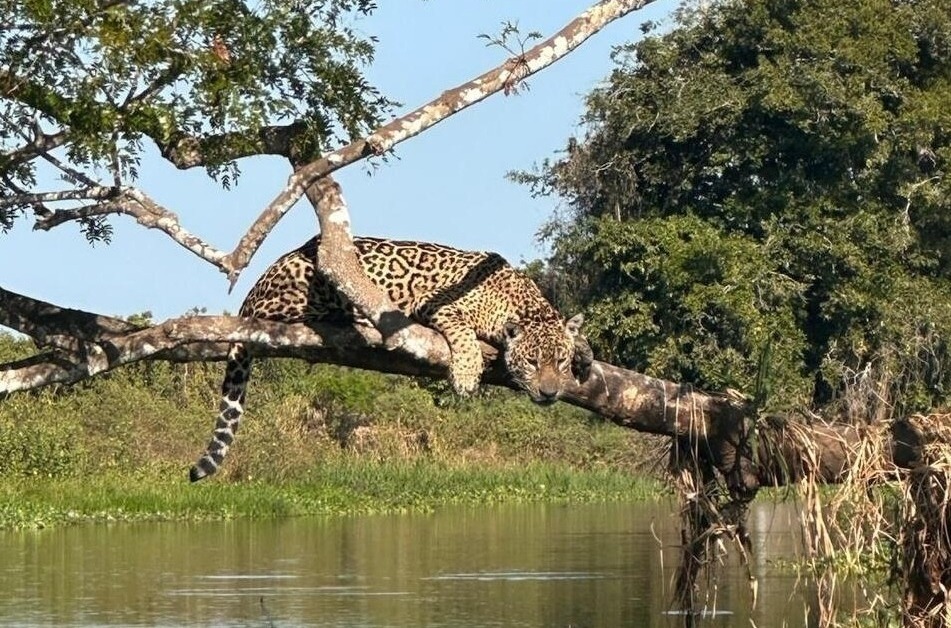
The coati is considered a “forest gardener.” By consuming a large variety of fruits and defecating the seeds in different locations, it promotes the genetic diversity of plants. Furthermore, by preying on insects and small rodents, it helps maintain the balance of these populations. In the Pantanal, they are also an important prey source for large predators, such as the jaguar (Panthera onca) and the ocelot (Leopardus pardalis) [15] [23].
Conservation Status
Classified as Least Concern (LC) by the IUCN. However, in some regions, they face threats such as habitat fragmentation, roadkill, and diseases transmitted by domestic animals (such as rabies and parvovirus). In the Pantanal, the main concern is the loss of forest areas due to large-scale wildfires [10] [24].
Curiosities
- Double-jointed Ankles: Coatis can rotate their ankles 180 degrees, allowing them to descend trees head-first.
- Sophisticated Communication: They use a wide range of vocalizations, from high-pitched chirps to alert the group to cohesion calls.
- Acuri Engineers: In the Pantanal, coatis are primarily responsible for “cleaning” acuri fruits, facilitating access for other smaller animals to the pulp and assisting in the palm’s dispersal.
References
[1] GARCIA, C. M. (2017). Ecologia espacial e biologia social de quatis (Carnivora: Nasua nasua) em uma área do Pantanal da Nhecolândia. MS Thesis. Available at: https://www.alice.cnptia.embrapa.br/alice/bitstream/doc/1087654/1/Dissertacaogarcia.pdf [2] BIANCHI, R. C. et al. (2016). Niche Partitioning among Mesocarnivores in a Brazilian Wetland. PLoS ONE, v. 11, n. 9. Available at: https://journals.plos.org/plosone/article?id=10.1371/journal.pone.0162893 [3] DESBIEZ, A. L. J. et al. (2010). Density, habitat selection and observations of South American coati Nasua nasua in the central region of the Brazilian Pantanal wetland. Mammalia, v. 74, n. 4. [4] ONÇAFARI. (n.d.). Quati (Nasua nasua). Available at: https://oncafari.org/especie_fauna/quati/ [5] GOMPPER, M. E.; DECKER, D. M. (1998). Nasua nasua. Mammalian Species, n. 580. [6] BEISIEGEL, B. M. (2001). Notes on coati, Nasua nasua (Carnivora: Procyonidae) in an Atlantic Forest Area. Brazilian Journal of Biology, v. 61, n. 4. [7] EMMONS, L. H.; FEER, F. (1997). Neotropical Rainforest Mammals: A Field Guide. 2. ed. University of Chicago Press. [8] ALVES-COSTA, C. P. et al. (2004). Variation in the diet of the Brown-nosed coati (Nasua nasua) in Southeastern Brazil. Journal of Mammalogy, v. 85, n. 3. [9] ALHO, C. J. R. (2008). Mamíferos do Pantanal. In: ALHO, C. J. R. (Ed.). Fauna do Pantanal. Embrapa. [10] ICMBIO. (2013). Avaliação do Risco de Extinção de Nasua nasua (Linnaeus, 1766) no Brasil. Biodiversidade Brasileira, v. 3, n. 1. [11] OLIFIERS, N. et al. (2009). Life-history traits of the coati (Nasua nasua) in the Brazilian Pantanal. Journal of Mammalogy, v. 90, n. 6. [12] COSTA, E. M. J. et al. (2009). Group composition and activity patterns of brown-nosed coatis in savanna fragments, Mato Grosso do Sul, Brazil. Brazilian Journal of Biology, v. 69, n. 4. [13] RUSSELL, J. K. (1982). Social units of coatis, Nasua narica. In: EISENBERG, J. F. (Ed.). Vertebrate Ecology in the Northern Neotropics. Smithsonian Institution Press. [14] HIRSCH, B. T. (2002). Social monitoring and vigilance in brown coatis (Nasua nasua). Behavioral Ecology and Sociobiology, v. 52, n. 6. [15] ROCHA, E. C. et al. (2006). Uso do habitat e dieta de Nasua nasua (Carnivora: Procyonidae) no Pantanal de Mato Grosso, Brasil. Revista de Biologia Tropical, v. 54, n. 4. [16] BIANCHI, R. C. (2009). Ecologia de mesocarnívoros em uma área no Pantanal Central, Mato Grosso do Sul. PhD Thesis. [17] ALVES-COSTA, C. P. (1998). Frugivoria e dispersão de sementes por quatis (Nasua nasua) no Parque das Mangabeiras, Belo Horizonte, MG. MS Thesis. [18] LIMA, J. S. et al. (2015). Nesting ecology of the coati (Nasua nasua) in the Brazilian Pantanal. Journal of Mammalogy, v. 96, n. 4. [19] KAUFMANN, J. H. (1962). Ecology and social behavior of the coati, Nasua narica on Barro Colorado Island, Panama. University of California Publications in Zoology, v. 60. [20] BEISIEGEL, B. M.; MANTOVANI, W. (2006). Habitat use, home range and foraging preferences of Nasua nasua in a pluvial tropical Atlantic forest area. Journal of Zoology, v. 269, n. 1. [21] JORDANO, P. (2000). Fruits and frugivory. In: FENNER, M. (Ed.). Seeds: The Ecology of Regeneration in Plant Communities. 2. ed. CAB International. [22] HOWE, H. F.; SMALLWOOD, J. (1982). Ecology of seed dispersal. Annual Review of Ecology and Systematics, v. 13. [23] ROEMER, G. W. et al. (2009). The ecological role of the world’s terrestrial carnivores. Bioscience, v. 59, n. 2. [24] IUCN. (2016). Nasua nasua: The IUCN Red List of Threatened Species. Available at: https://www.iucnredlist.org/species/41684/45213378 [25] HARRIS, M. B. et al. (2005). Safeguarding the Pantanal: Wetlands of International Importance. BioScience, v. 55, n. 8. [26] HERRERA, H. M. et al. (2008). Enzootic cycle of Trypanosoma cruzi in the Pantanal of Brazil. Parasitology, v. 135, n. 2.