

Introduction
The giant otter (Pteronura brasiliensis), also known popularly as the river wolf or water jaguar, is the largest representative of the mustelid family in the world and one of the most emblematic species of South American fauna. This semi-aquatic mammal stands out not only for its impressive dimensions, reaching nearly two meters in length, but also for its complex social organization and aggressive territorial behavior. In the Pantanal ecosystem, the giant otter occupies the position of top predator in aquatic food chains, playing a fundamental role in controlling fish populations and maintaining the ecological balance of rivers and bays.
Historically distributed throughout almost all of tropical South America, the species suffered a drastic decline in its populations due to predatory hunting for the fur trade during the 20th century. Currently, the Brazilian Pantanal represents one of the last safe refuges and one of the main conservation centers for the species, where family groups can be observed with relative frequency in calm rivers. The presence of the giant otter is considered an excellent indicator of environmental health, as the species is extremely sensitive to water pollution and riparian habitat degradation.
Scientific Classification
| Category | Classification |
|---|---|
| Kingdom | Animalia |
| Phylum | Chordata |
| Class | Mammalia |
| Order | Carnivora |
| Family | Mustelidae |
| Genus | Pteronura |
| Species | Pteronura brasiliensis |
| Common Name | Giant Otter, River Wolf |
Description
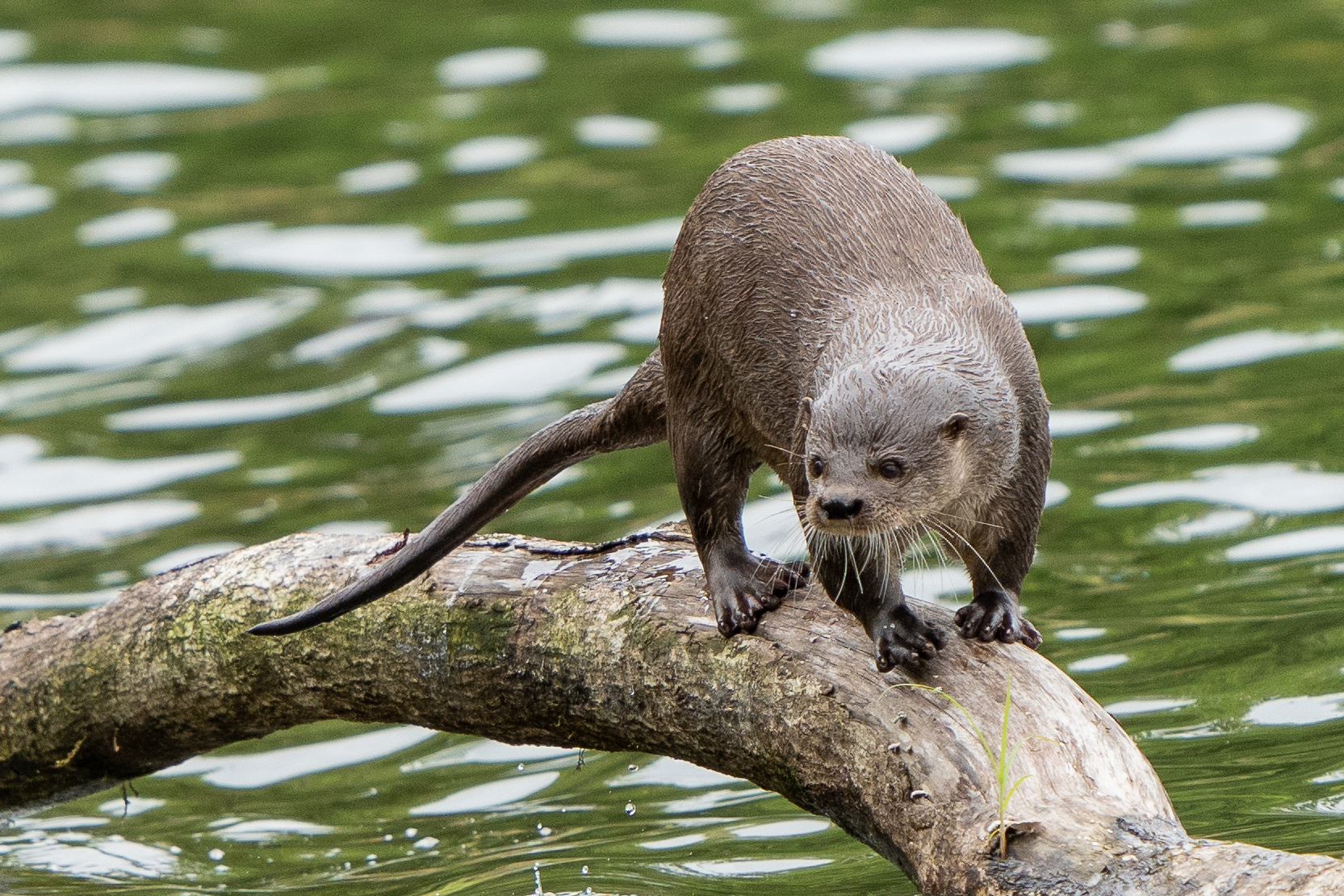
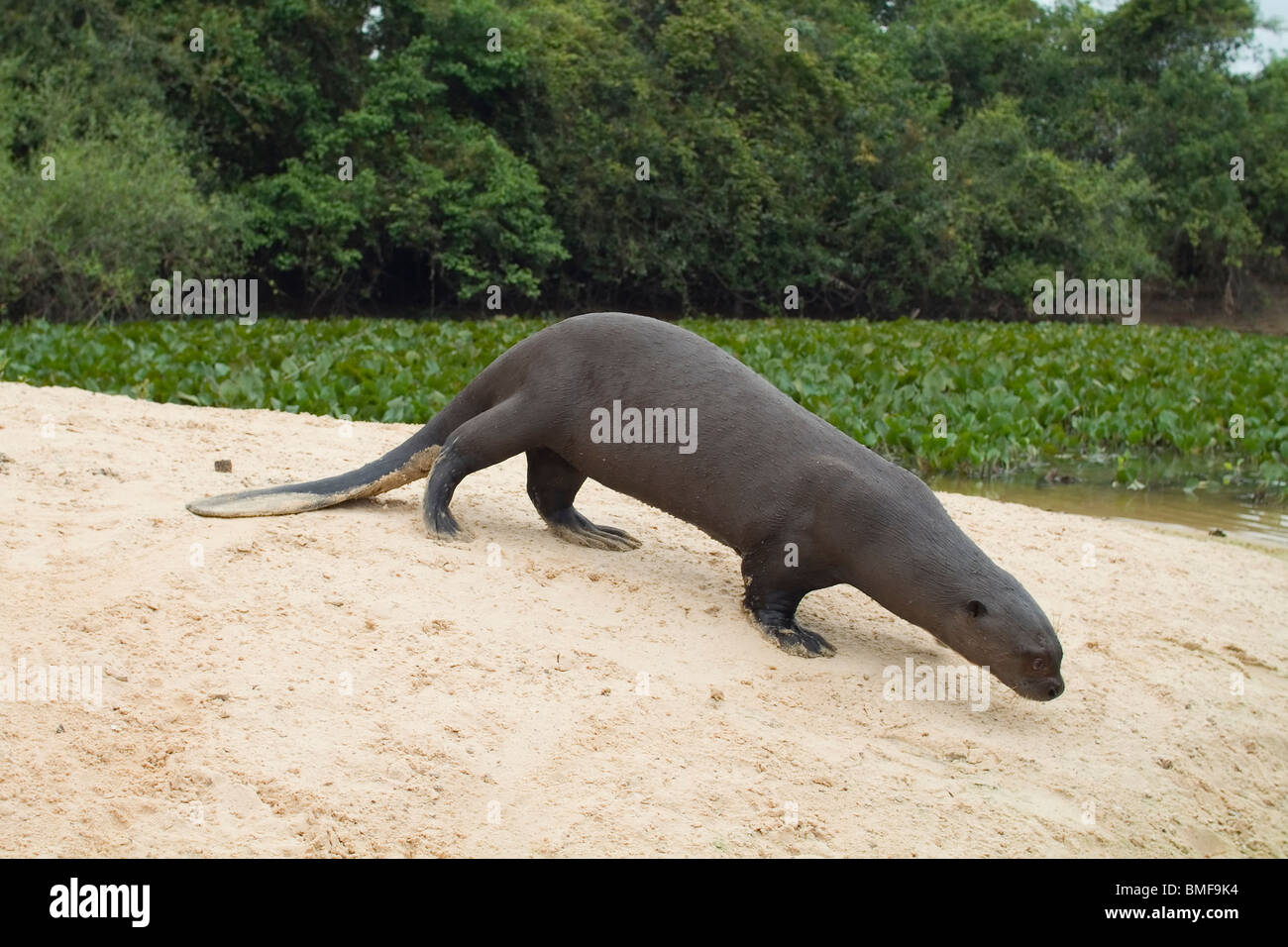
The giant otter possesses highly specialized morphological adaptations for semi-aquatic life. Its body is long and muscular, covered by a short, dense, and velvety coat of dark brown or chestnut color, which becomes almost black when wet. One of the most distinctive features of the species is the presence of whitish or yellowish gular patches in the neck and throat region. These marks are unique to each individual, functioning as a “fingerprint” that allows researchers to identify and monitor specific specimens in the wild [1] [2].
The head is broad and flattened, with small, rounded ears that can be closed during diving. The eyes are large and provide excellent underwater vision, essential for hunting. Its limbs are short and robust, equipped with large interdigital membranes that facilitate propulsion in the water. The tail, which gives rise to the scientific name of the genus (Ptero = wing; nura = tail), is notably flattened laterally at the terminal portion, functioning as a powerful rudder and oar during fast swimming [1].
| Feature | Value |
|---|---|
| Total Length | 1.5 to 1.8 meters |
| Weight (Adult) | 22 to 34 kg |
| Longevity (Wild) | 10 to 13 years |
| Longevity (Captivity) | Up to 20 years |
| Daily Food Consumption | 3 to 4.5 kg of fish |
Distribution and Habitat
The geographic distribution of Pteronura brasiliensis covers the Amazon, Orinoco, and Paraná-Paraguay river basins. However, its original area of occupancy has been severely fragmented, and the species is currently extinct in countries such as Argentina and Uruguay. In Brazil, the largest remaining populations are found in the Amazon basin and the Pantanal of Mato Grosso and Mato Grosso do Sul. The Pantanal, in particular, offers an ideal habitat due to its vast network of meandering rivers, channels (corixos), and permanent bays that ensure food availability throughout the year [2] [4].
The preferred habitat of the giant otter consists of slow-moving rivers, lakes, and floodplains with preserved banks. They require firm banks and dense riparian vegetation for the construction of their dens (locas), which are excavated under tree roots or fallen logs. These structures are vital for nightly rest and for raising pups. In addition to dens, giant otters establish “campsites” on the banks, where they clear vegetation to mark territory and perform social activities [1] [3].
Behavior
Unlike most mustelids, which are solitary, the giant otter is an extremely social animal, living in cohesive family groups ranging from 2 to 20 individuals. The group is generally led by a monogamous breeding pair and composed of offspring from different generations. Cooperation is the basis of the group’s survival: members hunt together, defend territory collectively, and assist in caring for newborns. Communication is intense and complex, involving a wide range of vocalizations, from alarm screams to social contact sounds, audible over long distances [2] [3].
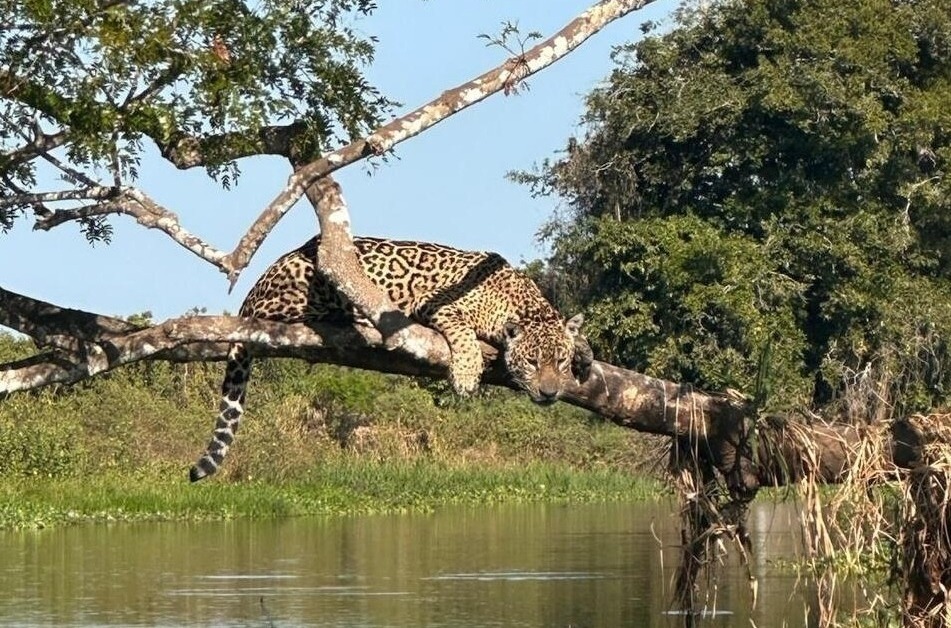
Territoriality is a striking feature. A group of giant otters vigorously defends a stretch of river that can vary from 12 to 40 km, depending on resource availability. Demarcation is done through collective latrines, where animals deposit feces and urine, mixing them with churned earth to intensify the odor. In the Pantanal, “wild diplomacy” is common between giant otters and other predators; although they avoid direct confrontations with the jaguar, giant otter groups are known to face and chase away felines that approach too close to their dens or pups, using aggressive vocalizations and collective displays of strength [4] [5].
Feeding / Nutrition
The giant otter is a strictly piscivorous carnivore for most of its diet, being an opportunistic and highly efficient hunter. Its hunting technique involves the collective surrounding of schools, where group members coordinate movements to corner fish in shallow waters or areas with vegetation. Once captured, the prey is generally brought to the surface and consumed while the animal floats or leans on a log, holding the fish firmly with its front paws and starting to eat from the head [1] [2].
Although fish constitute about 90% of its diet, the giant otter can diversify its diet depending on the season and local availability. In the Pantanal, during the dry season, when fish are confined to smaller bays, hunting efficiency increases drastically. In addition to fish, they can prey on crustaceans, small reptiles, and even juvenile caimans. The giant otter’s metabolism is very fast, requiring an adult to consume daily about 10% of its body weight in food [1] [3].
| Food Type | Importance in Diet |
|---|---|
| Fish (Cichlids and Characids) | High |
| Piranhas | High |
| Catfish and Armored Catfish | Medium |
| Crabs | Low |
| Small Caimans and Snakes | Low |
Reproduction
The reproductive cycle of the giant otter is closely linked to the flood and dry regime of the Pantanal. Although they can reproduce throughout the year, there is a peak of births during the dry season (August to October), which ensures that the pups are more developed when the water levels begin to rise. The gestation period lasts between 65 and 72 days, resulting in litters of 1 to 5 pups, with 2 or 3 being the most common number. Newborns are totally dependent, remaining inside the den for the first few weeks of life [1] [2].
Parental care is cooperative; all group members, including older siblings, participate in protecting and feeding the pups. The young begin to swim around two months of age and start ingesting solid food shortly thereafter, although complete weaning occurs only around 9 months. Sexual maturity is reached between 2 and 3 years of age, at which point young adults may leave the original group to try to establish their own territory and form a new breeding pair [2] [3].
Ecological Importance
As a top predator, the giant otter plays a vital role in regulating aquatic biological communities. By consuming large quantities of fish, it helps control populations of dominant species, preventing a single species from overwhelming the ecosystem and allowing for greater biodiversity. Furthermore, the giant otter acts as an indirect “ecosystem engineer”; its activities of excavating dens and clearing banks create microhabitats that can be used by other species of small animals and insects [4] [5].
The presence of healthy giant otter groups is a biological indicator of the integrity of the Pantanal ecosystem. Because they are at the top of the food chain, they accumulate contaminants present in the water, such as mercury from mining activities or pesticides from adjacent crops. Therefore, monitoring giant otter populations provides crucial data on water quality and the overall health of the river basin. Additionally, the species has high value for sustainable ecotourism, attracting wildlife observers from around the world and generating economic incentives for biome preservation [2] [4].
Conservation Status
Pteronura brasiliensis is globally classified as Endangered (EN) by the IUCN Red List and as Vulnerable (VU) on the national ICMBio list. The main historical threat was hunting for the international fur trade, which nearly led the species to extinction between the 1950s and 1970s. Although hunting has decreased drastically after legal prohibition, new threats have emerged, such as riparian habitat destruction, heavy metal pollution, and conflict with commercial and sport fishermen, who see the giant otter as a competitor for fishing resources [1] [4].
In the Pantanal, intense fires in recent years also represent a severe risk, destroying the bank vegetation necessary for dens and affecting prey availability. Conservation projects, such as the Giant Otter Project (Projeto Ariranhas), work on population monitoring, environmental education for riverside communities, and promoting tourism practices that do not disturb family groups. Protecting ecological corridors and rigorous inspection against river pollution are fundamental measures to ensure that the “river jaguar” continues to thrive in the heart of Brazil [2] [5].
Fun Facts
- Giant otters are known for their extreme courage; groups have been recorded chasing away jaguars and even large anacondas that approached their territories.
- The name “ariranha” comes from the Tupi arira’ña, which means something like “water jaguar,” reflecting its predatory nature and strength.
- They have a repertoire of at least 22 distinct vocalizations, each with a specific meaning for group cohesion and defense.
- Unlike common otters, giant otters are strictly diurnal, being very active during daylight hours and retreating to dens at nightfall.
- The interdigital membranes of giant otters are so developed that their paws function as true flippers, allowing for deep dives and fast chases underwater.
References
[1] PRÓ-CARNÍVOROS. Ariranha (Pteronura brasiliensis). Available at: https://procarnivoros.org.br/animais/ariranha/ [2] SOS PANTANAL. Ariranha: conheça a maior lontra do mundo. Available at: https://sospantanal.org.br/ariranha-conheca-a-maior-lontra-do-mundo-que-habita-o-pantanal/ [3] IUCN. Pteronura brasiliensis. IUCN Red List. Available at: https://www.iucnredlist.org/species/18531/164580466 [4] ICMBIO. Avaliação do Estado de Conservação de Mustelídeos. Available at: https://www.icmbio.gov.br/portal/faunabrasileira/estado-de-conservacao/2744-mamiferos-pteronura-brasiliensis-ariranha [5] PROJETO ARIRANHAS. Conservação e Pesquisa no Pantanal. Available at: https://projetoariranhas.org/