Introduction
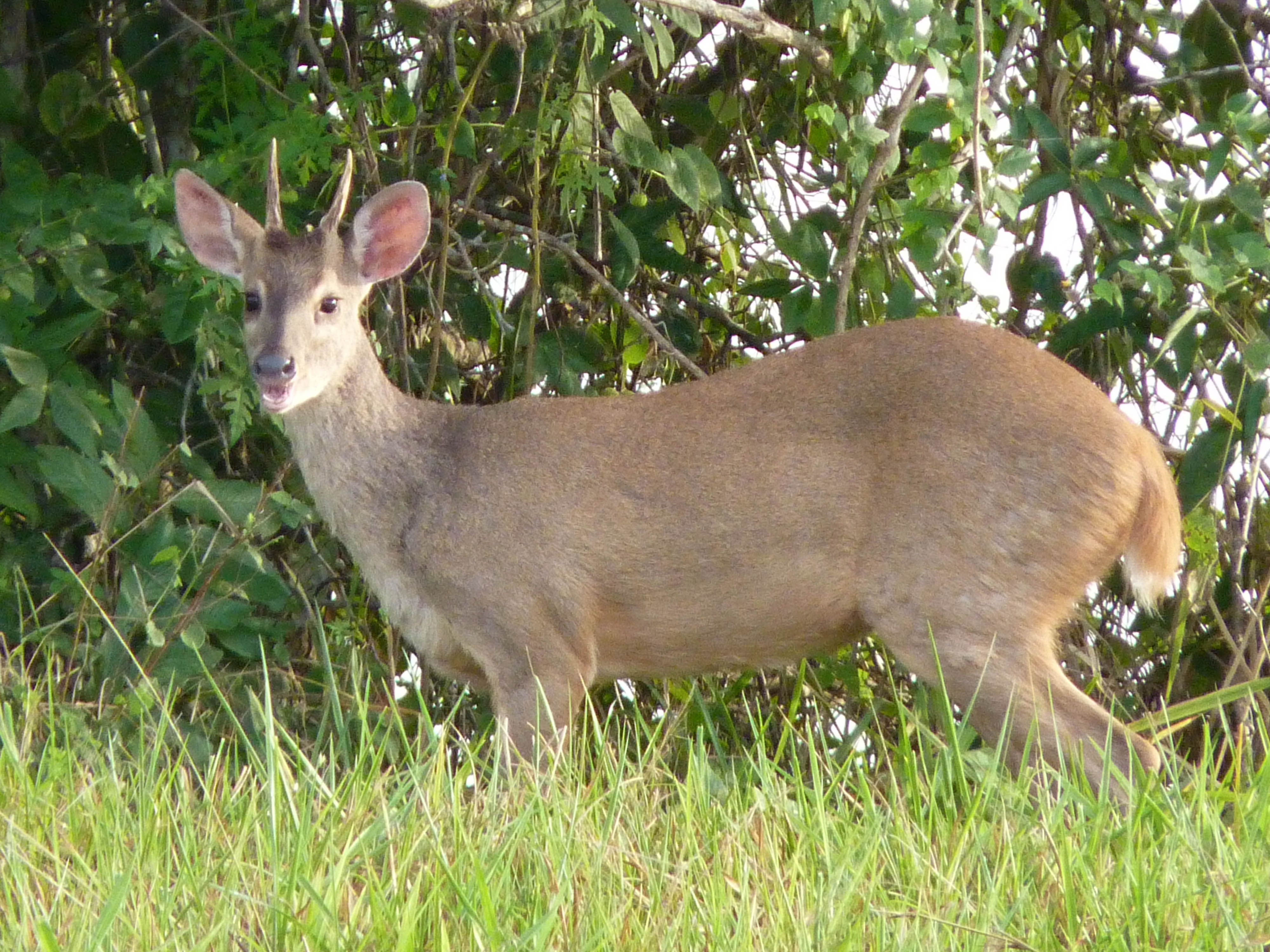
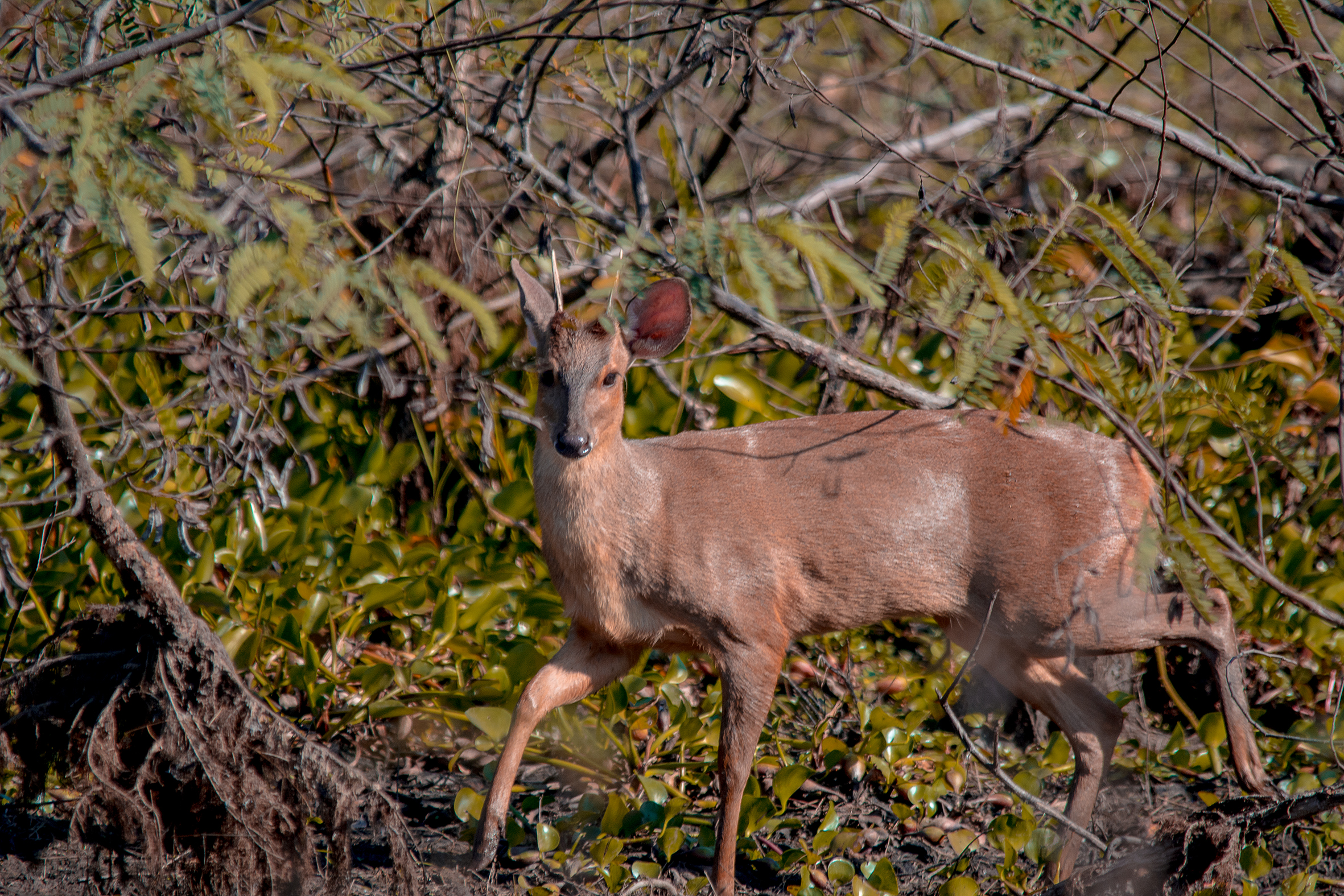
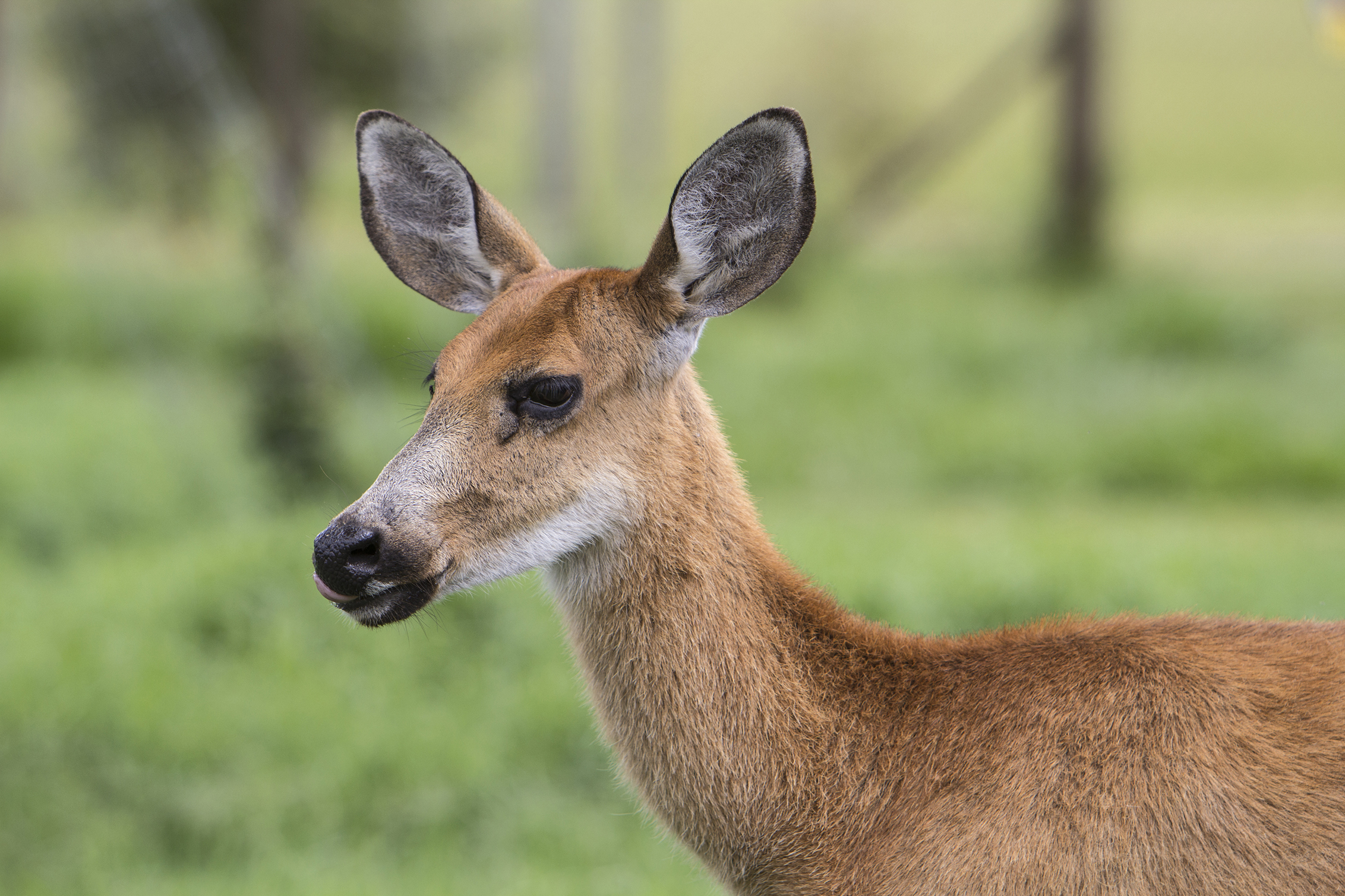
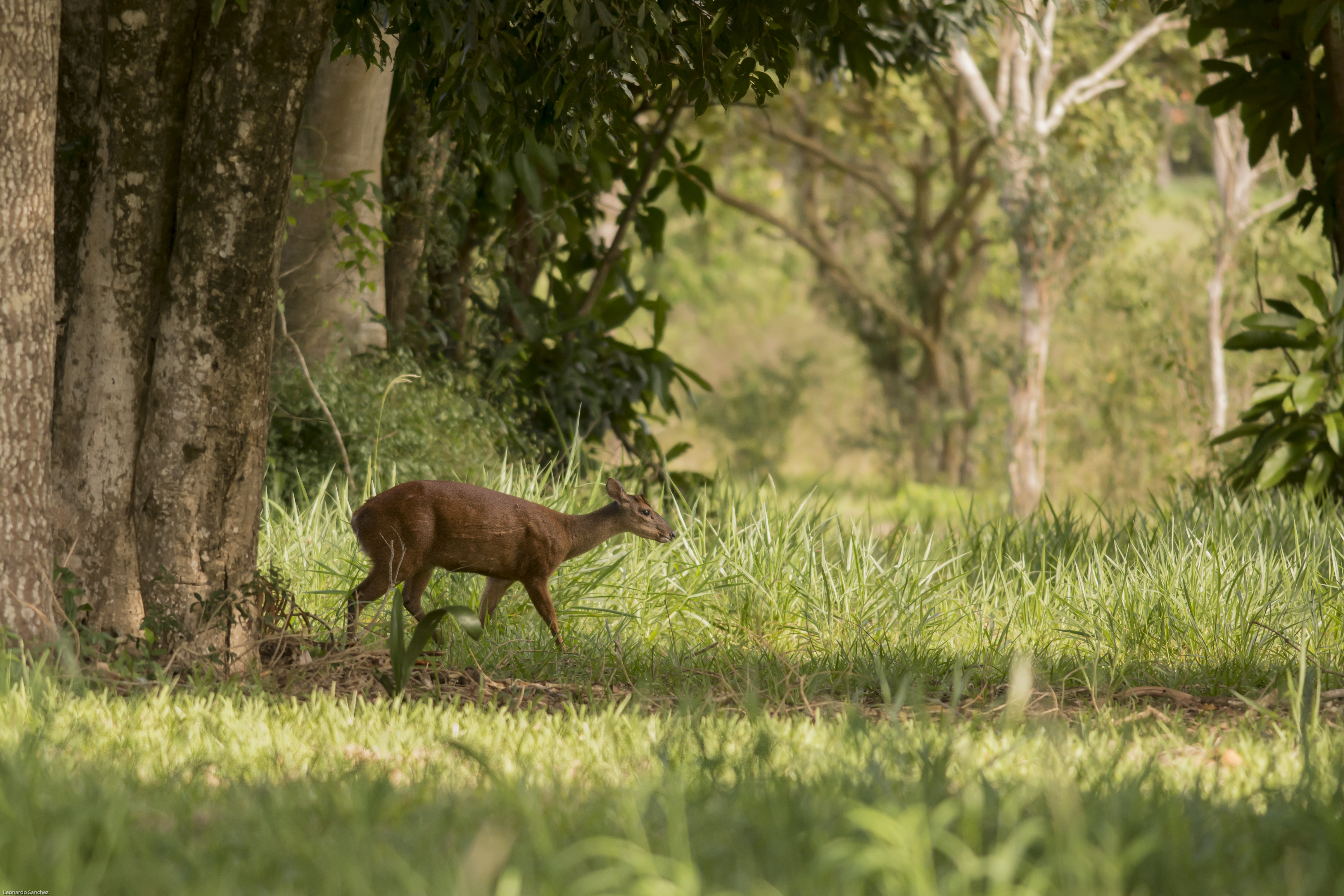
The Mazama americana, or red brocket deer, is a shy and solitary cervid. In the Pantanal, it is a master of camouflage, living in the dense gallery forests and cordilheiras.
Scientific Classification
| Kingdom | Animalia |
| Phylum | Chordata |
| Class | Mammalia |
| Order | Artiodactyla |
| Family | Cervidae |
| Genus | Mazama |
| Species | Mazama americana |
| Common name | Red brocket deer |
Unlike the marsh deer or pampas deer, the red brocket prefers closed habitats. Its reddish coat blends perfectly with the forest floor, making it very difficult to spot.
Physical Description
It is the largest of the Mazama genus, weighing up to 30-40 kilograms. Its coat is a deep reddish-brown, with a lighter underside. Males have small, unbranched spike antlers.
Habitat and Distribution in the Pantanal
It is found in dense forests and riparian areas. In the Pantanal, it uses the cordilheiras as refuge during the floods.
Behavior
Solitary and mainly nocturnal or crepuscular. It is very cautious and flees at the slightest sign of danger. It is an excellent jumper and swimmer.
Diet
Mainly frugivorous, eating fallen fruits, but also consumes leaves, fungi, and flowers.
Reproduction
Gestation lasts about 220 days. A single calf is born, which has white spots for camouflage during its first weeks.
Conservation Status
Classified as "Data Deficient" (DD) by the IUCN due to taxonomic complexity, but threatened by habitat loss and hunting.
Fun Facts
Known as the "ghost of the forest" for its ability to disappear. It is one of the few mammals that regularly eats fungi in the Pantanal.