

Introduction
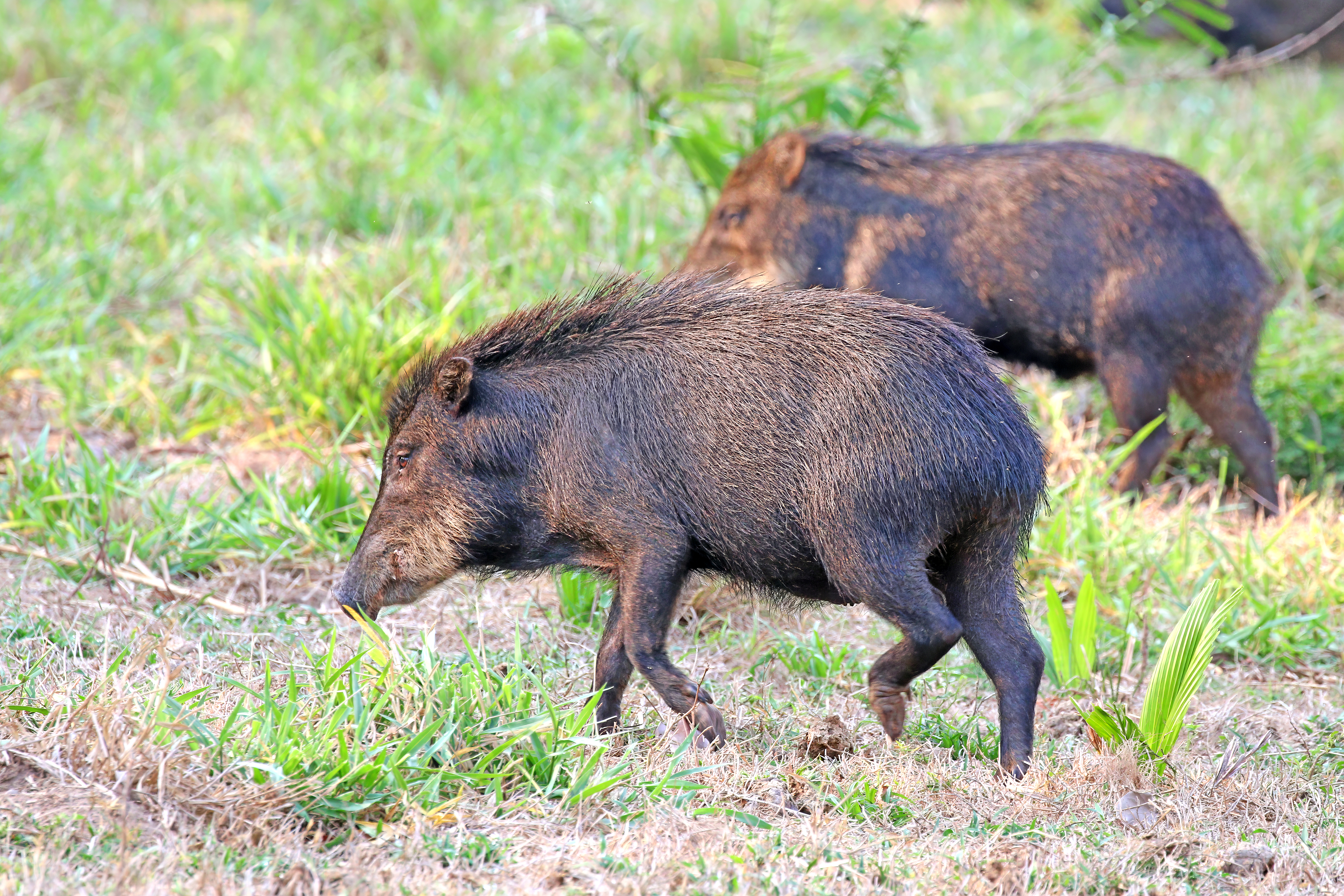
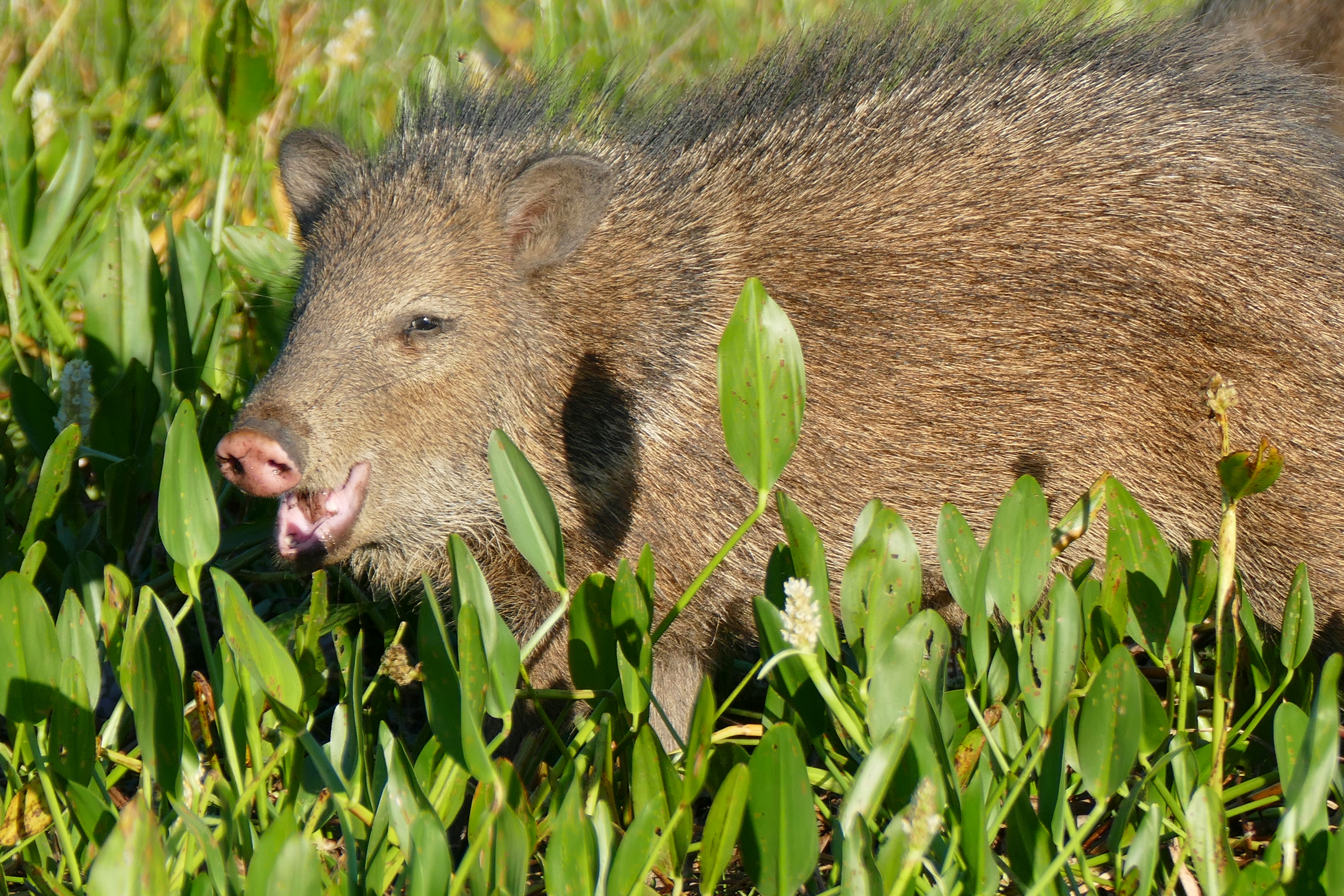
The Pecari tajacu, or collared peccary, is a social mammal that resembles a pig but belongs to a distinct family, Tayassuidae. In the Pantanal, it is a common sight, living in stable groups and playing a key role as a seed disperser.
Scientific Classification
| Kingdom | Animalia |
| Phylum | Chordata |
| Class | Mammalia |
| Order | Artiodactyla |
| Family | Tayassuidae |
| Genus | Pecari |
| Species | Pecari tajacu |
| Common name | Collared peccary |
Collared peccaries are smaller and less aggressive than white-lipped peccaries. They are named for the band of lighter fur around their neck, which looks like a collar.
Physical Description
They weigh between 15 and 30 kilograms. Their fur is dark gray and coarse. They have a scent gland on their back used for social bonding and marking territory.
Habitat and Distribution in the Pantanal
They are found in forests, savannas, and even desert-like areas. In the Pantanal, they prefer gallery forests and forest patches (capões).
Behavior
They live in groups of 5 to 15 individuals. They are very social and use scent marking to recognize group members. They are active during the day.
Diet
Omnivorous, but mainly feed on fruits, roots, tubers, and palm nuts. They also eat insects and small vertebrates.
Reproduction
Gestation is about 145 days, usually resulting in 2 offspring. The young are reddish-brown and can follow the group shortly after birth.
Conservation Status
Classified as "Least Concern" (LC) by the IUCN. They are widespread and adaptable.
Fun Facts
They are not true pigs; they diverged from suids over 30 million years ago. They have a complex three-chambered stomach for efficient digestion of tough plants.