Introduction
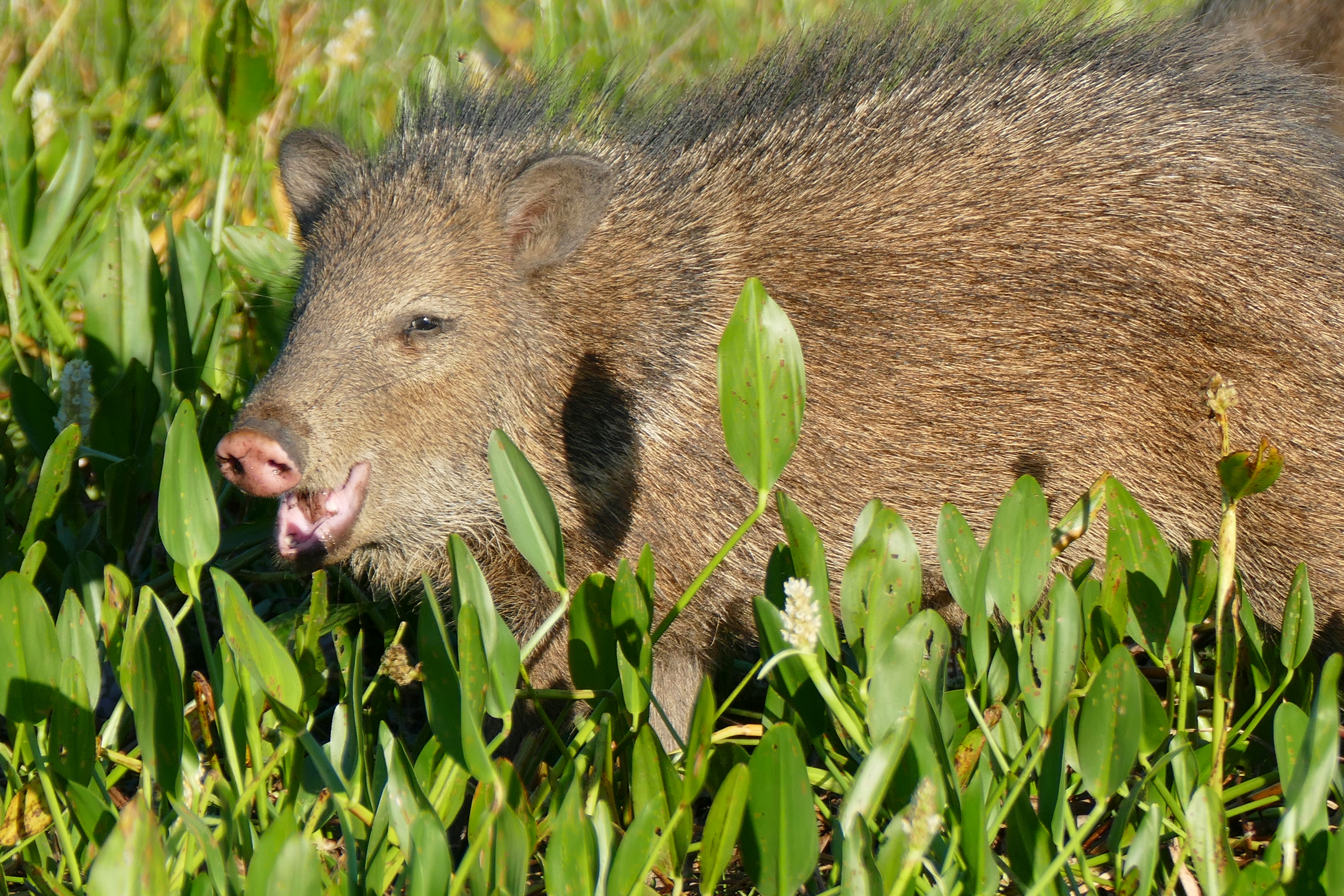
The Tayassu pecari, or white-lipped peccary, is one of the most important mammals for the health of Neotropical forests. In the Pantanal, they form large herds that roam vast areas, acting as "ecosystem engineers."
Scientific Classification
| Kingdom | Animalia |
| Phylum | Chordata |
| Class | Mammalia |
| Order | Artiodactyla |
| Family | Tayassuidae |
| Genus | Tayassu |
| Species | Tayassu pecari |
| Common name | White-lipped peccary |
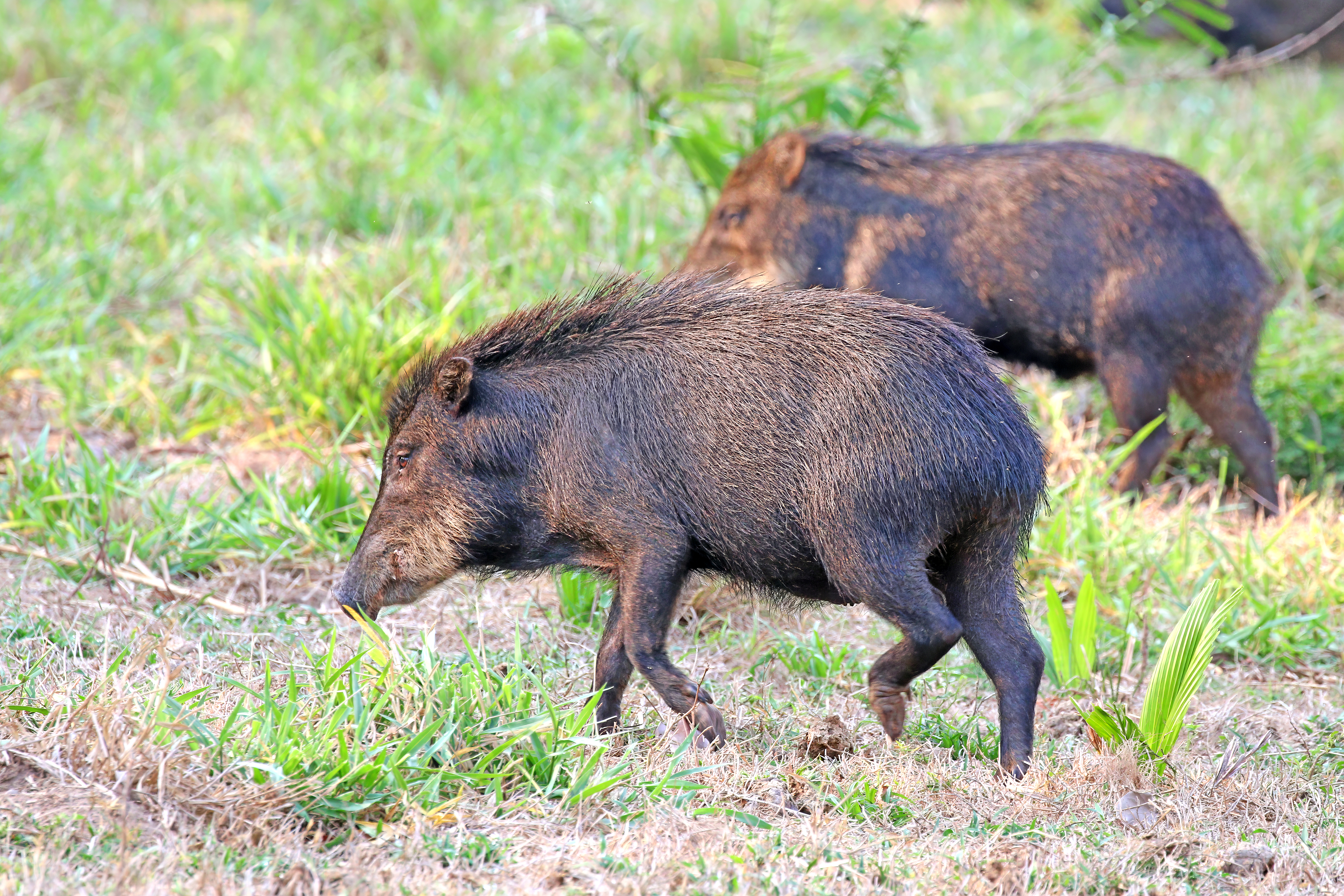
They are larger and more aggressive than collared peccaries. They are named for the white fur around their lower jaw and cheeks.
Physical Description
They weigh between 25 and 45 kilograms. Their fur is dark brown or black. They have sharp tusks that they clatter together as a warning.
Habitat and Distribution in the Pantanal
They require large areas of intact forest. In the Pantanal, they move between different habitats depending on fruit availability.
Behavior
They form herds of 50 to over 300 individuals. They are highly social and have a strong group defense against predators like jaguars.
Diet
Mainly frugivorous, specializing in hard palm nuts. They also eat roots, invertebrates, and small vertebrates.
Reproduction
Gestation is about 158 days, usually resulting in 2 offspring. They can breed year-round.
Conservation Status
Classified as "Vulnerable" (VU) globally. They are sensitive to habitat fragmentation and hunting.
Fun Facts
The herd exales a strong musky odor that can be detected from far away. They have a symbiotic relationship with other animals by breaking hard fruits that others can then eat.