
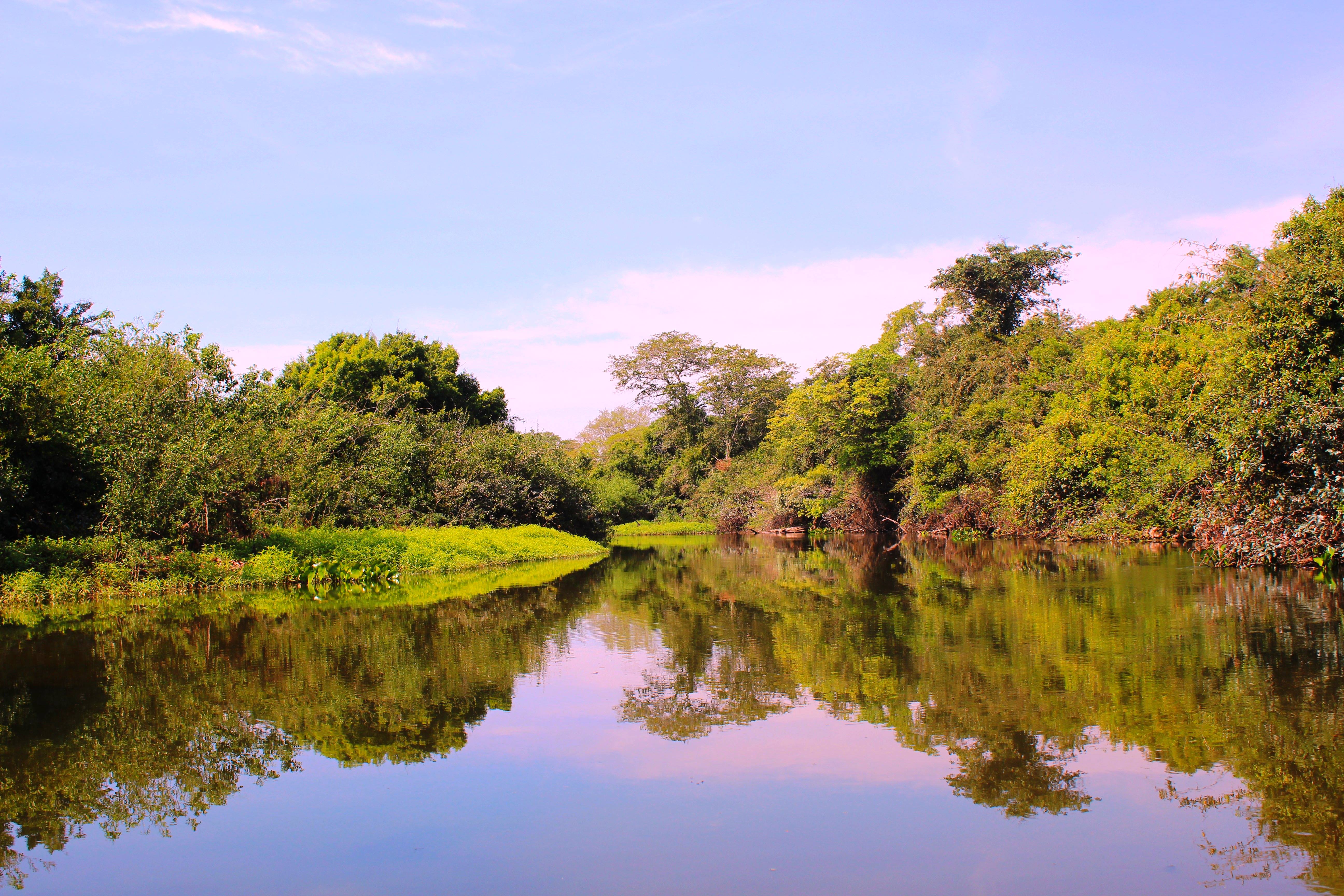
Overview
The Salobra River is one of the most unique and preserved watercourses in the Southern Pantanal, in the state of Mato Grosso do Sul. Acting as a vital link between the Bodoquena Plateau and the vast Pantanal plain, this river is widely recognized for its surprisingly crystal-clear waters, a rare feature in a biome where rivers usually carry large volumes of sediment. The name "Salobra" (Brackish) derives from the high mineral content, especially limestone, which gives a slight saline taste to the water, although its purity and transparency are its most notable attributes.
Historically, the Salobra River played a strategic role during the War of the Triple Alliance (1864-1870). In 1865, its mouth served as a refuge for the residents of the village of Miranda fleeing the invasion of Paraguayan troops. Among the refugees was Friar Mariano de Bagnaia, whose historical accounts helped document the river's geographical and social importance to the region since the 19th century. Today, the river is a protected ecological sanctuary, largely within the Serra da Bodoquena National Park, being fundamental for the maintenance of local biodiversity.
In addition to its historical and ecological relevance, the Salobra River is an economic engine for the municipalities of Bodoquena and Miranda through ecotourism and sport fishing. The abrupt transition from its rocky canyons on the plateau to the gentle meanders of the plain creates landscapes of dramatic contrast, attracting researchers, nature photographers, and tourists from all over the world seeking an authentic experience in the heart of the South Mato Grosso Pantanal.
Geography and Course
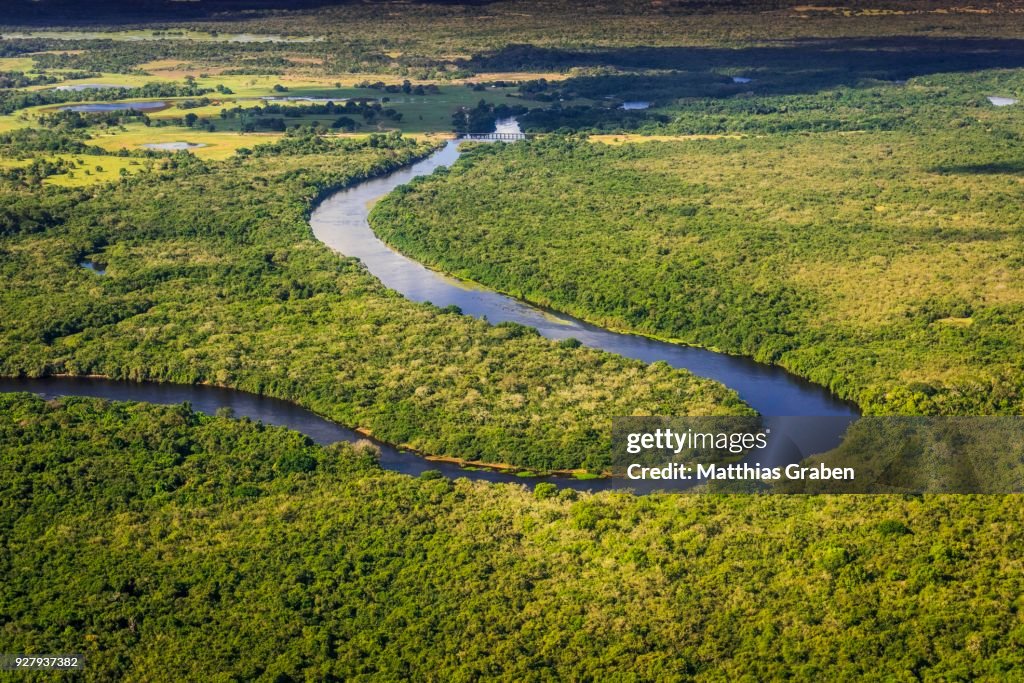
The course of the Salobra River begins on the escarpments of the Serra da Bodoquena, a geological formation of carbonate rocks that functions as a natural filter for its waters. Its headwaters are located in strictly preserved areas within the municipality of Bodoquena. In its upper course, the river crosses deep canyons and imposing rock formations, where the water speed is higher and the bed is predominantly composed of stones and limestone deposits. This initial stage is marked by dense Seasonal Deciduous Forest vegetation, typical of the mountain slopes.
As it descends to the Pantanal plain, the Salobra River becomes more sinuous, reducing its speed and beginning to meander through the flat terrain. It serves as a natural boundary between the municipalities of Bodoquena and Miranda in several stretches of its course. Its mouth occurs on the left bank of the Miranda River, one of the main hydrological axes of the Southern Pantanal. The total length of the river, although medium-sized compared to giants like the Paraguay River, is characterized by remarkable environmental integrity, with little direct human interference on its banks.
Below, a table summarizes the main geographical data of the Salobra River:
| Feature | Details |
|---|---|
| Source | Serra da Bodoquena (Bodoquena, MS) |
| Mouth | Miranda River (Miranda, MS) |
| Hydrographic Basin | Upper Paraguay Basin |
| Municipalities Traversed | Bodoquena and Miranda |
| Water Type | Crystal-clear (rich in limestone) |
| Main Formations | Rocky canyons and plain meanders |
Hydrological Role in the Pantanal
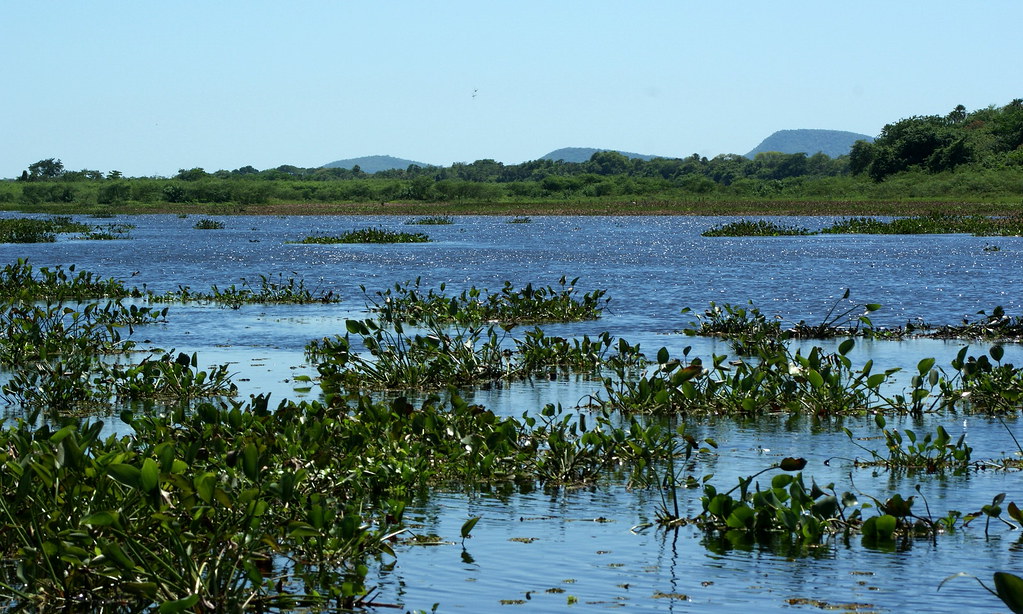
The Salobra River plays a crucial role in the flood pulse dynamics of the Southern Pantanal. As a direct tributary of the Miranda River, it contributes significantly to the volume of water that floods the plains during the rainy season (November to March). The interaction between the crystal-clear waters of the Salobra and the murkier, sediment-rich waters of the Miranda River creates an interesting visual phenomenon at the mouth, where the two currents meet before mixing completely.
During the dry period (May to September), the Salobra River maintains a constant flow fed by the groundwater of the Serra da Bodoquena. During this period, the water's transparency reaches its peak, allowing total visibility of the bed and aquatic life. This hydrological stability is vital for the survival of several species that use the river as a refuge when other smaller bodies of water on the plain dry up. The river also acts as an ecological corridor, transporting nutrients and organisms between the plateau and the plain, ensuring the resilience of the Pantanal ecosystem in the face of seasonal variations.
Fauna and Ecology
The biodiversity along the Salobra River is one of the richest in the region, benefited by excellent water quality and the preservation of riparian forest. In the aquatic environment, the river is famous for the abundance of Piraputangas (Brycon hilarii), which can be seen in large schools due to the water's transparency. Other emblematic species include the Dourado (Salminus brasiliensis), the Pacu (Piaractus mesopotamicus), and large catfish such as the Pintado or Surubim (Pseudoplatystoma corruscans). The presence of these species indicates a balanced and healthy ecosystem.
On the banks and in the skies, the fauna is equally vibrant. The canyons of the upper course are nesting sites for large birds of prey and Hyacinth Macaws and Red-and-green Macaws, which find protection in the rocky walls. Large mammals are frequently sighted using the river for drinking and movement, including the Jaguar (Panthera onca), the Tapir (Tapirus terrestris), and the Giant Otter (Pteronura brasiliensis). The transition vegetation between the Cerrado and the Seasonal Forest provides a wide range of ecological niches, sustaining a complex food web that defines the biological richness of the Southern Pantanal.
Tourism and Experiences
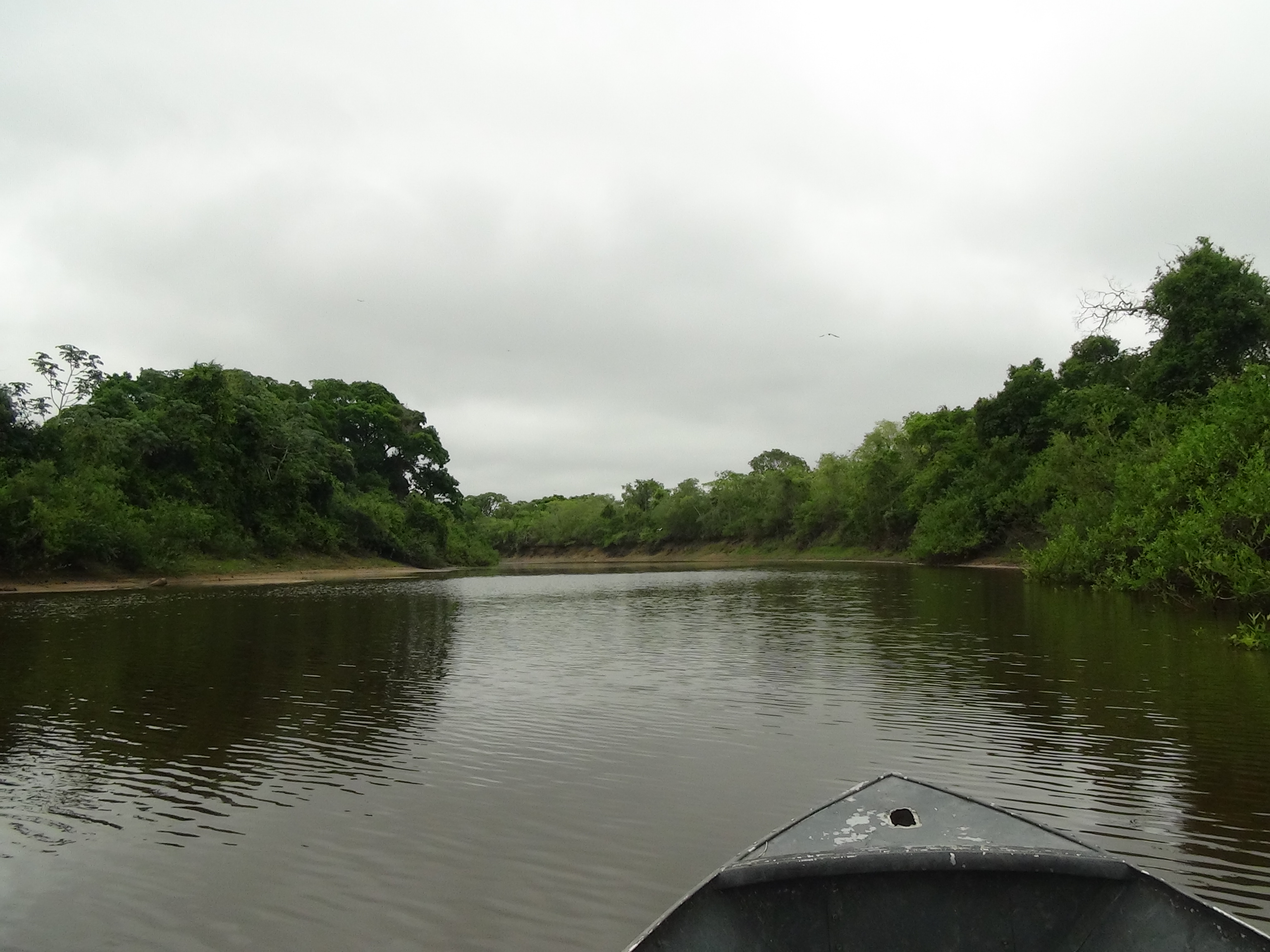
The Salobra River has consolidated itself as an elite destination for ecotourism and sport fishing. In the municipality of Bodoquena, snorkeling and Acqua Trekking activities in the canyons allow visitors to explore the crystal-clear waters and rock formations in an immersive way. Underwater visibility is comparable to that of famous destinations like Bonito, but with the wild and exclusive edge of the Pantanal. Boat trips and river safaris are common in the mouth region, offering exceptional opportunities for observing jaguars and Pantanal birds.
For fishing enthusiasts, the Salobra River is one of the few places where sight fishing is practiced, a technique in which the fisherman identifies the fish in the transparent water before casting, usually using fly fishing equipment. This modality requires silence and technique, reinforcing the commitment to preservation, as the practice of "catch and release" is strictly encouraged. The best time to visit the river is between the months of April and October, when the rains decrease and the waters reach their maximum clarity, providing the best conditions for all tourist activities.
Connection with Other Rivers
The Salobra River is a fundamental piece in the intricate hydrological puzzle of the Upper Paraguay Basin. Its primary connection is with the Miranda River, of which it is one of the most important tributaries on the left bank. Through the Miranda, the Salobra's waters eventually reach the Paraguay River, the central axis that drains the entire Pantanal. This hydrographic network connects the Salobra to other vital systems, such as the Aquidauana River, which also feeds the Miranda system, and the Negro River (MS), located further north.
Although geographically more distant, the Salobra's dynamics indirectly influence the balance of large rivers such as the Cuiabá River and the São Lourenço River, since they all share the same final destination in the Paraguay River. The preservation of the Salobra and its headwaters in the Serra da Bodoquena is, therefore, essential not only for the Southern Pantanal but for the health of the entire Pantanal ecosystem, ensuring that the flow of clean water continues to feed the flood areas that sustain life throughout the basin.
References
[1] IUCN. (2020). *Salminus brasiliensis*. The IUCN Red List of Threatened Species. Available at: https://www.iucnredlist.org/species/186780/1814631
[2] ICMBIO. (2018). *Plano de Ação Nacional para a Conservação de Espécies Ameaçadas de Extinção do Pantanal e Chaco*. ICMBio. Available at: https://www.icmbio.gov.br
[3] ALHO, C. J. R. (2008). *Biodiversidade do Pantanal*. Editora UNIDERP.
[4] EMBRAPA PANTANAL. (2010). *Recursos Hídricos do Pantanal*. Embrapa Pantanal. Available at: https://www.embrapa.br/pantanal/publicacoes
[5] POTT, A.; POTT, V. J. (1994). *Plantas do Pantanal*. Embrapa-SPI.
[6] SOS PANTANAL. (2024). *The importance of Pantanal rivers*. SOS Pantanal. Available at: https://sospantanal.org.br/a-importancia-dos-rios-do-pantanal/
[7] SILVA, J. S. V. (2000). *A Guerra do Paraguai: Aspectos Históricos e Geográficos*. Editora da UFMS.