

Territorial Behavior of the Maned Wolf (Chrysocyon brachyurus) in the Pantanal
Introduction and Overview
The maned wolf (Chrysocyon brachyurus), the largest canid in South America, is an emblematic species of the open fields and Neotropical savannas, with a striking presence in the Pantanal biome. Its ecology and territorial behavior are crucial aspects for understanding the dynamics of the ecosystems where it lives. In the Pantanal, a complex mosaic of fields, seasonal forests, and wetlands that undergoes periodic flooding, the maned wolf adapts its life strategies, including the demarcation and defense of territories, to environmental particularities. This article explores in depth the territorial behavior of the maned wolf in the Pantanal, highlighting marking strategies, space use, social dynamics, and the ecological importance of these interactions.
Characteristics of the Maned Wolf
The maned wolf is easily recognizable by its reddish coat, long and slender legs, large and erect ears, and a dark mane that extends from the neck to the shoulders. Its morphology is a remarkable adaptation to high field environments, allowing it to spot prey and predators above the vegetation. In the Pantanal, where vegetation can be dense at certain times of the year, this characteristic is particularly advantageous. Despite its name, the maned wolf is not a true wolf, but a distinct canid, the only member of the genus Chrysocyon. Its diet is omnivorous, composed of small mammals, birds, reptiles, insects, and a significant proportion of fruits, such as the wolf apple (Solanum lycocarpum), which plays an important role in its ecology and, possibly, in its intestinal health.
Distribution and Occurrence in the Pantanal
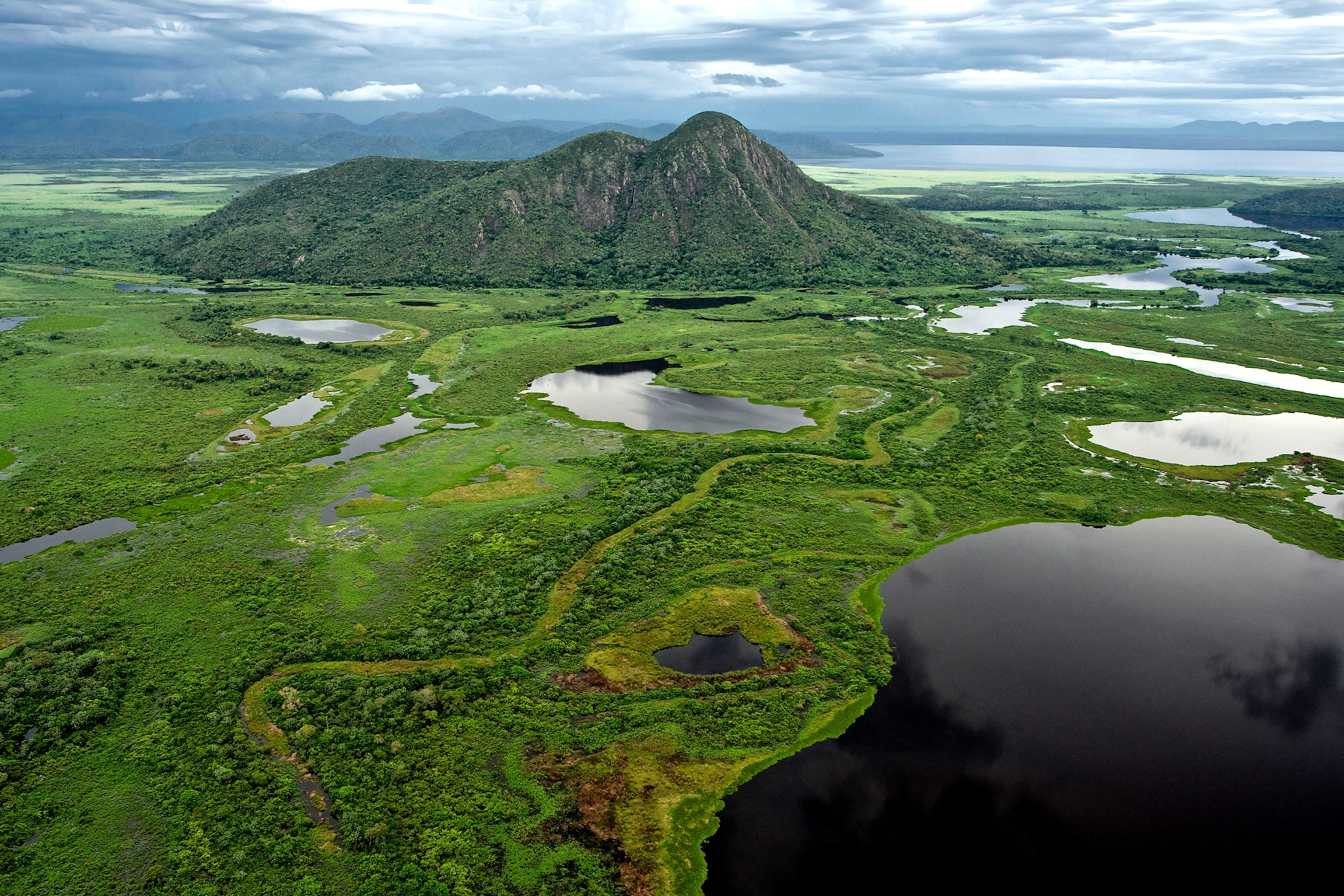
The Pantanal, with its vast extension of approximately 150,000 km² in Brazil, is one of the main refuges for the maned wolf. The species is present in all Pantanal sub-regions, from the drier areas of the Nhecolândia Pantanal to the floodplains of the Abobral and Paiaguás Pantanal. The heterogeneity of the Pantanal habitat, which includes campos limpos (clean fields), campos sujos (dirty fields), cerradões, gallery forests, and capões (forest islands), offers a variety of resources and shelters for the maned wolf. The occurrence of the species is influenced by the availability of prey and fruits, as well as the presence of elevated areas that serve as refuge during floods. Studies indicate that the population density of the maned wolf in the Pantanal can vary significantly depending on resource availability and anthropogenic pressure.
Ecological Importance
As a top predator and seed disperser, the maned wolf plays a crucial ecological role in the Pantanal. Its omnivorous diet, which includes a large amount of fruits, makes it an important vector in the dispersal of seeds of various plant species, contributing to the regeneration and maintenance of the biome’s plant biodiversity. By preying on small mammals, such as rodents, and insects, the maned wolf also assists in population control, contributing to the trophic balance of the ecosystem. The presence of healthy populations of maned wolves is an indicator of the overall health of the Pantanal, serving as a bioindicator of environmental integrity.
Territorial Behavior in the Pantanal
The territorial behavior of the maned wolf is one of the most fascinating aspects of its biology, fundamental for its survival and reproduction in the Pantanal environment.
Size and Structure of Territories
In the Pantanal, the maned wolf establishes territories that typically range between 25 and 30 km². This territorial extension is influenced by the availability of food resources, the population density of other maned wolf species, and habitat quality. Larger territories may be observed in areas with lower prey abundance or greater habitat fragmentation, while in richer regions, territories may be slightly smaller. The shape of the territories is not fixed and can adapt to geographical features such as rivers, mountain ranges, and flood areas.
Territorial Demarcation: The Intense Scent of Urine
The main form of territorial demarcation for the maned wolf is through urine. This method is highly effective due to the intense and characteristic odor that the urine exhales, often compared to the smell of cannabis or hops. This odor is the result of the presence of pyrazines, volatile organic compounds that act as pheromones, transmitting crucial information about the individual who marked the territory.
- Function of Marking: Urine is deposited at strategic points along the boundaries of the territory, on bushes, fallen logs, stones, or mounds of earth. These chemical “warning signs” serve to communicate the presence of the territory occupant to other maned wolves, avoiding direct confrontations and establishing the limits of space use. In addition to demarcating, urine can transmit information about the sex, reproductive status, and even the age of the individual.
- Intensity of Marking: The intensity of territorial marking varies seasonally. During the reproductive season, which in the Pantanal occurs mainly between April and June, the frequency and amount of urinary markings increase significantly. This is due to the need to attract partners and to signal the occupation of the territory to potential competitors, ensuring access to resources and the opportunity for mating. Both males and females contribute to demarcation, but males tend to do so more frequently.
Social Dynamics and Territory Use
The maned wolf presents a monogamous social system, where a couple shares the same territory. However, despite sharing the space, hunting is predominantly solitary.
- Monogamy and Sharing: The monogamous couple establishes and defends the territory together, although direct interactions between them may not be constant. They meet to mate, raise the offspring, and occasionally to feed together, but most of their daily activities, such as the search for food, are performed individually. This strategy minimizes competition for resources within the pair, especially in an environment where prey is small and dispersed.
- Solitary Hunting: Solitary hunting is an adaptation to the omnivorous diet and the nature of the maned wolf’s prey, which consists mainly of small animals and fruits. The formation of packs for hunting, as observed in true wolves, would be inefficient for capturing small prey and would not be advantageous for fruit collection.
- Patrolling and Surveillance: Both members of the couple regularly patrol the boundaries of the territory, renewing markings and checking for the presence of intruders. This patrolling is essential to maintain the integrity of the territory and to monitor resource availability.
Territorial Interactions and Conflicts
Although territorial demarcation is a way to avoid confrontations, encounters between maned wolves from adjacent territories or with wandering individuals can occur.
- Avoidance of Physical Conflicts: A notable characteristic of the maned wolf’s territorial behavior is the low incidence of severe physical combat. Territorial conflicts between males rarely result in direct aggression that causes serious injury. Instead, olfactory and vocal communication (barks and howls) serve as mechanisms to resolve disputes. The presence of urine marks and intense odors are generally sufficient to deter intruders.
- Display and Posture: In case of an encounter, maned wolves may adopt display postures, such as bristling the mane to appear larger, and emit vocalizations. These displays serve to assess the opponent’s strength and, most of the time, result in the intruder’s withdrawal without the need for physical contact. This strategy minimizes the risk of injury, which would be debilitating in an environment where survival depends on the ability to hunt and move.
- Importance of Marking: The effectiveness of olfactory marking in preventing physical conflicts underlines the importance of the “cannabis scent” in the ecology of the maned wolf. It is a highly evolved communication system that allows the coexistence of individuals in a landscape, optimizing space use and reducing energy expenditure and the risk associated with direct confrontations.
Conservation and Threats
The maned wolf is classified as “Near Threatened” by the IUCN, and its populations in the Pantanal face several threats. Habitat loss and fragmentation due to the expansion of agriculture and cattle ranching, road construction, and urbanization are the main risk factors. Roadkills on highways are a significant cause of mortality. Illegal hunting, although less common than in the past, still occurs in some regions. Furthermore, diseases transmitted by domestic dogs, such as distemper and rabies, represent a threat to wild populations.
Conservation of the maned wolf in the Pantanal requires the protection of large areas of continuous habitat, the implementation of measures to reduce roadkills (such as wildlife crossings), the control of domestic dogs in areas close to wild habitats, and environmental education to promote coexistence between humans and fauna. A deep understanding of its territorial behavior is crucial for planning effective conservation strategies, ensuring that territories are large enough to sustain viable populations and that dispersal routes between them are maintained.
References
[1] DIETZ, J. M. (1984). Ecology and social organization of the maned wolf (Chrysocyon brachyurus). Smithsonian Contributions to Zoology, 393. Available at: https://repository.si.edu/bitstream/handle/10088/5446/SCZ-0393.pdf
[2] RODDEN, M.; RODDEN, K. (2009). Maned Wolf (Chrysocyon brachyurus). In: D. W. Macdonald & A. J. Loveridge (Eds.), Biology and Conservation of Wild Canids. Oxford University Press.
[3] IUCN (International Union for Conservation of Nature). (2020). Chrysocyon brachyurus. The IUCN Red List of Threatened Species. Available at: https://www.iucnredlist.org/species/4819/81194943
_on_capybara_(Hydrochoeris_hydrochaeris).JPG/1280px-Yellow-headed_caracara_(Milvago_chimachima)_on_capybara_(Hydrochoeris_hydrochaeris).JPG)