Introduction
The Pantanal Food Chain represents one of the most complex and dynamic biological systems on the planet, sustained by a rigorous hydrological cycle that alternates between extreme flooding and severe drought. This biome, recognized as the world’s largest continuous floodplain, functions as an immense mosaic of aquatic and terrestrial habitats, where the transfer of energy and matter occurs in an accelerated and highly efficient manner. The base of this trophic structure is fueled by the primary productivity of aquatic macrophytes and algae, which convert solar energy into biomass, serving as the foundation for a wide range of consumers, from tiny invertebrates to large top predators.
The interconnectivity between aquatic and terrestrial environments is the defining characteristic of the Pantanal food web. During the flood season, the expansion of waters allows fish and other aquatic organisms to access resources in previously dry areas, while during the receding waters, the concentration of prey in channels and bays sustains massive populations of piscivorous birds and caimans. This ecological pulsation, known as the flood pulse, dictates the rhythm of reproduction, migration, and survival of species, making the Pantanal food chain a classic example of biological resilience and adaptation to seasonal environmental variations [1] [2].
What Is the Pantanal Food Chain?
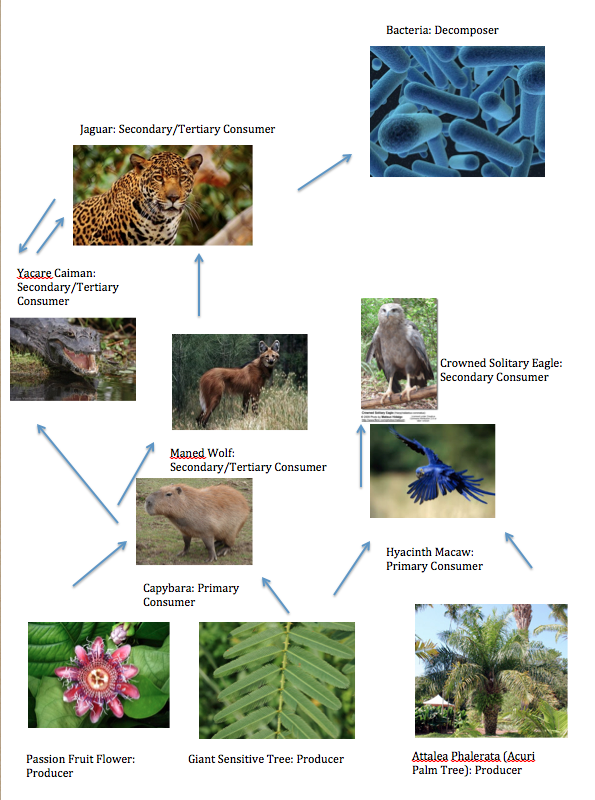
The food chain, or trophic web, of the Pantanal is the set of feeding relationships between the organisms that inhabit this biome, describing the path taken by energy and nutrients from producers to decomposers. Unlike more static systems, the Pantanal web is characterized by high trophic plasticity, where many species alter their diet according to the seasonal availability of resources. It is not linear but rather an intricate network of interactions where a single organism can occupy different trophic levels depending on its life stage or the time of year.
The concept of the food web in the Pantanal covers both the grazing pathway (based on living plants and algae) and the detritus pathway (based on dead organic matter). The latter is particularly robust in the biome, as the decomposition of submerged vegetation during floods releases large amounts of nutrients that sustain detritivorous fish and benthic invertebrates. Thus, the food chain functions as a continuous recycling mechanism, ensuring that soil fertility and water productivity are maintained even in an environment with naturally mineral-poor soils [3] [4].
Main Characteristics
The trophic structure of the Pantanal is organized into well-defined levels, but with fluid boundaries due to flooding. Primary producers are the entry point for energy into the system, followed by primary consumers (herbivores and detritivores), secondary consumers (small and medium-sized carnivores), and tertiary consumers or top predators. The flow of energy is unidirectional and decreasing, meaning that available biomass decreases as one moves up the trophic pyramid, requiring an extremely vast base of producers to sustain large carnivores.
| Aspect | Description |
|---|---|
| Energy Base | Predominance of algae, periphyton, and aquatic macrophytes in the aquatic system; grasses and gallery forests in the terrestrial system. |
| Flood Pulse | Main driver of trophic dynamics, alternating the availability of habitats and food resources. |
| Detritus Pathway | High importance of decomposing organic matter for sustaining fish and invertebrates. |
| Connectivity | Strong interaction between aquatic and terrestrial subsystems, with constant biomass exchange. |
| Key Species | Presence of top predators (jaguar) and ecosystem engineers (caimans and detritivorous fish). |
The efficiency of this chain is visible in the abundance of wildlife. The Pantanal has one of the highest vertebrate biomasses in the world, which is only possible thanks to rapid nutrient cycling. Warm, sediment-rich waters favor the explosive growth of phytoplankton and aquatic plants like the water hyacinth (Eichhornia crassipes), which form extensive floating mats known as “camalotes.” These structures not only produce oxygen and biomass but also serve as refuge and nursery for countless species of fish and invertebrates, connecting the lower to the upper levels of the food web [5].
Involved Species / Associated Fauna
The fauna associated with the Pantanal food chain is vast and diverse, ranging from microorganisms invisible to the naked eye to the largest felines in the Americas. Each species plays a specific role in energy transfer and the maintenance of ecological balance. Primary consumers, such as the capybara (Hydrochoerus hydrochaeris) and the marsh deer (Blastocerus dichotomus), are the main links between vegetation and terrestrial carnivores. In the aquatic environment, detritivorous fish such as the curimbatá (Prochilodus lineatus) and the armored catfish (Pterygoplichthys spp.) are fundamental for recycling organic matter at the bottom of rivers and bays.
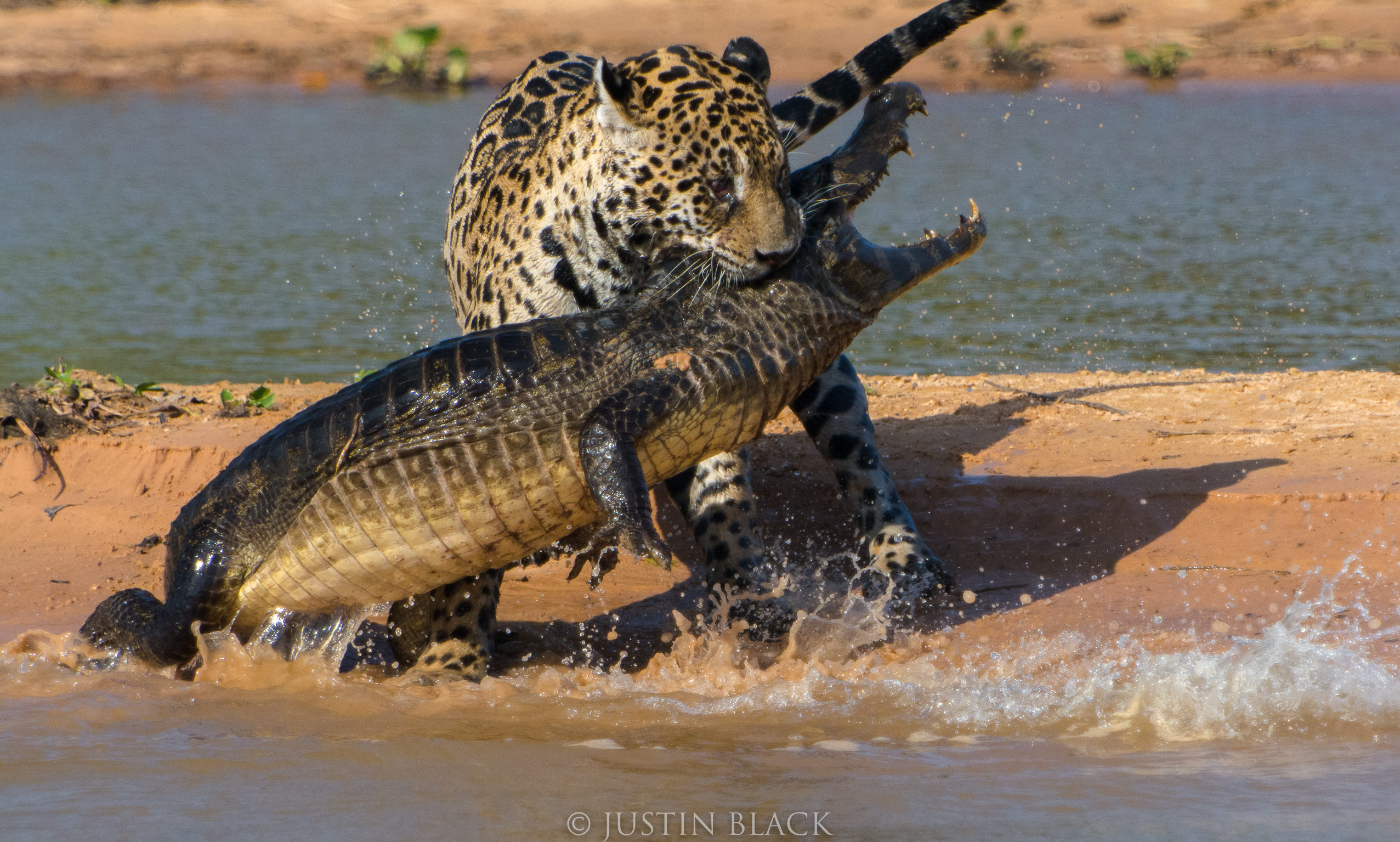
Secondary and tertiary consumers include a range of specialized and generalist predators. The Pantanal caiman (Caiman yakare) is one of the most abundant predators, feeding mainly on fish and mollusks, but also serving as prey for the jaguar (Panthera onca), the undisputed top predator of the biome. Birds such as the jabiru (Jabiru mycteria) and the kingfisher (Chloroceryle spp.) are secondary consumers that depend on the abundance of fish in shallow waters during the receding phase.
| Species | Role / Characteristic |
|---|---|
| Jaguar (Panthera onca) | Top predator; controls populations of herbivores and caimans. |
| Pantanal Caiman (Caiman yakare) | Secondary/tertiary consumer; link between aquatic and terrestrial environments. |
| Capybara (Hydrochoerus hydrochaeris) | Primary consumer (herbivore); main terrestrial prey of large felines. |
| Curimbatá (Prochilodus lineatus) | Primary consumer (detritivore); essential in aquatic nutrient recycling. |
| Jabiru (Jabiru mycteria) | Secondary consumer (piscivore); symbol of the Pantanal and indicator of environmental health. |
| Red-bellied Piranha (Pygocentrus nattereri) | Secondary/tertiary consumer; opportunistic predator and scavenger. |
Dynamics and Processes
The dynamics of the food chain in the Pantanal are primarily governed by the flood pulse, an annual phenomenon that drastically alters the landscape and resource availability. During the flood season, water overflows from riverbeds and floods the plains, carrying nutrients and sediments. This process stimulates aquatic primary productivity, with the accelerated growth of algae and macrophytes. Fish take advantage of this expansion to feed and reproduce in the flood areas, where they find an abundance of insects, fruits, and plant debris.
In the receding and dry phase, the process is reversed. As the waters recede, fish become confined in increasingly smaller bays and channels, becoming easy prey for a multitude of predators. It is during this period that the greatest concentration of piscivorous birds, such as herons and spoonbills, occurs, gathering in large breeding colonies (rookeries) to take advantage of the abundance of food. The mortality of fish and other aquatic organisms that cannot return to the main rivers provides a huge amount of organic matter for decomposers, closing the nutrient cycle and preparing the soil for the next period of plant growth [6] [7].
Impacts on the Ecosystem
The integrity of the food chain is vital for the health of the entire Pantanal ecosystem. Any alteration at one trophic level can trigger cascade effects that compromise local biodiversity. For example, overfishing of large carnivorous fish can lead to an uncontrolled increase in smaller or detritivorous fish, altering the composition of aquatic communities and water quality. Similarly, the loss of top predators, such as the jaguar, can result in the overpopulation of herbivores, which in turn can degrade native vegetation through overgrazing.
Environmental impacts, such as the deforestation of gallery forests and pollution from pesticides from agricultural areas surrounding the Pantanal, represent serious threats to the food web. The removal of riparian vegetation reduces the input of allochthonous organic matter (leaves, fruits, and terrestrial insects) into rivers, which is a crucial energy source for many fish species. Furthermore, contamination by heavy metals, such as mercury used in historical mining, can undergo bioaccumulation and biomagnification along the food chain, reaching toxic concentrations in top predators and even in human populations that depend on fishing [8] [9].
Adaptations of Fauna and Flora
The species that make up the Pantanal food chain have developed remarkable morphological, physiological, and behavioral adaptations to survive extreme seasonal fluctuations. The flora, for example, presents rapid growth strategies during the flood, with many aquatic macrophytes possessing aerenchyma tissues (air spaces) that allow for flotation and oxygenation of submerged roots. Trees such as the sarã (Ludwigia spp.) and the ingá (Inga spp.) are able to tolerate long periods of flooding, providing fruit and shelter for fish and birds in flooded areas.
The fauna also exhibit fascinating trophic adaptations. Many fish species, such as the pacu (Piaractus mesopotamicus), have robust teeth for crushing fruits and seeds that fall from trees during the flood, acting as important seed dispersers. The Pantanal caiman has a highly efficient metabolism, capable of withstanding long periods of fasting during severe drought when prey availability decreases drastically. Birds such as the roseate spoonbill (Platalea ajaja) have specialized spatula-shaped beaks for filtering small crustaceans and fish in shallow, muddy waters, a perfect adaptation for the receding phase [10] [11].
Importance for Conservation
The conservation of the Pantanal food chain is fundamental for maintaining the ecosystem services that this biome provides to humanity, such as the regulation of the hydrological cycle, water purification, and carbon sequestration. The preservation of key species, such as the jaguar and the giant otter, is essential to ensure trophic balance and the health of prey populations. Furthermore, the protection of headwater areas and gallery forests is crucial to maintain the flow of energy and nutrients that sustains the entire Pantanal food web.
Habitat fragmentation and the alteration of the flood regime through the construction of small hydroelectric plants (PCHs) in the rivers that feed the Pantanal represent significant threats to the integrity of the food chain. These interventions can block the migratory routes of rheophilic fish (which swim against the current to spawn), such as the surubim and the golden dorado, compromising reproduction and food availability for top predators. Therefore, the integrated management of the Upper Paraguay basin is indispensable to ensure the continuity of the ecological processes that define this unique biome [12] [13].
Curiosities
- The Pantanal has one of the highest caiman densities in the world, with estimates of millions of individuals that play a central role in aquatic nutrient recycling.
- The Pantanal jaguar is significantly larger than those found in the Amazon, an adaptation to the abundance of large prey such as caimans and capybaras.
- During the drought, the concentration of fish in isolated pools attracts thousands of birds, creating a unique visual spectacle known as “rookeries.”
- The jabiru, the symbol bird of the Pantanal, builds gigantic nests at the top of tall trees, which can be reused for decades by different pairs.
- Some piranha species are scavengers and play a vital role in cleaning rivers, consuming carcasses of dead animals and preventing the spread of diseases.
References
[1] JUNK, W. J.; BAYLEY, P. B.; SPARKS, R. E. (1989). The flood pulse concept in river-floodplain systems. Canadian Special Publication of Fisheries and Aquatic Sciences, v. 106, n. 1, p. 110-127. [2] ALHO, C. J. R. (2008). Biodiversity of the Pantanal: response to seasonal flooding regime and to environmental degradation. Brazilian Journal of Biology, v. 68, n. 4, p. 957-966. [3] CALHEIROS, D. F. (2003). The influence of the flood and dry cycle in sustaining the food chain of the Paraguay River, Pantanal-MS. Embrapa Pantanal, Technical Communication n. 61. [4] WANTZEN, K. M.; et al. (2008). Ecological effects of human-induced changes in the flood pulse of the Pantanal, Brazil. Aquatic Conservation: Marine and Freshwater Ecosystems, v. 18, n. 7, p. 1156-1172. [5] HAMILTON, S. K.; et al. (1996). The role of inundation in the ecology of the Pantanal wetland, Brazil. Wetlands, v. 16, n. 4, p. 468-481. [6] CRAWSHAW JR, P. G.; QUIGLEY, H. B. (1991). Jaguar spacing, activity, and habitat use in a seasonally flooded environment in Brazil. Journal of Zoology, v. 223, n. 3, p. 357-370. [7] MOURÃO, G.; et al. (2000). Abundance of the Pantanal caiman (Caiman crocodilus yacare) in the Pantanal, Brazil. Journal of Herpetology, v. 34, n. 3, p. 454-462. [8] CALLIL, C. T.; JUNK, W. J. (2001). Aquatic gastropods as indicators of environmental quality in the Pantanal of Mato Grosso, Brazil. Brazilian Journal of Biology, v. 61, n. 3, p. 399-405. [9] COUTINHO, M.; et al. (2000). Mercury in the Pantanal: a review of the current state of knowledge. In: Pantanal: Ecology, Health and Management. Embrapa Pantanal. [10] SOUZA, K. G.; et al. (2017). Trophic ecology of fish in the Pantanal: a review. Journal of Fish Biology, v. 91, n. 4, p. 1015-1035. [11] FIGUEIREDO, M. S. L.; et al. (2005). Diet of the roseate spoonbill (Platalea ajaja) in the southern Pantanal, Brazil. Waterbirds, v. 28, n. 1, p. 110-114. [12] HARRIS, M. B.; et al. (2005). Safeguarding the Pantanal: priorities for conservation and a sustainable future. Conservation Biology, v. 19, n. 3, p. 714-720. [13] SCHULZ, C.; et al. (2019). The Pantanal under siege: a review of the current threats to the world’s largest wetland. Science of the Total Environment, v. 683, p. 622-644.

.jpg/1280px-Brazil_Pantanal_Mato_Grosso_Do_Sul_Caiman_Yacaré_Close_under_the_Water_Salobra_River_(17067068247).jpg)