
Introduction
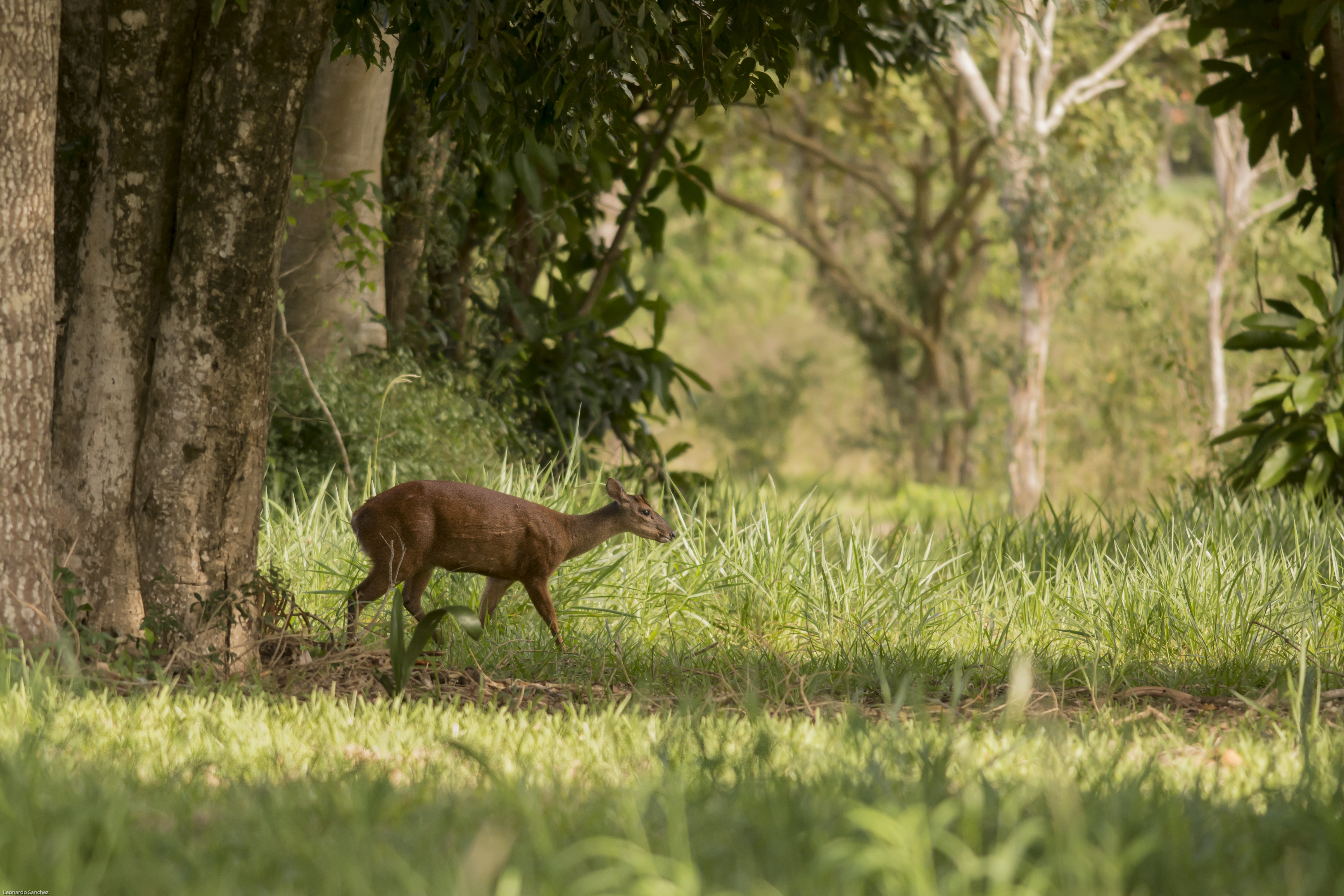
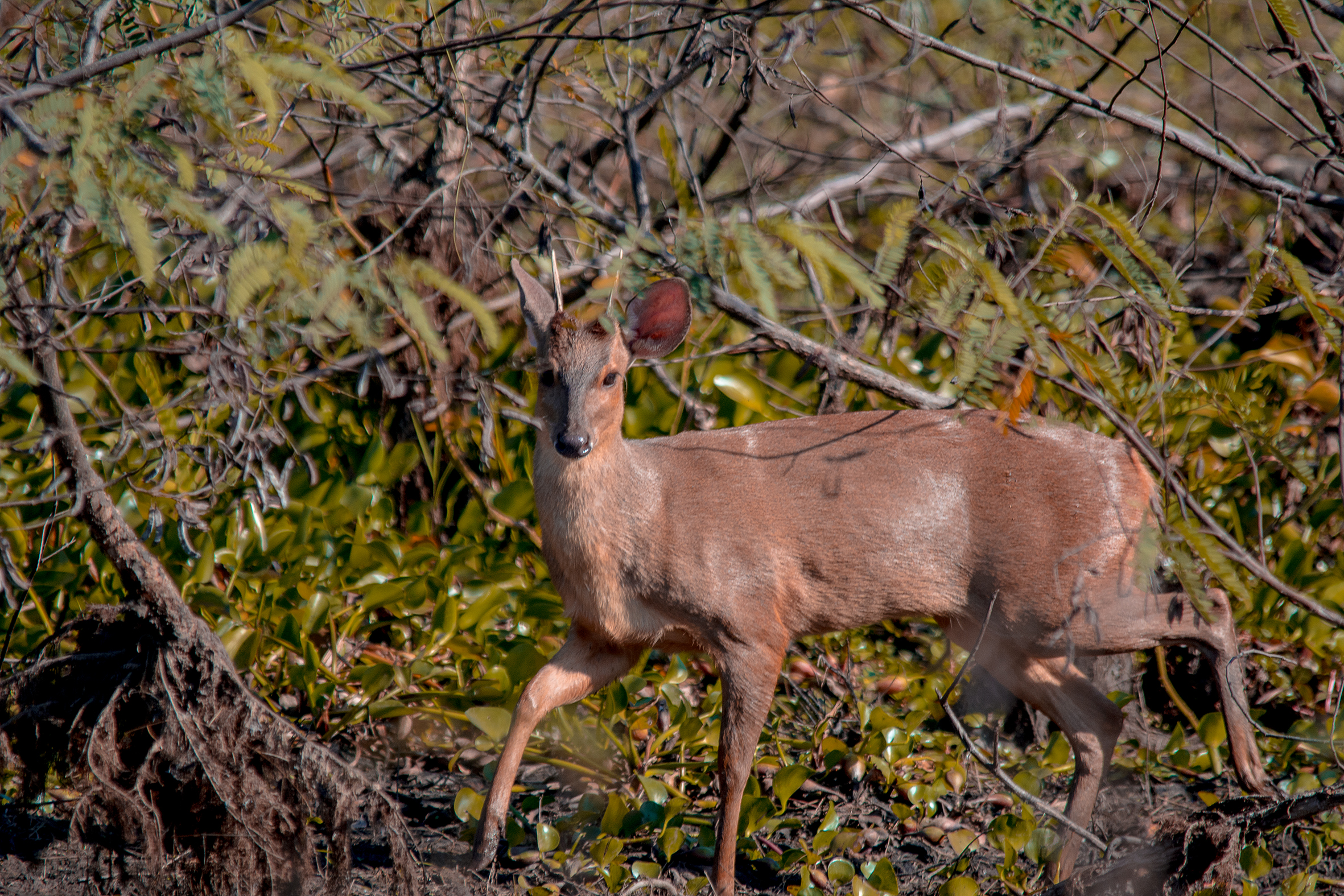
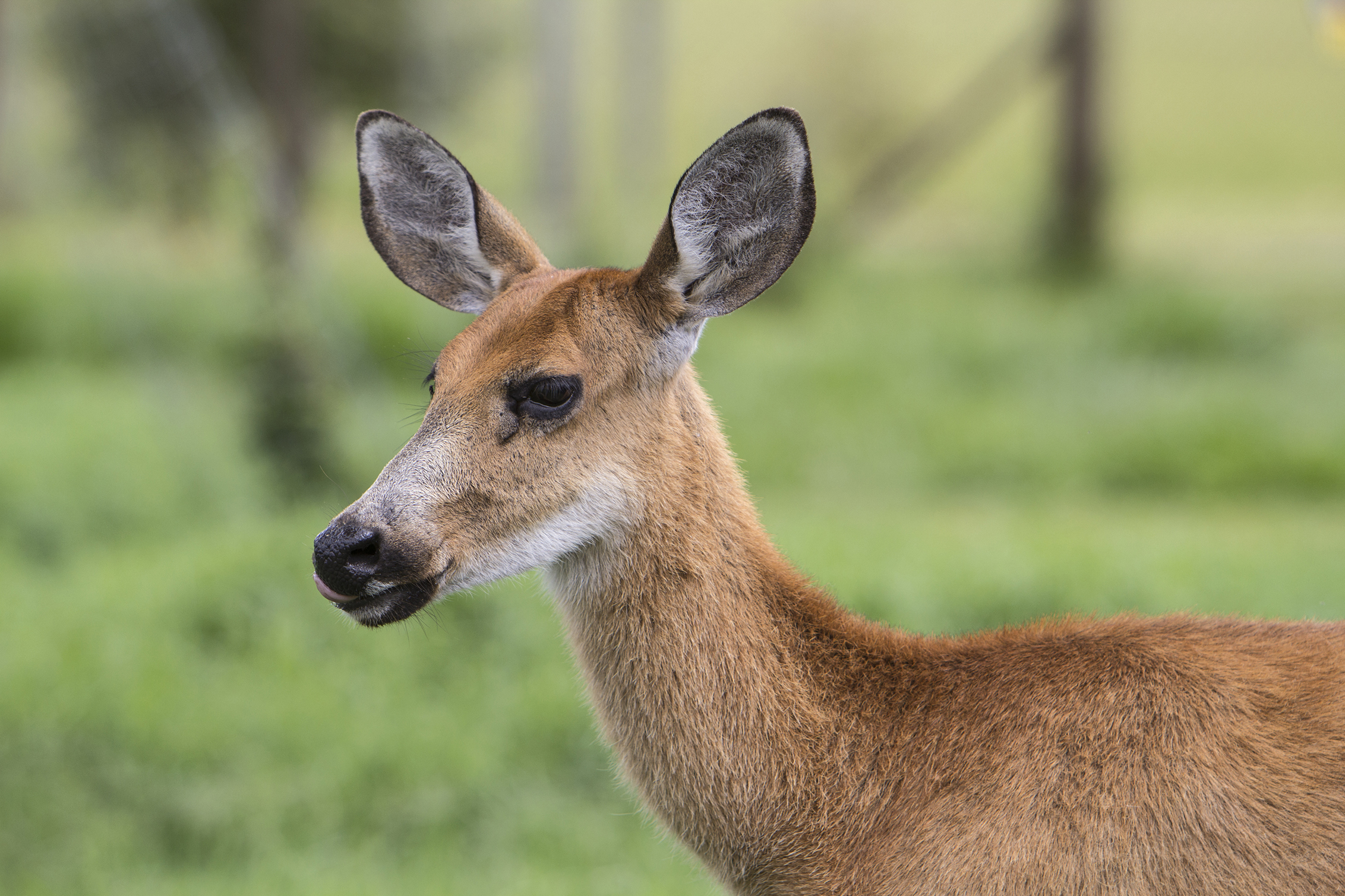
The Ozotoceros bezoarticus, known as the pampas deer, is a medium-sized cervid typical of open landscapes. In the Pantanal, it finds one of its last strongholds, inhabiting the vast natural grasslands that characterize the region.
Scientific Classification
| Kingdom | Animalia |
| Phylum | Chordata |
| Class | Mammalia |
| Order | Artiodactyla |
| Family | Cervidae |
| Genus | Ozotoceros |
| Species | Ozotoceros bezoarticus |
| Common name | Pampas deer |
The pampas deer is known for its elegance and the strong, garlic-like scent emitted by glands in its hooves, which it uses for communication. It is a highly social animal, often seen in small groups in the Pantanal plains.
Physical Description
It stands about 70 centimeters tall and weighs between 30 and 40 kilograms. The coat is tan or reddish-brown, with white patches around the eyes, throat, and under the tail. Males have small, three-pointed antlers.
Habitat and Distribution in the Pantanal
It prefers open grasslands and savannas. In the Pantanal, it is common in areas that do not flood deeply. It is often seen sharing pastures with domestic cattle.
Behavior
They are social animals, forming groups of 2 to 6 individuals. They are active during the day and night. When threatened, they use a characteristic "stiff-legged" jump to alert others.
Diet
They are browsers and grazers, feeding on a variety of herbs, flowers, and young grass shoots. They are particularly fond of the new growth that appears after natural fires.
Reproduction
Gestation lasts about 7 months, resulting in a single spotted calf. Births can occur throughout the year but often peak in the dry season.
Conservation Status
Classified as "Near Threatened" (NT) globally, but many subspecies are endangered. In the Pantanal, the population is relatively stable but threatened by diseases from cattle and habitat conversion.
Fun Facts
The name bezoarticus refers to "bezoars," stones found in the stomach once thought to have medicinal properties. They are attracted to recently burned areas for the fresh sprouts.