Introduction
The Cerdocyon thous, popularly known as the Crab-eating Fox or graxaim-do-mato, is one of the most common and adaptable wild canids inhabiting the Pantanal. Often seen at dusk and during the night along roads and near farm headquarters, this animal stands out for its versatility and opportunistic behavior. In the vast Pantanal ecosystem, the crab-eating fox plays a fundamental ecological role as a seed disperser and a controller of small vertebrate and insect populations, contributing significantly to the health and regeneration of the region's varied habitats.
Scientific Classification
| Kingdom | Animalia |
| Phylum | Chordata |
| Class | Mammalia |
| Order | Carnivora |
| Family | Canidae |
| Genus | Cerdocyon |
| Species | Cerdocyon thous |
| Common Name | Crab-eating Fox |
Historically, the crab-eating fox has always been a resilient species, capable of thriving in both preserved environments and areas modified by human activity. In the Pantanal, its presence is a constant, and its ability to consume a wide variety of foods — from fruits to small animals — makes it one of the most successful mammals in the biome. Its conservation is important not only for the species itself but for the maintenance of the ecological processes it supports, such as the dispersal of native plants that are essential for the Pantanal's flora.
The importance of the crab-eating fox for the Pantanal goes beyond its ecological function; it is a familiar figure for residents and visitors to the region. In areas near the Paraguay River and the Cuiabá River, it is common to find these canids exploring the surroundings of lodges and campsites, where their curiosity and relative tolerance to human presence make them excellent subjects for observation and nature photography.
Physical Description
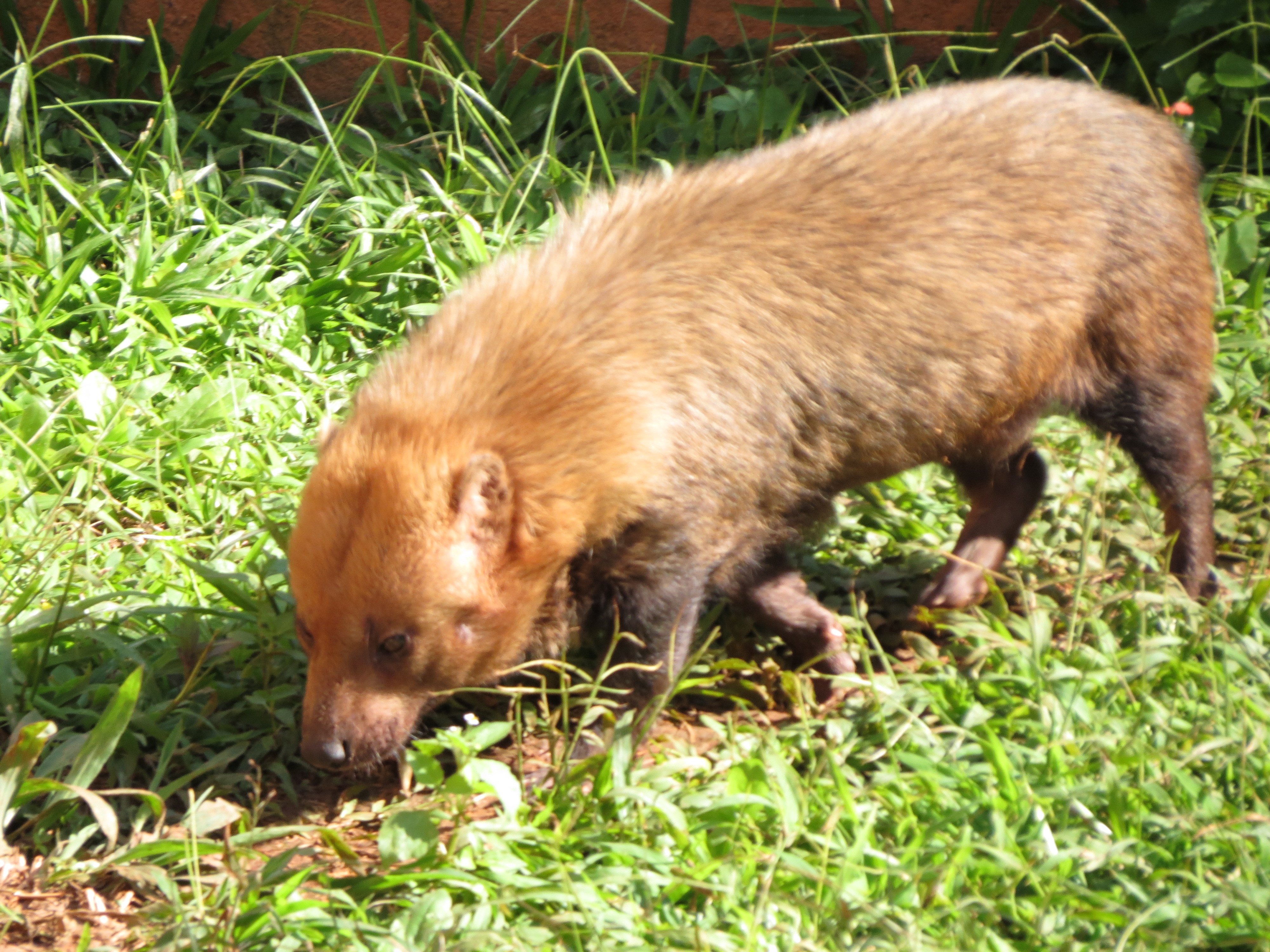
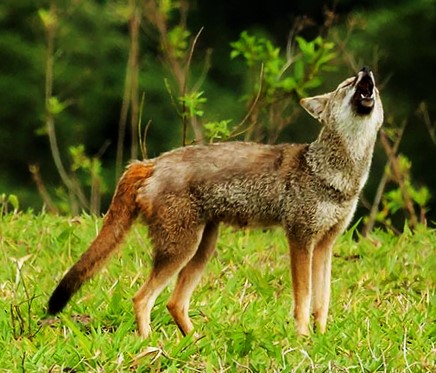
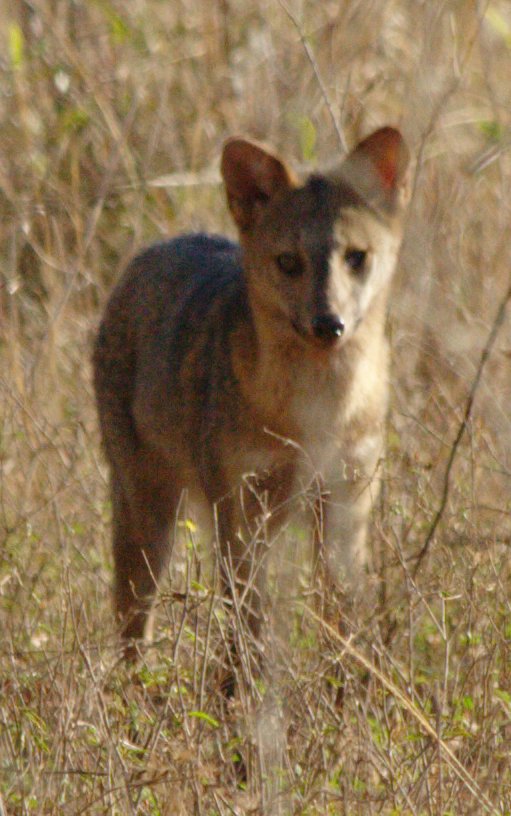
The Cerdocyon thous is a medium-sized canid, with a robust body and relatively short, strong legs. Adults weigh between 5 kg and 8 kg, with a body length ranging from 60 cm to 70 cm, plus a bushy tail of about 30 cm. Its coat is predominantly gray-brown, with a "grizzled" appearance due to the mix of black, white, and yellow hairs. A characteristic feature is the dark line that runs along the back to the tip of the tail.
The face of the crab-eating fox is marked by a short snout and relatively large, upright ears, which provide excellent hearing for detecting prey. The legs are often darker, almost black, especially in the lower part. Its fur is dense and provides good protection against the varied climate of the Pantanal, from the intense heat of the day to the cooler temperatures of the winter nights.
Unlike the maned wolf, which has very long legs, the crab-eating fox has a more "compact" structure, which aids its mobility in dense vegetation and forest edges. Its teeth are adapted for an omnivorous diet, with sharp incisors for capturing prey and molars capable of crushing fruits and seeds. Its eyes are dark and expressive, with pupils that contract into a vertical slit in bright light, a common characteristic in many nocturnal predators.
Habitat and Distribution in the Pantanal
The geographical distribution of Cerdocyon thous is wide, covering almost all of South America, from Colombia and Venezuela to northern Argentina and Uruguay. In the Pantanal, the species is found in virtually all habitats, including natural grasslands, savannas, gallery forests, and cordilheiras. Its high adaptability allows it to explore both dry areas and the edges of flooded regions.
The crab-eating fox is particularly common in transition areas and near human settlements, where it takes advantage of the availability of resources. In the Pantanal mosaic, it uses the cordilheiras as refuge and breeding sites during the flood season. In Mato Grosso, sightings are frequent along the Transpantaneira, while in Mato Grosso do Sul, the species is easily observed in the Miranda and Aquidauana regions, often crossing roads at night.
The species' preference for edge habitats and its tolerance for modified landscapes make it less vulnerable to habitat fragmentation than more specialized carnivores. However, the expansion of the agricultural frontier and the increase in road traffic represent significant risks. Maintaining native vegetation corridors is essential to ensure that crab-eating fox populations can move safely and continue their role as seed dispersers throughout the Pantanal.
Behavior
The Cerdocyon thous is a predominantly nocturnal and crepuscular animal, although it can occasionally be seen active during the day, especially in more preserved areas or on cloudy days. It is a social animal that usually lives in monogamous pairs or small family groups consisting of the parents and their offspring from the last litter. Pairs are often seen hunting together, maintaining communication through vocalizations and scent marking.
Despite being a canid, the crab-eating fox is not a long-distance runner like the wolf; instead, it uses a strategy of active search and opportunism. It moves with a characteristic trot, exploring the ground in search of food. Its behavior is marked by curiosity and intelligence; it is known for its ability to find food in varied places, including the surroundings of human dwellings. Communication between individuals involves a variety of sounds, from barks to high-pitched howls.
Social interactions are fundamental for the species, with the pair sharing the territory and the care of the young. In the Pantanal, the crab-eating fox's behavior is influenced by the water cycle, which dictates the availability of different types of food. During the floods, they become more confined to the cordilheiras, where they can be seen more frequently. Their ability to coexist with other carnivores, such as the maned wolf and small felines, is a testament to their ecological flexibility.
Diet
The diet of Cerdocyon thous in the Pantanal is one of the most varied among the region's carnivores, characterizing it as a true generalist omnivore. As its common name suggests, it consumes crabs in flooded areas during the wet season. However, its diet goes far beyond that, including a wide variety of fruits, insects, small mammals (like rodents), birds, reptiles, and amphibians. During the dry season, the consumption of fruits and insects increases significantly.
Its hunting technique is opportunistic: it explores the environment and captures what is available. Its role as a seed disperser is crucial; by consuming native fruits and moving through different habitats, it helps in the forest regeneration of the Pantanal. In the ecosystem, the crab-eating fox also acts as a "cleaner," consuming carrion when available. This dietary flexibility is a key factor for its success and abundance in the biome, allowing it to face seasonal variations in food availability without major difficulties.
Competition for food with other carnivores is minimized by its broad diet and ability to explore different micro-habitats. While some felines focus exclusively on meat, the crab-eating fox takes advantage of the seasonal abundance of fruits and insects. This ecological niche ensures its survival and contributes to the overall complexity of the Pantanal's food web, where it acts as an important link between different trophic levels.
Reproduction
The reproduction of Cerdocyon thous is characterized by a stable social system and shared parental care. The species is monogamous, and the pair usually stays together for several years. In the Pantanal, breeding can occur twice a year, but there is a peak of births that generally coincides with the beginning of the rainy season, when food becomes more abundant.
The gestation period lasts about 52 to 59 days, resulting in litters of 2 to 6 pups. The pups are born with a dark coat and open their eyes after about 14 days. Both the father and the mother participate in the care of the young, providing food and protection. The pups begin to consume solid food around 30 days of age and become independent after 5 or 6 months. Sexual maturity is reached around 9 months to a year.
Females choose safe places for their dens, such as burrows abandoned by other animals (like armadillos), hollow logs, or dense vegetation in the cordilheiras. The reproductive success of the crab-eating fox is high due to the shared care and the parents' ability to find food in varied conditions. Although the pups are vulnerable to predators like large birds of prey and larger felines, the stable family structure ensures that a high percentage of pups reach adulthood, contributing to the species' population stability in the region.
Conservation Status
Currently, Cerdocyon thous is classified by the International Union for Conservation of Nature (IUCN) as a species of "Least Concern" (LC). In Brazil, ICMBio follows the same classification, indicating that the species is not at imminent risk of extinction in the short term. This stability is due to its wide geographical distribution and its remarkable ability to adapt to environments modified by human action, including agricultural areas and cattle pastures in the Pantanal.
Despite the favorable status, the species faces significant threats that cannot be ignored. Roadkill on highways crossing the biome, such as BR-262 and the Transpantaneira itself, is one of the main causes of direct mortality. In addition, the transmission of diseases by domestic dogs, such as sarcoptic mange, distemper, and parvovirus, represents a serious risk to wild populations, especially in areas where contact between domestic and wild animals is frequent due to the expansion of the agricultural frontier.
Conservation efforts for the crab-eating fox in the Pantanal are integrated into broader regional fauna protection programs. The maintenance of ecological corridors and the creation of Private Natural Heritage Reserves (RPPNs) are fundamental to ensuring safe territories. Environmental education projects with local communities and landowners aim to reduce conflict between humans and carnivores, promoting coexistence and discouraging retaliatory hunting, which, although illegal, still occurs sporadically when animals are wrongly accused of attacking small domestic livestock.
Curiosities
One of the most interesting curiosities about the crab-eating fox is its relationship with local Pantanal culture. Often called simply "lobinho" (little wolf), it is the protagonist of various legends and stories told by farm residents, being admired for its cunning and agility. In ecotourism, it is one of the "darlings" of nocturnal photo safaris. Its relative tameness in places accustomed to human presence allows for close observations, providing spectacular photos for visitors exploring regions like Porto Jofre.
Unlike other canids, Cerdocyon thous has scent glands at the base of the tail that produce a characteristic and strong smell, used for social communication. Another fascinating fact is its ability to "vocalize" in ways that resemble a child's cry or a high-pitched laugh, which can be quite impressive for those hearing it for the first time in the silence of the Pantanal night. In addition, its diet includes a wide variety of unusual items, such as turtle eggs and even carrion, demonstrating that it is nature's true "cleaner."
In the context of biodiversity, the crab-eating fox is often confused with the maned wolf by laypeople, but the differences are striking: while the maned wolf has long legs and reddish fur, the crab-eating fox is low, robust, and gray. In the Pantanal, it also coexists with the collared peccary and the white-lipped peccary, often taking advantage of the fruit remains left by these large groups of wild pigs. This network of complex interactions makes the crab-eating fox an irreplaceable piece in the biological puzzle of the Pantanal.
References
[1] IUCN. (2015). *Cerdocyon thous*. The IUCN Red List of Threatened Species. Available at: https://www.iucnredlist.org/species/4240/81225315
[2] ICMBIO. (2018). *Red Book of Brazilian Fauna Threatened with Extinction*. ICMBio. Available at: https://www.icmbio.gov.br
[3] ALHO, C. J. R. (2008). *Biodiversity of the Pantanal*. UNIDERP Publishing.
[4] PEREIRA, J. A.; DE SOUZA, A. L.; DE OLIVEIRA, T. G. (2012). Feeding ecology of the crab-eating fox (*Cerdocyon thous*) in the Pantanal, Brazil. *Brazilian Journal of Zoology*, 29(3), 345-352.
[5] EMBRAPA PANTANAL. (2020). *Fauna of the Pantanal: Mammals*. Embrapa Pantanal. Available at: https://www.embrapa.br/pantanal/fauna
[6] SICK, H. (1997). *Brazilian Ornithology*. Nova Fronteira.
[7] SOS PANTANAL. (2023). *Crab-eating fox: a guardian of the Pantanal*. SOS Pantanal. Available at: https://sospantanal.org.br/cachorro-do-mato-um-guardiao-do-pantanal/