Introduction
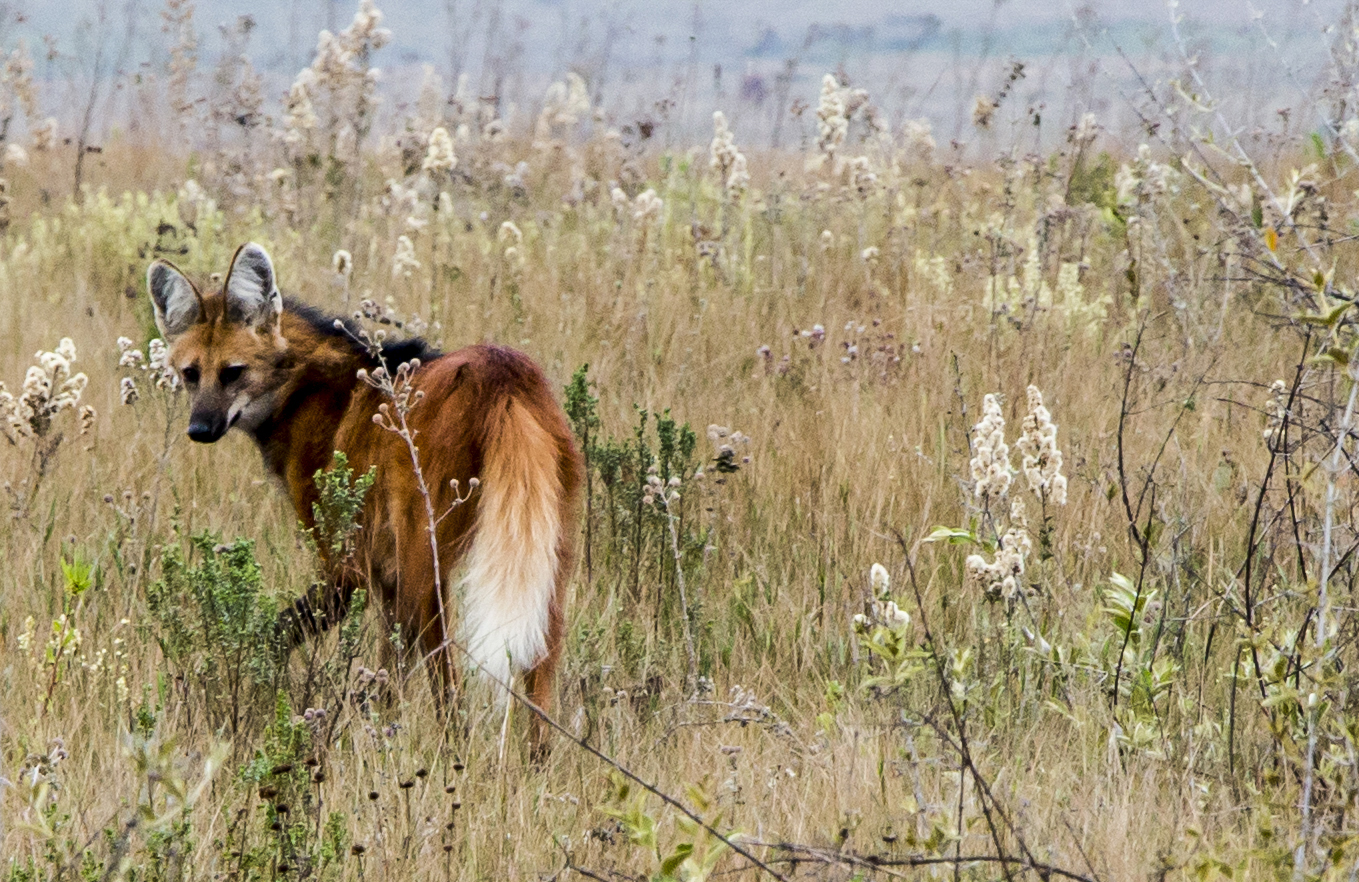
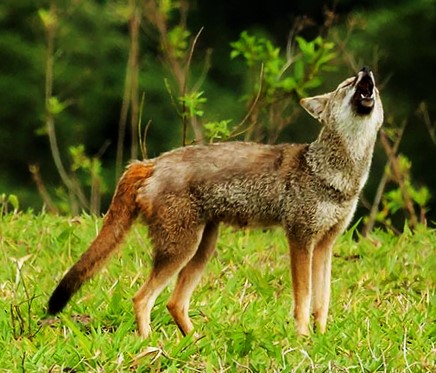
The hoary fox (Lycalopex vetulus), also known locally as raposinha-do-campo, jaguamitinga, or jaguapitanga, is one of the most unique and least known canids of the South American fauna. Endemic to Brazil, this species stands out as the country's smallest canid and for possessing a highly specialized, predominantly insectivorous diet, which significantly differentiates it from other carnivores in the Pantanal. Although its name suggests a direct relationship with the true foxes of the northern hemisphere (genus Vulpes), the hoary fox belongs to the genus Lycalopex, being evolutionarily closer to species such as the maned wolf and the crab-eating fox.
Scientific Classification
| Kingdom | Animalia |
| Phylum | Chordata |
| Class | Mammalia |
| Order | Carnivora |
| Family | Canidae |
| Genus | Lycalopex |
| Species | Lycalopex vetulus |
| Common name | Hoary fox |
In the Pantanal ecosystem, Lycalopex vetulus plays a fundamental ecological role as a controller of insect populations and a disperser of native fruit seeds. Its presence in the biome is generally associated with transition areas and open fields, where the topography and vegetation facilitate its specialized hunting behavior. Despite its importance, the species faces increasing challenges related to habitat loss and the expansion of anthropogenic activities, making knowledge about its biology essential for effective conservation strategies in the region.
This small canid is a symbol of the biodiversity of Brazilian open areas. Its unique adaptation to the savanna environment and its interaction with the Pantanal reveal the complexity of local food webs. Unlike large predators such as the jaguar, the hoary fox occupies a more discreet but no less vital niche, contributing to the balance of the floodable savannas and edge areas of the biome.
Physical Description
The hoary fox is characterized by its small and slender build, generally weighing between 2.5 kg and 4 kg. The body length varies from 58 cm to 64 cm, with a proportionally long tail measuring between 28 cm and 32 cm. Its fur features a predominantly brownish-gray coloration on the back, with a distinct dark stripe extending from the nape to the tip of the tail, the latter being quite dense and ending in a black patch. The ventral region and limbs tend to be lighter, ranging from cream to whitish, while the face and ears often exhibit reddish or yellowish tones.
One of the most striking morphological characteristics of Lycalopex vetulus is its adapted dentition. Compared to other canids, it has relatively small carnassial teeth (premolars and molars) and wide molars, an evolutionary specialization for crushing the exoskeleton of insects, its main food source. Its ears are large and erect, providing the sharp hearing necessary to locate small prey in the low vegetation. There is no pronounced sexual dimorphism, although males may show the dark dorsal stripe slightly more clearly than females.
Habitat and Distribution in the Pantanal
Although considered the only canid species strictly endemic to the Brazilian Cerrado, the hoary fox has a distribution that covers transition zones (ecotones) with other biomes, including the Pantanal. In the Pantanal biome, its occurrence is recorded mainly in open fields, wooded savannas, and edge zones that do not suffer severe and prolonged flooding. It prefers open environments where visibility is greater, avoiding dense forests or permanently flooded areas.
Geographically, Lycalopex vetulus is found in both the Northern Pantanal (Mato Grosso) and the Southern Pantanal (Mato Grosso do Sul). Its presence is noted in regions near highways such as the Transpantaneira, where the mosaic of pastures and native vegetation offers ideal conditions for its survival. The species also inhabits areas of farms and anthropogenic pastures, demonstrating some tolerance to human presence, provided there is availability of prey and places for shelter, such as abandoned armadillo burrows.
Behavior
The hoary fox has predominantly crepuscular and nocturnal habits, although it can be seen active during the day in areas with low human disturbance. It is a solitary animal for most of the year but can be observed in pairs or small family groups during the pup-rearing season. Its social behavior is discreet; they use scent marking and vocalizations to delimit territories and communicate with other individuals.
Unlike other more aggressive canids, Lycalopex vetulus is known for its shy and elusive nature. When threatened, it prefers to flee into dense vegetation or into holes in the ground. In the Pantanal, its activity is influenced by the water regime; during the flood, they tend to concentrate on "cordilheiras" (slightly elevated areas that do not flood), while in the dry season, they expand their home range through the newly exposed fields. They are excellent diggers but often take advantage of abandoned burrows of other animals for rest and reproduction.
Diet
The diet of the hoary fox is what most distinguishes it among the carnivores of the Pantanal. It is classified as an insectivorous-omnivorous carnivore. Coprological studies indicate that termites and beetles can represent up to 80% of its diet at certain times of the year. They use their thin snout and sharp hearing to locate insect colonies in the soil or under fallen logs. In addition to insects, they consume grasshoppers, small rodents, terrestrial birds, lizards, and a considerable variety of wild fruits.
Its ecological role is vital: by consuming large quantities of insects, they help regulate populations that could become pests. Furthermore, by feeding on fruits, Lycalopex vetulus acts as an important seed disperser, contributing to the regeneration of native flora in field and savanna areas. In the Pantanal, this generalist diet allows the species to adapt to seasonal variations in resource availability, although the abundance of insects during the transition between seasons is the period of greatest plenty.
Reproduction
The reproductive system of the hoary fox is generally monogamous. The mating season occurs mainly between the months of May and July. After a gestation period of approximately 50 days, the female gives birth to a litter ranging from 2 to 5 pups, usually between August and September, coinciding with the end of the dry season in the Pantanal. Birth occurs in protected burrows, often reused and enlarged armadillo holes.
Parental care is shared; while the female nurses the pups, the male plays an active role in protecting the territory and occasionally providing solid food for the female and, later, for the young. The pups begin to leave the burrow around four weeks of age and are weaned at four months. Sexual maturity is reached at around one year of age, at which point the young tend to disperse to establish their own territories, although some may remain in the vicinity of the natal area for longer.
Conservation Status
Currently, Lycalopex vetulus is classified by the International Union for Conservation of Nature (IUCN) as "Near Threatened". However, in national lists from ICMBio, its situation is often considered more serious, being listed as "Vulnerable" in several regions due to rapid habitat loss. The main threat to the species is the conversion of native fields and cerrados into areas of intensive agriculture and exotic pastures, which reduces the availability of natural prey and shelter sites.
In the Pantanal, in addition to habitat loss, the species suffers from roadkill on highways, predation by domestic dogs, and the transmission of canine diseases such as distemper and sarcoptic mange. Another significant problem is direct persecution by farmers, who often confuse the hoary fox with the crab-eating fox or erroneously believe it attacks poultry, despite its diet being mostly insectivorous. Conservation efforts include the creation of ecological corridors and environmental education programs to demystify the species' behavior among local communities.
Curiosities
A fascinating curiosity about the hoary fox is its incredible ability to "hunt" termites; it can be seen licking the insects directly from the ground with great speed. In the local culture of the Pantanal and the Cerrado, it is often the protagonist of folk tales that highlight its cleverness, although it is frequently confused with other canids. For ecotourism, observing Lycalopex vetulus is a special attraction in places like Porto Jofre or along the Transpantaneira, especially during twilight, when its elegant silhouette can be seen crossing the dirt roads.
Unlike other canids that can be noisy, the hoary fox is extremely silent, making it a "ghost" of the fields. Its presence is an indicator of the environmental health of open areas; where there are hoary foxes, there is generally a solid base of biodiversity of insects and small vertebrates. Preserving this small canid is ensuring that the complex ecological machinery of the Pantanal continues to function at all its levels, from the smallest termite to the largest predator.
References
[1] IUCN. (2016). *Lycalopex vetulus*. The IUCN Red List of Threatened Species. Available at: https://www.iucnredlist.org/species/12657/81014169
[2] ICMBIO. (2018). *Red Book of Threatened Brazilian Fauna*. ICMBio. Available at: https://www.icmbio.gov.br
[3] ALHO, C. J. R. (2008). *Biodiversity of the Pantanal*. UNIDERP Publishing.
[4] JUAREZ, K. M.; SILVA, J. A. (2009). Diet of the hoary fox (Lycalopex vetulus) in Cerrado and Pantanal areas. *Brazilian Journal of Zoology*, v. 26, n. 3, p. 455-462.
[5] LIMA, E. S.; ASTÚA DE MORAES, D. (2004). *Lycalopex vetulus*. In: MACHADO, A. B. M.; MARTINS, C. S.; GONÇALVES, G. R. (Eds.). *Red Book of Threatened Brazilian Fauna*. Belo Horizonte: Fundação Biodiversitas.
[6] EMBRAPA PANTANAL. (2020). *Mammals of the Pantanal*. Embrapa Pantanal. Available at: https://www.embrapa.br/pantanal/publicacoes
[7] COURA, P. R.; JORGE, R. S. (2012). Feeding ecology of Lycalopex vetulus (Carnivora: Canidae) in a Cerrado area in central-western Brazil. *Biota Neotropica*, v. 12, n. 1, p. 1-7.