

Introduction
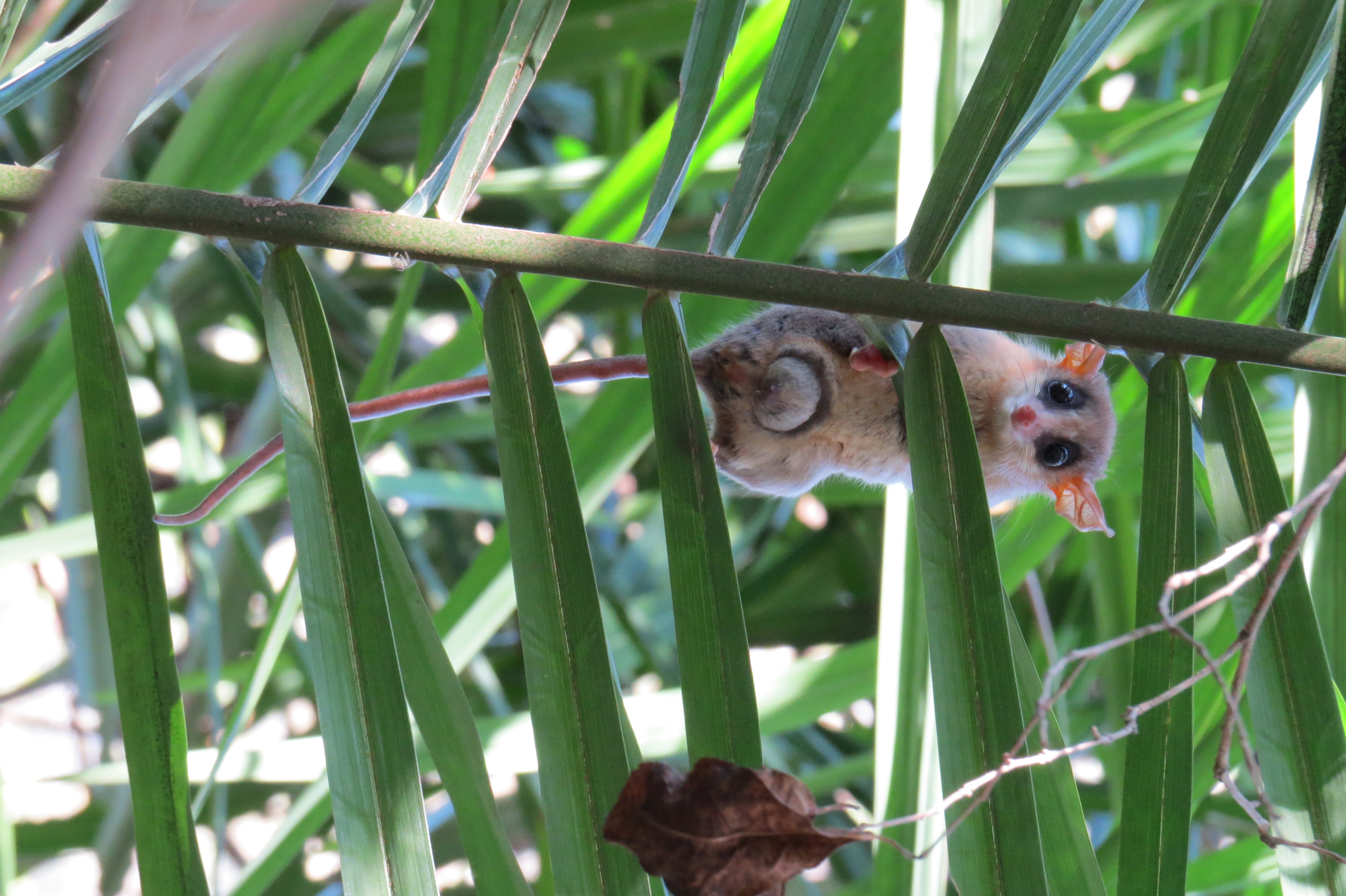
The Micoureus paraguayanus, popularly known as the woolly mouse opossum or guaiquica, is a small marsupial belonging to the Didelphidae family, distinguished by its exquisite adaptation to arboreal life. Recently reclassified by some taxonomists as Marmosa paraguayana, this species is a vital component of the Pantanal's biodiversity, where it plays fundamental ecological roles as a seed disperser and invertebrate population controller. Its presence is an indicator of environmental health, especially in areas of preserved forests and gallery forests bordering the Paraguay River.
Scientific Classification
| Kingdom | Animalia |
| Phylum | Chordata |
| Class | Mammalia |
| Order | Mammalia |
| Family | Mammalia |
| Genus | Micoureus |
| Species | Micoureus paraguayanus |
| Common name | Micoureus paraguayanus |
Unlike its more well-known relatives, such as the white-eared opossum, the woolly mouse opossum has dense, soft fur that gives it its common name. In the Pantanal ecosystem, it inhabits "cordilheiras" — elevated land strips that do not flood — and "capões de mata," islands of arboreal vegetation that serve as refuge for numerous species during seasonal floods. Its discreet nature and strictly nocturnal habits mean it is rarely seen by casual visitors, although it is a central figure in the trophic web of the region's seasonal forests.
The importance of Micoureus paraguayanus to the Pantanal biome extends beyond its intrinsic biology. As a small non-flying mammal, its ability to move between forest fragments is limited, making it a sentinel species for the effects of habitat fragmentation caused by agricultural expansion. Understanding its ecology is essential for devising conservation strategies that ensure landscape connectivity in the Pantanal, ensuring that this small marsupial continues to perform its function as an invisible gardener of the forests.
Physical Description
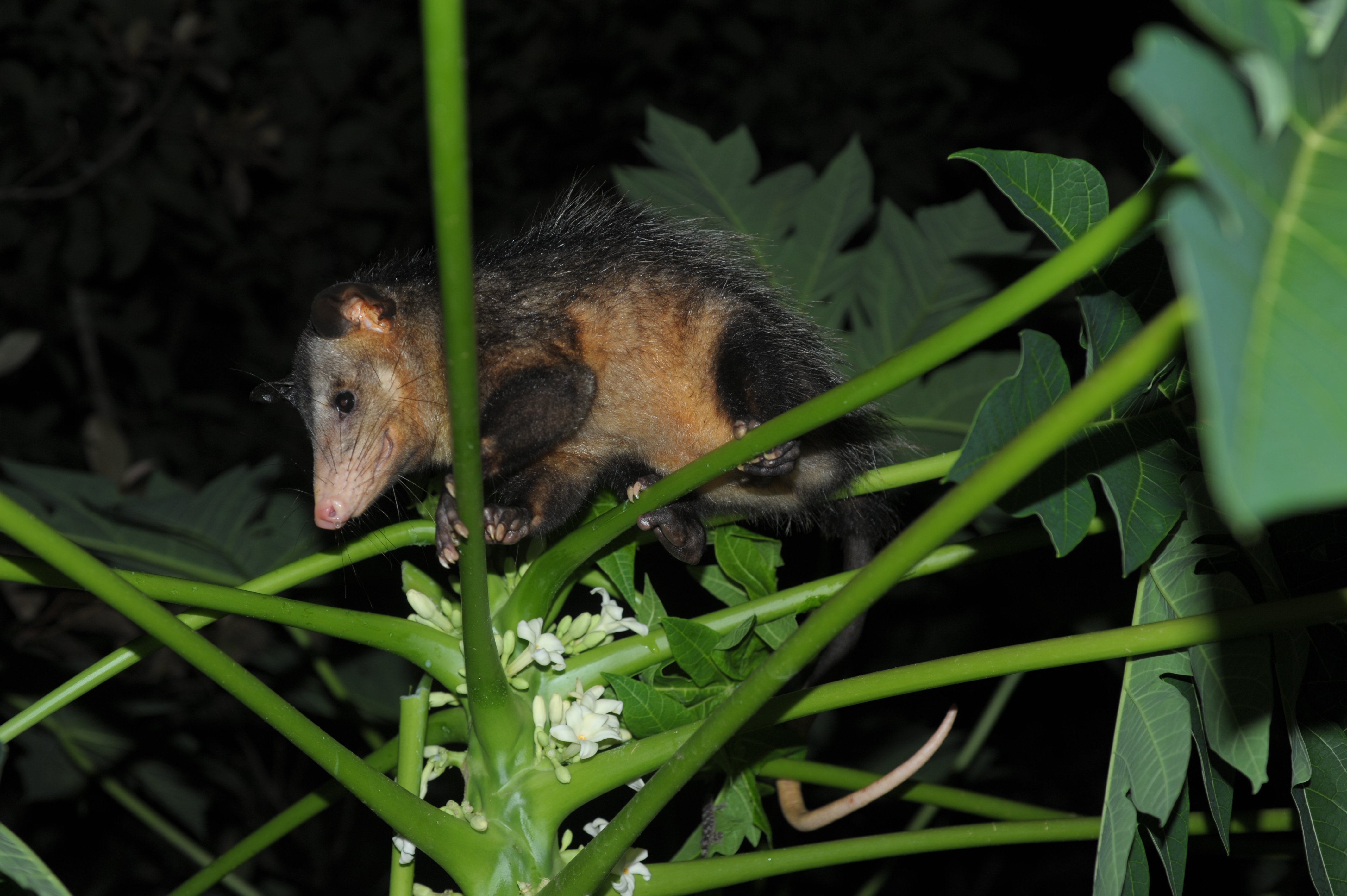
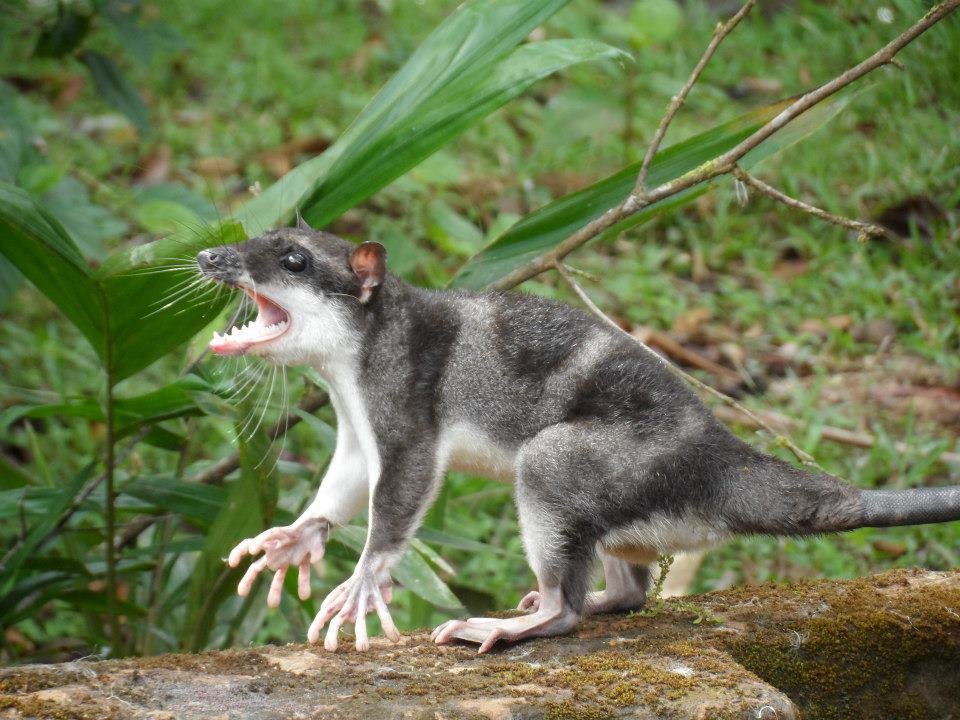
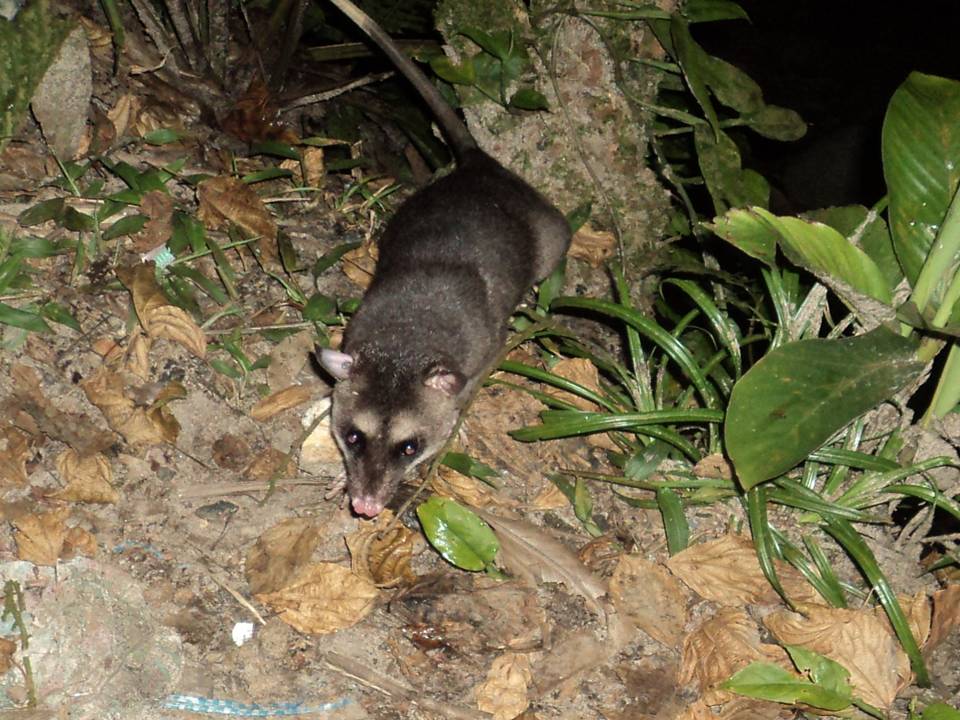
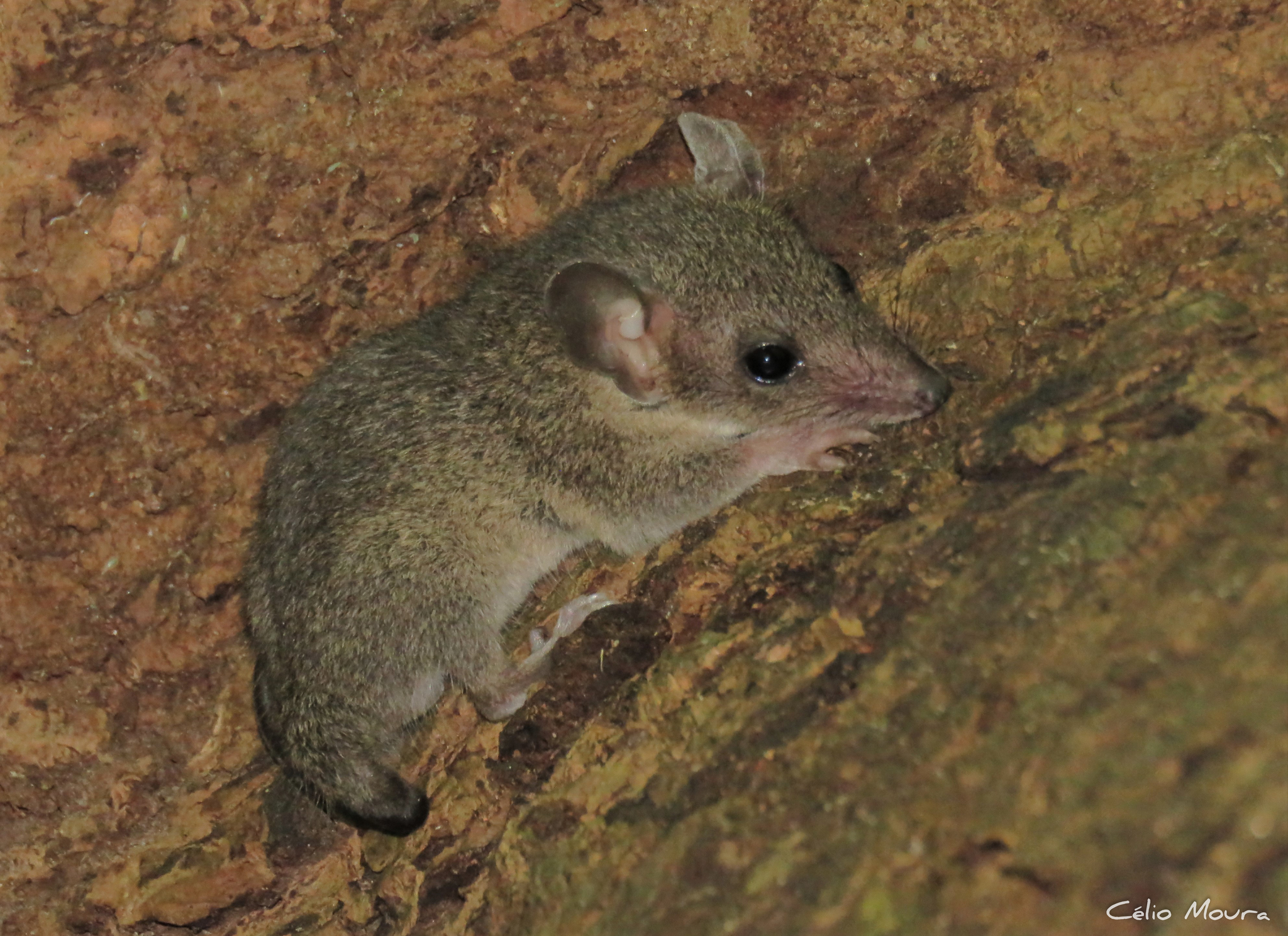
The woolly mouse opossum is a small to medium-sized marsupial, featuring a slender body adapted for agility in tree canopies. Body length varies between 12 and 20 centimeters, while its prehensile tail is remarkably long, reaching 15 to 25 centimeters, exceeding the total length of the trunk and head. The weight of a healthy adult ranges from 60 to 130 grams, with males tending to be slightly larger and more robust than females, although sexual dimorphism is not extremely pronounced at first glance.
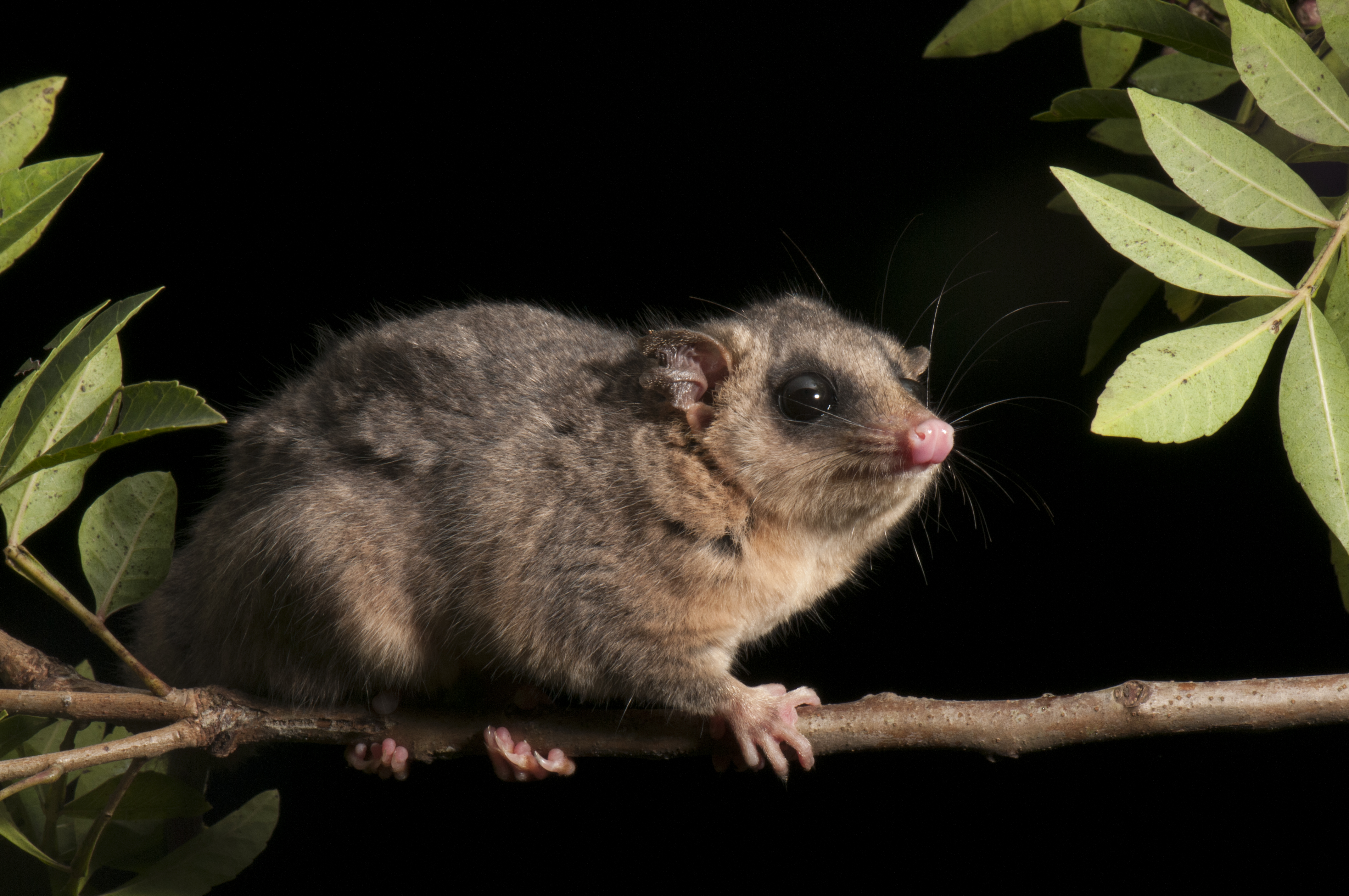
The most distinctive characteristic of this species is its fur, which is exceptionally dense, long, and woolly in texture. The dorsal coloration exhibits shades ranging from brownish-gray to cinnamon-brown, providing efficient camouflage against tree bark and dry foliage. In contrast, the ventral region is covered with shorter, lighter-colored hairs, usually cream, yellowish, or whitish. The face features a characteristic "mask": rings of dark fur around the large, black eyes, which are adapted for vision in very low light conditions.
The tail of Micoureus paraguayanus is a multifunctional tool. The base of the tail (about 10% to 20% of the total length) is covered by the same woolly fur as the body, while the rest is naked or covered with very short, fine hairs, with a coloration that darkens towards the tip. Being prehensile, it functions as a "fifth limb," aiding stability during locomotion on thin branches. The paws have long toes with sharp claws, and the hallux (the "thumb" of the hind foot) is opposable and clawless, facilitating a firm grip on cylindrical substrates.
Habitat and Distribution in the Pantanal
Geographically, Micoureus paraguayanus is distributed across eastern Paraguay, northern Argentina, and vast areas of Brazil, encompassing the Atlantic Forest and Cerrado biomes. Within the specific context of the Pantanal, its occurrence is intrinsically linked to the forest formations that punctuate the floodable plain. It is found more frequently in the gallery forests that follow watercourses, such as the Paraguay River and its tributaries, where humidity and canopy density offer ideal conditions for shelter and food.
Within the complex Pantanal landscape matrix, the woolly mouse opossum selects specific microhabitats. The "cordilheiras" — strips of seasonal forest that occupy the highest parts of the relief — are preferred locations, as they remain dry even during the peak of the flood pulse. Additionally, the "capões de mata" represent crucial habitats; in these forest islands, the species finds a complex vertical structure, with an abundance of lianas, epiphytes, and tree hollows, fundamental elements for its survival. The density of vegetation in these locations protects the marsupial from aerial and terrestrial predators.
Although predominantly a forest species, the woolly mouse opossum shows some tolerance to altered environments, provided there are vegetation corridors or nearby forest fragments. However, its dependence on the arboreal stratum makes it vulnerable in areas where native vegetation is replaced by extensive pastures. In the Pantanal, the preservation of riparian forests and legal reserves on farms is crucial for maintaining Micoureus populations, allowing them to move and maintain gene flow between the different sub-regions of the biome.
Behavior
The woolly mouse opossum is an animal with strictly nocturnal habits, beginning its activities shortly after sunset and returning to its shelters before dawn. During the day, it remains hidden in nests carefully constructed in tree hollows, tangled vines, or even abandoned bird nests. These refuges are lined with dry leaves and other plant materials, providing thermal insulation and protection against the typical climatic variations of the Pantanal, which can feature days of intense heat followed by sudden cold fronts.
Socially, Micoureus paraguayanus is a solitary species. Interactions between individuals occur predominantly during the reproductive season or in territorial disputes. Males tend to have larger home ranges than females, often overlapping the territory of several potential partners. Communication between individuals is done through olfactory signals — scent marking with odoriferous glands — and vocalizations, which include clicks and high-pitched sounds used in alarm situations or close social interaction.
The locomotion of the woolly opossum is a spectacle of arboreal agility. It uses the middle and upper strata of the forest (understory and canopy) to move, avoiding descending to the ground as much as possible, where it would be more exposed to predators such as the jaguar or small felines. Its prehensile tail is constantly used as an anchor point, allowing the animal to reach fruits or insects on extremely thin terminal branches. Radio-telemetry studies indicate that, despite its agility, the species has a low dispersal rate through open areas, rarely crossing pasture matrices greater than 800 meters without the protection of tree cover.
Diet
The diet of Micoureus paraguayanus is classified as insectivorous-omnivorous, showing remarkable plasticity that allows it to take advantage of the seasonal resources of the Pantanal. The main component of its diet consists of a wide variety of invertebrates, including beetles, ants, termites, spiders, and grasshoppers. The opossum uses its keen hearing and sensitive vibrissae (whiskers) to locate moving prey under tree bark or among the nocturnal foliage, capturing them with quick and precise movements of its front paws.
In addition to animal protein, fruit consumption plays a crucial role in its nutrition, especially during periods of greater fruit availability in the Pantanal forests. It consumes pulp and seeds of various native species, acting as an important dispersal agent. By ingesting fruits and defecating seeds in locations distant from the mother plant, the woolly opossum aids in the natural regeneration of gallery forests and cordilleras. There are also records of nectar and flower consumption, suggesting that the marsupial may act as an occasional pollinator of certain plants whose flowers open at night.
The ecological role of the woolly opossum as an insect predator is fundamental to the balance of the ecosystem. By controlling invertebrate populations, it prevents outbreaks of species that could become pests for native vegetation. In turn, the opossum itself serves as a food source for a range of larger predators, including nocturnal birds of prey (such as owls of the genus Tyto and Strix), arboreal snakes, and small carnivores. This intermediate position in the food chain reinforces the importance of conserving this marsupial for maintaining the biological integrity of the Pantanal.
Reproduction
The reproductive cycle of Micoureus paraguayanus in the Pantanal is intimately linked to the biome's seasonality. Generally, reproductive activity intensifies during the transition from the dry to the wet season, a period that coincides with an increase in insect abundance and the maturation of various wild fruits. This synchronicity ensures that the female has access to sufficient energy resources to support the high metabolic costs of lactation and offspring care.
A fascinating biological characteristic, common to many small Brazilian marsupials, is that the woolly opossum does not have a complete and permanent pouch (marsupium). Instead, females have rudimentary skin folds or simply exposed mammary glands in the abdominal region. After a short gestation period—typical of marsupials—the offspring, born in an embryonic state, climb to the mammary glands and remain firmly attached to them for several weeks. A litter can range from 6 to 11 young, depending on the mother's age and the environmental conditions of the year.
Parental care is exercised exclusively by the female. As the young grow and become too heavy to be carried permanently, the mother begins to leave them in the nest while she forages. During this period, the young begin to explore the surroundings of the shelter and experiment with solid foods, although they continue to suckle until complete weaning, which occurs around three to four months of age. Sexual maturity is reached early, usually before completing one year of life, allowing the species to have a population dynamic capable of recovering after natural mortality events, such as extreme droughts or severe floods.
Conservation Status
Currently, Micoureus paraguayanus is classified by the International Union for Conservation of Nature (IUCN) and the Chico Mendes Institute for Biodiversity Conservation (ICMBio) in the category of Least Concern (LC). This classification is based on its wide geographical distribution and the existence of relatively stable populations in various conservation units. However, this situation of apparent security should not be a reason for complacency, especially given the rapid transformations that the Pantanal has undergone in recent decades.
The main threat to the survival of the woolly opossum is habitat loss and fragmentation. The conversion of native forests into pastures for extensive livestock farming drastically reduces the areas available for foraging and nesting. Furthermore, large-scale forest fires, which have become more frequent and severe in the Pantanal due to climate change and human actions, pose a direct mortal danger to small arboreal animals, which have difficulty escaping quickly from flames that consume the canopy.
Another factor of concern is population isolation. As the woolly opossum avoids crossing large open areas, landscape fragmentation can lead to genetic isolation of local groups, increasing vulnerability to diseases and reducing long-term adaptability. In Brazil, the National Action Plan for the Conservation of Small Mammals emphasizes the need to maintain ecological corridors and protect riparian forests along rivers such as the Paraguay River to ensure the necessary connectivity for the species' persistence throughout its original territory.
Curiosities
The woolly opossum is the protagonist of interesting facts that enchant researchers and wildlife enthusiasts. The term "Micoureus", which long gave its genus its name, derives from an indigenous word to designate small marsupials, while the specific epithet "paraguayanus" refers to its initial description in Paraguayan lands. A notable biological curiosity is its ability to enter "torpor" — a state of drastic reduction in metabolism and body temperature — during periods of extreme food scarcity or intense cold, a vital survival strategy to conserve energy.
In the context of ecotourism, the woolly opossum has gained prominence in specialized nocturnal spotlighting tours, especially in lodges located along the Transpantaneira highway. Observing this small marsupial skillfully climbing among the lianas of a forest patch offers tourists a unique perspective on the secret life of the Pantanal after dusk. Its charismatic appearance, with large eyes and fluffy fur, helps demystify the negative image often associated with marsupials (frequently confused with rats), promoting greater empathy and support for the conservation of small fauna.
In local culture, although less celebrated than the jaguar or the capybara, the opossum is recognized by more observant Pantanal residents as a harmless and beneficial animal. Its presence near rural dwellings is often tolerated due to its role in insect control. Scientifically, the species continues to be an important model for studies of community ecology and vertical space use, helping biologists understand how the complexity of forest structure influences mammal diversity in the world's largest freshwater wetland.
References
[1] IUCN. (2016). *Micoureus paraguayanus*. The IUCN Red List of Threatened Species. Available at: https://www.iucnredlist.org/species/136733/22179929
[2] PAGLIA, A. P.; FONSECA, G. A. B.; RYLANDS, A. B.; HERRMANN, G.; LIMA, S. L.; MITTERMEIER, R. A.; RYLANDS, A. B. (2012). *Annotated List of Brazilian Mammals*. 2nd Edition. Conservation International.
[3] ALHO, C. J. R. (2008). *Biodiversity of the Pantanal*. Editora UNIDERP.
[4] GARDNER, A. L. (2008). *Mammals of South America, Volume 1: Marsupials, Xenarthrans, Shrews, and Bats*. University of Chicago Press.
[5] ICMBIO. (2018). *Red Book of Brazilian Threatened Fauna*. ICMBio. Available at: https://www.icmbio.gov.br
[6] POTT, A.; POTT, V. J. (1994). *Plants of the Pantanal*. Embrapa-SPI.
[7] EMBRAPA PANTANAL. (2020). *Biodiversity of the Pantanal: Mammals*. Embrapa Pantanal. Available at: https://www.embrapa.br/pantanal/publicacoes