

Introduction
The white-eared opossum (Didelphis albiventris), also known locally as saruê or mucura, is one of the most emblematic and resilient mammals of South American fauna. As the most common marsupial in Brazil, this species plays a fundamental ecological role in the Pantanal, where its adaptability allows it to thrive in both preserved forest areas and anthropized environments. Its presence is an indicator of ecosystem health, acting as a tireless controller of invertebrate and small vertebrate populations.
Scientific Classification
| Kingdom | Animalia |
| Phylum | Chordata |
| Class | Mammalia |
| Order | Didelphimorphia |
| Family | Didelphidae |
| Genus | Didelphis |
| Species | Didelphis albiventris |
| Common Name | White-eared Opossum |
In the context of the Pantanal, Didelphis albiventris is frequently sighted near "cordilheiras" (sandy ridges) and "capões" (forest patches), as well as along the Transpantaneira highway, where it seeks refuge and food. Unlike other more charismatic mammals of the region, such as the jaguar, the white-eared opossum often goes unnoticed due to its nocturnal habits, but its importance for the balance of Pantanal biodiversity is invaluable, especially in seed dispersal and the control of venomous animals.
Physical Description
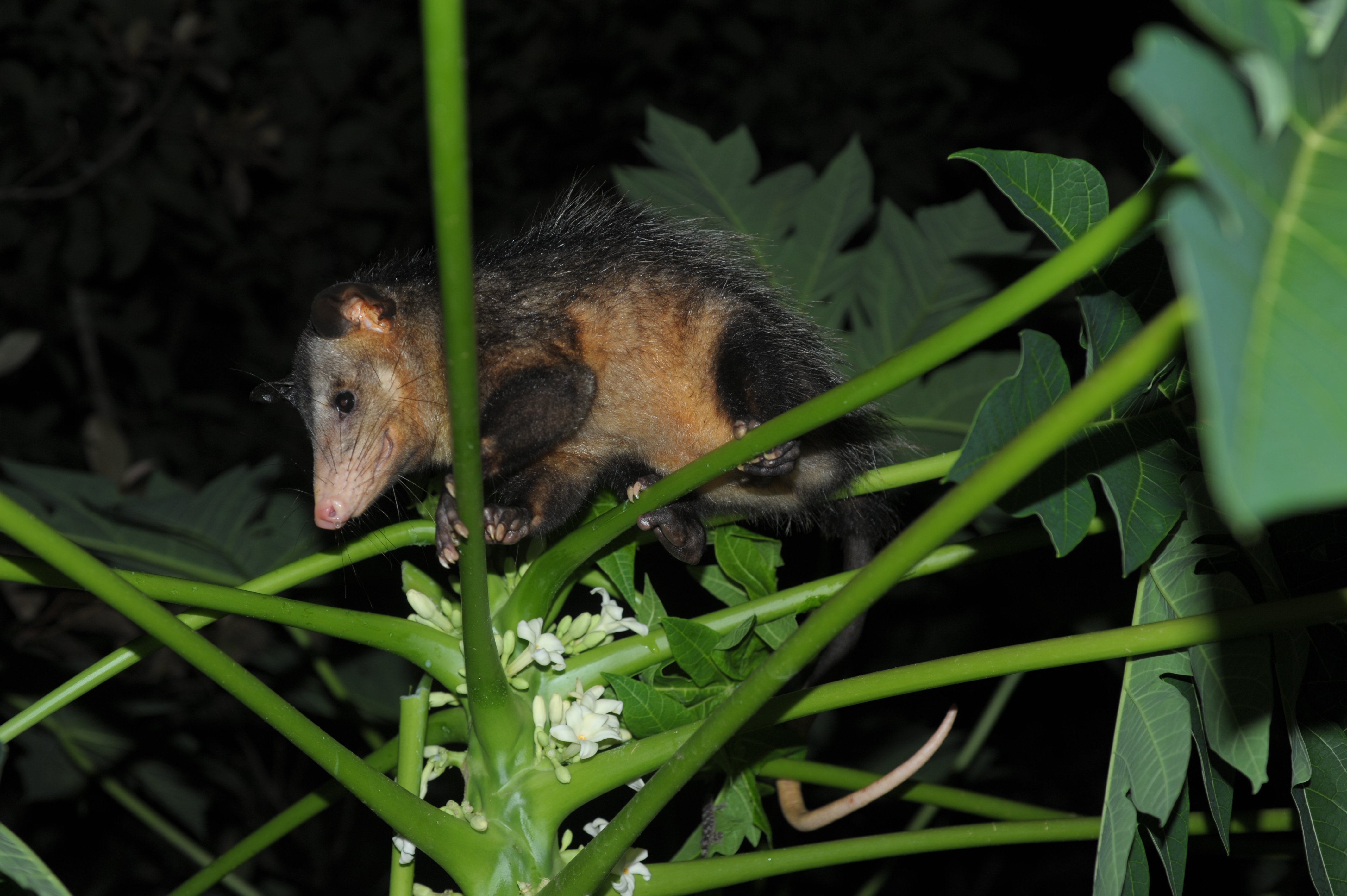
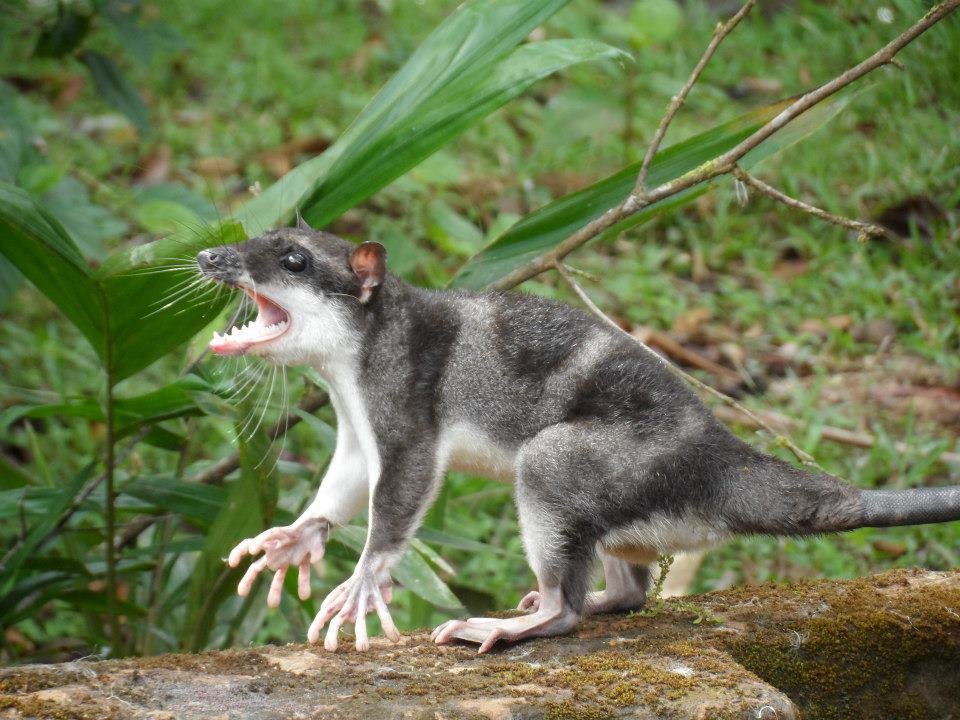
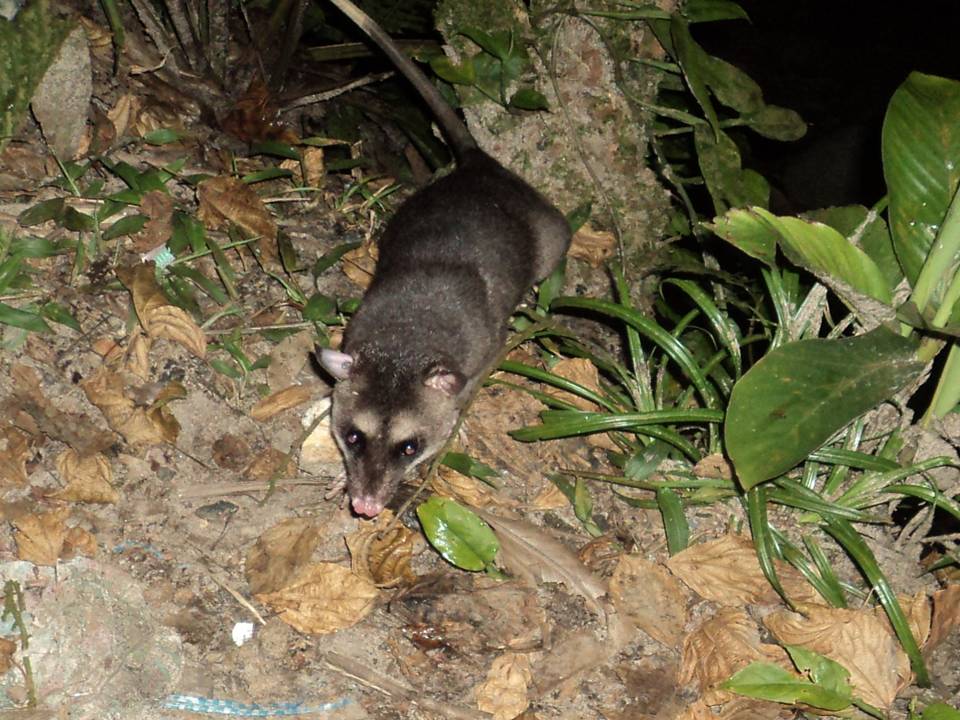
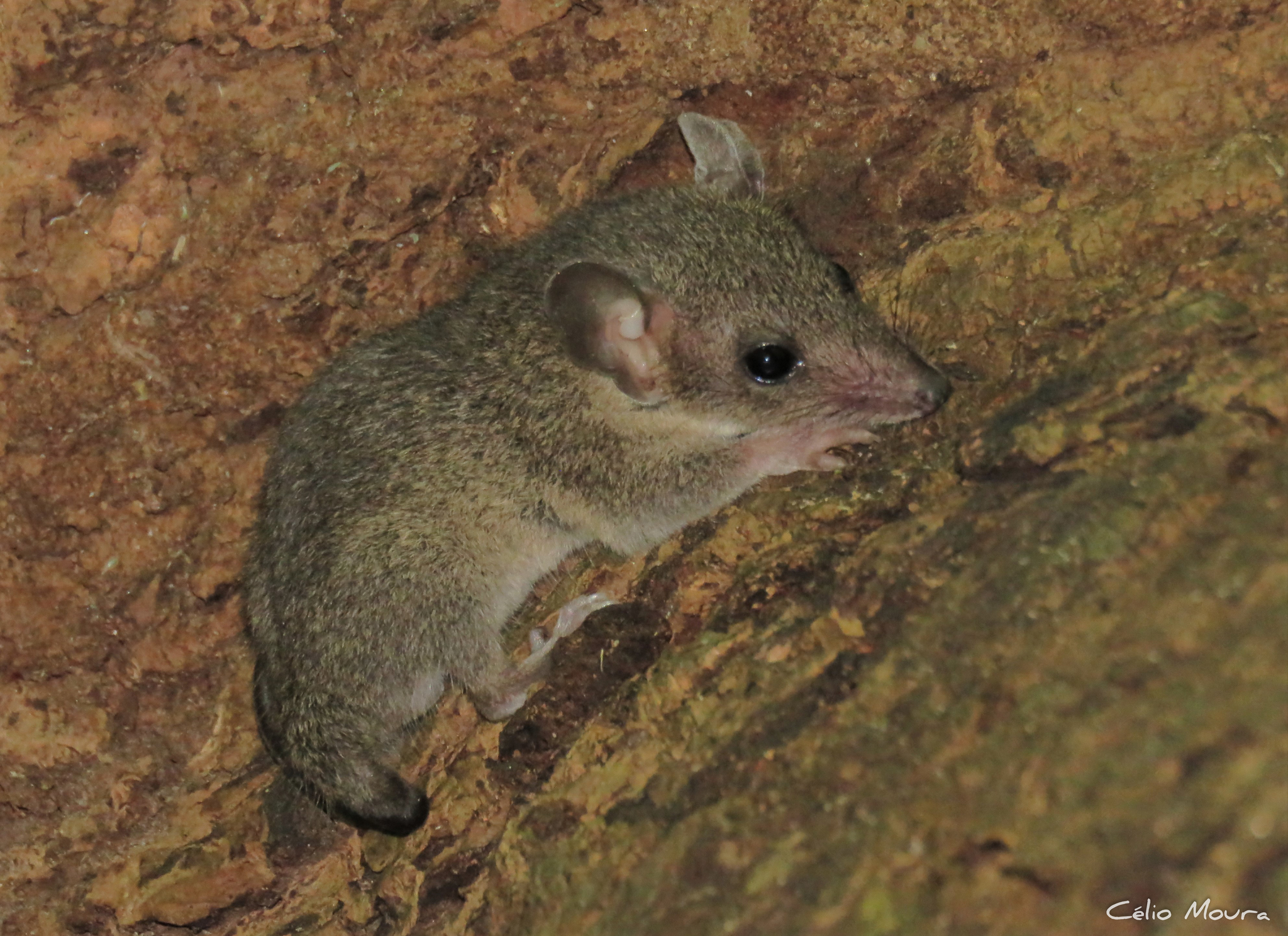
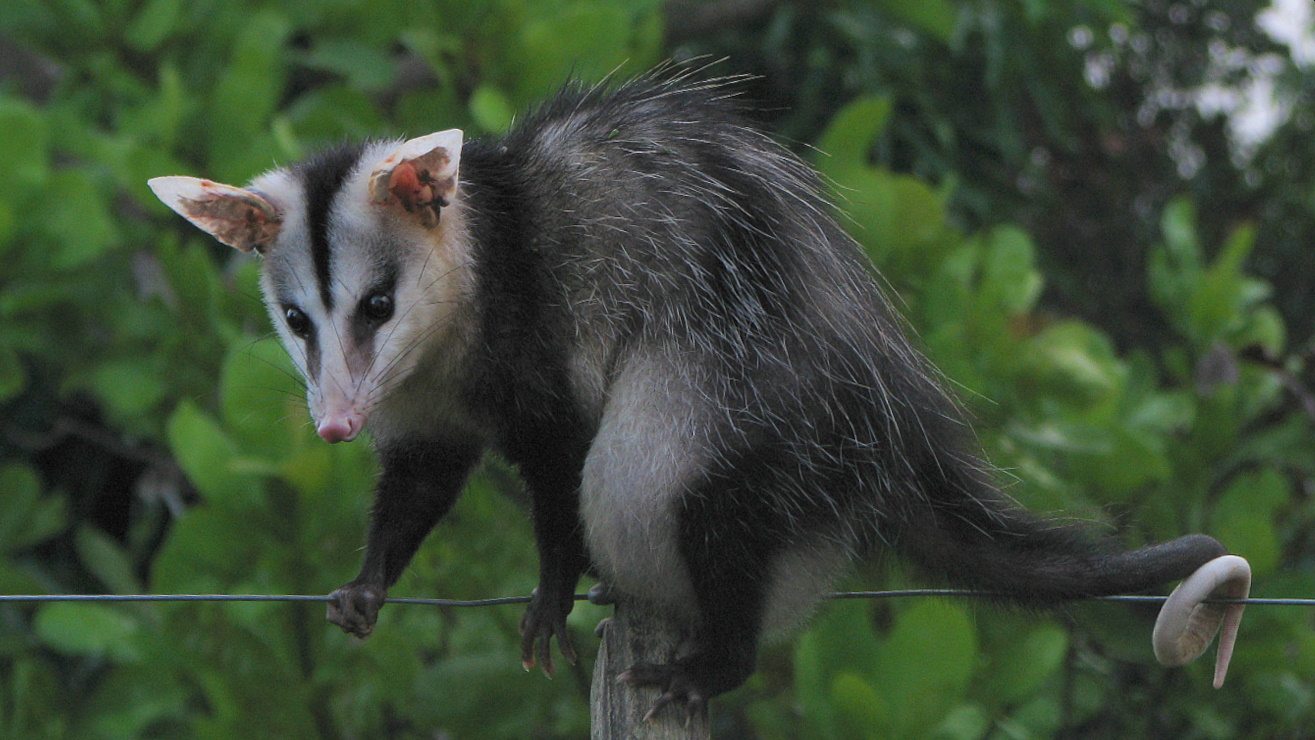
The white-eared opossum is characterized by a robust body and an elongated head with a pointed snout. The most distinctive morphological trait, which gives it its common name, is its large, membranous, and predominantly white ears, although the base may show dark tones. The fur consists of two layers: a dense, yellowish undercoat and longer, coarser guard hairs, generally gray or blackish in color, giving the animal a grizzled appearance.
In terms of dimensions, adults weigh between 500 g and 2.75 kg, with body lengths ranging from 30 to 44 cm. Its prehensile tail is a vital tool, measuring between 30 and 49 cm; it is hairless for much of its length and has a muscular base that aids in arboreal locomotion. On the face, three characteristic black stripes stand out: a central one running from the forehead to the snout and two lateral ones passing through the eyes, creating a facial "mask" that facilitates its identification in the field.
Habitat and Distribution in the Pantanal
The geographical distribution of Didelphis albiventris covers much of South America, extending from Argentina to northeastern Brazil. In the Pantanal biome, the species demonstrates remarkable versatility, occupying everything from the gallery forests bordering the Paraguay River to Cerrado areas and floodplains. They prefer areas with dense vegetation that offer daytime shelter, such as tree hollows, rock cavities, or dense tangles of vines.
Water dynamics in the Pantanal directly influence its movement. During the flood period, opossums concentrate in higher areas, known as cordilheiras, where the vegetation remains dry. Their climbing ability allows them to use the vertical stratum of the forest to avoid terrestrial predators and access seasonal food resources. It is also common to find them in areas of farms and eco-lodges, where the supply of food resources is usually abundant throughout the year.
Behavior
The white-eared opossum is an animal of strictly nocturnal and solitary habits. During the day, it remains hidden in improvised nests made of dry leaves and twigs in protected locations. Its locomotion is predominantly terrestrial, but it is an excellent climber, using its prehensile tail as a "fifth limb" to ensure stability on tree branches. Despite its slow appearance, it is capable of rapid movements when threatened.
One of the most fascinating behaviors of this species is thanatosis, popularly known as "playing dead." When confronted by a predator and without an escape route, the opossum enters a state of catatonic paralysis: it falls on its side, closes its eyes, sticks its tongue out, and releases a foul odor through anal glands. This defense mechanism aims to discourage predators that prefer live prey, such as certain birds of prey or felines. After the danger passes, the animal "wakes up" and quickly seeks refuge.
Diet
Classified as a generalist and opportunistic omnivore, Didelphis albiventris has an extremely varied diet that contributes to its survival in diverse niches. In the Pantanal, it feeds on a wide range of items, including wild fruits, seeds, insects (such as beetles and grasshoppers), small rodents, birds and their eggs, as well as reptiles and amphibians. Its diet varies seasonally according to the availability of resources imposed by the flood cycle.
A crucial aspect of its feeding ecology is its resistance to the venom of various venomous snakes, such as pit vipers (jararacas). This allows the opossum to act as a natural predator of these reptiles, aiding in population control. Furthermore, by consuming large quantities of fruits, it acts as an important seed disperser, helping in the regeneration of gallery forests and forest patches in the Pantanal. In areas near human settlements, it may also consume food scraps and carrion, playing a role as nature's "scavenger."
Reproduction
Like all marsupials, the reproductive system of the white-eared opossum is characterized by a short gestation period and long development of the young in the marsupium (pouch). The breeding season in the Pantanal generally coincides with the increase in food supply at the beginning of the rainy season. After a gestation of only 12 to 14 days, the young are born in an embryonic state and must climb the mother's belly to the marsupial pouch.
A litter can vary from 4 to 14 young, although the number of survivors depends on the number of available teats (usually between 9 and 13). Inside the marsupium, the young remain attached to the teats for about 46 days. After this period, they begin to venture out of the pouch, often being carried on the mother's back in a typical parental care behavior. Complete weaning occurs between the 60th and 100th day of life, when the young become independent and seek their own territories.
Conservation Status
Currently, Didelphis albiventris is classified by the International Union for Conservation of Nature (IUCN) as "Least Concern" (LC). In Brazil, ICMBio follows the same classification, reflecting the species' wide distribution and high reproductive capacity. However, this does not mean the species is free from threats. In the Pantanal, the main risks include habitat loss due to uncontrolled wildfires and the conversion of native areas into intensive pastures.
Another significant threat is roadkill on highways such as the Transpantaneira, where nocturnal habits and the paralysis reaction to bright lights make opossums vulnerable to vehicles. Furthermore, the species suffers from human prejudice; they are often confused with rats or considered disease transmitters, leading to indiscriminate killing. Environmental education campaigns are essential to demystify the species and highlight its ecological benefits, such as pest and snake control.
Curiosities
The white-eared opossum is surrounded by curious facts that enchant tourists and researchers in the Pantanal. One of the most notable characteristics is its natural immunity to scorpion and snake venoms, an evolutionary adaptation that makes it one of the few predators capable of facing highly dangerous animals. Additionally, its prehensile tail is so strong that it can support its full body weight for short periods, although the myth that they sleep hanging by their tails is just that—a myth.
In local culture, the opossum is often viewed with suspicion, but its presence in ecotourism lodges has helped change this perception. Specialized guides frequently use the opossum as an example of marsupial adaptation, comparing them to the famous Australian kangaroos to attract visitor interest. Its ability to "play dead" is one of the most impressive moments to observe in nature, demonstrating a unique survival strategy that has allowed this lineage of marsupials to persist for millions of years in South America.
References
[1] IUCN. (2016). *Didelphis albiventris*. The IUCN Red List of Threatened Species. Available at: https://www.iucnredlist.org/species/40487/22176421
[2] ALHO, C. J. R. (2008). *Biodiversidade do Pantanal*. Editora UNIDERP.
[3] EMBRAPA PANTANAL. (2010). *Mamíferos do Pantanal*. Embrapa Pantanal. Available at: https://www.embrapa.br/pantanal/publicacoes
[4] REIS, N. R.; PERACCHI, A. L.; PEDRO, W. A.; LIMA, I. P. (2006). *Mamíferos do Brasil*. Londrina: Editora da Universidade Estadual de Londrina.
[5] VIEIRA, E. M.; CAMARGO, N. F. (2012). Diet and food availability for *Didelphis albiventris* (Didelphimorphia, Didelphidae) in a rural area of southern Brazil. *Brazilian Journal of Biology*, 72(2), 373-380.
[6] ICMBIO. (2018). *Livro Vermelho da Fauna Brasileira Ameaçada de Extinção*. ICMBio. Available at: https://www.icmbio.gov.br