

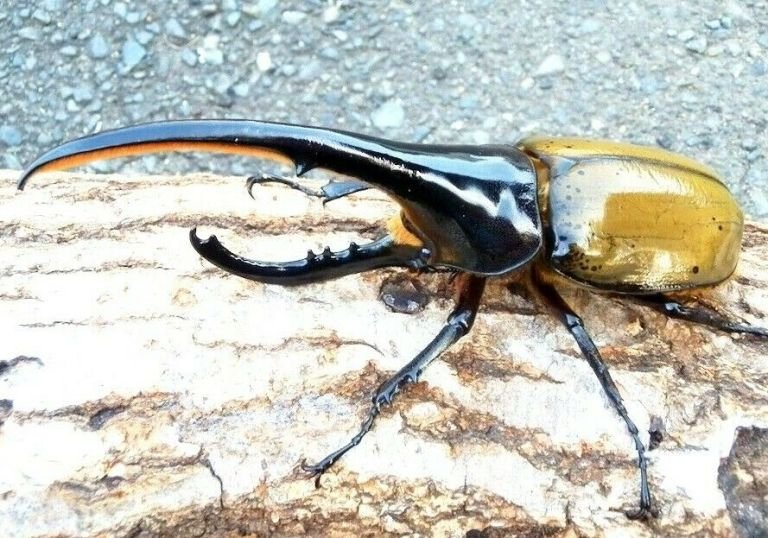
Dynastes hercules (Hercules Beetle)
Introduction
Dynastes hercules, commonly known as the Hercules beetle, is one of the most impressive and powerful insects in the world. Belonging to the family Scarabaeidae and the subfamily Dynastinae, this giant beetle is famous for its massive horns and extraordinary strength. While its primary distribution is in the rainforests of Central and South America, its presence in the Pantanal ecosystem is a testament to the biome’s rich biodiversity and its role as a refuge for some of the planet’s most fascinating invertebrates [1] [2].
In the Pantanal, the Hercules beetle plays a crucial role in the decomposition of organic matter. As a saproxylophagous species, it feeds on decaying wood during its larval stage, facilitating the nutrient cycle and the health of the forest floor. Its presence is often used as a bioindicator of well-preserved forest environments, as it requires large areas of mature forest with abundant dead wood to complete its long life cycle [3] [4].
Scientific Classification
The taxonomic classification of the Hercules beetle highlights its position among the rhinoceros beetles, a group known for their dramatic sexual dimorphism and robust exoskeletons:
| Category | Classification |
|---|---|
| Kingdom | Animalia |
| Phylum | Arthropoda |
| Class | Insecta |
| Order | Coleoptera |
| Family | Scarabaeidae |
| Genus | Dynastes |
| Species | Dynastes hercules |
| Common Name | Hercules Beetle |
Description
The Hercules beetle is one of the largest beetles in existence, with some males reaching up to 17.5 centimeters in length (including horns). The most striking feature of the males is the pair of large horns: one thoracic horn that curves forward and a smaller cephalic horn that curves upward. These horns are used in combat between males for access to females. Females, on the other hand, lack horns and are generally smaller, with a more discreet appearance that aids in camouflage among the leaf litter [2] [5].
The coloration of the elytra (wing covers) is another fascinating aspect. They can vary from olive green to yellowish or even grayish, often with black spots. Interestingly, the color of the elytra can change depending on the humidity of the environment; they become darker in high humidity and lighter in dry conditions. This phenomenon is caused by the structure of the elytra’s cuticle, which reflects light differently as it absorbs moisture [4] [6].
| Characteristic | Value |
|---|---|
| Maximum Length (Males) | 17.5 cm |
| Average Length (Females) | 6 - 8 cm |
| Larval Weight | Up to 120 g |
| Adult Lifespan | 6 - 12 months |
| Larval Duration | 2 - 3 years |
Distribution and Habitat
Dynastes hercules is widely distributed from southern Mexico to northern South America, including the Amazon basin and parts of the Pantanal. In the Pantanal, it is primarily found in areas of gallery forest and dense woodland where the humidity remains relatively high throughout the year. These habitats provide the necessary conditions for the development of its larvae, which depend on large decaying logs [1] [3].
During the adult phase, the Hercules beetle is primarily nocturnal and is often attracted to light sources. It spends much of its time in the forest canopy or on the trunks of trees, where it feeds on sap and fermenting fruits. The seasonal pulse of the Pantanal influences its activity, with adults being more frequently observed during the transition from the dry to the rainy season [5] [7].
Behavior
The behavior of the Hercules beetle is marked by the intense competition between males. During the mating season, males use their powerful horns to engage in wrestling matches, attempting to lift and flip their opponents. These battles are rarely fatal but determine the dominance and reproductive success of the individuals. Despite their size and intimidating appearance, they are not aggressive toward humans and do not possess venom [2] [4].
Another notable behavior is their flight. Despite their heavy bodies, Hercules beetles are capable of flying long distances in search of mates or food sources. Their flight is loud and somewhat clumsy, but it is an essential dispersal mechanism in the vast landscapes of the Pantanal. They are also known for their ability to produce a stridulating sound by rubbing their abdomen against their elytra, a behavior used to deter predators or during social interactions [6].
Feeding / Nutrition
The diet of the Hercules beetle changes significantly between its life stages. As larvae, they are specialized decomposers, feeding exclusively on decaying wood and the fungi associated with it. This stage is critical for their growth, as they must accumulate large fat reserves to fuel their metamorphosis and adult life. In the Pantanal, they prefer the wood of native trees that have fallen and are in advanced stages of decay [3] [5].
Adults, however, have a diet based on liquids and soft tissues. They primarily feed on tree sap, which they obtain by scarring the bark with their mandibles, and on overripe or fermenting fruits that fall to the forest floor. This high-sugar diet provides the energy needed for their active flights and the demanding physical combat between males.
Reproduction
The reproductive cycle of Dynastes hercules is long, potentially lasting two to three years. After mating, the female deposits about 50 to 100 eggs directly into decaying logs or organic-rich soil. The larval stage is the longest, passing through three instars (growth phases) where the larva accumulates massive fat reserves.
Pupation occurs within a chamber built by the larva using wood fragments and soil. After metamorphosis, the adult emerges, usually coinciding with the start of the rainy season in the Pantanal, when humidity is ideal for activity and dispersal. The adult lifespan is relatively short, lasting six to twelve months, focused entirely on reproduction.
Ecological Importance
As one of the primary decomposers of large wood, the Hercules beetle is vital for the health of the Pantanal ecosystem. It facilitates the decomposition of trunks that would otherwise take decades to integrate into the soil. This process releases essential nutrients that support the growth of new plants and maintain the primary productivity of the forest.
Furthermore, larvae and adults serve as a food source for a variety of predators, including large birds, small mammals, and reptiles. Its presence is an indicator of mature and well-preserved forests, making it a flagship species for the conservation of invertebrates and soil microfauna.
Conservation Status
While not globally listed as “Threatened” by the IUCN, the Hercules beetle faces increasing local pressures. In Brazil, the destruction of forest habitats for agriculture and the removal of dead wood from forests drastically reduce breeding sites. Illegal collection for the exotic collector market also represents a significant threat due to the high commercial value of large males.
Conservation measures include the protection of ecological corridors in the Pantanal and raising awareness about the importance of invertebrates in maintaining ecosystem services. Maintaining legal reserve areas with leaf litter and fallen wood is fundamental to ensuring the long-term survival of this majestic species.
Fun Facts
- The Hercules beetle is capable of carrying up to 850 times its own weight, making it proportionally one of the strongest animals on Earth.
- The color change of its elytra acts as a biological hygrometer, instantly reflecting air humidity levels.
- Its larvae can reach the size of a human hand and weigh over 100 grams before pupation.
- The name “Hercules” is a direct reference to the hero of Greek mythology, symbolizing the insect’s immense strength.
- Despite its intimidating appearance and massive horns, the Hercules beetle is completely harmless to humans, possessing no venom or stinger.
References
[1] IUCN. (2018). Dynastes hercules. The IUCN Red List of Threatened Species. Available at: https://www.iucnredlist.org/species/189780/8622744 [2] EMBRAPA PANTANAL. (2020). Biodiversidade de Insetos no Pantanal. Embrapa Pantanal. Available at: https://www.embrapa.br/pantanal/publicacoes [3] ALHO, C. J. R. (2008). Biodiversidade do Pantanal. Editora UNIDERP. [4] RATCLIFFE, B. C. (2003). The Dynastine Scarab Beetles of the World (Coleoptera: Scarabaeidae: Dynastinae). Bulletin of the University of Nebraska State Museum, 16. [5] SOS PANTANAL. (2023). A importância dos insetos para o equilíbrio do Pantanal. SOS Pantanal. Available at: https://sospantanal.org.br/a-importancia-dos-insetos-para-o-equilibrio-do-pantanal/ [6] POTT, A.; POTT, V. J. (1994). Plantas do Pantanal. Embrapa-SPI. [7] ICMBIO. (2018). Livro Vermelho da Fauna Brasileira Ameaçada de Extinção. ICMBio. Available at: https://www.icmbio.gov.br