

Apis mellifera (Western Honey Bee)
Introduction
Apis mellifera, popularly known as the Western honey bee or European bee, is a social insect belonging to the family Apidae. Although it is an introduced species in the Americas, it has become perfectly integrated into the Pantanal ecosystem, where it plays a vital role as a pollinator. Its presence is fundamental for the reproduction of numerous native plant species, contributing directly to the maintenance of the biome’s floral diversity and the production of honey, which is an important economic resource for local communities.
In the Pantanal, Apis mellifera is recognized for its high adaptability and efficiency in foraging. The species lives in highly organized colonies, where the division of labor and complex communication, such as the “waggle dance,” allow for the optimization of natural resource collection. Its importance transcends the ecological scope, being a central pillar for sustainable apiculture in the region, which values the “Pantanal honey” for its unique organoleptic characteristics.
Scientific Classification
| Category | Description |
|---|---|
| Kingdom | Animalia |
| Phylum | Arthropoda |
| Class | Insecta |
| Order | Hymenoptera |
| Family | Apidae |
| Subfamily | Apinae |
| Genus | Apis |
| Species | Apis mellifera |
Description
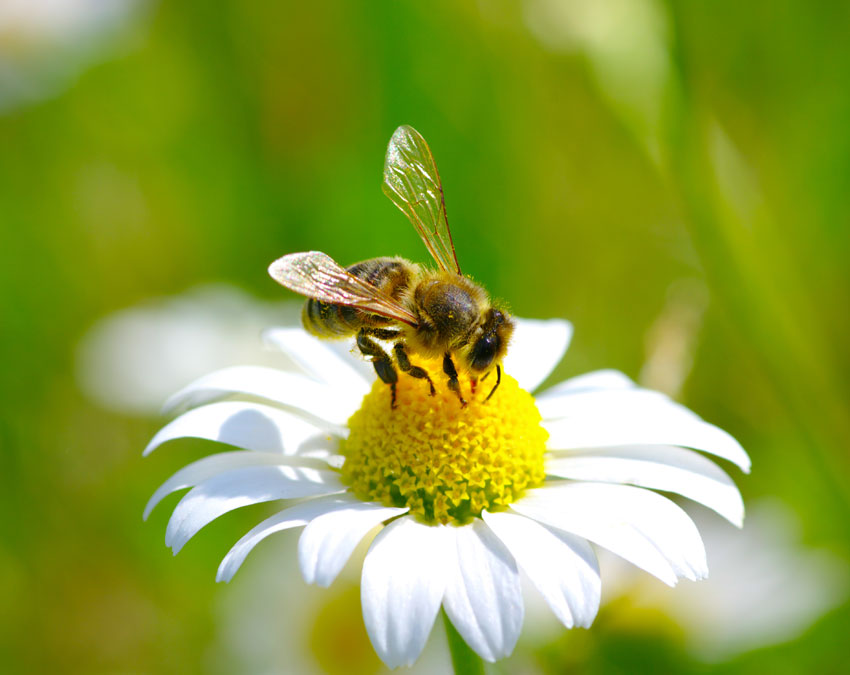
Apis mellifera has a body divided into head, thorax, and abdomen, covered by fine hairs that aid in pollen collection. Workers measure between 1.2 and 1.5 cm, while the queen can reach 2 cm. The coloration varies from golden yellow to dark brown, with characteristic black transverse bands on the abdomen. They possess two pairs of membranous wings and a stinger at the end of the abdomen, used for colony defense.
A striking feature is the presence of the corbicula (pollen basket) on the hind legs, a specialized structure for transporting pollen to the hive. Their mouthparts are of the chewing-lapping type, adapted both for handling wax and for sucking nectar. The complex eyes and antennae are highly sensitive, allowing for the detection of floral scents and navigation based on polarized light.
Distribution and Habitat
Originally from Europe, Africa, and part of Asia, Apis mellifera is now found on all continents except Antarctica. In the Pantanal, it occupies a wide variety of habitats, from dense riparian forests to open fields and flooded areas. The species is extremely versatile, being able to establish nests in hollow trees, rock crevices, or even in abandoned human structures.
The abundance of the species in the Pantanal is directly related to the seasonal cycles of flowering. During the ebb and dry periods, the explosion of flowers from species like the cambará (Vochysia divergens) and the piúva (Handroanthus heptaphyllus) provides an abundance of nectar and pollen, favoring the expansion of colonies. Its ability to travel long distances (up to 10 km) allows it to exploit resources in different landscape units of the biome.
Behavior
The behavior of Apis mellifera is characterized by a high degree of sociality (eusociality). The colony is composed of a single queen, thousands of workers (sterile females), and a few hundred drones (males). Communication is one of the most fascinating aspects, performed through pheromones and the “dance of the bees,” which informs the location and quality of food sources to other members of the hive.
They are predominantly diurnal and highly active during the warmer hours of the day. Defense behavior is collective; when the hive is threatened, workers release alarm pheromones that recruit other bees for protection. In the Pantanal, they also exhibit “floral constancy,” where the bee focuses on a single plant species as long as the resource is abundant, optimizing collection.
Reproduction
The reproductive cycle of the colony is centered on the queen, the only fertile female. Individual reproduction occurs through the nuptial flight, where the virgin queen mates with several drones in mid-air, storing sperm in the spermatheca for lifelong use. A healthy queen can lay up to 2,000 eggs per day. Development follows complete metamorphosis (holometaboly): egg, larva, pupa, and adult.
The reproduction of the colony as a whole occurs through swarming, a process where the old queen leaves the hive with about half of the workers to found a new nest, while a new queen emerges in the original colony. In the Pantanal, this phenomenon is more frequent during the periods of great flowering that follow the rainy season, ensuring the expansion of the species in the ecosystem.
Ecological Importance
Apis mellifera is one of the most important pollinators in the Pantanal due to its abundance and generalist behavior. It contributes significantly to the reproduction of native plants that sustain the base of the food chain. By ensuring the production of seeds and fruits, the species aids in the natural regeneration of forests and the maintenance of the biome’s plant structure, indirectly impacting the survival of birds, mammals, and other insects.
Furthermore, the species acts as an indicator of environmental health. Although it may compete for resources with native stingless bees (Meliponini), studies indicate that in vast environments like the Pantanal, interaction networks tend to adjust. The presence of Apis mellifera in conservation areas highlights the complexity of modern ecological relationships, where introduced species play critical roles in ecosystem resilience in the face of climate change.
Conservation Status
Globally, Apis mellifera is not considered a threatened species, being classified as “Data Deficient” or “Least Concern” in various IUCN lists, depending on the subspecies and region. In Brazil, populations are stable and abundant. However, the species faces growing threats due to the indiscriminate use of pesticides in areas peripheral to the Pantanal, which can cause Colony Collapse Disorder (CCD).
Conservation measures in the Pantanal focus on promoting sustainable apiculture and preserving native flora. The maintenance of ecological corridors and the protection of natural nesting areas are essential to ensure that bee populations continue to provide their ecosystem services. Awareness of the importance of bees for food security and biodiversity is a central pillar of management strategies in the region.
Curiosities
- Honey Production: A single colony of Apis mellifera in the Pantanal can produce more than 40 kg of honey per year, depending on the intensity of the flowering of species like the cambará.
- Visual Communication: Bees can see colors in the ultraviolet spectrum, which helps them locate nectar guides invisible to the human eye on Pantanal flowers.
- Wax Architecture: Honeycombs are built in perfect hexagons, the geometric shape that allows for storing the largest amount of honey with the least amount of wax possible.
- Longevity: While workers live about 45 days during the intense work season, a queen can live from 3 to 5 years, dedicating herself exclusively to egg-laying.
- Sense of Orientation: Apis mellifera uses the Earth’s magnetic field and the position of the sun as natural compasses to return to the hive after traveling distances of up to 10 km.
References
[1] IUCN. (2016). Apis mellifera. The IUCN Red List of Threatened Species. Available at: https://www.iucnredlist.org/species/42463639/42463660 [2] EMBRAPA PANTANAL. (2018). Apiculture in the Pantanal: Potential and Challenges. Embrapa Pantanal. Available at: https://www.embrapa.br/pantanal/publicacoes [3] ALHO, C. J. R. (2008). Biodiversity of the Pantanal. UNIDERP Publishing. [4] POTT, A.; POTT, V. J. (1994). Plants of the Pantanal. Embrapa-SPI. [5] SOS PANTANAL. (2023). Pollinators and the health of the Pantanal. SOS Pantanal. Available at: https://sospantanal.org.br [6] IMPERATRIZ-FONSECA, V. L.; NOGUEIRA-FERREIRA, F. H. (2019). Bees in Brazil: Biodiversity, Conservation and Uses. University of São Paulo Press. [7] FREITAS, B. M.; PEREIRA, J. O. P. (2004). Agricultural Pollination in Brazil. Embrapa Technological Information.